Budget-Friendly Ways to Make a Rental Feel Like Home
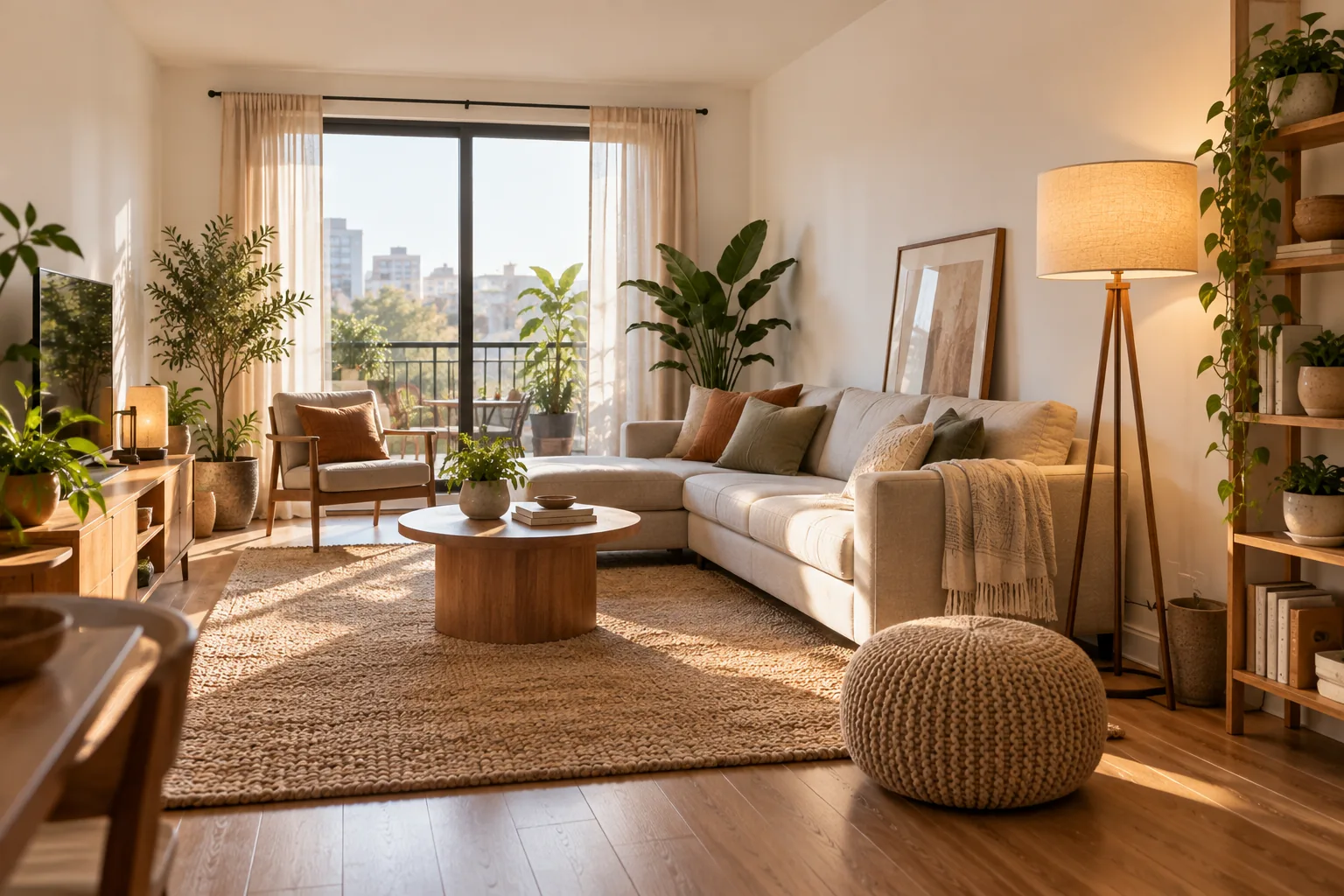
The real constraint in a rental isn't money, it's permanence. Reversible, budget-friendly ways to make it feel like yours — and keep your deposit.
Renting often gets treated as a reason to wait — wait until you own a place, wait until you can paint, wait until the "real" decorating can start. Most of what actually makes a home feel like home has nothing to do with ownership at all.
The real constraint in a rental isn't money. It's permanence. Almost everything that makes a space feel considered — layered textiles, the right lighting, art on the walls, plants, a sense of your own things around you — can be done in a way that's fully reversible and leaves no trace when you move out. Budget and permanence are two separate problems, and rentals are mostly a permanence problem wearing a budget disguise.
The Real Constraint Isn't Money, It's Permanence
A rental's actual limitation is that you can't paint every wall, install permanent fixtures, or make structural changes, not that you have no money to spend. Once decorating decisions are filtered through "will this survive moving out and not touch a wall permanently" instead of "can I afford this," the options open up considerably, and most of them cost very little regardless.
Layer Textiles First
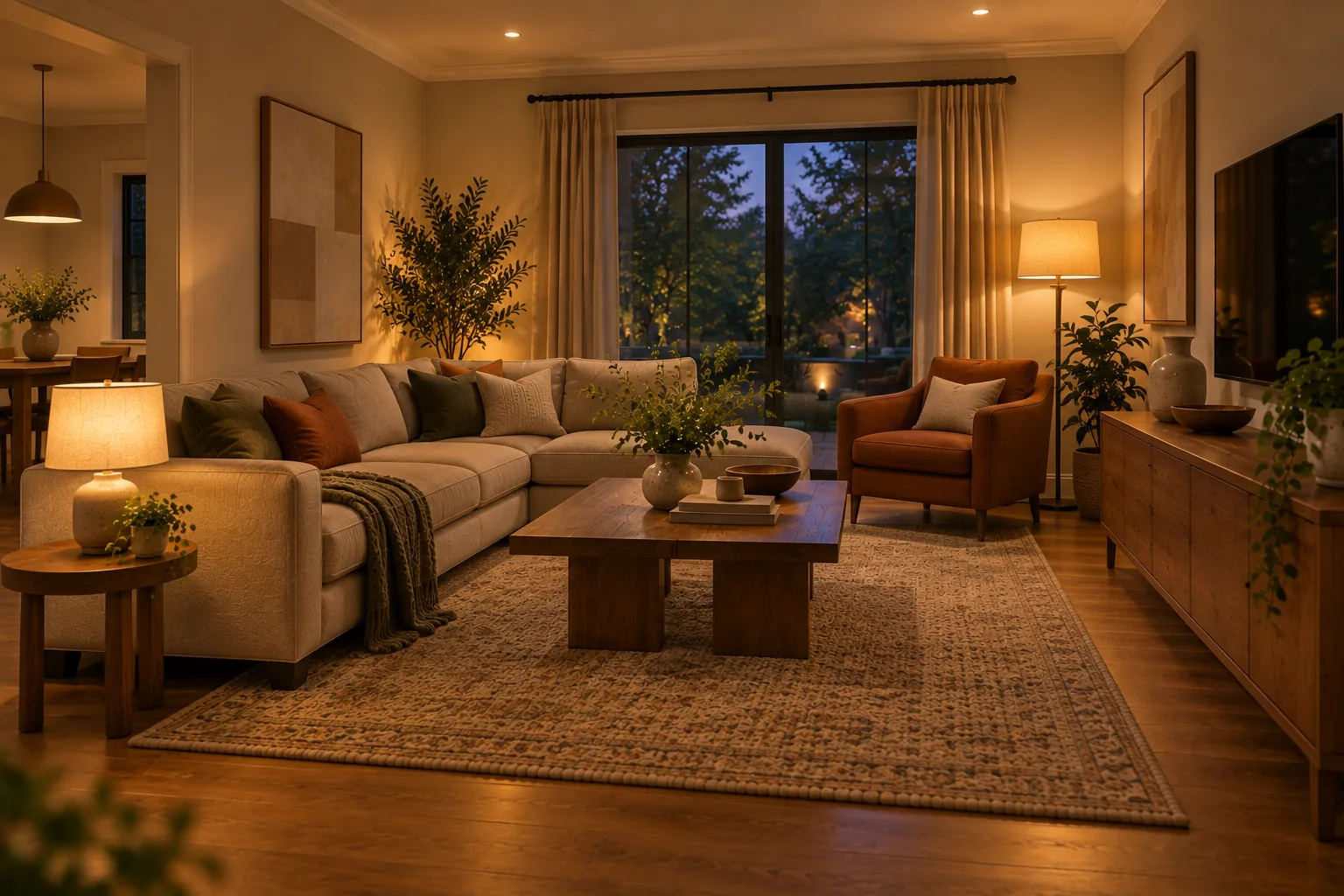
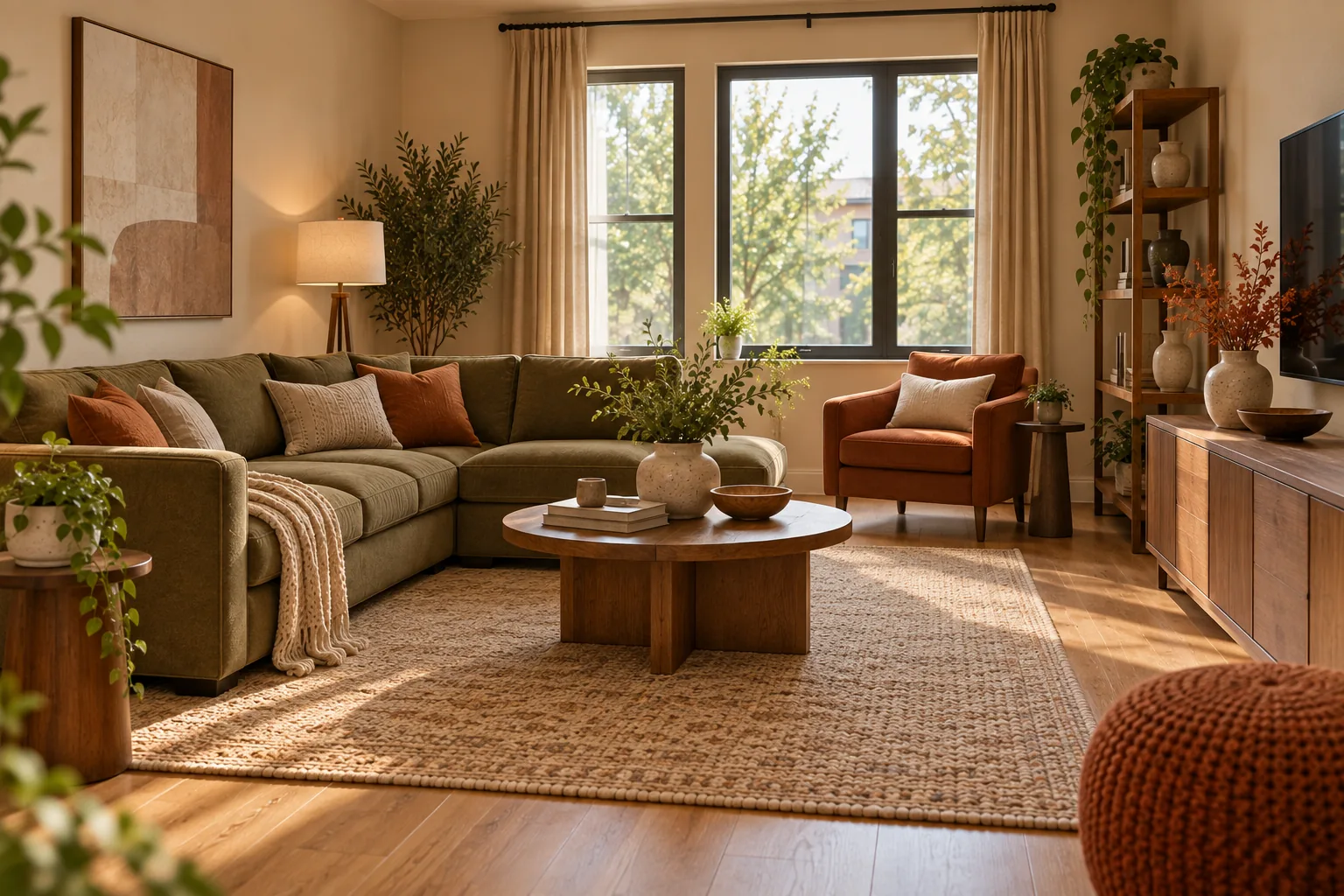
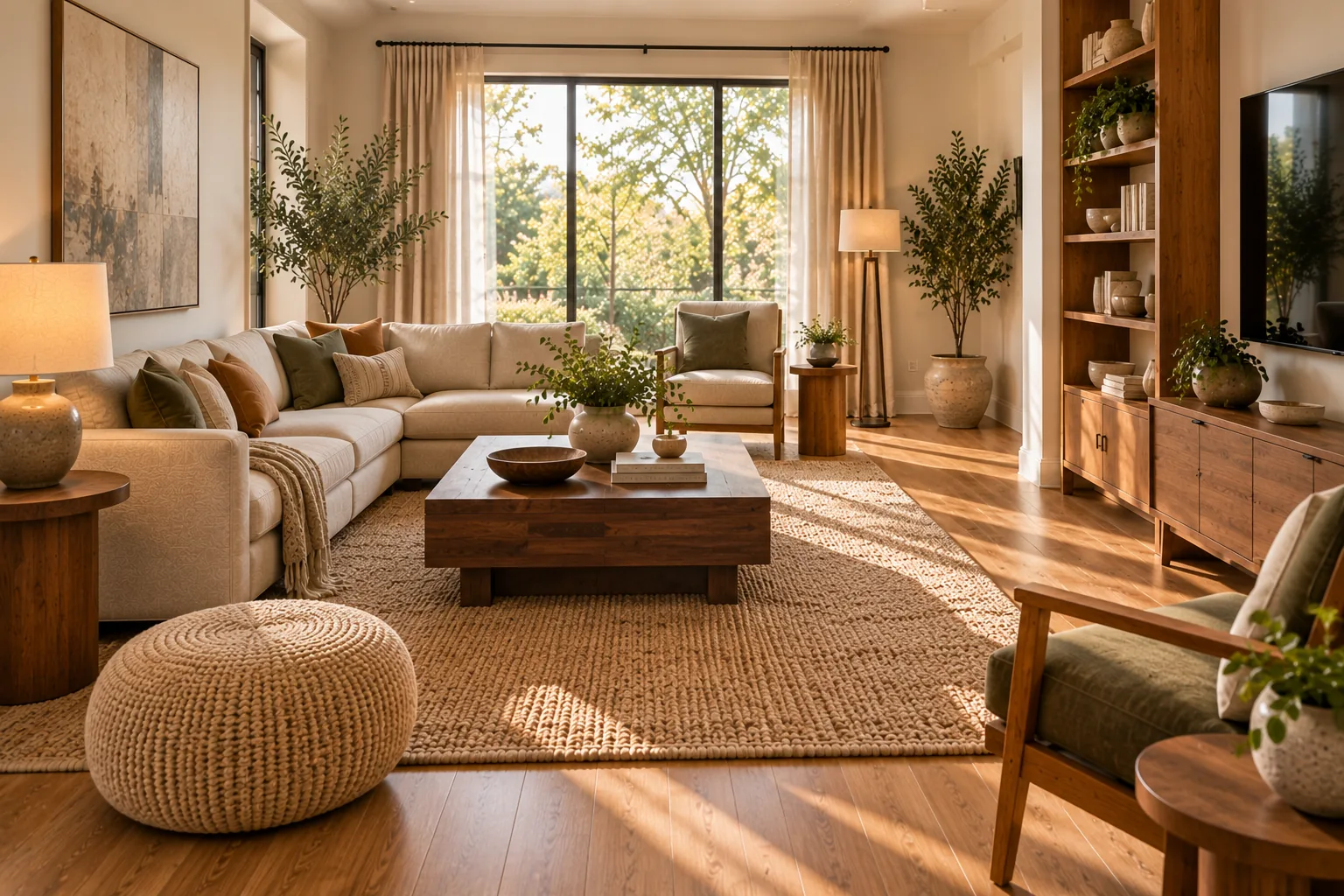
Textiles are the highest-impact, lowest-risk category available in a rental. A rug over existing flooring, a throw over a landlord's sofa, curtains hung on a tension or spring-loaded rod that requires no drilling — all of it is fully reversible and changes how a room feels more than almost any other single category of purchase. If budget is genuinely tight, prioritize one good rug over several small decorative items; it does more visual work per dollar than nearly anything else available to a renter.
Lighting Without Rewiring
Landlord-installed overhead fixtures are rarely flattering and almost never adjustable. Plug-in floor and table lamps, plug-in wall sconces with a cord cover, and smart bulbs that dim through an app all add the kind of layered light covered in the room-by-room guide to layering lighting, without any electrical work or landlord involvement.
Mirrors and Art Without Damaging Walls
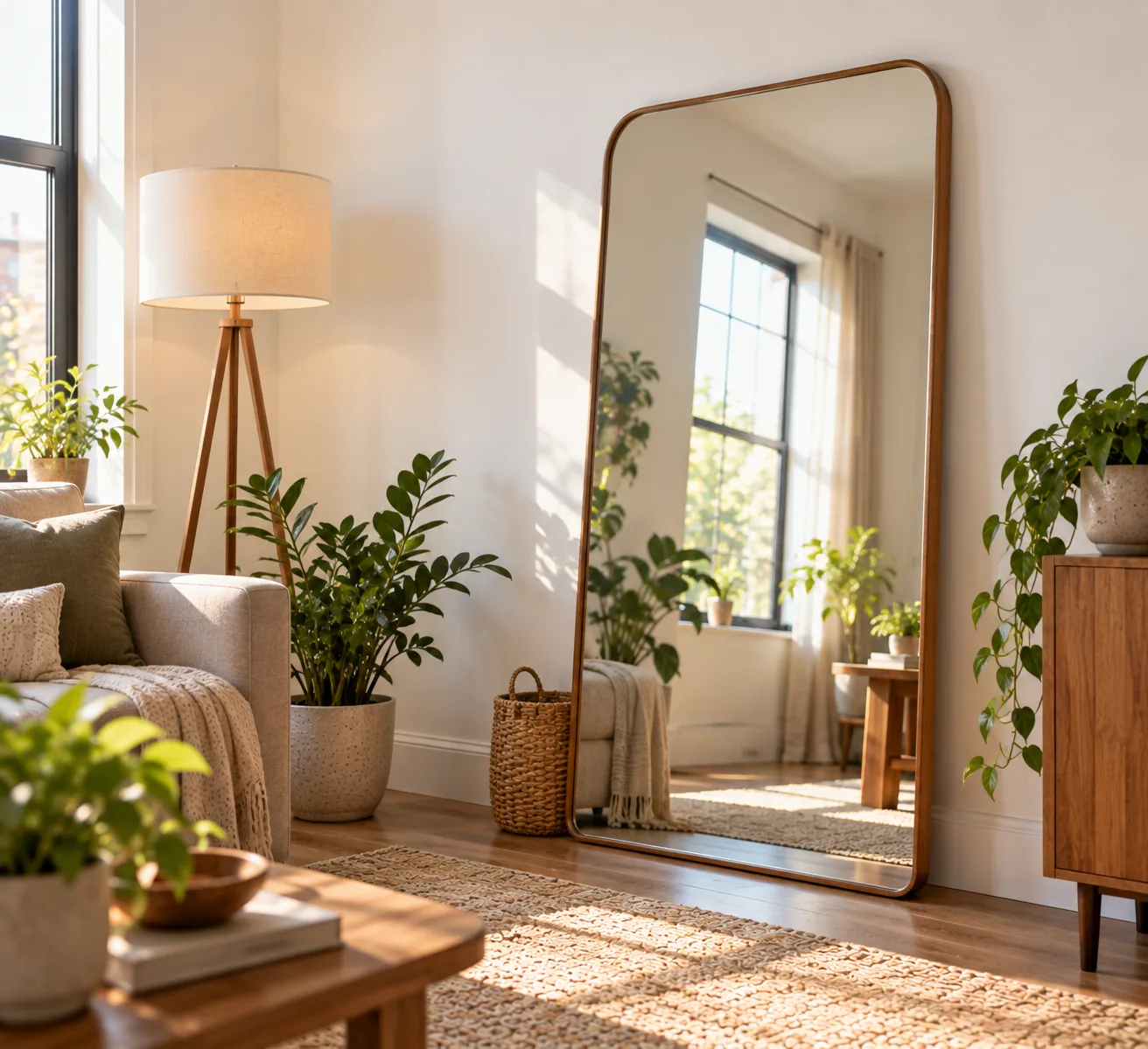
A large mirror leaned against a wall, rather than hung, avoids any wall damage while still doing the job of reflecting light and adding depth to a room. For actual wall art, weight-rated adhesive strips hold picture frames securely and remove cleanly, and a gallery wall built entirely with removable strips can be taken down and reassembled elsewhere without a single nail hole.
Freestanding Furniture Does the Work Built-Ins Would
A rolling kitchen cart, a freestanding shelving unit, a bookcase used as a room divider — all of these replicate what built-in storage or architectural features would do in a home you own, without altering the space itself. This furniture moves with you, which makes it a genuine long-term investment rather than a temporary compromise.
Plants: The Cheapest Way to Make a Space Feel Alive
A single plant does more to make a rented, often landlord-neutral space feel lived-in than most decorative objects at a similar price point. Plants require no installation, no risk to a security deposit, and move easily whenever you do. For renters without much natural light, low-light-tolerant varieties or well-made faux plants achieve a similar visual effect without the maintenance risk.
What Not to Spend Money On First
Skip anything semi-permanent that a landlord would need to approve — wallpaper, permanent shelving, anything requiring drilling into tile. Skip large furniture purchases before you've lived in the space long enough to know how you actually use each room; a fast, cheap decision made in the first week is harder to reverse than a textile choice. Prioritize the changes that are both reversible and immediately noticeable — lighting and textiles — before spending on anything larger or more specific to one exact layout.
Getting Your Deposit Back: What's Actually Safe
Most standard leases allow small nail holes from picture hanging, though it's worth checking your specific agreement rather than assuming. What consistently causes deposit deductions: adhesive residue left behind from poor-quality strips, paint applied without approval, and damage from over-anchoring heavy items into drywall without proper hardware. Weight-rated removable strips rated for the actual item's weight, tested on an inconspicuous spot first, and removed slowly and at the correct angle, avoid nearly all of this risk. When in doubt about a specific change, asking the landlord directly is faster and cheaper than guessing wrong.
A Room-by-Room Priority List
In the living room, prioritize the rug and one good lamp first, since this is the room guests see most and where the return on a small investment is highest. In the bedroom, prioritize bedding and a nightstand lamp over anything decorative, since comfort matters more there than visual impact. In the kitchen, focus spending on organization tools covered in organizing a small kitchen with almost no storage rather than decor, since function has a bigger effect on daily satisfaction than styling does in a room you're only in briefly. In the bathroom, a few textile swaps — a bath mat, a shower curtain, fresh towels — go further than almost anything else for the cost.
Common Rental Decorating Mistakes
Mistake: Assuming nothing is worth doing because it's temporary. This mindset costs nothing to avoid and leaves the most visual and emotional value on the table. Nearly everything reversible is still worth doing for however long you're living there.
Mistake: Buying furniture sized for a future, larger home. Furniture bought for a home you don't have yet often doesn't fit the rental you're actually in, creating exactly the cramped, ill-fitting feeling good decorating is supposed to solve.
Mistake: Skipping lighting because it feels like a landlord's problem. The existing fixtures are the landlord's; the lamps, bulbs and sconces you bring are entirely yours to control, and lighting is one of the cheapest, highest-impact changes available.
Real Examples
The Studio With White Walls and No Permission to Paint
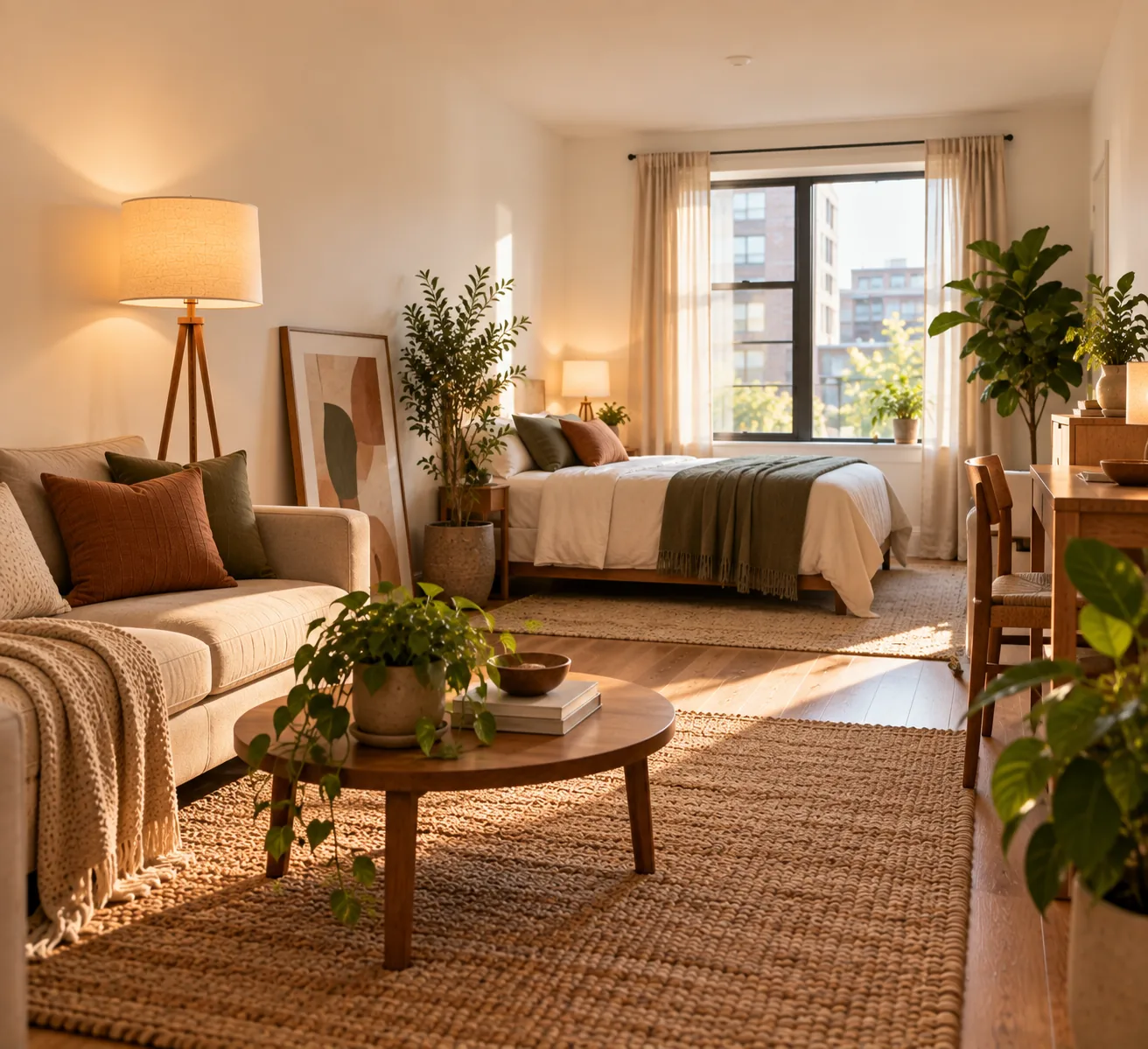
Without paint as an option, color and warmth have to come from textiles, art, and a consistent palette carried through rugs, curtains and pillows. A large piece of leaned art or a fabric wall hanging can substitute for a painted accent wall's visual impact without touching the wall itself.
The Shared Apartment
When common areas are shared but a bedroom is fully yours, concentrate personal, harder-to-reverse choices in the private space and keep shared areas to easily removable, neutral additions — a throw, a rug, a plant — that don't require negotiating with a roommate over anything permanent.
The Short-Term Rental or Sublet
For a stay measured in months rather than years, prioritize only the highest-impact, most portable changes: one good rug, layered lighting via lamps, and a few personal objects on visible surfaces. Anything larger isn't worth the cost or the effort of moving it again soon.
A "What to Bring When You Move" Mindset
Treat rental purchases as an investment in your next home too, not just the current one. A well-chosen rug, a good floor lamp, and freestanding furniture all transfer to wherever you live next, which changes the math on what's worth spending more for. Items chosen only to suit one specific rental's quirks are the ones least likely to earn back their cost over time.
A Simple Rental Decorating Checklist
- Have you prioritized textiles and lighting before larger purchases?
- Does everything you've added leave zero permanent trace on walls or fixtures?
- Would this piece still be useful in your next home, not just this one?
- Have you added at least one plant or living element?
- Are you using leaning, freestanding, or adhesive-mounted solutions instead of drilling?
A Home Doesn't Require Ownership
Almost everything that makes a space feel like yours — light, texture, personal objects, a sense of care — is available to a renter exactly as fully as it is to an owner. The difference is method, not budget: reversible instead of permanent, freestanding instead of built-in, leaned instead of drilled. The same warmth covered in making a home feel warmer and more inviting and the styling habits in simple decor ideas for a more finished room both apply just as well here — they were never dependent on ownership to begin with.
What's the single best thing to buy first for a rental?
A good area rug. It has more visual impact per dollar than almost any other purchase, works in any room you move to next, and requires no permanent installation.
How do I add wall art without damaging rental walls?
Use weight-rated adhesive picture-hanging strips, which hold securely and remove cleanly, or lean larger pieces against the wall instead of mounting them.
Can I improve rental lighting without an electrician?
Yes. Plug-in floor and table lamps, plug-in wall sconces, and smart bulbs controlled through an app all add layered, adjustable light without any wiring work.
Is it worth spending money on furniture I might not keep long-term?
Prioritize furniture that would work in your next home too, not just this one. Freestanding, versatile pieces are a better investment than anything chosen to fit one rental's specific quirks.