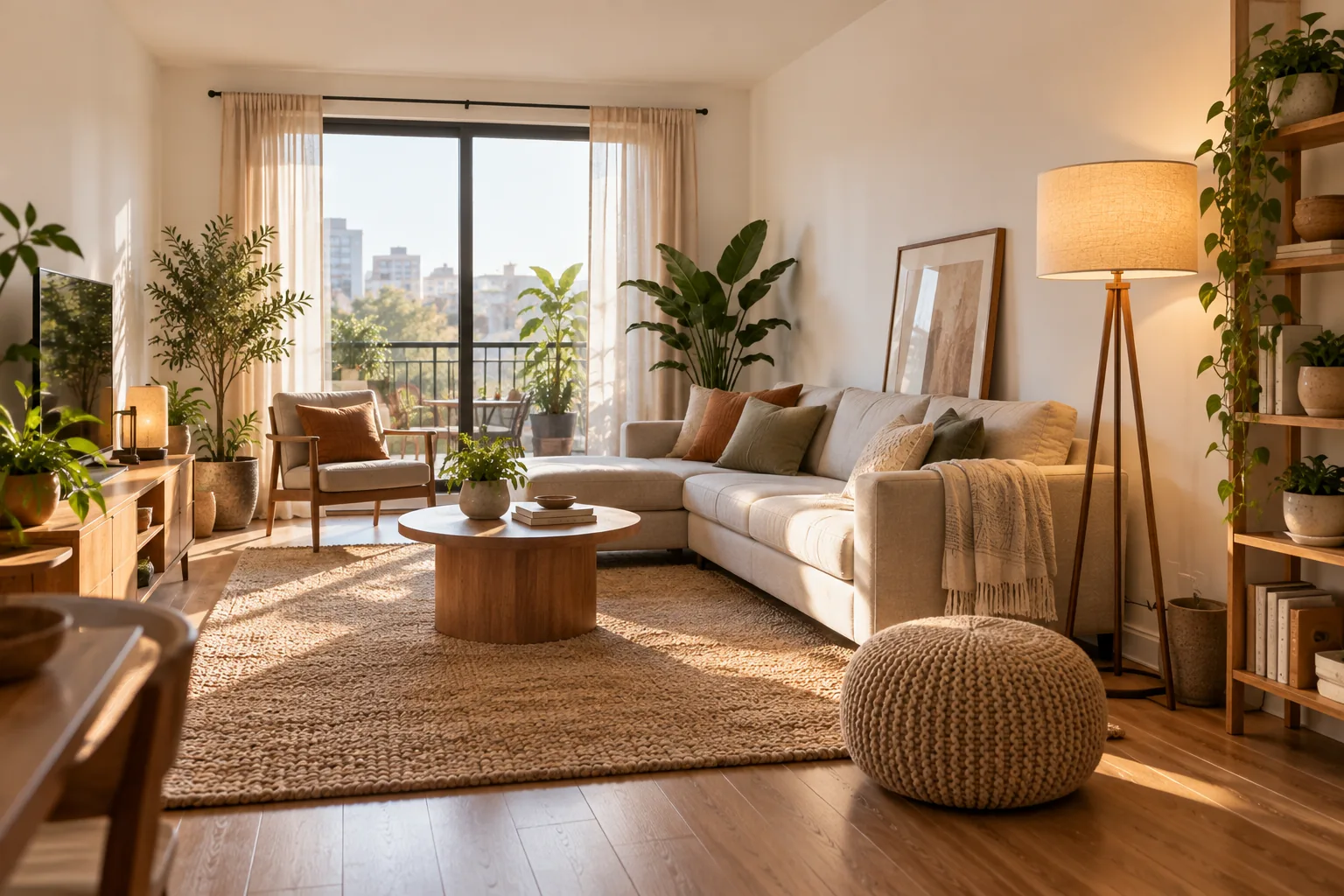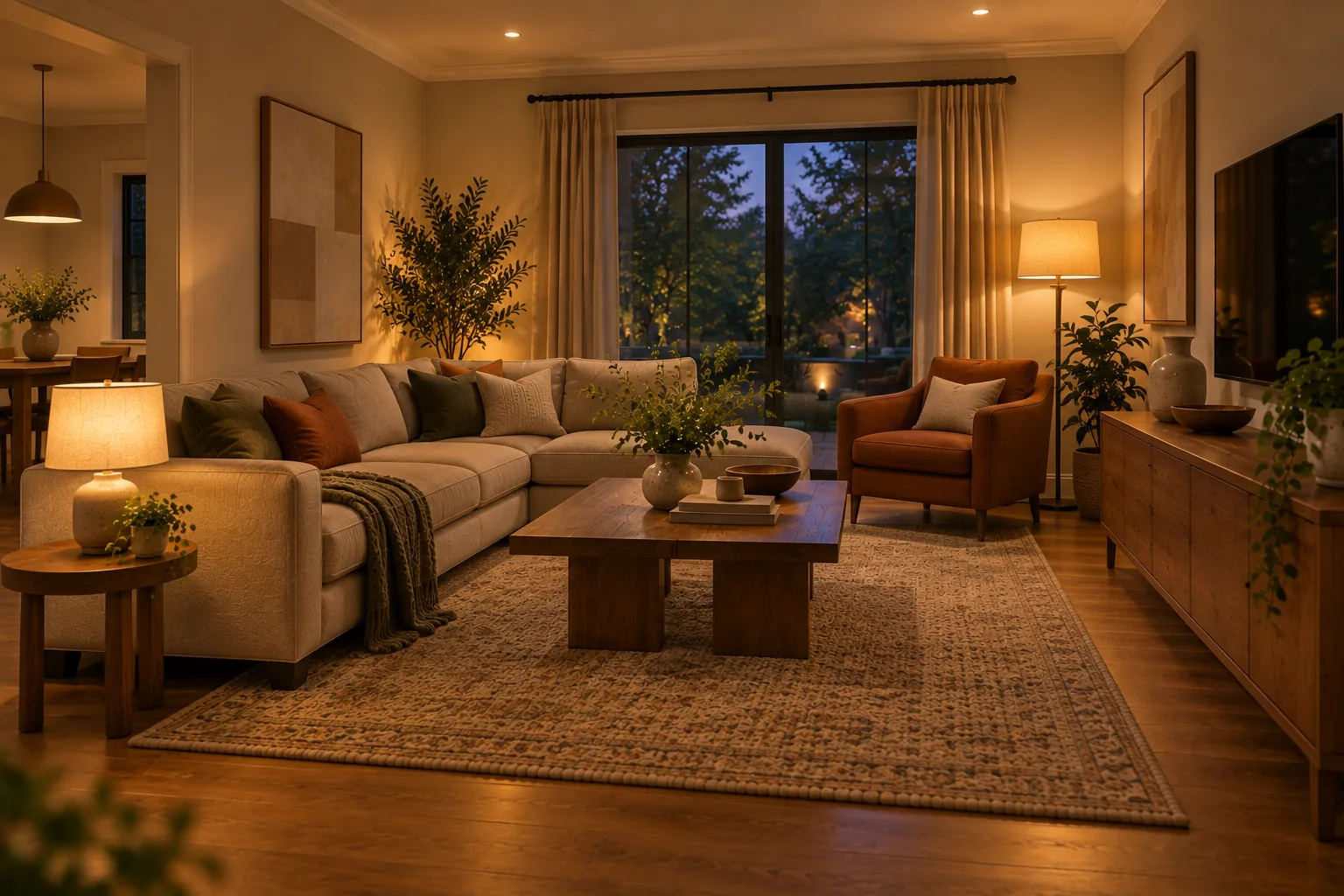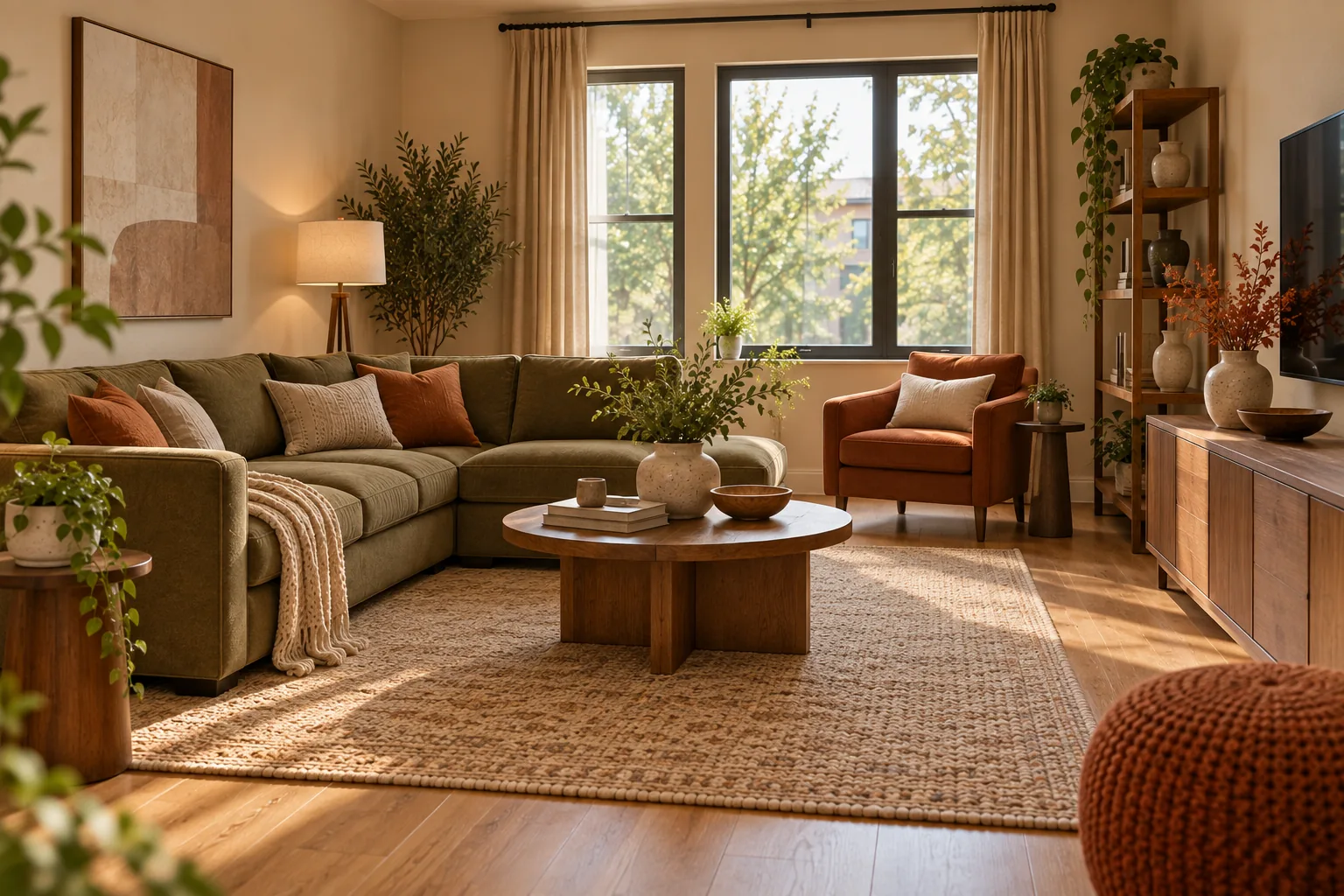
25 Ways to Make Your Home Feel Warmer, Calmer and More Inviting
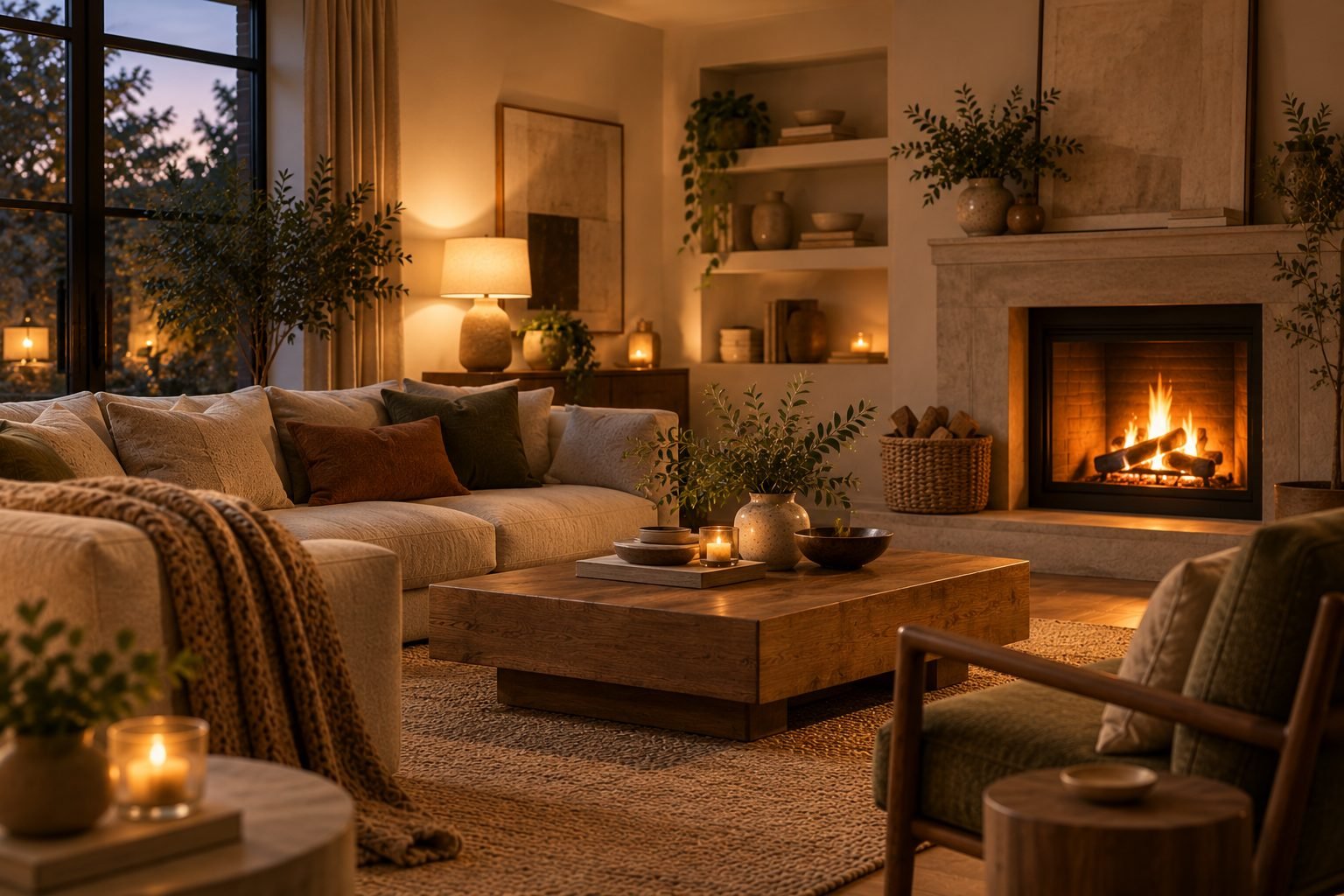
Sensory, lived-in habits — light, texture and ritual — that make a home feel genuinely warm, not just decorated to look that way.
A warm home isn't about a color palette. It's about how it feels to walk through the door.
Two houses can be decorated almost identically and still feel completely different — one calm and welcoming, the other cold and showroom-perfect. The difference usually comes down to a set of small, sensory habits that have as much to do with light, texture and ritual as they do with furniture.
None of the ideas below require a renovation. Here are 25 ways to make your home feel warmer, calmer and genuinely more inviting, to you and to everyone who walks through the door.
1. Layer Warm, Dimmable Lighting
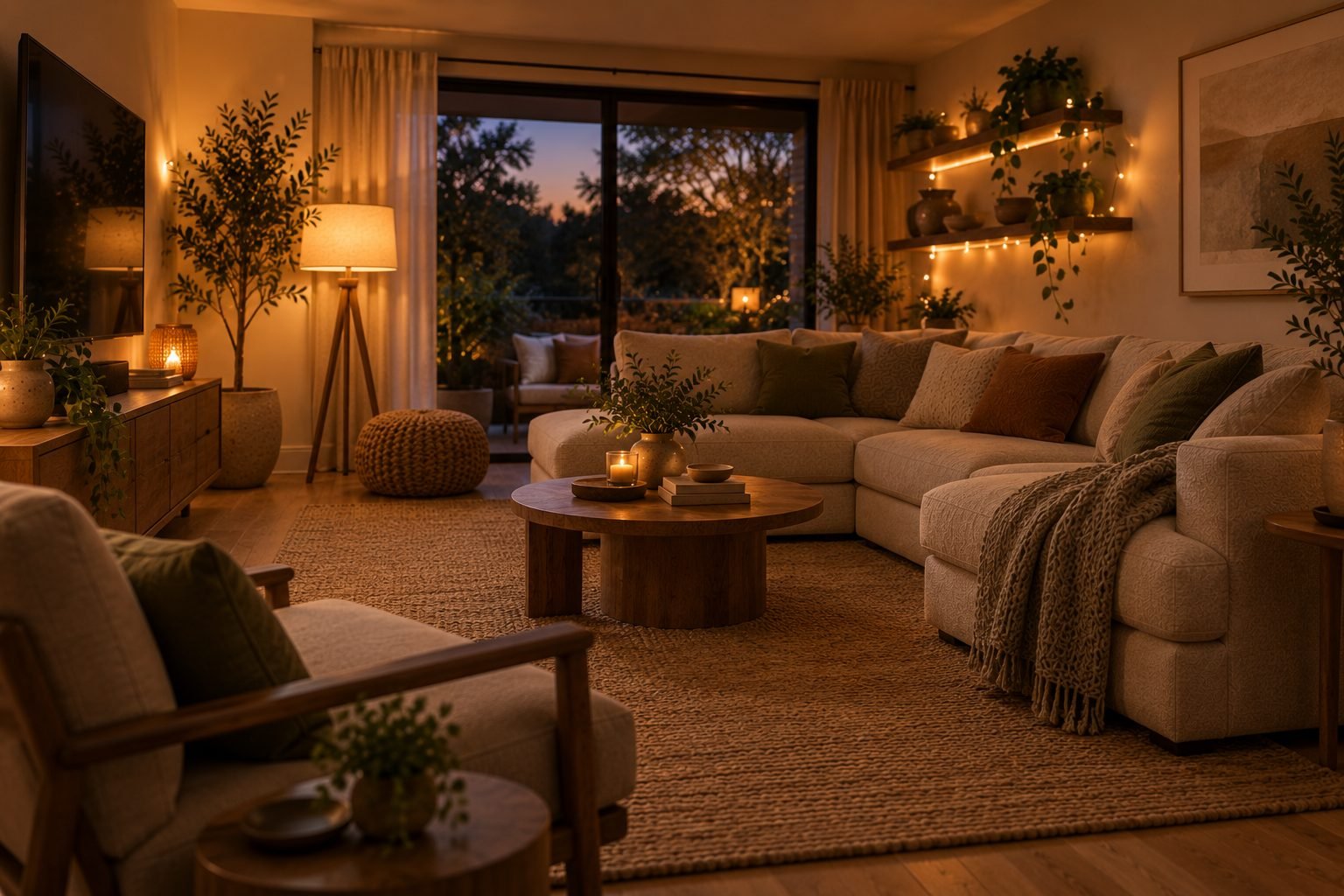
A single bright overhead light makes a room feel more like an office than a home. Layering in lamps, dimmers and warmer bulb temperatures gives you control over the mood of a space throughout the day, not just whether it's on or off.
2. Choose Warm Undertones Over Cool Ones
A cool white or grey-toned wall can read as clean, but it rarely reads as warm. Shifting even slightly toward warm white, soft putty or warm greige changes how a room feels the moment you walk in, without changing anything structural.
3. Add Natural Wood Wherever You Can
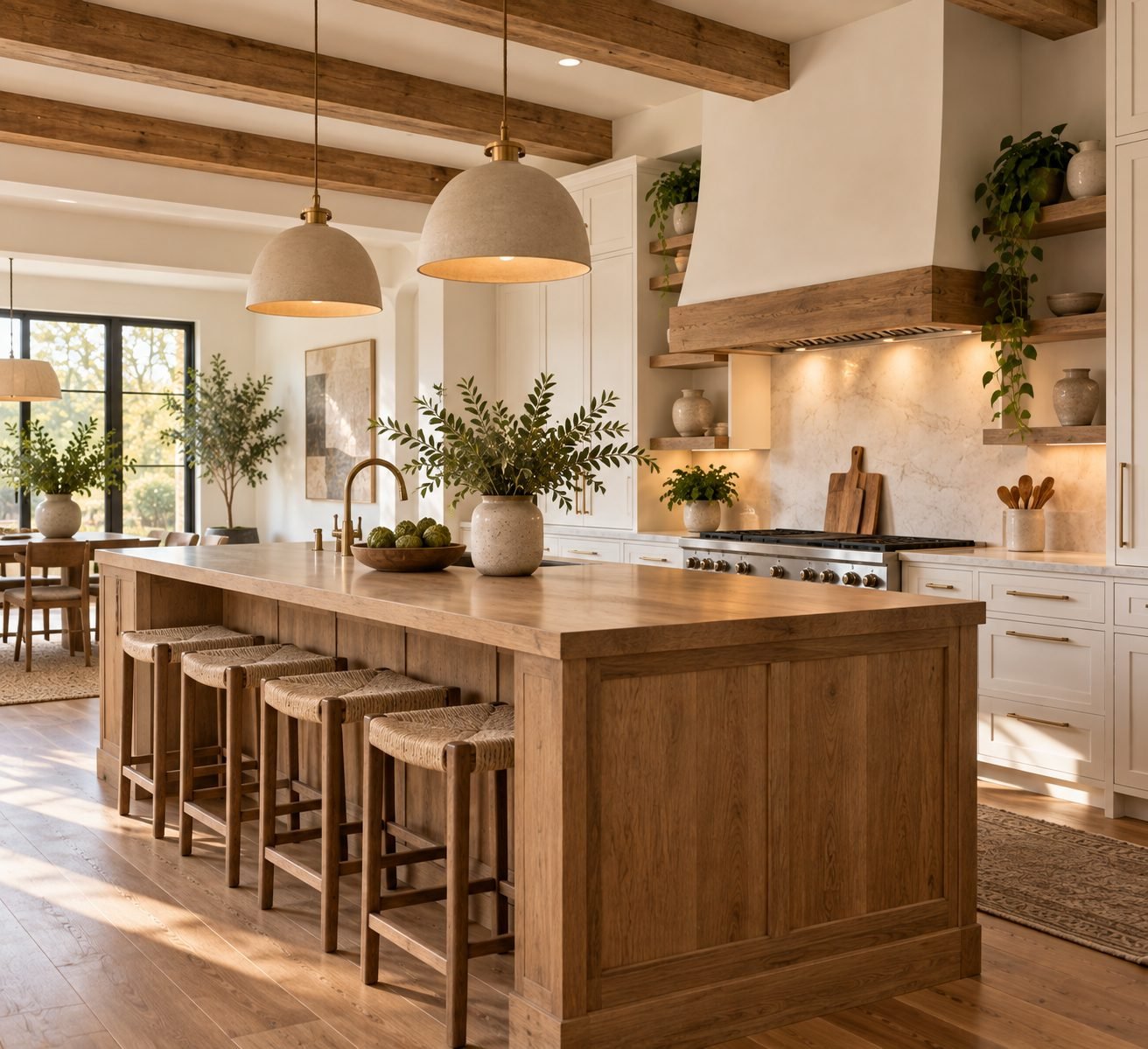
Wood grain does something no painted surface can — it introduces natural variation and warmth just by existing in a room. A wood island, a beam, an open shelf, even a single wood bowl, all pull a space away from feeling sterile.
4. Bring in Soft, Touchable Textiles
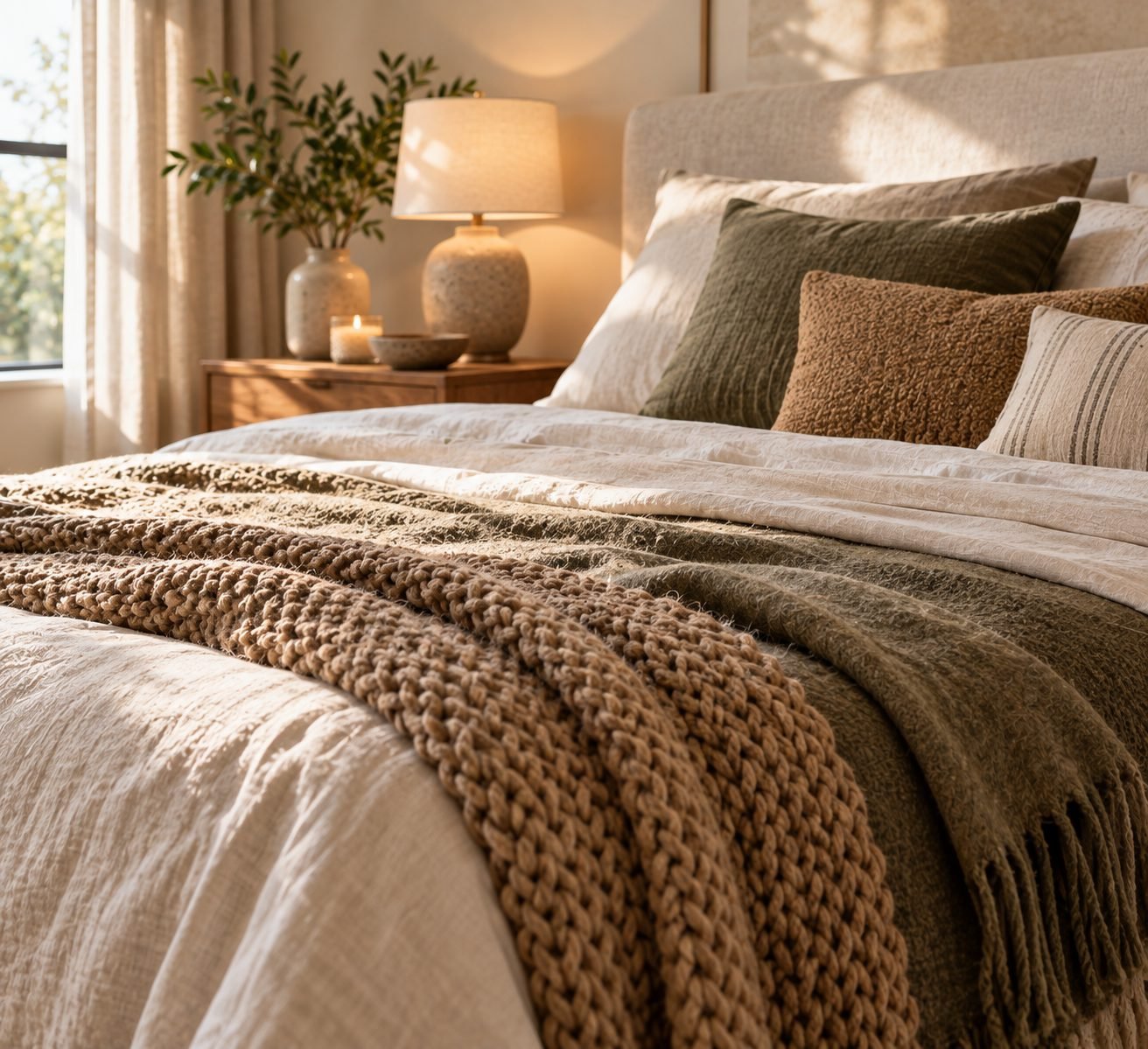
A room you want to touch is a room that feels inviting. Linen, wool, boucle and chunky knits all add warmth through texture alone, even within a completely neutral color palette.
5. Let a Few Personal Objects Show
A home styled to look like nobody lives there rarely feels warm, no matter how beautiful the furniture. A few visible personal touches — a favorite mug, a stack of well-loved books, a photo — signal that the space is actually lived in.
6. Use Scent as Part of the Welcome
Scent reaches people before they've consciously registered anything visual. A simmering pot, a lit candle, or fresh coffee brewing does more to make a home feel welcoming in the first ten seconds than almost any visual choice.
7. Keep a Fire Element, Even a Small One
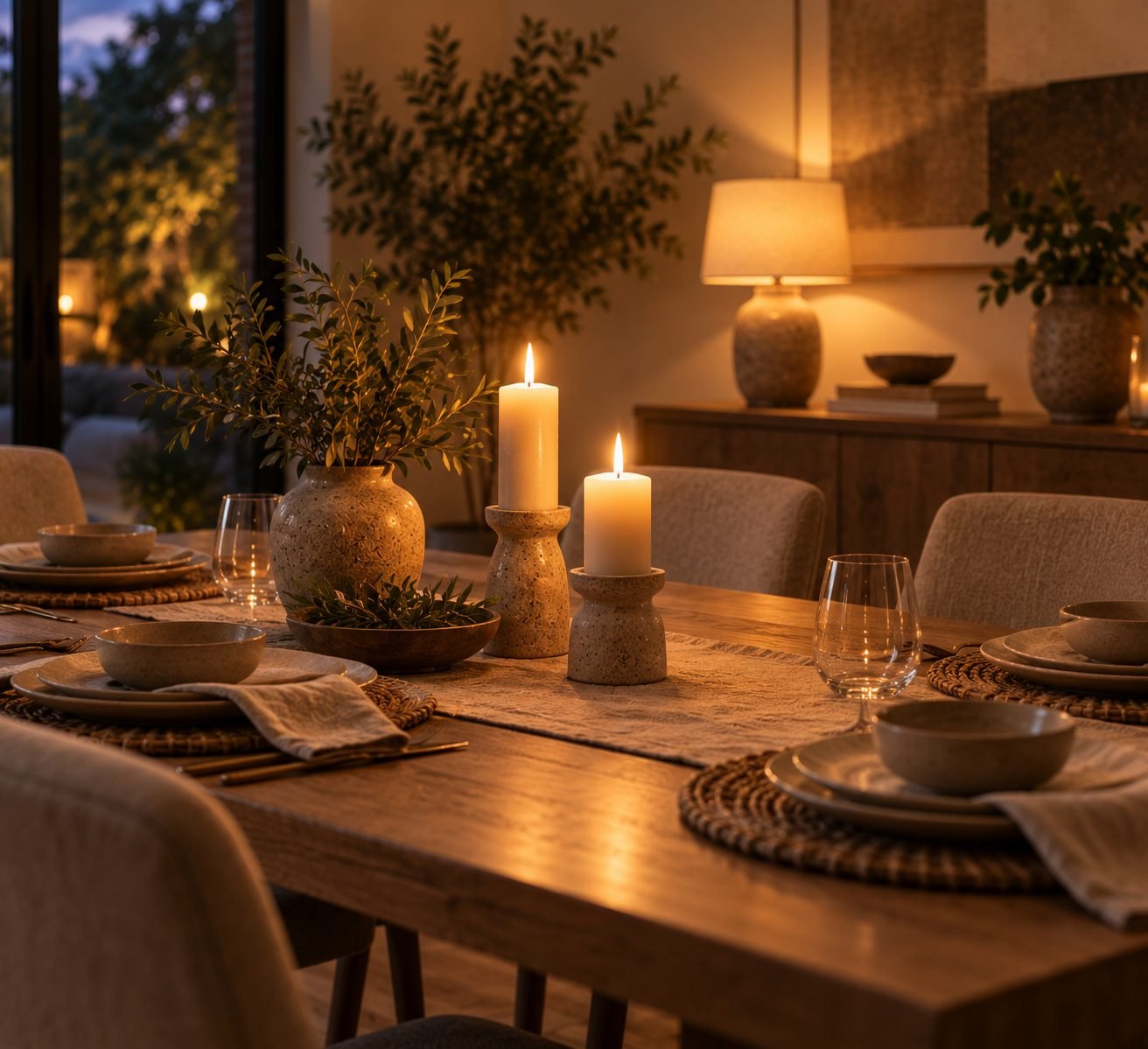
Not every home has a fireplace, but almost every home can manage a candle or a small lantern. Firelight, even in miniature, triggers a sense of comfort that fixed electric lighting simply doesn't replicate.
8. Soften Hard Corners With Curves and Layers
A room built entirely from straight lines and sharp corners can feel more clinical than calm. A round mirror, a curved chair, or a softly draped throw introduces just enough softness to change how the whole room feels.
9. Play Quiet Background Sound
Total silence can feel as unsettling as noise. Soft instrumental music, or even the ambient hum of a home functioning — water running, something simmering — adds a layer of life to a space that's otherwise just visual.
10. Add a Reading Nook or Cozy Corner
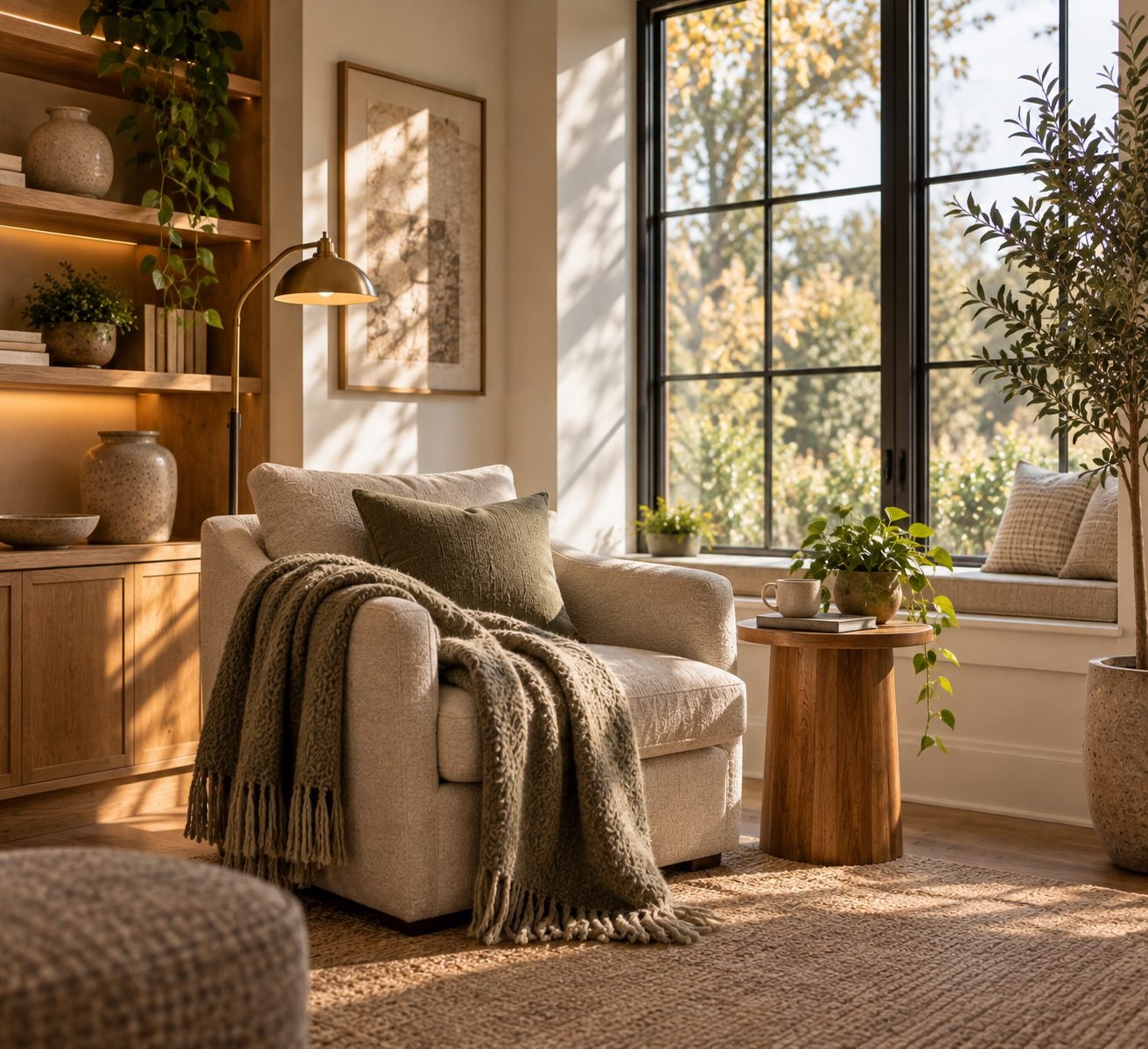
A dedicated small spot for sitting quietly — a window seat, an armchair with good light — gives a home a place that feels restorative rather than purely functional. It doesn't need to be large to do its job.
11. Keep Surfaces Warm-Toned, Not Stark White
Stark white countertops and walls can feel more clinical than calm, especially under cool artificial light. Warmer whites, creams and natural stone tones achieve a similarly clean look while reading as noticeably softer.
12. Layer Rugs and Throws for a Collected Feel
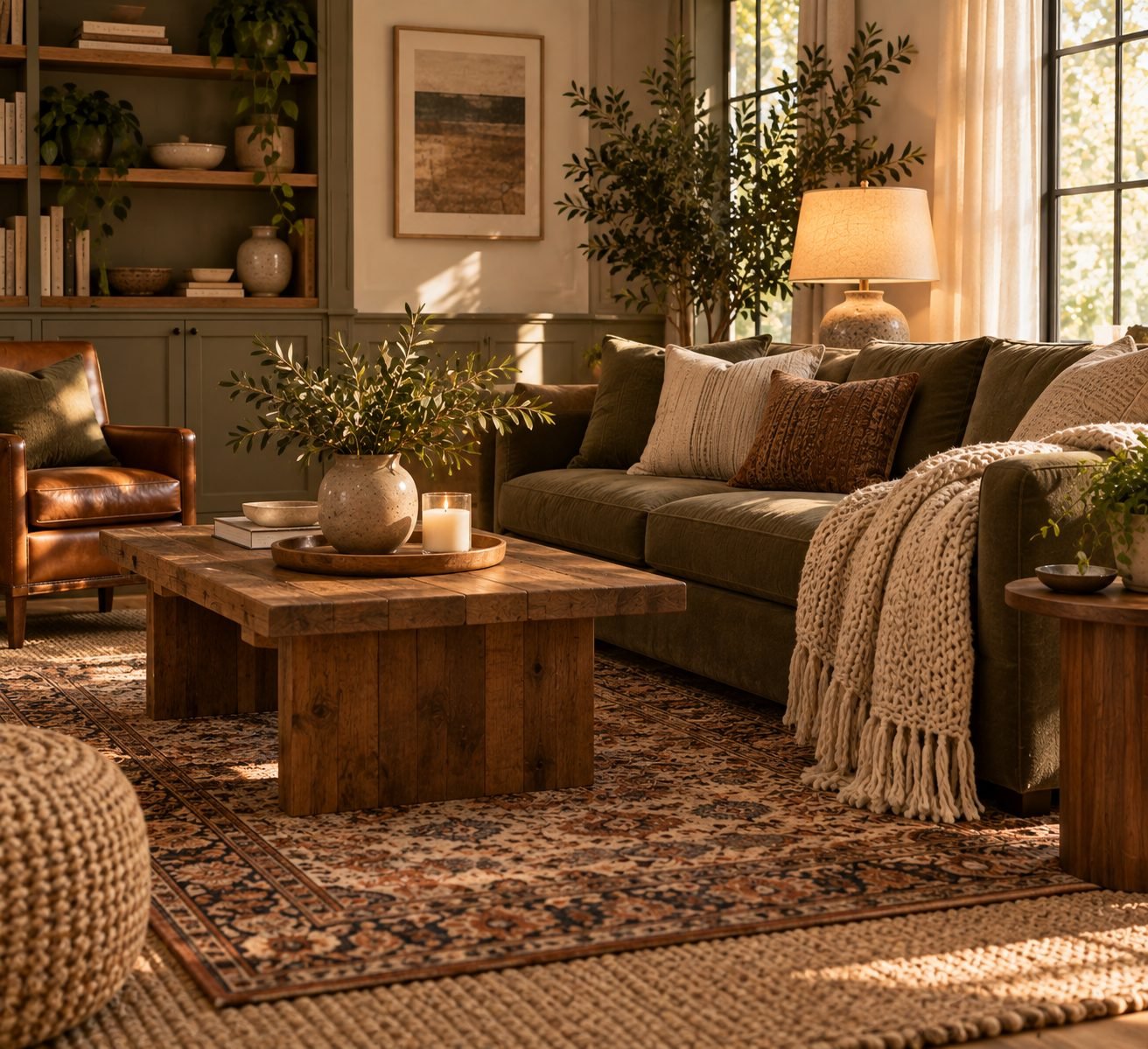
A room furnished all at once from a single source can feel complete but oddly impersonal. Layering in a vintage-style rug or an inherited throw adds a sense that the room was built up over time, which reads as more comfortable than a perfectly matched set.
13. Add Warmth Through Greenery
Living plants soften hard architectural lines and bring a sense of life into a room that furniture alone can't provide. Even one or two well-placed plants make a noticeable difference in how a space feels.
14. Dim the Lights in the Evening, Deliberately
The same room lit at full brightness at 9pm feels completely different from that room with the overheads off and only lamps on. Making the switch consciously, rather than leaving bright lights on out of habit, is one of the simplest ways to shift a home's evening mood.
15. Choose Furniture You Can Sink Into
A stiff, formal sofa might photograph well, but a home feels more inviting when the furniture actually invites you to sit down and stay a while. Deep seating and soft cushions do more for a room's warmth than almost any decorative choice.
16. Add a Welcoming Entryway Ritual
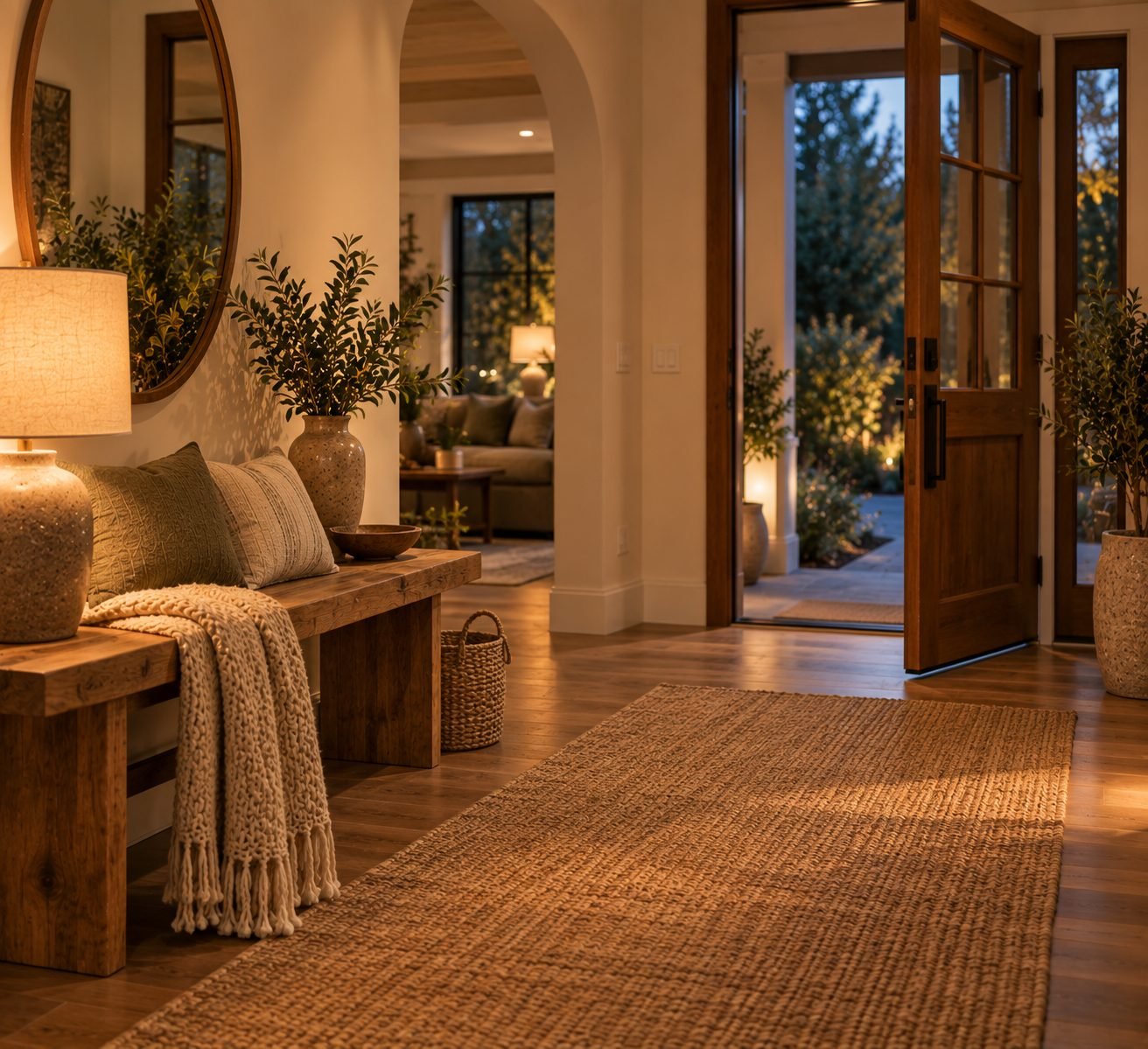
The first few feet inside the front door set the tone for the rest of the home. A place to sit, a soft light, somewhere to set down keys and bags — a small welcoming ritual at the entry makes coming home feel like an event, not just an arrival.
17. Keep One Room Screen-Free
A room without a television or a charging station tends to feel calmer simply because it isn't competing for attention. Even one screen-free space in the home gives everyone somewhere to fully unplug.
18. Use Warm Metals Over Cool Ones
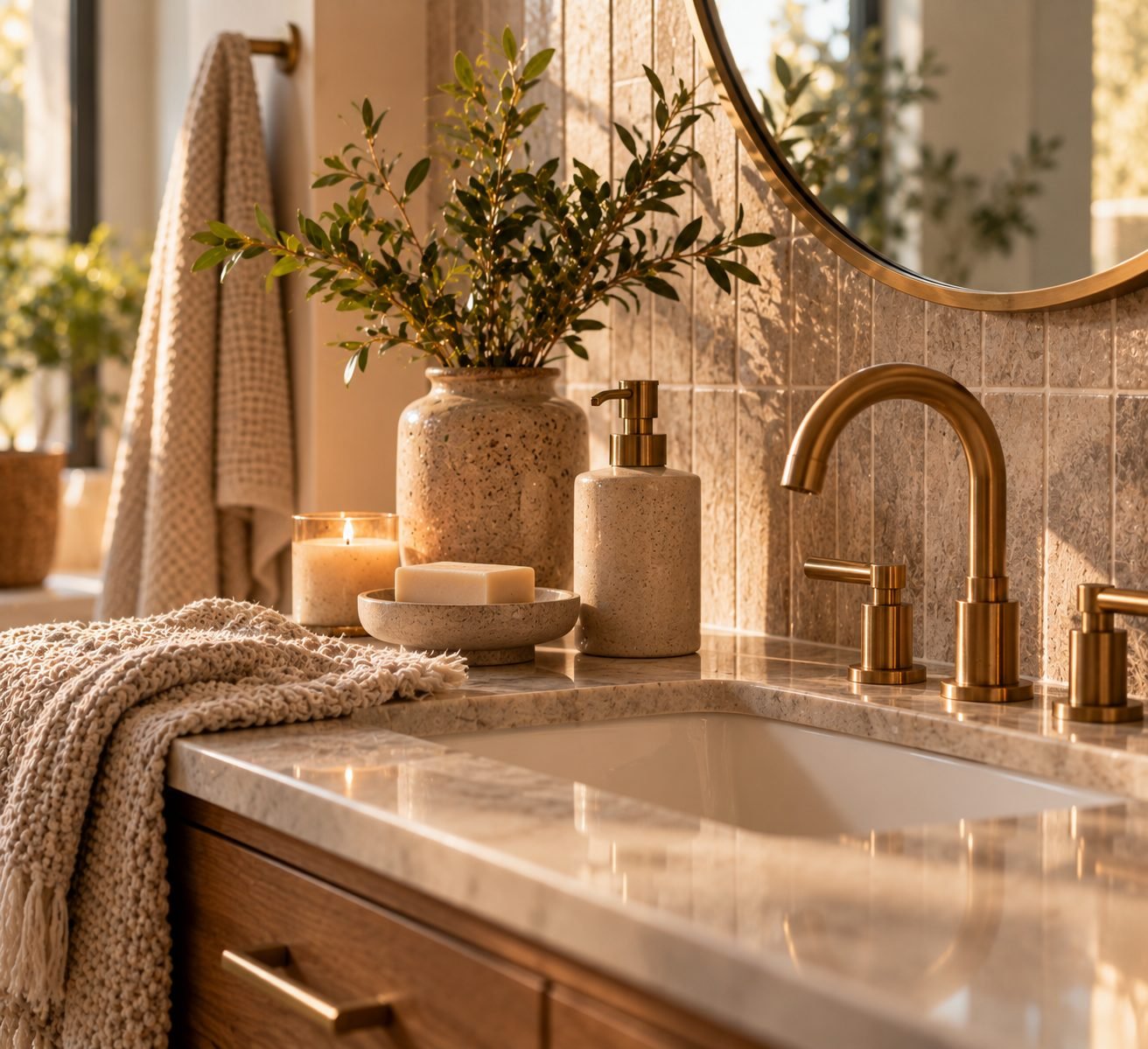
Chrome and stainless finishes read as clean and modern, but brass, bronze and warm brushed gold read as considerably warmer under the same light. Small hardware swaps — faucets, cabinet pulls — add up across a whole home.
19. Bring the Outdoors In With Natural Materials
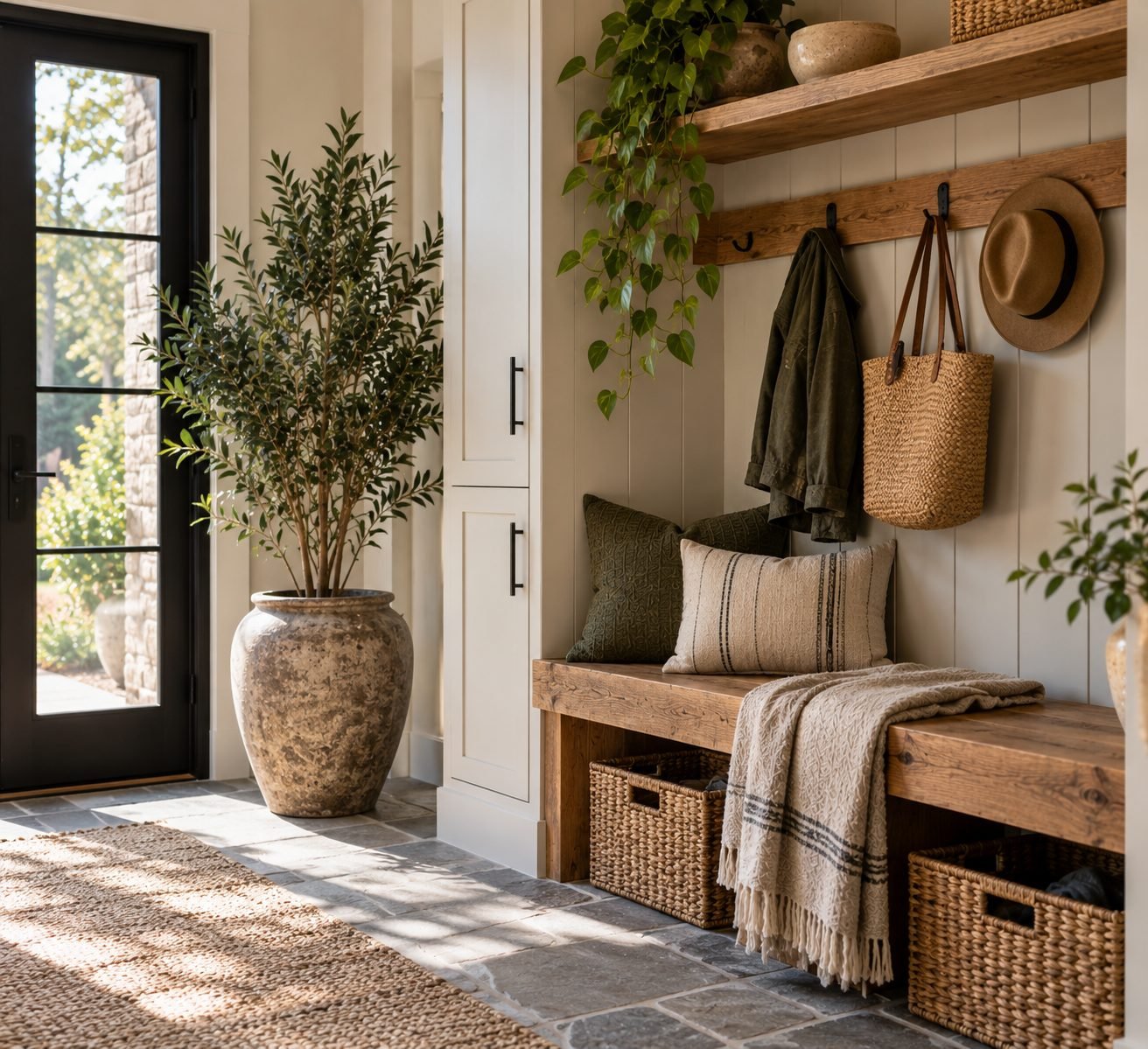
Stone, wood, wicker and rattan all carry a texture and imperfection that manufactured materials can't fully replicate. Introducing even one or two natural materials into a room grounds it in a way that feels calmer than an all-synthetic space.
20. Make the Bed Every Morning
This costs nothing and takes under a minute, but a made bed changes how an entire bedroom feels for the rest of the day. It's one of the few habits with an outsized effect relative to the effort involved.
21. Keep a Kettle or Teapot Visible and Ready
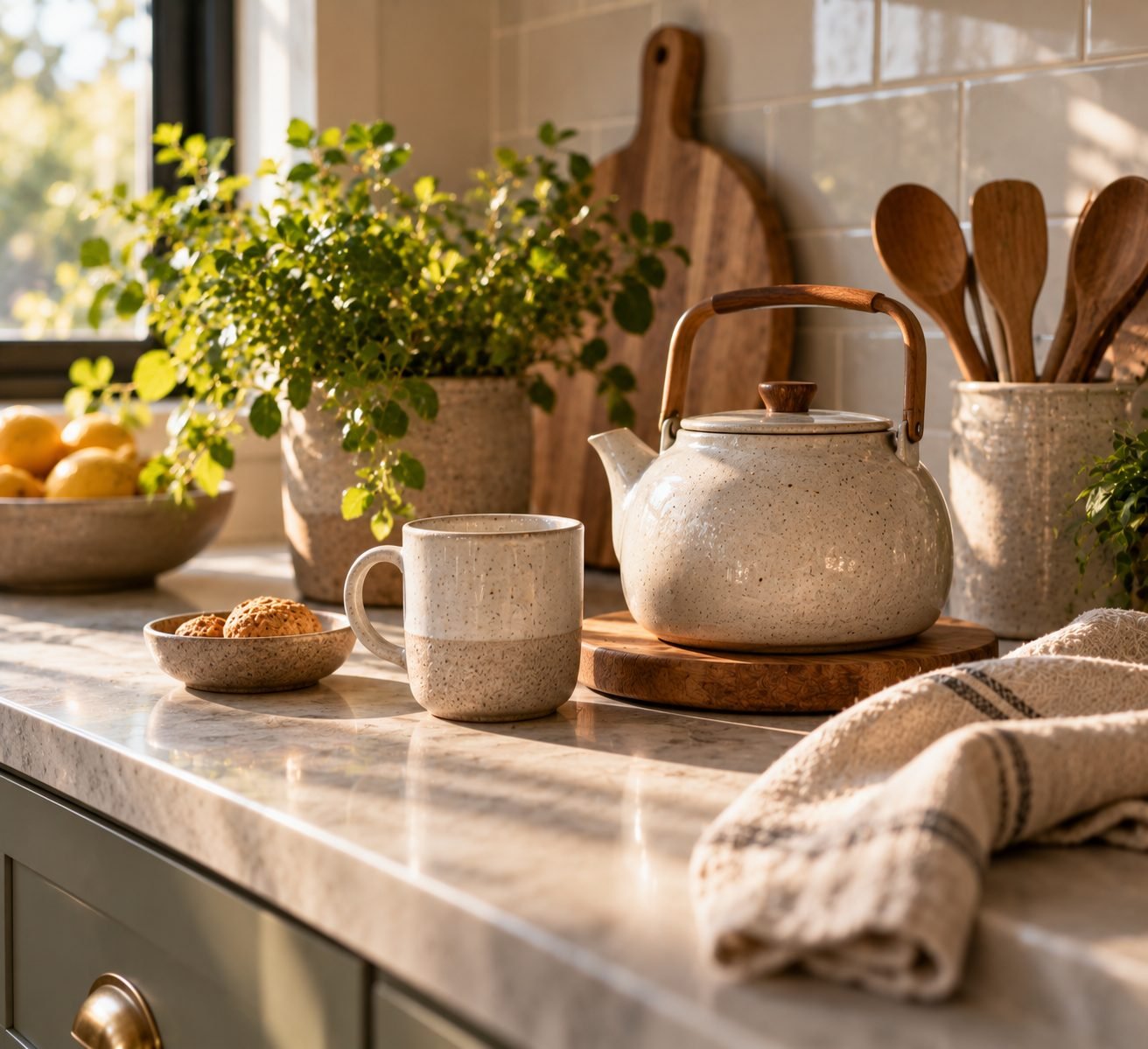
A kettle left out and ready removes the smallest bit of friction between wanting a warm drink and actually making one. It's a small visual cue that the home is set up for comfort, not just for looking finished.
22. Add Handwritten or Handmade Touches
A printed piece of art is fine, but something handwritten or handmade — a child's drawing, a hand-thrown ceramic piece, a note on the fridge — adds warmth that mass-produced decor can't replicate.
23. Let Natural Light Lead During the Day
Before turning on any artificial light during daylight hours, open curtains fully and see how far natural light actually reaches. A room lit primarily by daylight almost always feels calmer than one lit by fluorescent or cool LED light, even at the same brightness.
24. Create One Gathering Spot Everyone Gravitates To
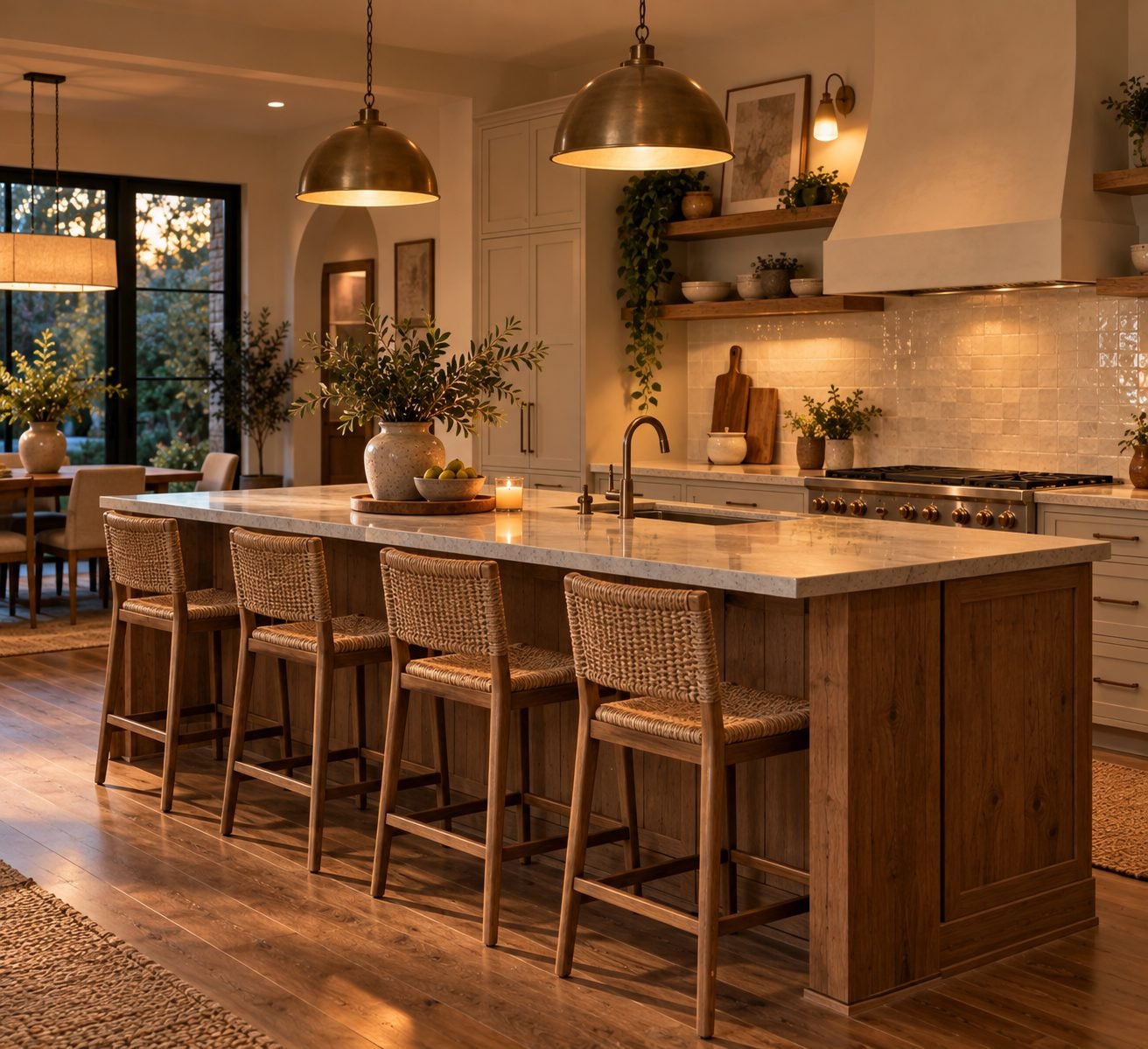
Most homes end up with one spot — a kitchen island, a particular sofa corner — where people naturally gather. Leaning into that spot, rather than fighting it, and making sure it's comfortable and well-lit, does more for a home's warmth than spreading effort evenly across every room.
25. Slow Down the Transition Home
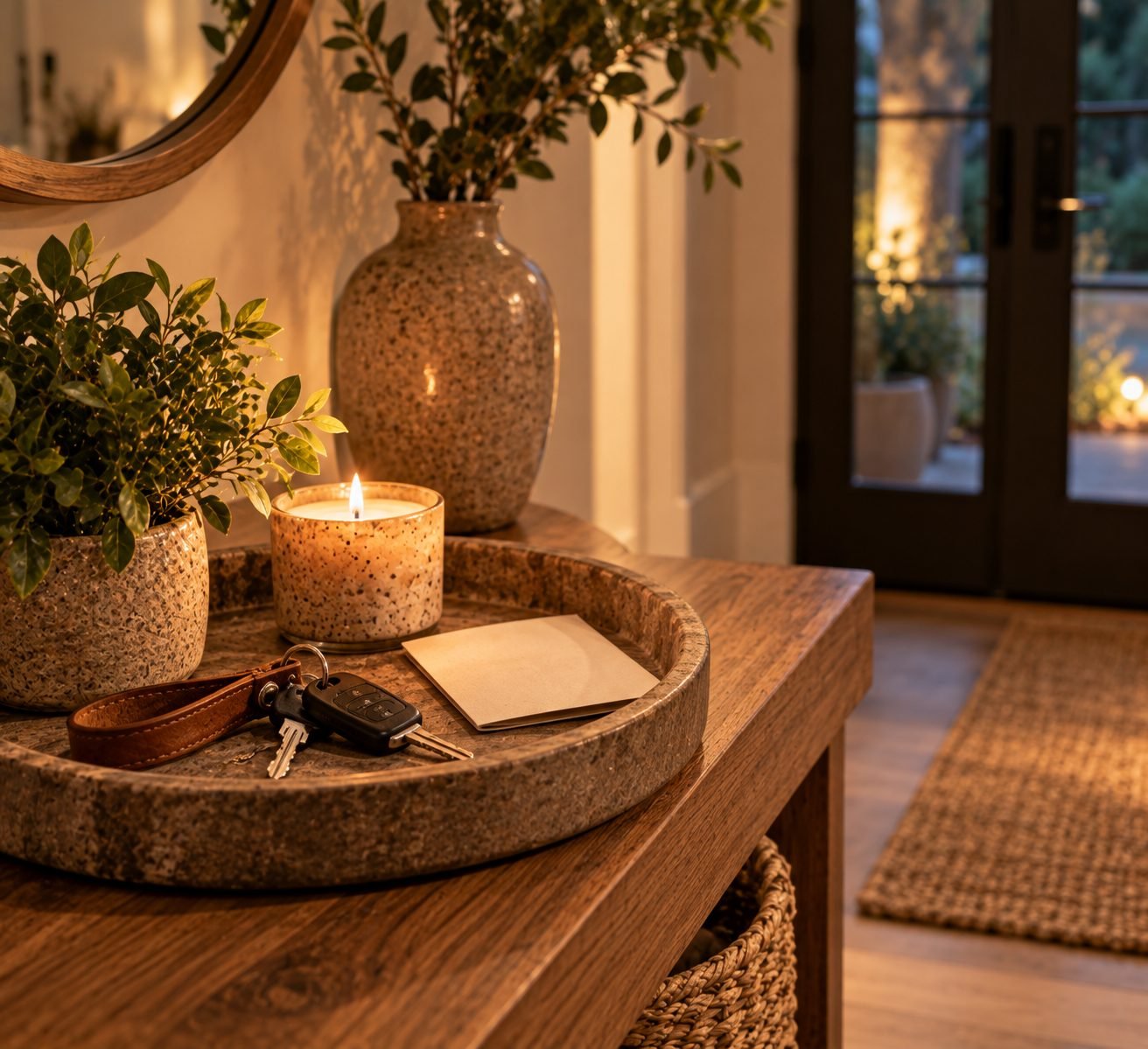
Walking straight from a stressful commute into a bright, cluttered space keeps that stress going. A brief pause at the door — setting keys down deliberately, taking off shoes, lighting a candle — acts as a small ritual that marks the shift from outside to home.
Warmth as a Practice, Not a Purchase
None of these 25 ideas require a renovation or a significant budget. Most of them come down to the same underlying idea: a home feels warm when it engages more than just the eye, and when small daily habits reinforce the atmosphere the decor is trying to create.
Start with lighting and one welcoming ritual at the door, then layer in the smaller habits over time. A home that's warm because of how it's lived in will always feel more inviting than one that's simply decorated to look that way.
What's the fastest way to make a home feel warmer?
Change your lighting habits in the evening — turn off overhead lights and rely on lamps and dimmers instead. It costs nothing and changes the feel of a room within seconds.
Can a home with a cool, modern palette still feel warm?
Yes. Warmth comes as much from texture, lighting and lived-in touches as it does from color. A cool-toned room with soft textiles, warm lighting and a few personal objects can feel just as inviting as a traditionally warm palette.
Does a home need a fireplace to feel cozy?
No. Candles, lanterns, and warm layered lighting provide much of the same emotional effect as a fireplace, just at a smaller scale.
How do I make my entryway feel more welcoming?
Add somewhere to sit or set things down, a soft light source, and a small ritual — a candle, a spot for keys — that marks the transition from outside to home. A welcoming entry sets the tone for the whole house.