How to Organize a Small Kitchen With Almost No Storage
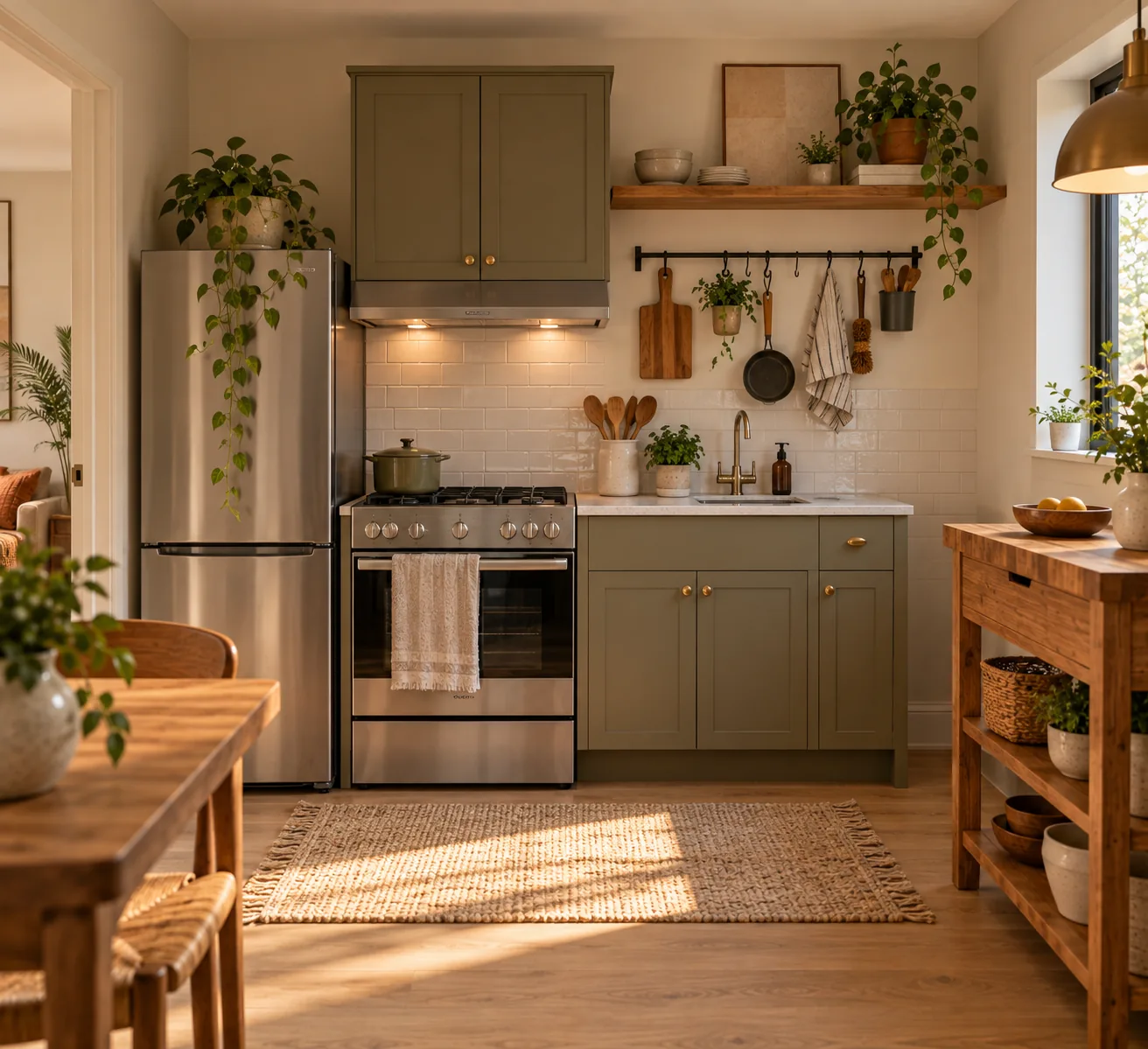
A genuine no-storage kitchen doesn't need better organizing — it needs new capacity. Here's how to create it, rental-friendly and budget-first.
A small kitchen and a kitchen with almost no storage are two different problems, even though they often get treated as the same one.
A small kitchen with a full run of cabinets just needs those cabinets organized well. A kitchen with one short wall of upper cabinets, no pantry, and barely any counter — common in studio apartments, older buildings, and a lot of rentals — doesn't have that luxury. There's nothing to reorganize because there's nowhere for most things to go in the first place. The solution isn't better organization. It's creating storage that doesn't currently exist.
Why This Needs a Different Approach
Most kitchen organizing advice assumes a baseline of cabinets, drawers and at least some pantry space, and focuses on using that space more efficiently. A genuinely storage-poor kitchen has already run out of that baseline space with the essentials still sitting on the counter. Efficiency improvements alone won't solve a capacity problem — the fix has to add storage, not just organize what's already there.
Start With an Honest Inventory
Before adding anything, sort everything currently in the kitchen into three groups: used weekly, used occasionally, and rarely or never used. In a storage-poor kitchen, only the first group has any claim to the limited cabinet and counter space available. The second group can move to overflow storage elsewhere in the home. The third group is usually the easiest source of reclaimed space in the entire kitchen, and the one most people skip checking.
Claim Vertical Space You're Not Using
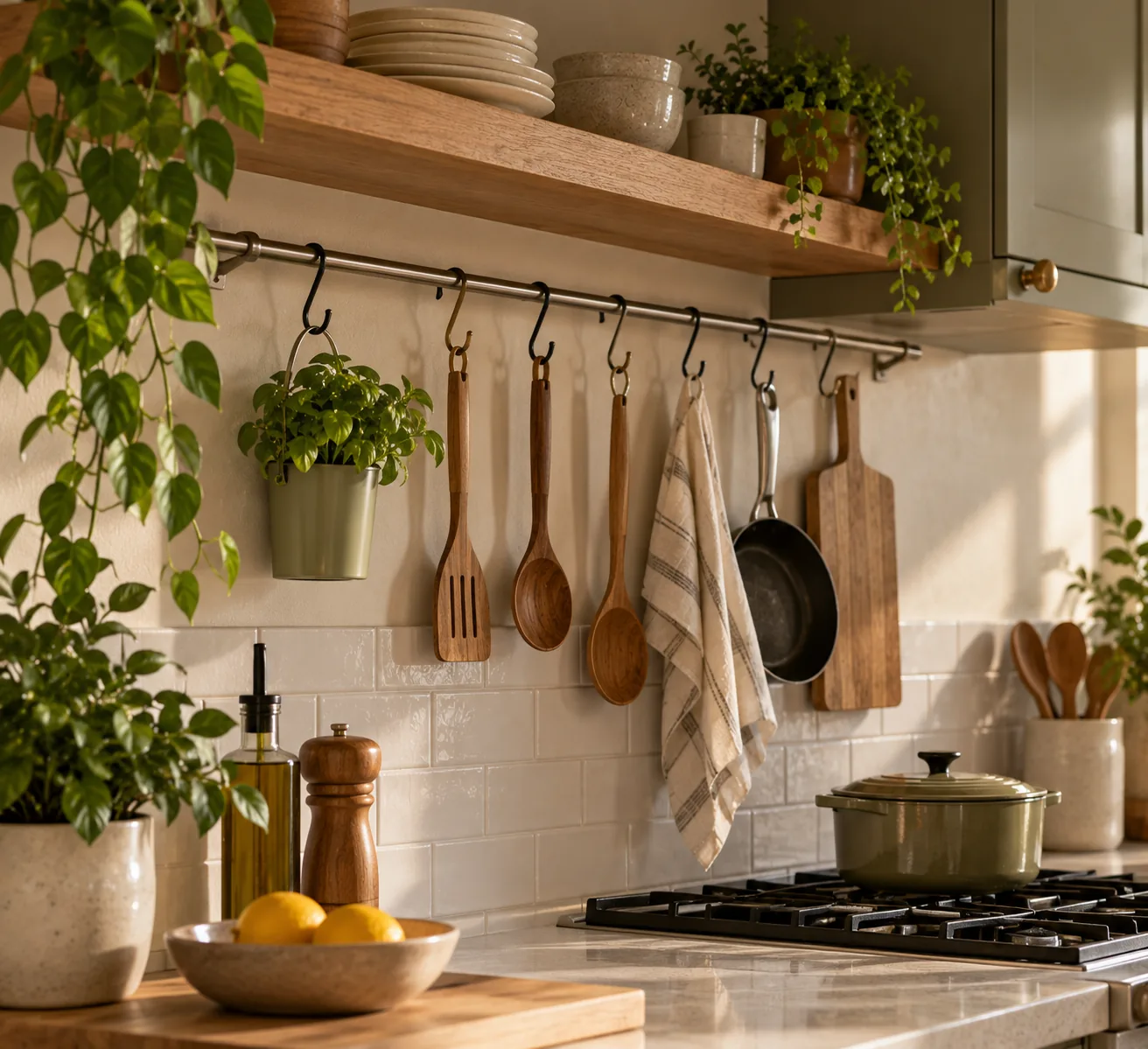
Wall space above the counter and below any upper cabinets is almost always empty in a small kitchen, and it's the single biggest source of new storage capacity available without buying furniture. A wall-mounted rail with hooks holds pots, utensils and pot lids that would otherwise compete for drawer space. Floating shelves, even a single one, hold dishware or pantry staples in matching containers.
Freestanding Storage That Doesn't Require Drilling
A slim rolling cart adds counter space and storage that can be tucked against a wall when not in use, and moves with you if you relocate. A narrow shelving unit in an underused corner, or beside a refrigerator, adds real cabinet-equivalent storage without touching a wall. Both solutions work in a rental exactly as well as they do in a home you own, since neither requires any permanent installation.
Use the Toe-Kick and Other Overlooked Gaps
The recessed toe-kick space beneath lower cabinets, the narrow gap beside a refrigerator, and the inside of cabinet doors are all storage that already exists but goes unused in most kitchens, storage-poor or not. A shallow toe-kick drawer holds baking sheets. A slim pull-out cart fills the refrigerator gap. Door-mounted organizers hold spices, lids, or cleaning supplies without touching a single inch of shelf space.
Store Some Things Outside the Kitchen Entirely
Not every kitchen item has to live in the kitchen. Small appliances used only occasionally, bulk paper goods, and backup pantry stock can move to a hallway closet, a shelf in another room, or under-bed storage, freeing the kitchen itself for what actually needs to be within reach during cooking. This is the same underlying idea behind home organization done well: not every category of item needs to be stored where it's used, especially when where it's used has run out of room.
Reduce What Needs Storing in the First Place
Every single-purpose gadget in a small kitchen is competing for space with tools you use far more often. A kitchen with almost no storage benefits disproportionately from choosing multi-purpose tools over specialized ones — one good chef's knife instead of a five-piece specialty knife set, a single sheet pan that works for both roasting and baking instead of separate pans for each. This isn't about owning less for its own sake. It's about recognizing that in a storage-poor kitchen, every item has to earn its spot more than it would in a kitchen with room to spare.
A Step-by-Step Plan for the First Weekend
Start by fully emptying every cabinet and drawer, which is the only way to see the actual available space rather than the space as it's currently, often inefficiently, used. Sort everything into the three categories from the inventory step, and physically remove anything moving to storage elsewhere in the home before putting anything back. Only after that reset should new storage — a rail, a shelf, a cart — be measured and added, since adding storage before the reset usually means storing things that shouldn't have made the cut in the first place. Doing the full reset in one sitting, rather than gradually, makes it much harder to quietly let everything creep back to where it started.
Real Examples
The Studio Apartment Kitchenette
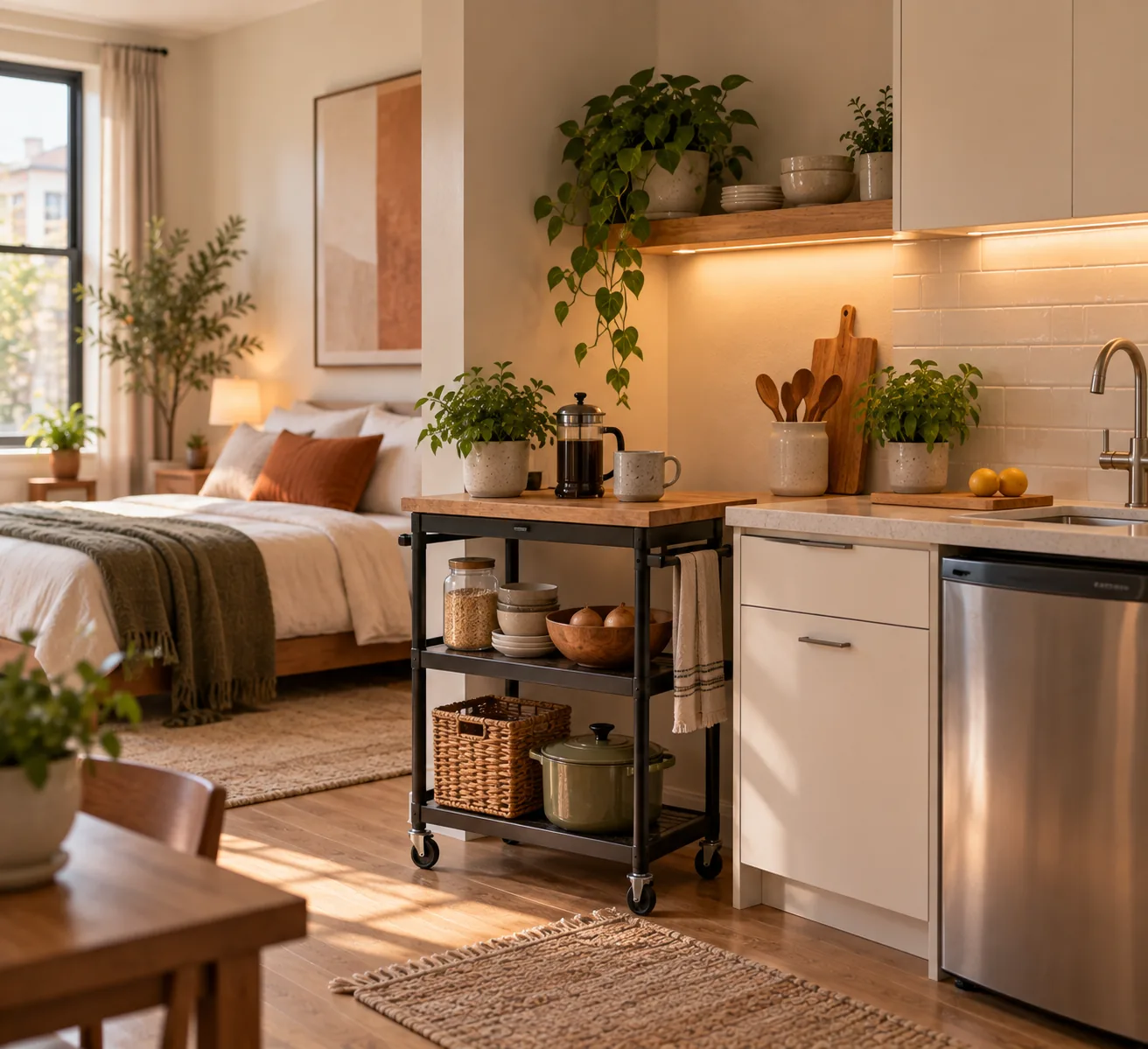
Often just a counter, a two-burner stove, and one small cabinet run. The realistic solution here leans almost entirely on freestanding pieces — a rolling cart for counter overflow, a wall rail for tools, and a decision to keep only daily-use cookware in the kitchen itself, with anything else stored in a nearby closet.
The Galley Rental With One Wall of Cabinets
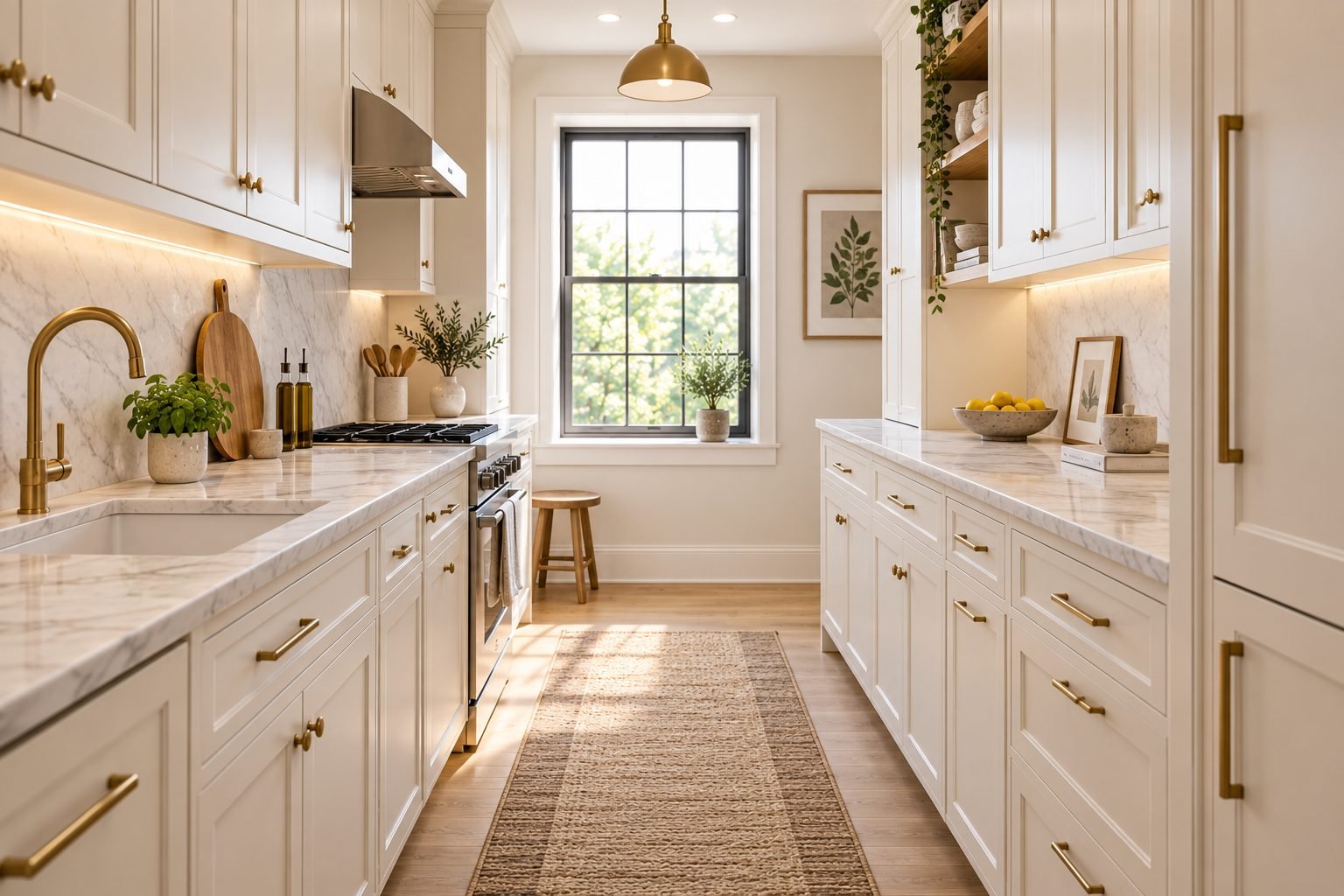
A narrow galley layout with cabinets on only one side needs its vertical space claimed aggressively, since floor space for freestanding furniture is limited by the narrow walkway. Floating shelves and a door-mounted organizer inside every cabinet door do more here than a cart would, since there's rarely room to roll one in and out.
The Kitchen With No Pantry at All
Without a dedicated pantry, dry goods need a new home entirely. A tall, narrow freestanding cabinet in an adjacent hallway or dining area, dedicated entirely to pantry overflow, solves this more reliably than trying to wedge pantry storage into an already-full kitchen.
Common Mistakes
Several of these overlap with mistakes that show up across small spaces generally, covered in more depth in the most common small-space design mistakes, but a few are specific enough to kitchens with genuinely limited storage to call out on their own.
Mistake: Buying storage before decluttering. Adding a cart or shelving unit to hold items that shouldn't be in the kitchen at all just relocates the clutter instead of solving the underlying space problem. Sort first, then measure what's actually left to store.
Mistake: Hanging absolutely everything. Wall storage is valuable, but a wall covered edge-to-edge in hanging pots and tools reads as visually chaotic rather than organized. Reserve wall storage for what you reach for most often, and keep the rest out of sight.
Mistake: Ignoring the inside of cabinet doors. This space is free, already exists, and is skipped in most kitchens regardless of size. A slim organizer here is one of the few storage additions with essentially no visual cost.
Mistake: Buying a cart or shelf without measuring the space first. A rolling cart that doesn't actually fit the gap it was bought for becomes one more thing crowding an already-tight kitchen. Measure the specific spot, including door swing and walkway clearance, before ordering anything.
Budget Priorities: What to Buy First
If money for new storage is limited, prioritize in this order: a wall-mounted rail or a couple of floating shelves first, since wall space is free to claim and typically the cheapest fix per square foot of capacity gained. Door-mounted organizers come next, since they're inexpensive and use space that's otherwise completely wasted. A rolling cart or freestanding shelving unit, which costs more and needs floor space to spare, is worth saving for last, once the free and low-cost options are already in place and you have a clearer sense of what's still missing.
A Simple No-Storage Kitchen Checklist
- Have you sorted items into weekly, occasional, and rarely-used categories?
- Is any wall space above the counter still empty?
- Have you checked the toe-kick, the refrigerator gap, and cabinet door interiors?
- Could anything currently in the kitchen be stored elsewhere in the home instead?
- Did you measure before buying any cart, shelf, or organizer?
The Goal Is Capacity, Not Just Organization
A genuinely storage-poor kitchen can't be organized into working better — it needs new storage added through walls, freestanding pieces, and overlooked gaps that were never being used in the first place. Once that capacity exists, ordinary organizing habits are enough to keep it working. For the kitchen's overall layout and light beyond just storage, small kitchen ideas that make it feel bigger and better covers the rest of the picture.
What's the fastest way to add storage to a kitchen with no pantry?
A tall, narrow freestanding cabinet placed just outside the kitchen — in a hallway or dining area — dedicated to pantry overflow, is usually faster and less disruptive than trying to fit pantry storage inside an already-full kitchen.
Can I add real storage to a rental kitchen without drilling into anything?
Yes. Rolling carts, freestanding shelving units, tension-mounted rods, and adhesive hooks all add meaningful storage capacity without any permanent installation or landlord approval.
Should I declutter before or after buying kitchen storage?
Always before. Buying storage first often means finding a home for items that shouldn't be in the kitchen at all, which just relocates clutter instead of solving the actual space shortage.
Is it worth storing kitchen items in another room?
Yes, especially occasional-use appliances and backup pantry stock. A kitchen with very limited storage works better when only daily-use items compete for the space that's actually available in it.