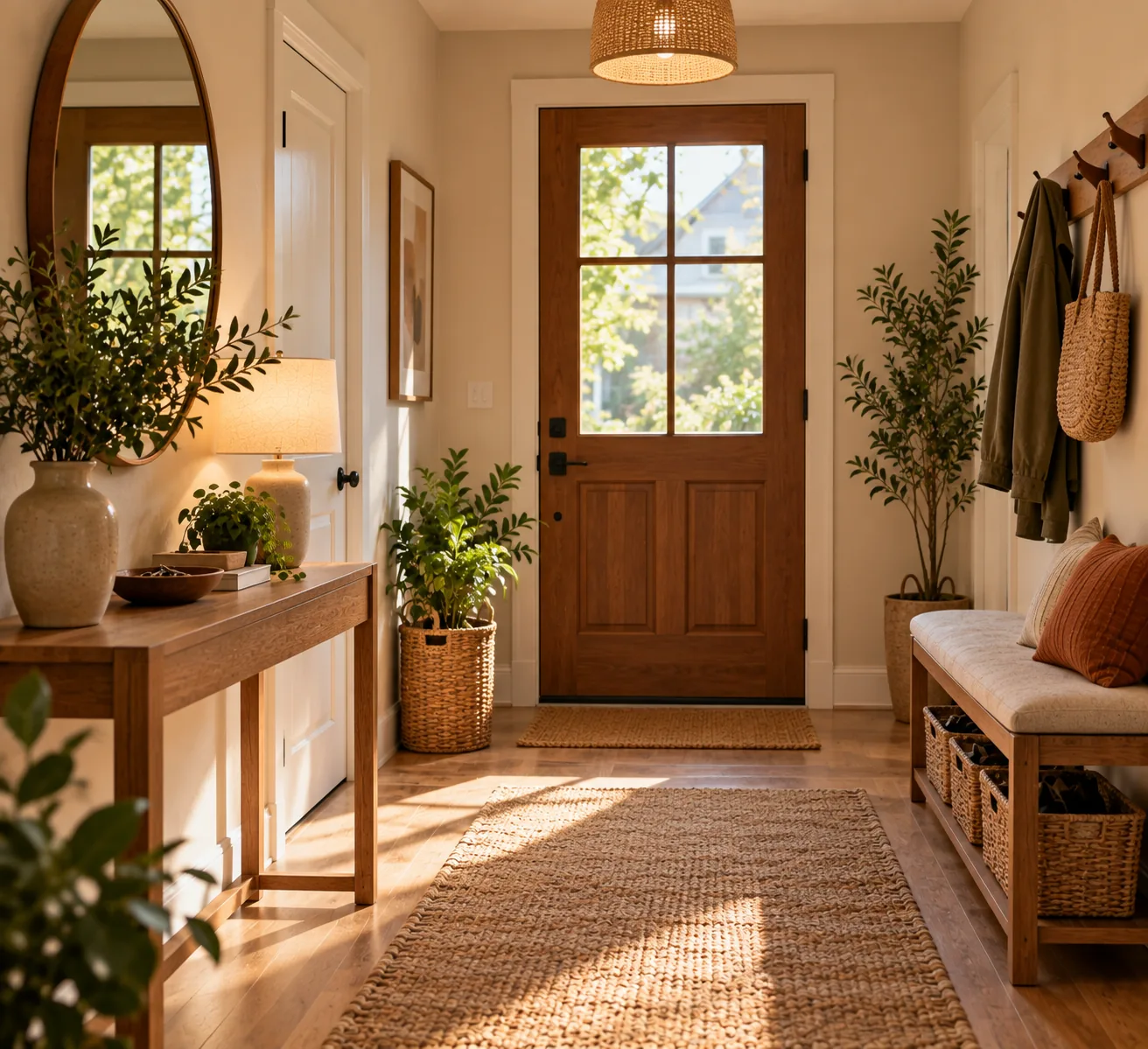
25 Beautiful Home Organization Ideas That Don't Make Your Home Feel Cluttered
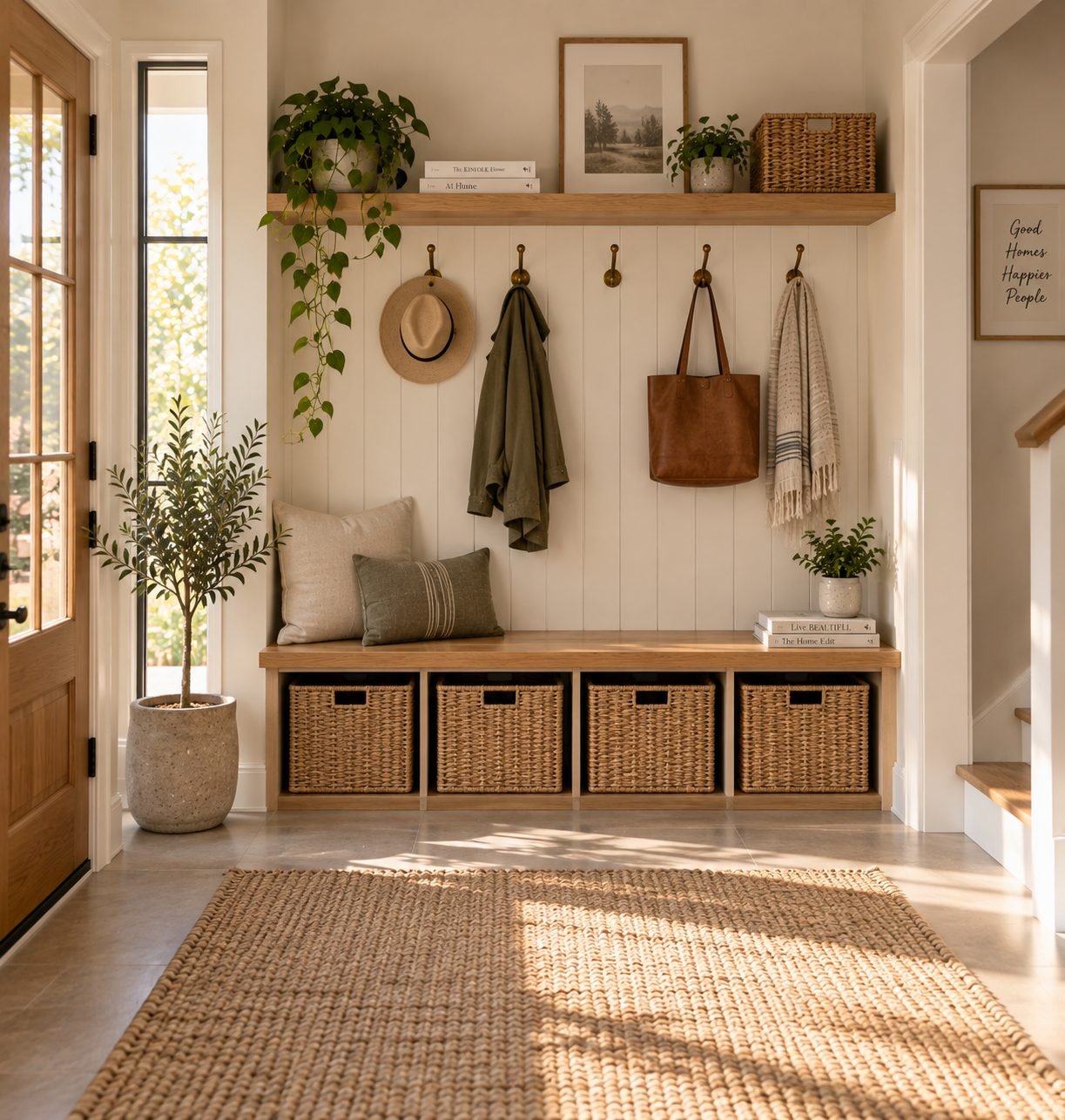
Real systems for a genuinely organized home — no matching bins required, just a place for everything and a habit that actually sticks.
An organized home doesn't have to look like a storage catalog.
Most organizing advice focuses on containers — buy the right bin, the right basket, the right label maker, and the clutter disappears. In practice, the homes that actually stay organized share something less about products and more about systems: everything has an assigned place, that place makes sense for how the item is actually used, and the system is simple enough to keep up with on a busy week.
None of the ideas below require a weekend renovation or a garage full of matching containers. Here are 25 ways to bring real organization into your home without it starting to feel like a warehouse.
1. Give Everything a Home, Not Just a Category
"Organized" doesn't mean sorted into general categories — it means every item has one specific spot it returns to after use. A drawer labeled "misc" isn't a home, it's a holding pattern. If something doesn't have an obvious spot, that's usually a sign it needs one, not that you need a bigger drawer.
2. Edit Before You Organize
Organizing what you don't need just means neatly storing clutter. Before buying a single bin, go through the space and remove anything you haven't used in the last year, is broken, or duplicates something else you own. Editing first means you're organizing less — and organizing less is always easier to maintain.
3. Use Matching Containers in the Pantry
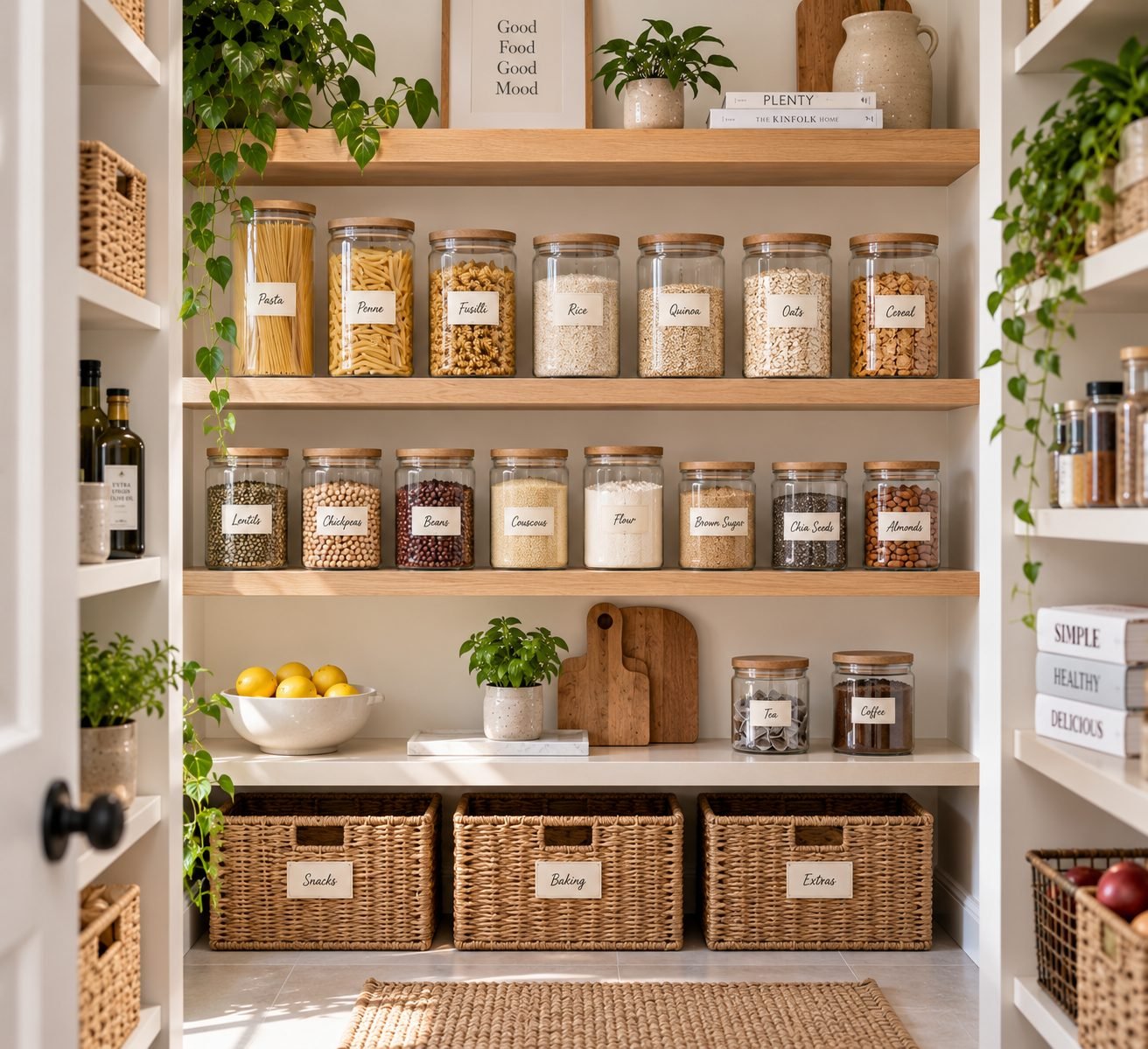
A pantry full of mismatched boxes and bags reads as cluttered even when everything technically has a spot. Decanting staples into a small set of matching containers creates visual calm instantly, and it's often easier to see what you're running low on.
4. Label Everything You Can
A label does two jobs: it tells you where something goes, and it tells everyone else in the house too. Systems that only one person understands tend to fall apart the first busy week that person is out of the loop.
5. Create a Landing Zone by the Door
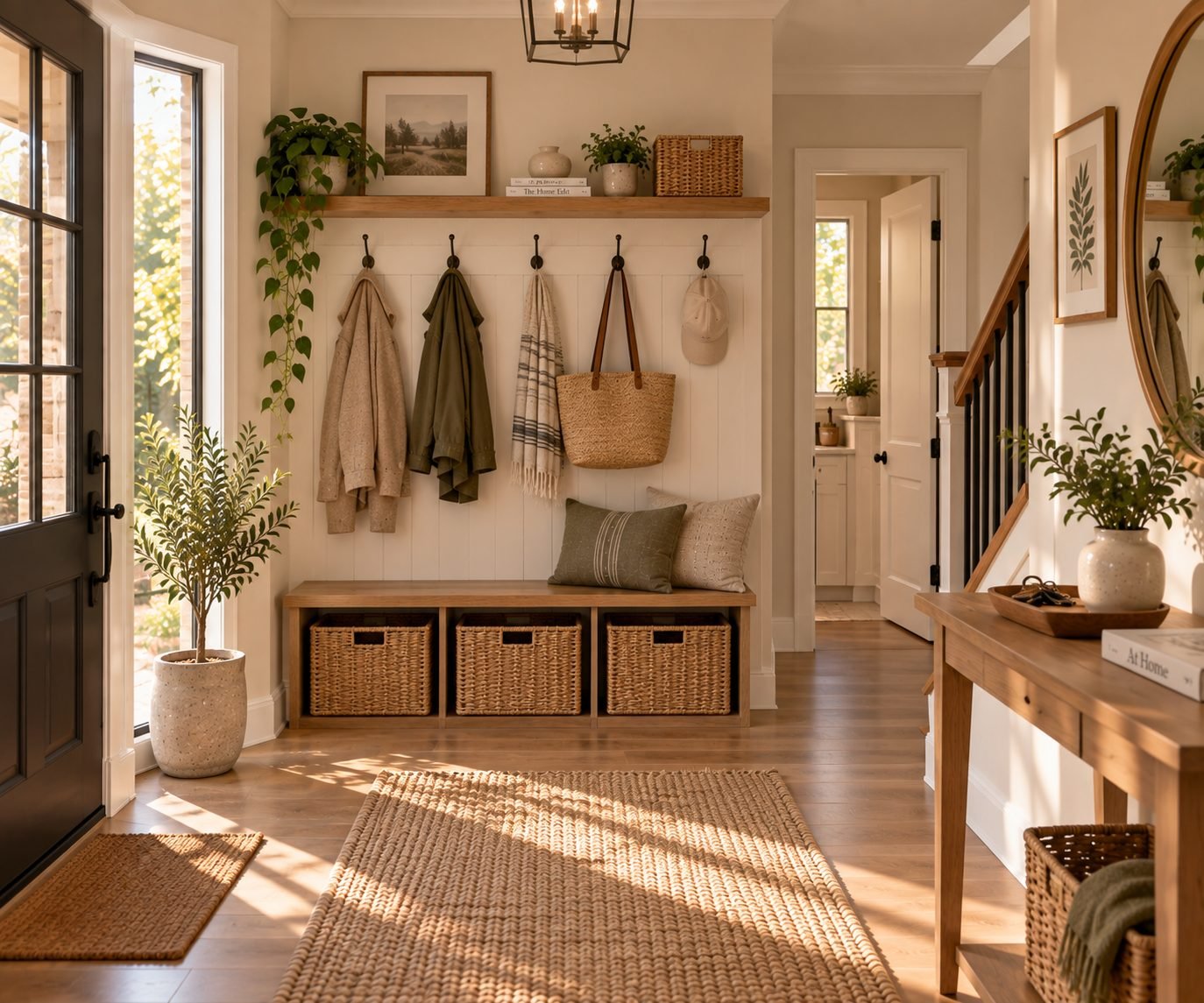
Keys, bags, mail and shoes all tend to pile up at the door because there's no obvious place for them to go instead. A simple landing zone — a hook, a tray, a bench with baskets underneath — intercepts that pile before it spreads into the rest of the house.
6. Use Drawer Dividers in Every Drawer
An undivided drawer becomes a junk drawer within weeks, no matter how it started. Simple adjustable dividers keep even a drawer full of small items — utensils, office supplies, hair accessories — visually sorted and easy to search without digging.
7. Store Off-Season Items Out of Sight, Not Out of Mind
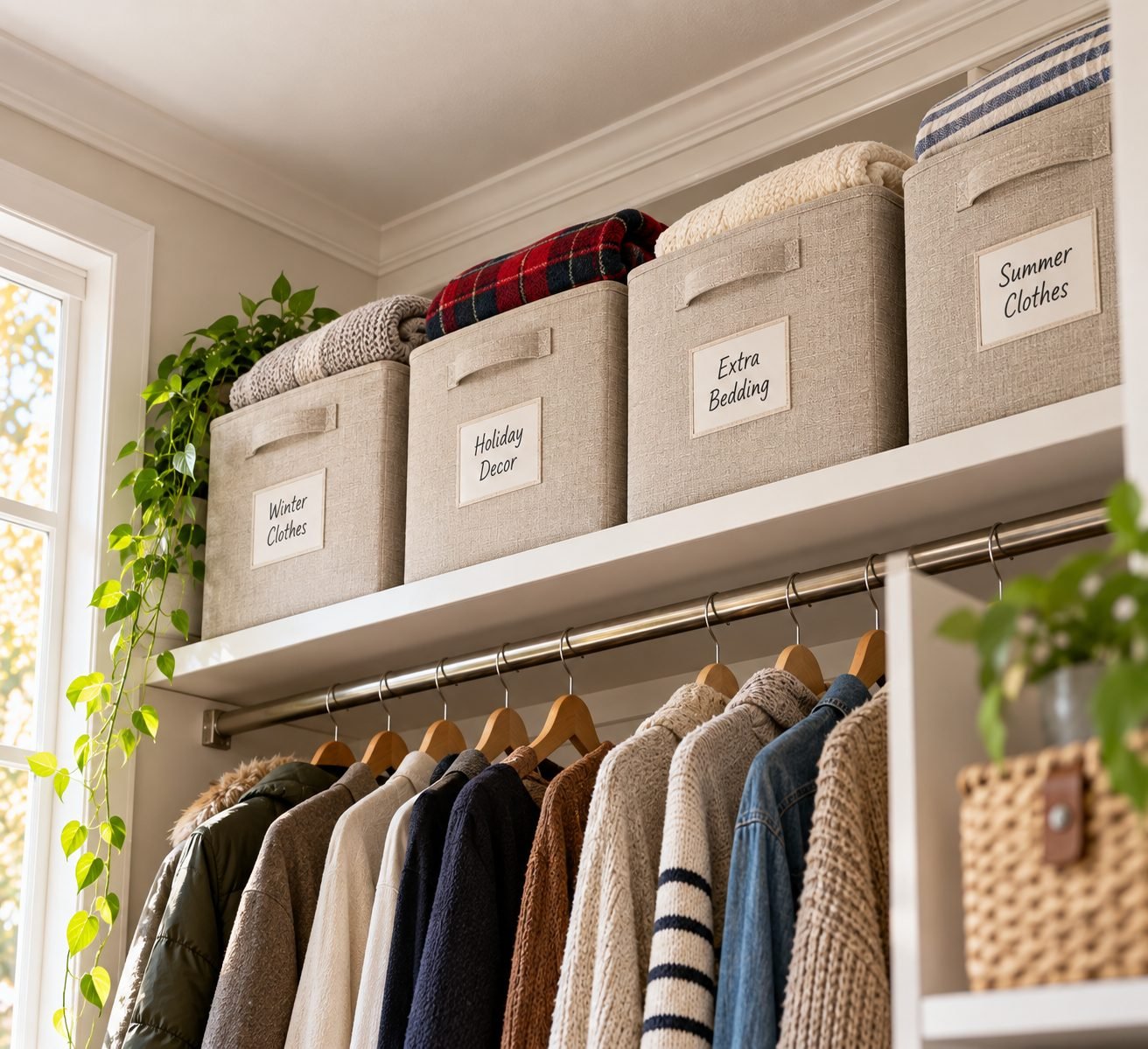
Winter coats in July and holiday decorations in March take up prime real estate for things you don't need yet. Store off-season items on a high shelf or in labeled bins, but keep a simple inventory list or clear labeling so you're not hunting through five identical boxes when the season changes.
8. Take Closets Vertical
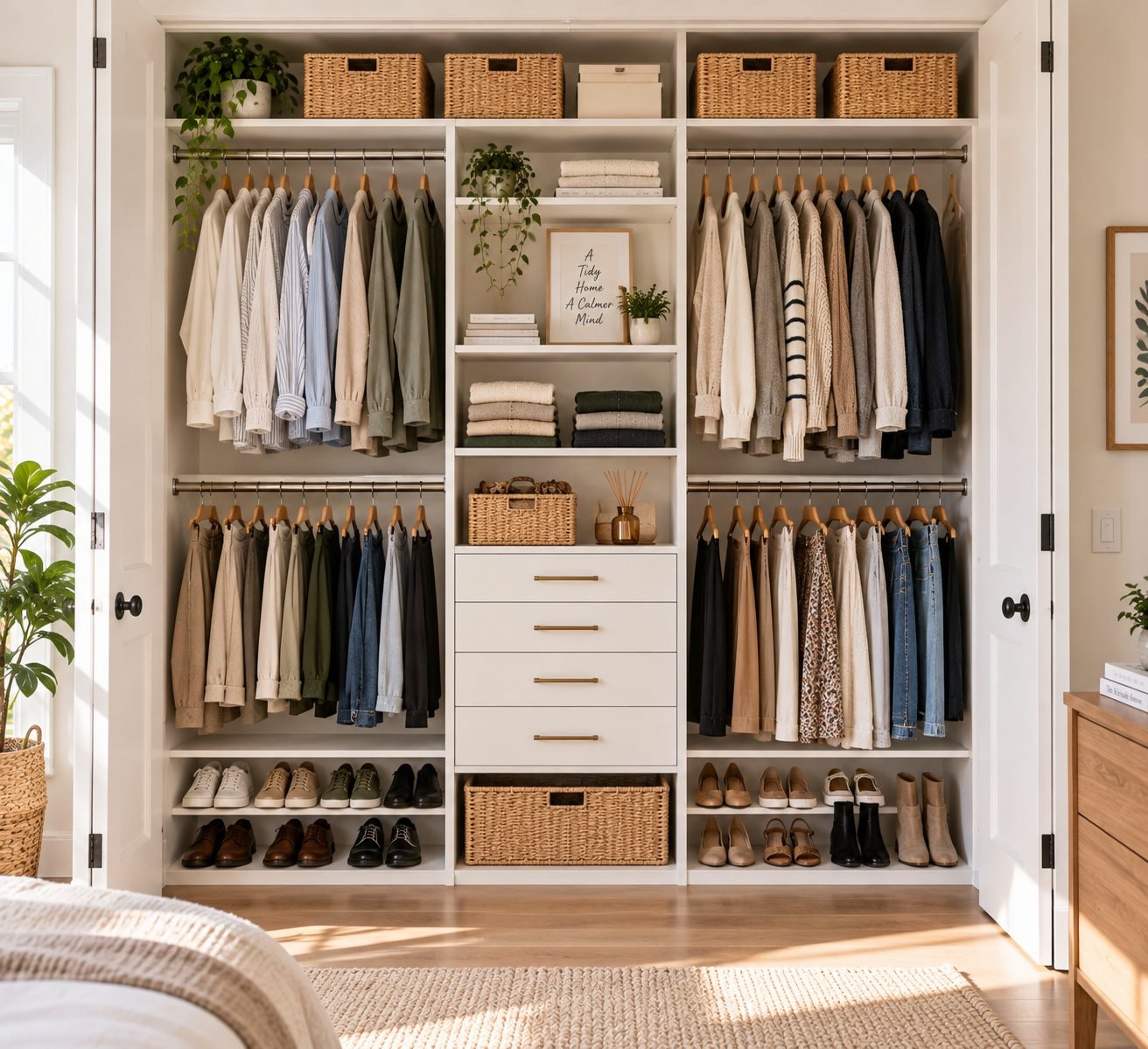
Most closets only use the middle third of their actual height. A double hanging rod for shorter items and shelving that runs to the ceiling can roughly double the storage in the same footprint, without any structural changes.
9. Set Up a Charging Station
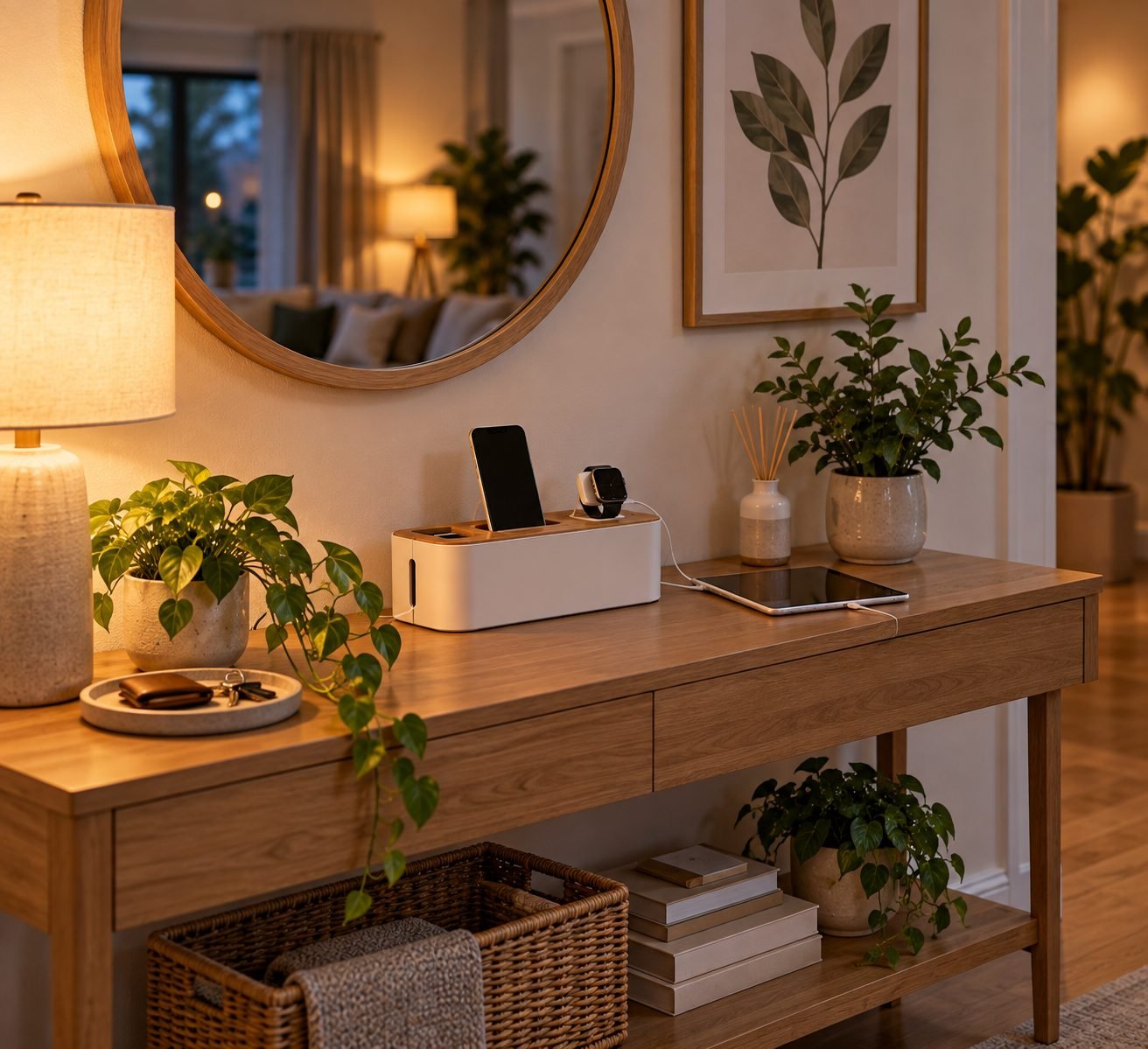
Chargers and cables migrate to every outlet in the house unless they have one designated spot. A single station with a cord organizer keeps the tangle contained and means you're not searching three rooms for a charger every morning.
10. Decant Pantry Staples Into Clear Containers
A cluttered pantry rarely needs more shelves. It needs fewer types of container competing for the same space.
Beyond just looking tidier, clear containers make it immediately obvious what you have and what's running low — which cuts down on both wasted food and duplicate grocery purchases.
11. Organize by Zone, Not Just by Room
Instead of thinking "the kitchen" as one space, think in zones: a baking zone, a coffee zone, a lunch-packing zone. Grouping items by how they're actually used, even within one room, means everything you need for a task is in one place instead of spread across three cabinets.
12. Add a Junk Drawer With Boundaries
Every home needs one drawer for the odds and ends that don't fit anywhere else — the trick is keeping it to exactly one, with a shallow tray inside so it doesn't become a bottomless catch-all. A junk drawer with a boundary is a system; an entire cabinet of loose miscellany is just hidden clutter.
13. Set Up a Family Command Center
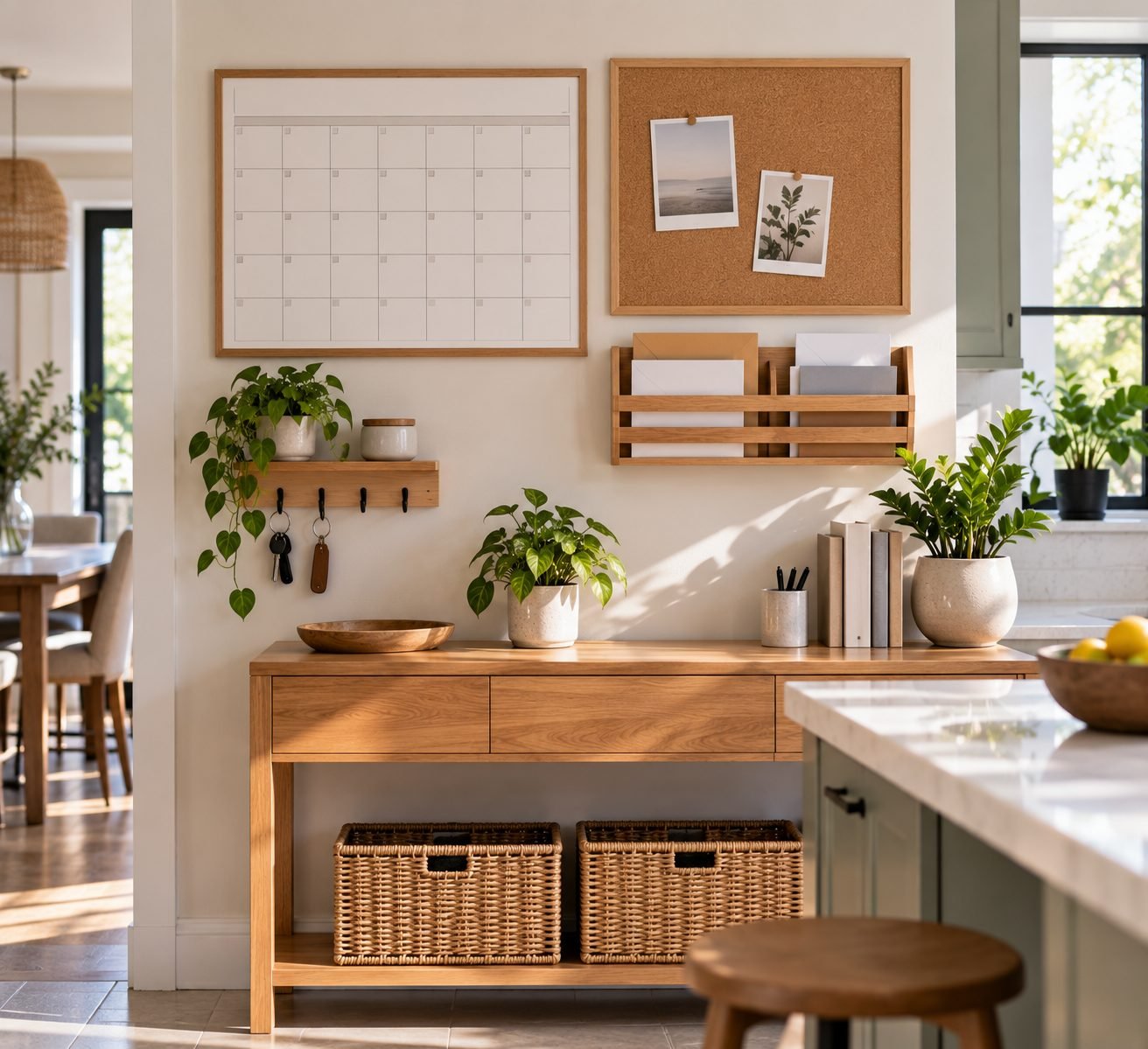
A shared calendar, a mail sorter and a spot for permission slips or bills near the kitchen keeps household admin from spreading across every countertop. It works best somewhere everyone passes daily, not tucked into a rarely used room.
14. Keep a Simple Filing System for Paper
Paper clutter usually isn't a storage problem, it's a decision-delay problem. A simple system — action needed, to file, to shred — sorted weekly keeps papers from becoming a permanent pile on the counter.
15. Use Under-Bed Storage for Bulky, Rarely Used Items
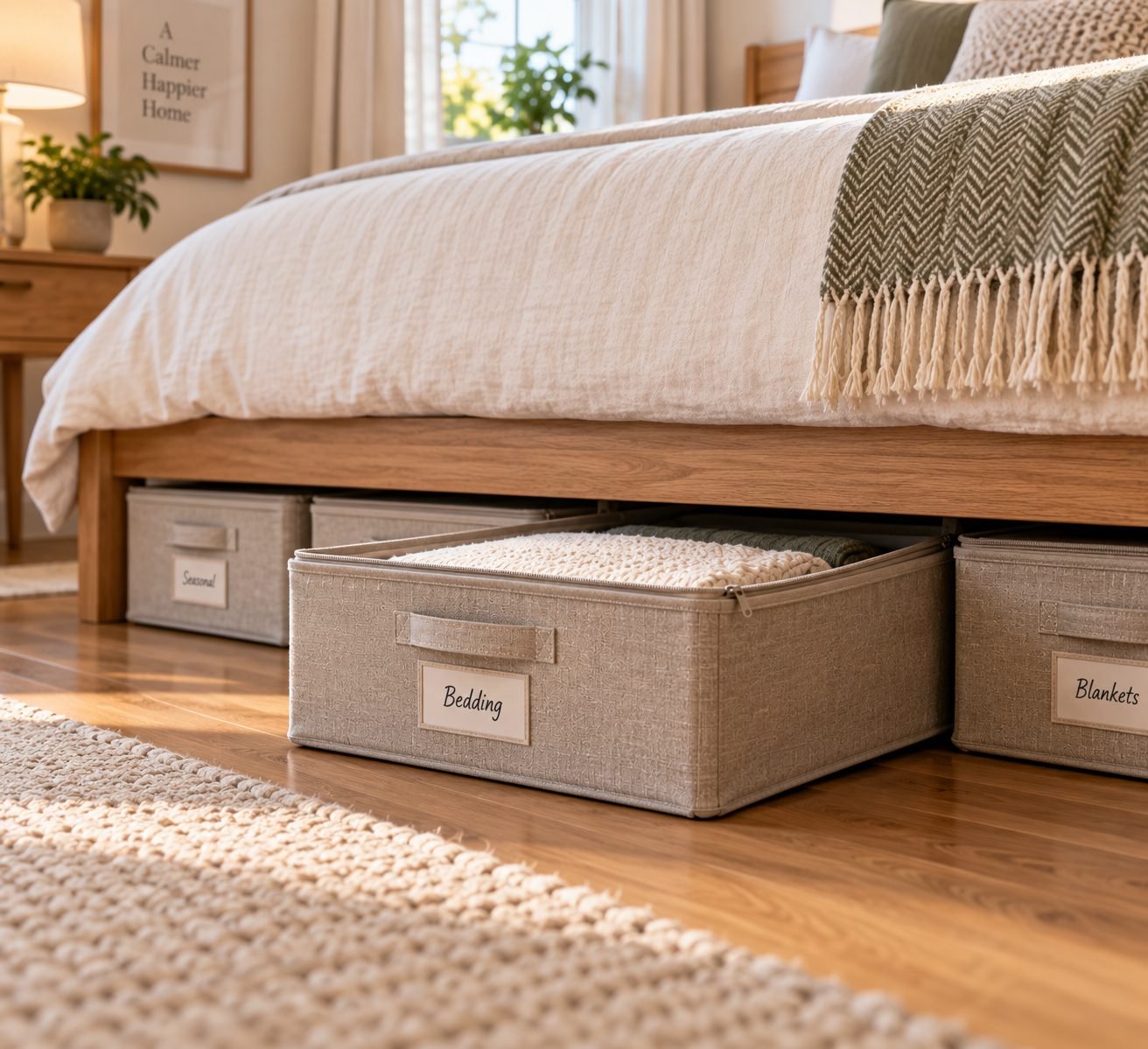
The space under a bed is one of the largest unused storage areas in most bedrooms. Flat, labeled bins are ideal for extra bedding, out-of-season shoes, or luggage — items you need occasionally but don't want visible day to day.
16. Create a Dedicated Gift Wrap Station
A roll of wrapping paper, tape, scissors and a few gift bags scattered across three closets means every wrapped gift starts with a scavenger hunt. Keeping supplies together in one bag or bin, wherever you have a few spare inches of closet space, removes that friction entirely.
17. Organize the Linen Closet by Room, Not by Type
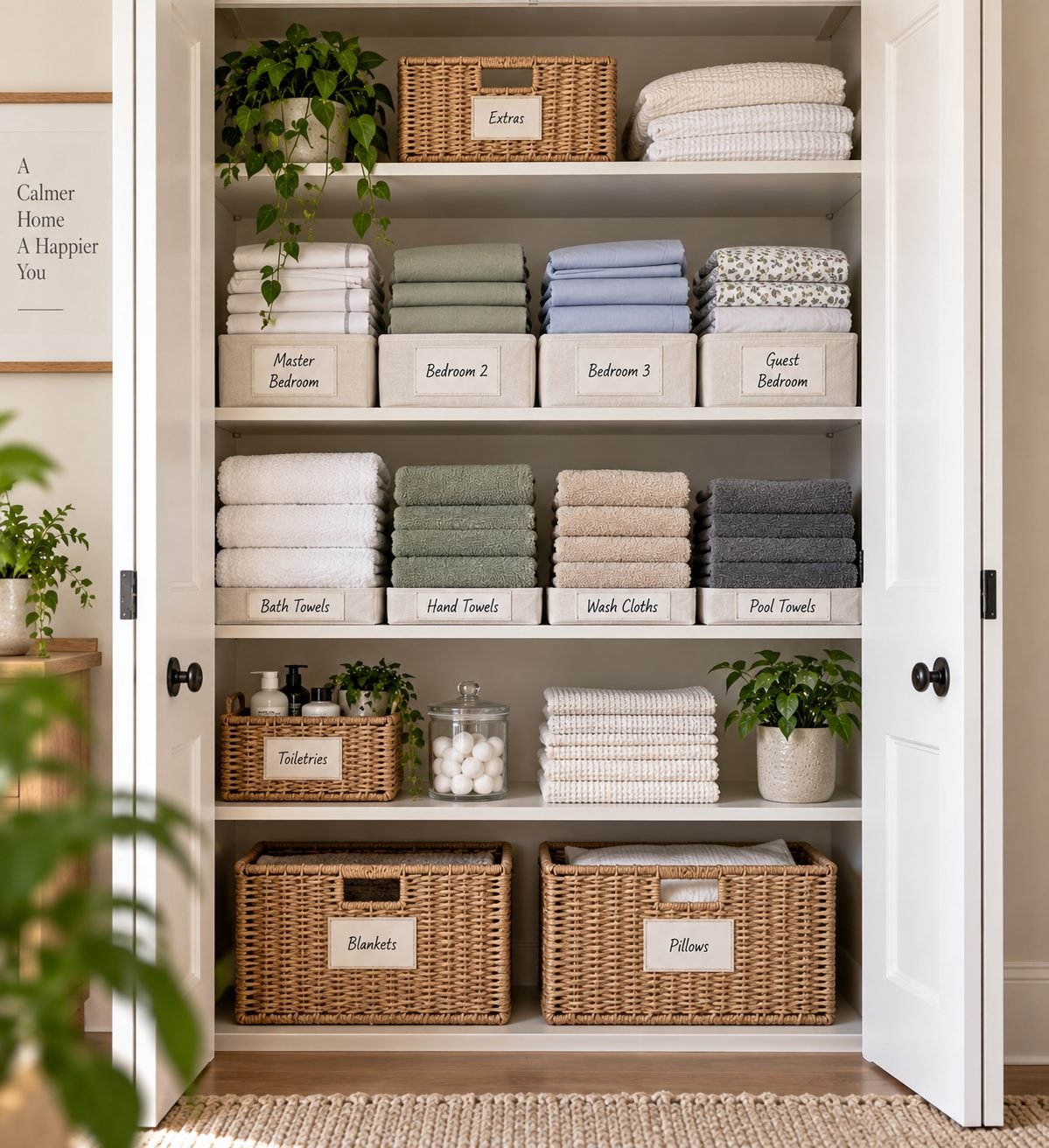
Sorting sheets and towels by which room or bed they belong to, rather than by fabric type, means you're not unfolding four sets to find the one that actually fits the guest bed. Storing a folded sheet set inside its matching pillowcase is a small trick that keeps sets from separating in the first place.
18. Add a Lazy Susan to Deep Cabinets
Deep bathroom or kitchen cabinets tend to become a place where things get lost behind other things. A turntable makes everything in the back just as reachable as what's up front, without needing to unload the whole cabinet to find one item.
19. Set Up a Toy Rotation System
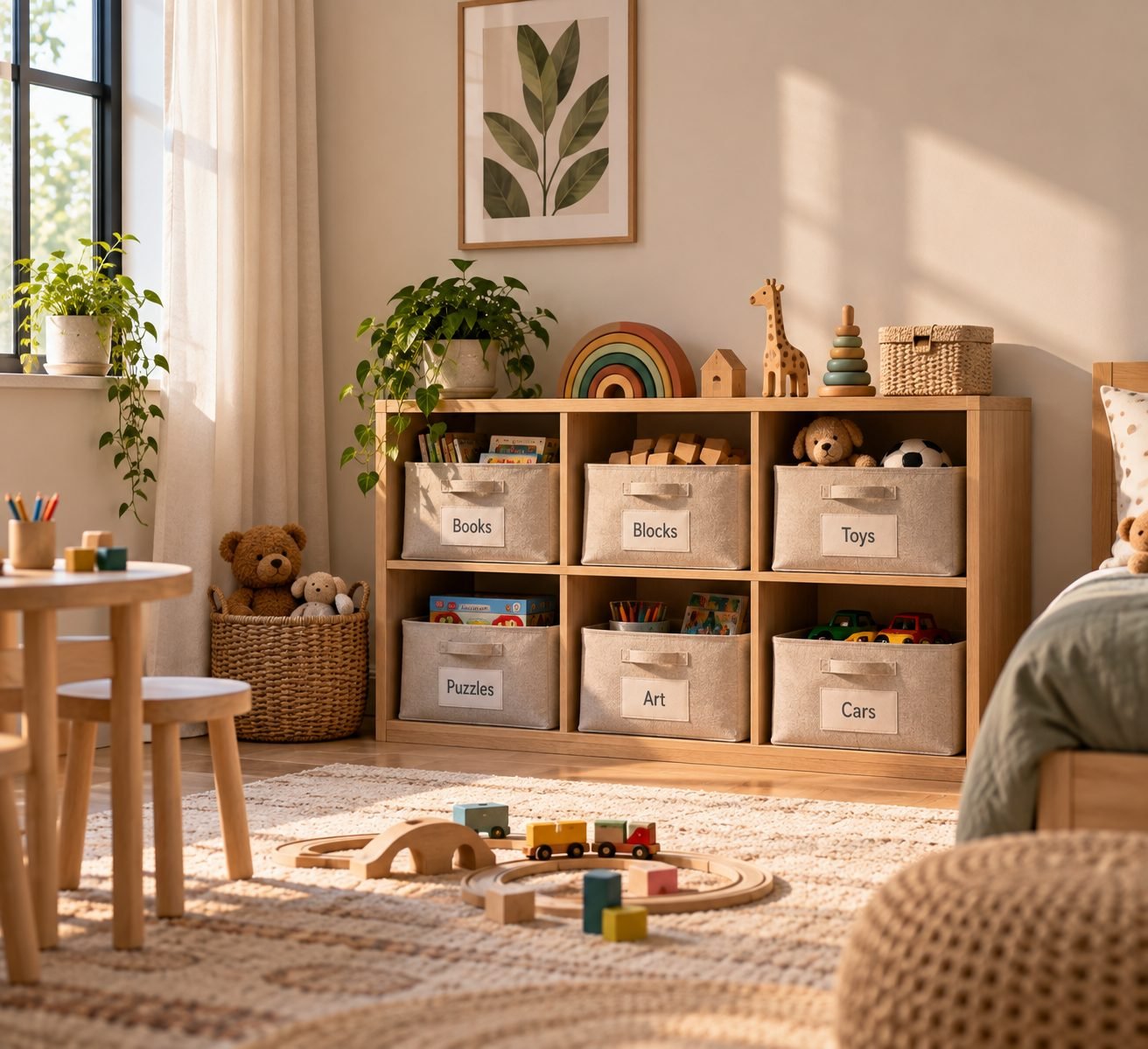
Keeping every toy a child owns out at once usually means none of them feel special and all of them end up on the floor. Rotating a smaller selection every few weeks, with the rest stored out of sight, tends to reduce both clutter and boredom.
20. Hang a Pegboard in the Garage
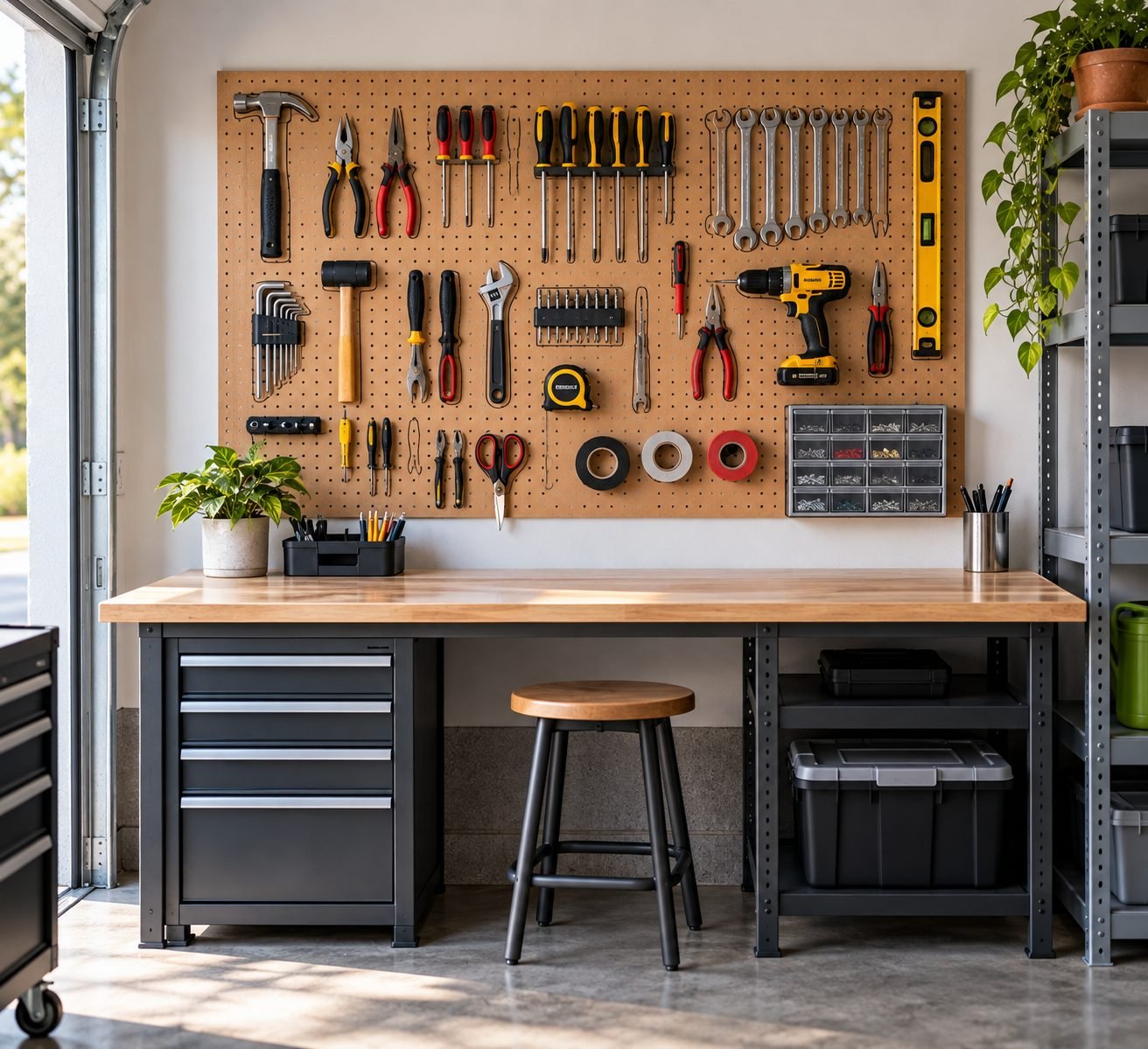
A pegboard with outlined tool shapes keeps everything visible and makes it immediately obvious when something hasn't been put back. It also frees up workbench and floor space that tends to become the garage's own junk drawer.
21. Use Baskets for "Homeless" Items in Shared Spaces
Every living room accumulates a small pile of items that don't belong there but end up there anyway — a stray charger, a magazine, a child's toy. A single basket by the sofa acts as a temporary home, corralling the pile until it's cleared out, rather than letting it colonize the coffee table.
22. Organize the Laundry Room With Labeled Bins
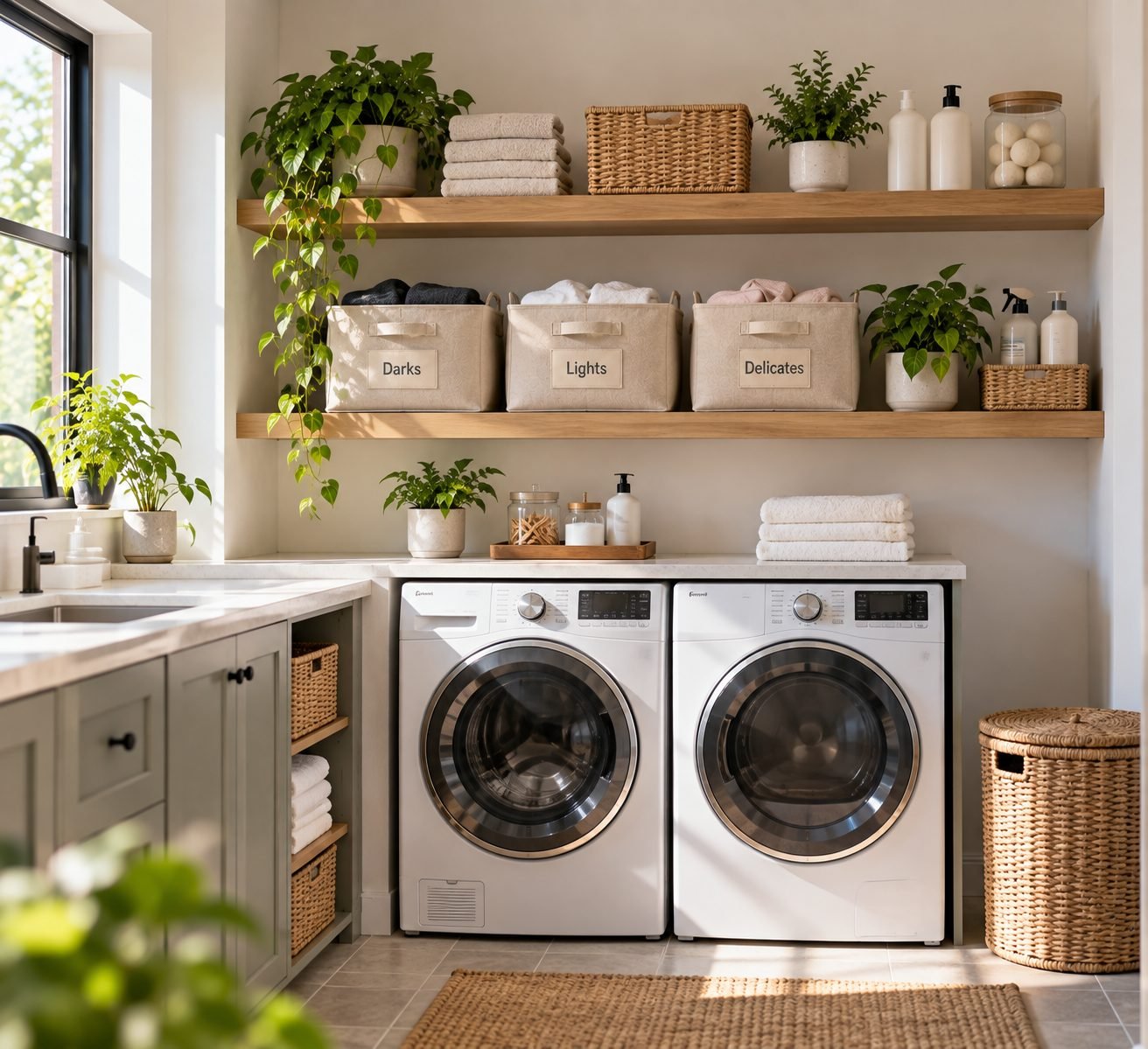
Sorting laundry into labeled bins as it's collected — rather than sorting one big pile on wash day — splits the work into smaller pieces the whole household can share, and keeps a mountain of mixed laundry from ever forming in the first place.
23. Keep a Donation Box Going Year-Round
Rather than waiting for a big annual purge, keep one box or bag somewhere accessible for items to donate as you notice them. Small, ongoing edits are far easier to sustain than one overwhelming declutter session twice a year.
24. Set Up a Simple Cord and Cable System
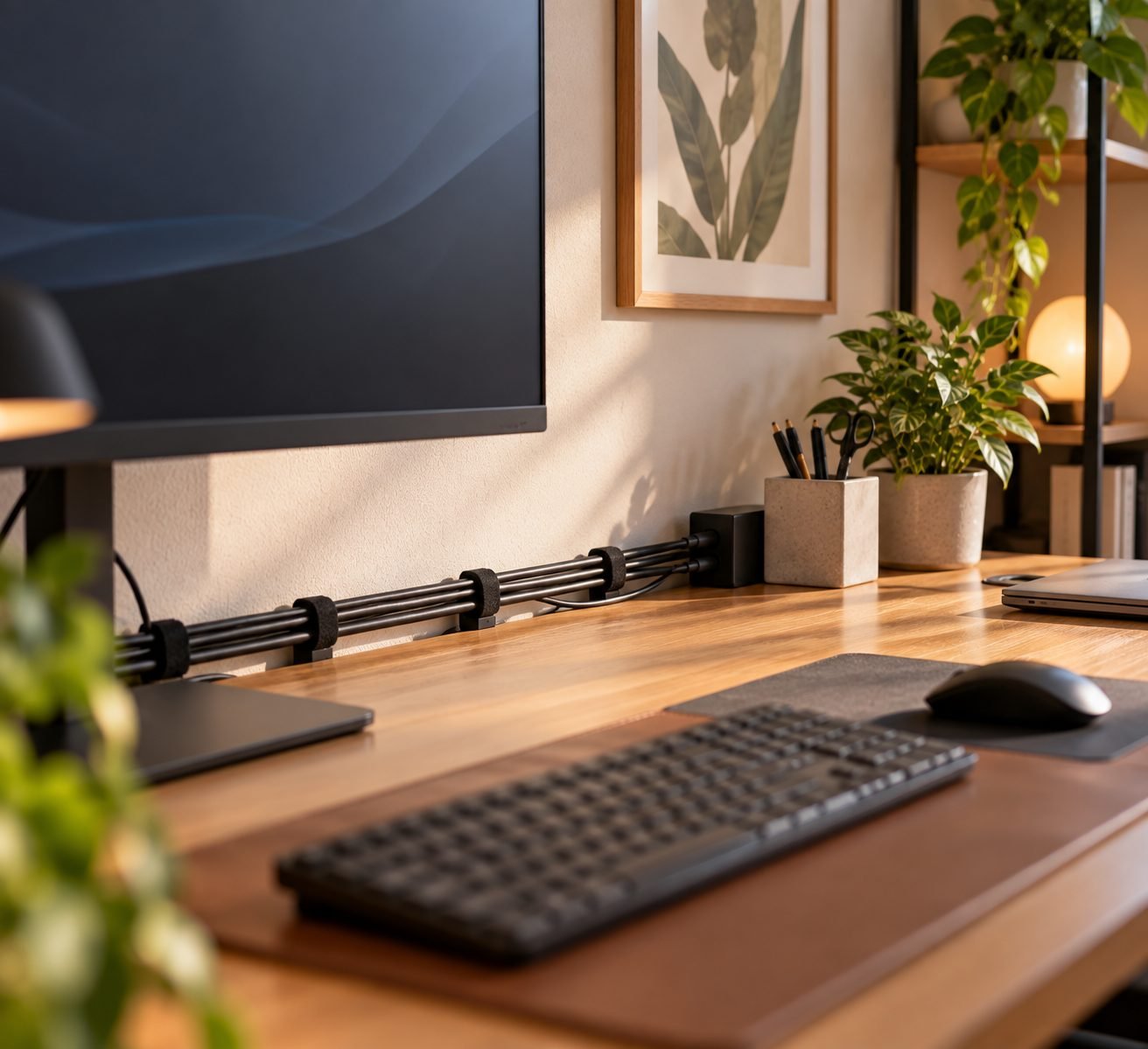
Labeling cables at both ends and bundling them along the back of a desk turns "which cord is this" into a non-issue. It's a five-minute fix that pays off every time a cable needs to be unplugged or traced.
25. Do a 10-Minute Reset Every Evening

No organizing system survives daily life without some form of maintenance. A short reset each evening — returning stray items to their homes, clearing surfaces — keeps small messes from compounding into a weekend-long reorganizing project.
Organization That Actually Sticks
None of these 25 ideas depend on buying your way into a more organized home. Most of them come down to the same two principles: give everything a specific place, and make that place easy enough to use that putting things away is never harder than leaving them out.
Start with one zone — the entryway, the pantry, one closet — rather than trying to overhaul the whole house at once. A system you can actually maintain will always outperform a perfect one that only lasts a week.
What's the first thing I should organize in my home?
Start with whichever space causes you the most daily friction — often the entryway or a kitchen counter. Fixing the spot you interact with every day has an outsized effect on how organized the whole home feels, even before you touch anything else.
Do I need to buy matching bins and containers to get organized?
No. Matching containers make a space look more visually calm, but the organization itself comes from giving items a consistent home and a simple system for putting them back — not from the containers themselves.
How do I keep an organized space from becoming cluttered again?
A short daily reset, even five to ten minutes, prevents the small accumulation that eventually turns into a full reorganizing project. Systems that are easy to maintain in the moment last far longer than elaborate ones that require real effort to keep up.
Should I declutter before or after buying storage containers?
Always before. Buying containers first often means organizing things you don't actually need to keep. Editing first means you're only creating storage for what's staying, which usually means you need less storage than you expected.