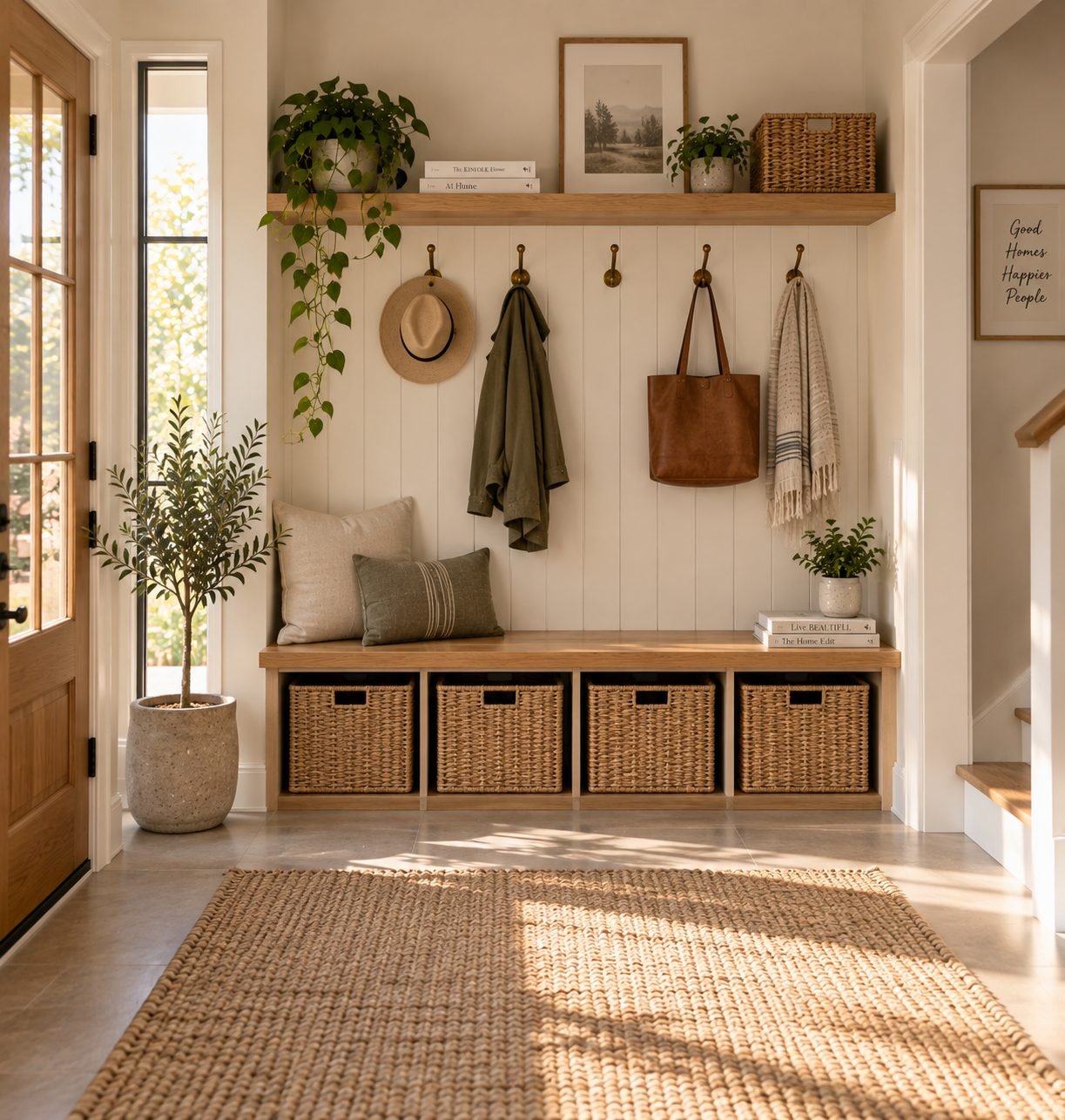
How to Design an Entryway That Actually Works
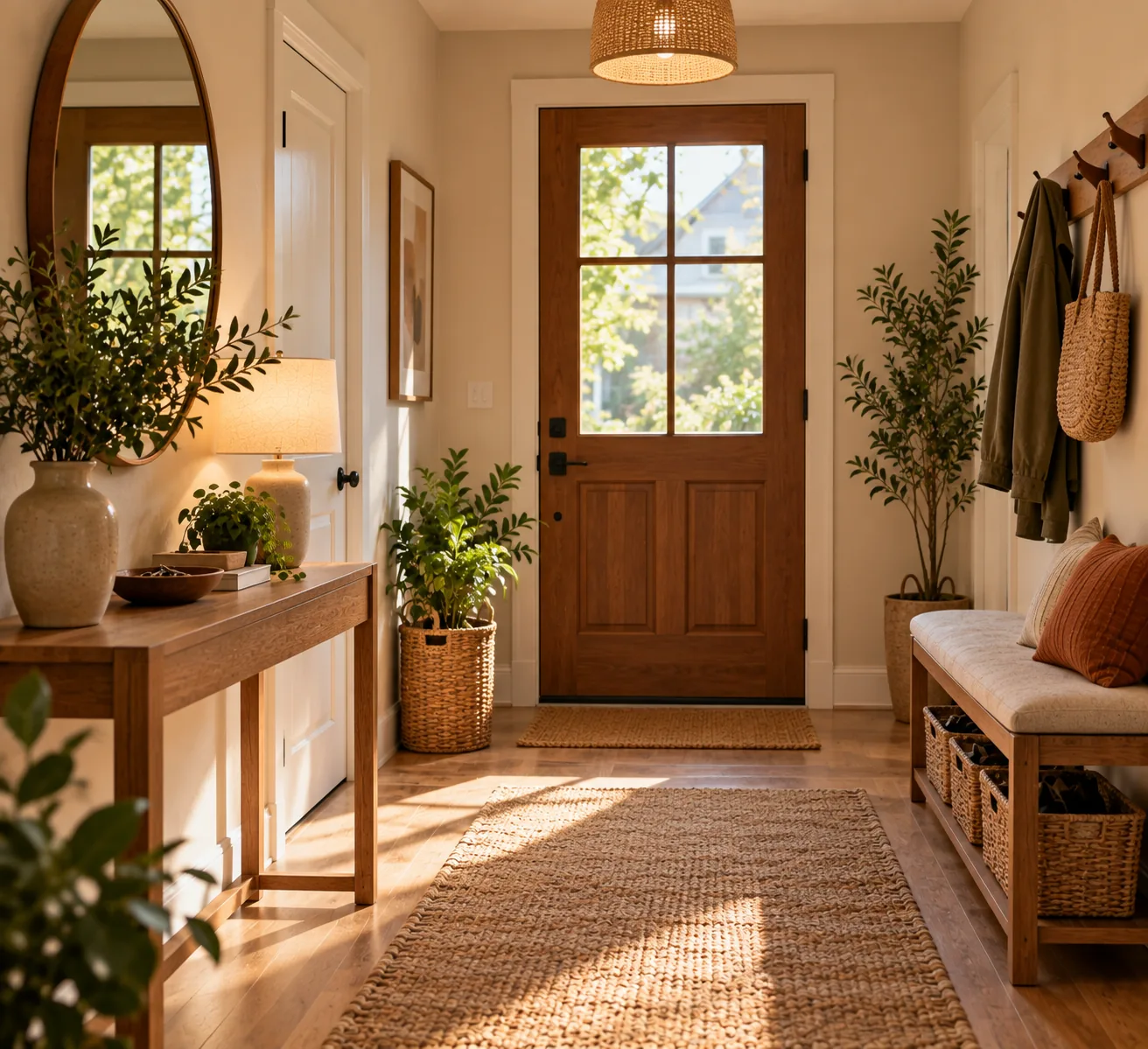
Function before styling — the three things every entryway needs, for closets, no-closet apartments, and shared family entries alike.
An entryway that photographs beautifully but doesn't actually catch keys, mail, or shoes has failed at its one job before it's done anything else.
Most entryway advice focuses on styling — a bench, a mirror, a runner — without addressing what the space actually needs to accomplish first. A beautiful entryway that still leaves shoes scattered by the door and mail piling up on the kitchen counter hasn't solved the problem it exists to solve. Function has to come before styling, or the styling doesn't hold up past the first week.
What an Entryway Actually Needs to Do
Every entryway, regardless of size or style, needs to answer the same three questions: where do things get set down when you walk in, where do shoes and coats go, and where do you sit or stand to deal with either. Everything else — the art, the paint color, the runner — is secondary to whether those three questions have clear answers.
The Core Elements: Landing Surface, Seating, and Storage
A landing surface — a console, a shelf, even a wall-mounted tray — gives keys, mail and a bag somewhere specific to go, rather than the nearest counter. Seating, even a small stool or a narrow bench, makes putting on and taking off shoes practical rather than something done awkwardly standing on one foot. Storage — hooks, a closet, a shoe rack, baskets — gives coats and shoes an assigned home instead of a pile. An entryway missing any one of these three tends to fail at its job regardless of how the other two are styled.
Designing for a Full Closet Entryway
With a coat closet already in place, the main opportunity is usually organizing what's inside it rather than adding new furniture. A shoe rack on the closet floor, hooks on the inside of the closet door, and a small bin for gloves and hats keep the closet itself from becoming the source of clutter it's meant to prevent. A console table just outside the closet handles the landing-surface job the closet itself can't.
Designing for a No-Closet Entryway
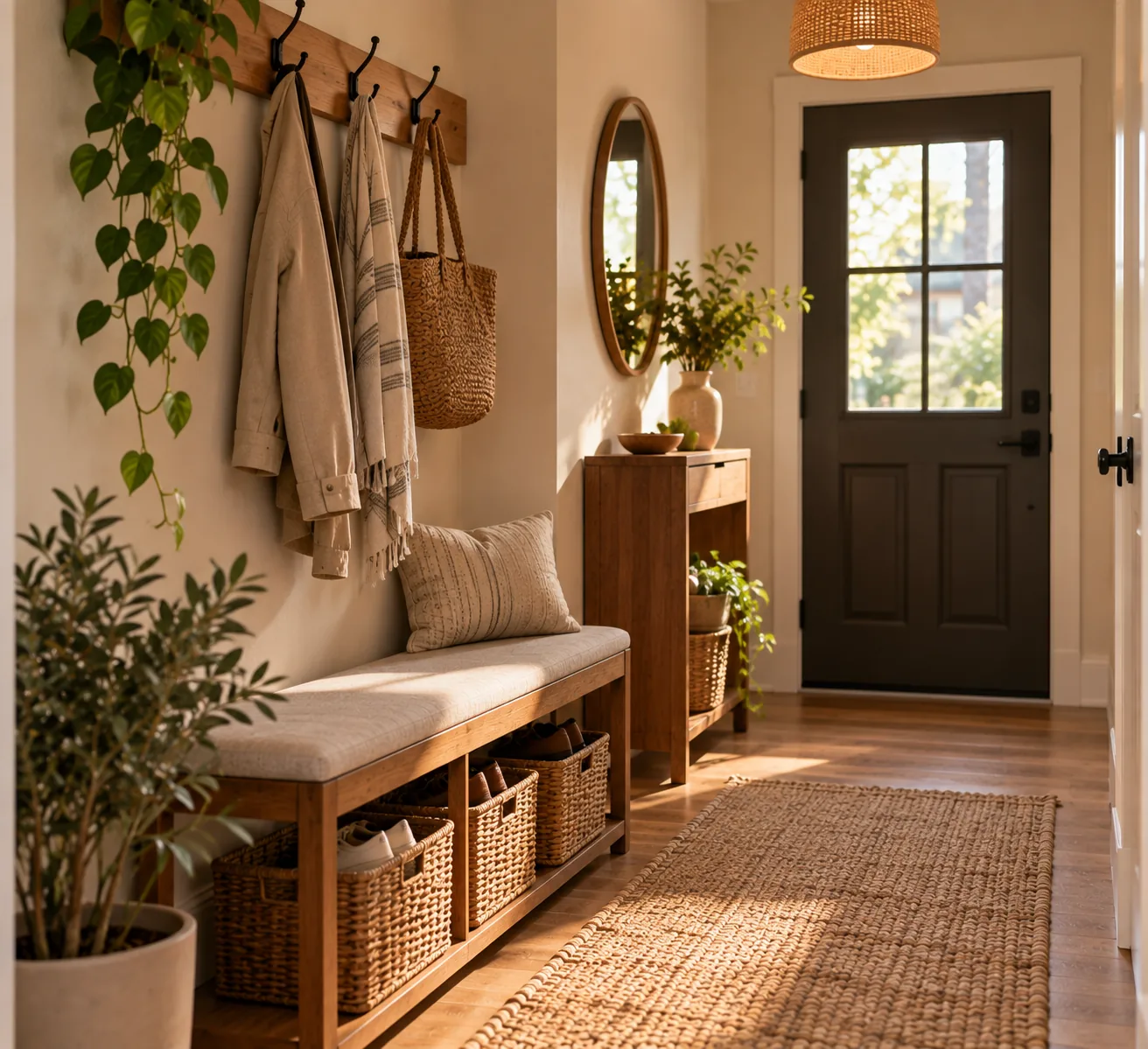
Without a closet, wall-mounted hooks take over the coat-storage job, and a narrow bench with baskets underneath handles both seating and shoe storage in the same footprint. This setup works in as little as two or three feet of wall space, which makes it realistic even in apartments where the "entryway" is really just the wall beside the front door.
Designing for a Shared or Family Entryway
With multiple people using one entry, individual assignment matters more than total capacity. A row of hooks with one section per person, or labeled baskets for each family member's loose items, prevents the entryway from becoming one undifferentiated pile that nobody feels responsible for. This is a place where the general organizing principle of giving every category a specific home, covered in home organization ideas that don't create clutter, applies especially directly.
Sizing Storage to Your Actual Household
The right amount of entryway storage isn't a fixed number — it's whatever matches how many people and how much gear actually pass through that door daily. Count coats in regular rotation, not every coat anyone owns, and count pairs of shoes actually worn each week rather than a full closet's worth. An entryway sized for four people's daily gear when only two people use that door regularly ends up half-empty and eventually becomes overflow storage for unrelated items. Sizing to actual daily use, then adding a small buffer, keeps the system from being either constantly overwhelmed or oddly empty.
Seasonal Rotation Keeps It Working
An entryway sized for daily use can't also hold every seasonal item at once — winter coats, snow boots, umbrellas, and beach bags don't all need to be accessible in the same week. Rotating out-of-season gear to a closet or bin elsewhere in the home, and swapping it back in as seasons change, keeps the entryway's limited space dedicated to what's actually needed right now, rather than slowly filling up with items relevant only a few months a year.
Lighting the Entryway
An entryway that's dim or lit by a single overhead fixture undercuts even a well-organized setup, since finding keys or checking mail is harder in flat, poor light. A wall sconce or a small lamp on the console adds a warmer, more functional layer of light than an overhead fixture alone, and it's one of the same layered-lighting principles covered in the room-by-room guide to layering lighting applied to the one room most likely to be overlooked entirely.
Real Examples
The Apartment With No Entryway at All
Many apartments open directly into the living room with no distinct entry space whatsoever. In this case, a narrow console table placed just inside the door, with a small tray on top and a basket underneath, manufactures an entryway function out of a few square feet that would otherwise just be walked through.
The Family Home With Multiple People's Gear
A mudroom or larger entry serving a whole family benefits from zone division — one hook and cubby per person, rather than shared, undivided storage that tends to become one parent's job to sort through. Labeling each zone, even informally, keeps the system working once the novelty of a fresh organization project wears off.
The Narrow Hallway Entry
A tight hallway entry can't fit a bench or a full console, but a slim wall-mounted shelf, a few hooks, and a small floor basket for shoes still cover all three core functions in a fraction of the footprint. Depth matters more than width here — a shelf just a few inches deep keeps the hallway passable while still providing a landing spot.
Before You Buy a Bench or Console
Measure the full width of the entry wall, then subtract at least the door's swing clearance and a comfortable walking path, before shopping for furniture. A bench or console that technically fits the wall but leaves no room to actually open the door or pass by someone removing shoes will get in the way daily, no matter how well it matches the rest of the room. Check weight capacity if the bench needs to double as real seating, not just a shelf at sitting height, and check for storage underneath specifically — open-leg benches look lighter visually but sacrifice the basket or bin space a closed-base bench provides.
Common Mistakes
Mistake: Designing for looks before function. A beautiful console with nothing to actually catch daily items just becomes another surface that accumulates clutter, since it was never given a specific job to do.
Mistake: No landing surface for keys and mail. Without one, these items end up on whatever surface is closest — usually a kitchen counter that then does double duty as an unofficial entryway.
Mistake: Shoes with nowhere specific to go. A pile of shoes by the door happens by default when there's no rack, tray, or designated spot, regardless of how organized the rest of the entryway is.
Mistake: Furniture that blocks the door's swing. A bench or console placed without checking how far the door opens creates a daily annoyance that no amount of styling compensates for. Always check the door's full swing before placing anything nearby.
Rental-Friendly Entryway Solutions
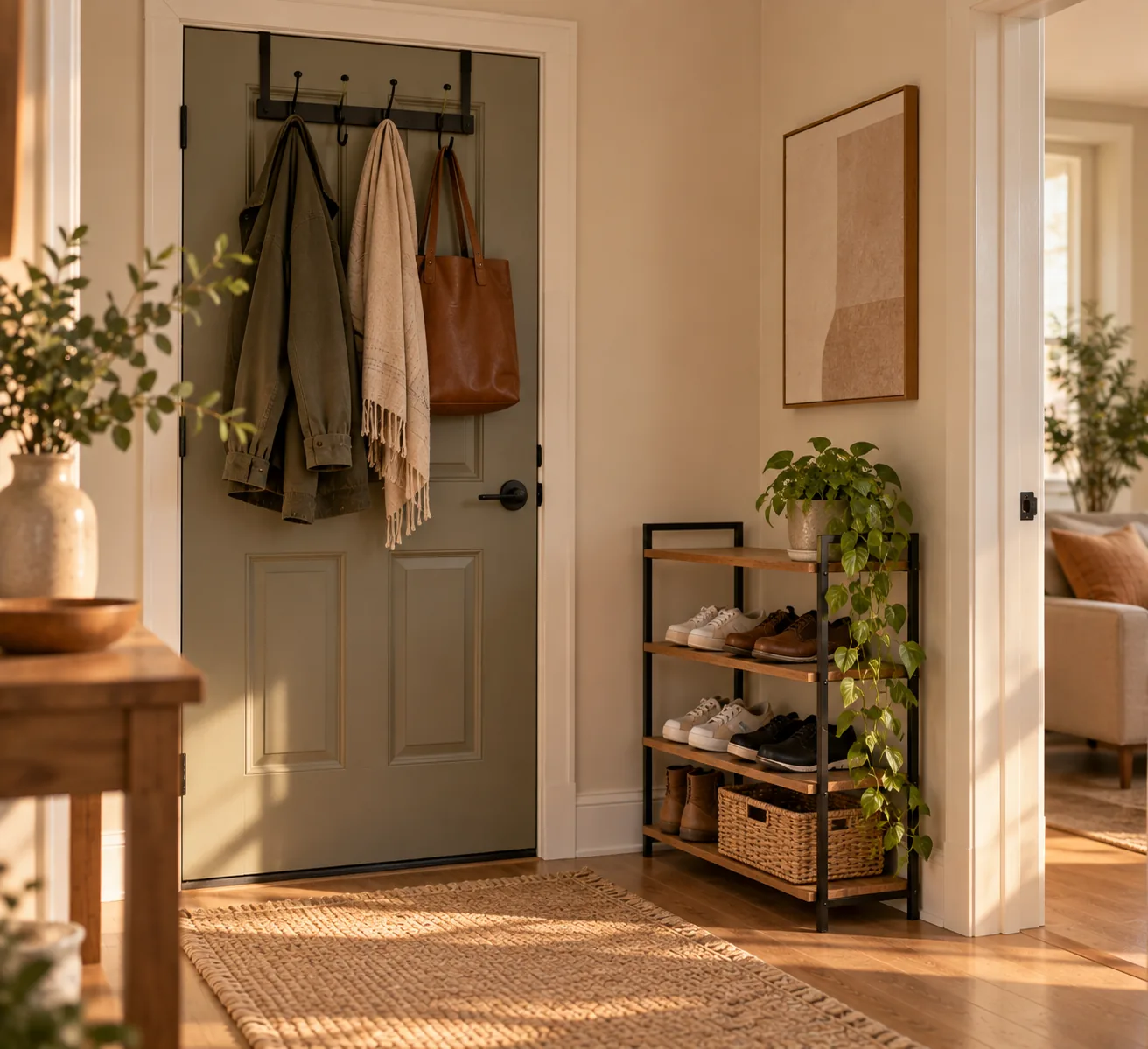
An over-the-door hook rack solves coat storage without any wall damage. A freestanding shoe rack or narrow console requires no installation at all. Command-style adhesive hooks, rated for the weight of what you're hanging, work for lighter coats and bags where a full rack isn't practical. All of these move with you and leave no trace when a lease ends.
A Simple Entryway Checklist
- Is there a specific landing spot for keys, mail, and a bag?
- Is there somewhere to sit or steady yourself while removing shoes?
- Do coats and shoes have an assigned home, not just a general area?
- If more than one person uses this entry, does everyone have their own zone?
- Does any furniture placed here block the door's full swing?
Function First, Then the Finishing Touches
An entryway that works isn't necessarily the most styled one — it's the one where landing, seating and storage all have clear, specific answers before any decorating decisions get made. Once those three functions are covered, the finishing layer — a mirror, warmer lighting, a small welcoming ritual like the entryway habits that make a home feel more inviting — is what turns a functional entry into one that actually feels good to walk through every day.
What are the three things every entryway needs?
A landing surface for keys and mail, somewhere to sit while dealing with shoes, and assigned storage for coats and shoes. An entryway missing any of these three tends to accumulate clutter regardless of how it's styled.
How do I create an entryway if my apartment doesn't have one?
A narrow console table or wall-mounted shelf placed just inside the front door, with a small tray and a basket, manufactures the entryway function even in a space with no distinct entry area.
What's the best entryway solution for a rental?
An over-the-door hook rack for coats and a freestanding shoe rack or console cover the core functions without any wall damage or permanent installation.
How should a family entryway be organized differently than one for a single person?
By dividing storage into individual zones — one hook, cubby or basket per person — rather than shared, undivided storage that tends to become disorganized faster with more people using it.