Why Your Living Room Doesn't Feel Finished (And How to Fix It)
You've bought the sofa, the art, the coffee table — and it still doesn't feel done. Here's what's actually missing, and why it's cheaper to fix than you'd think.
You've bought the sofa, hung a piece of art, added a coffee table. Every major purchase is checked off, and the room still doesn't feel done. It's not messy, it's not empty — it just sits there, flat, like a furniture showroom instead of a home.
This is one of the most common decorating frustrations, and it's almost never a "buy more stuff" problem. A room usually feels unfinished because of what's missing between the furniture, not because there isn't enough furniture in it.
Why a Fully Furnished Room Can Still Feel Unfinished
Furniture answers the question "what do I sit on, eat at, and store things in." It doesn't answer the questions that actually make a room feel resolved: where does light come from at different times of day, what draws the eye when you first walk in, and does the floor visually connect everything or leave it floating separately. Those three things are almost entirely independent of how much furniture is in the room, which is exactly why adding another chair or a second side table rarely fixes the flat feeling — it's solving a problem the room doesn't actually have.
The Three Things Almost Every Unfinished Room Is Missing
1. Layered Light Instead of One Overhead Source

A single ceiling fixture lights a room evenly and flatly, the same way a fluorescent tube lights an office. It shows you the room; it doesn't make the room feel like anywhere in particular. The fix is layering: a floor lamp in one corner, a table lamp near the seating area, and the overhead light used less often than you'd think. The specific fixtures matter less than having light coming from more than one height and direction, covered in more detail in the room-by-room guide to layering lighting.
2. A Rug That Anchors the Furniture
Furniture sitting directly on bare floor, especially hard flooring, reads as temporary — like it hasn't been decided where it belongs yet. A properly sized rug does the opposite: it defines a zone and visually ties the sofa, chairs, and coffee table into one grouping instead of several separate objects. Undersized is the most common failure here, covered fully in our rug size guide for every room.
3. Something That Draws the Eye Upward
Most starter furniture sits at roughly the same height — sofa, coffee table, side table, all clustered in a narrow horizontal band. A room with nothing above about three feet off the ground reads as low and flat no matter how nice the furniture is. Height fixes this: a tall plant, a large piece of art hung at the right level, a floor lamp with real presence. It doesn't need to be expensive, it needs to exist.
The Order to Fix These In
Doing all three at once isn't necessary, and it's worth fixing them in an order that lets you actually see the difference each one makes. Start with lighting — it's the cheapest, fastest change, and turning on a single new lamp will immediately tell you how much of the flat feeling was a lighting problem versus something else. Add the rug second; by this point you'll have a much better sense of whether the room still feels disconnected once it's properly lit. Height comes last, since it's the easiest to judge accurately once the first two changes are already in place — a room that's well lit and anchored by a rug needs less added height than one that isn't.
What This Actually Costs
A floor lamp runs anywhere from $40 to $150 depending on style; a table lamp is often less. A rug sized correctly for an average living room, in a mid-range material, typically lands between $150 and $400 — more for wool, less for a synthetic blend that still looks good from normal viewing distance. A single large piece of art or a floor plant adds another $50 to $150. All three changes together, for a typical living room, usually cost less than a single new accent chair, and they solve the actual problem instead of adding another piece of furniture that doesn't address it.
A Quick Way to Diagnose Your Own Room
Stand in the doorway and ask three questions. Is there a light source in the room other than the ceiling fixture, turned on right now? Is there a rug, and does it actually reach under the front legs of the seating? Is there anything in the room taller than the back of the sofa? A "no" to any of these is usually the exact thing making the room feel unfinished — and each one is a smaller, cheaper fix than most people assume before diagnosing it this specifically.
Real Examples
The All-Furniture-No-Layers Room
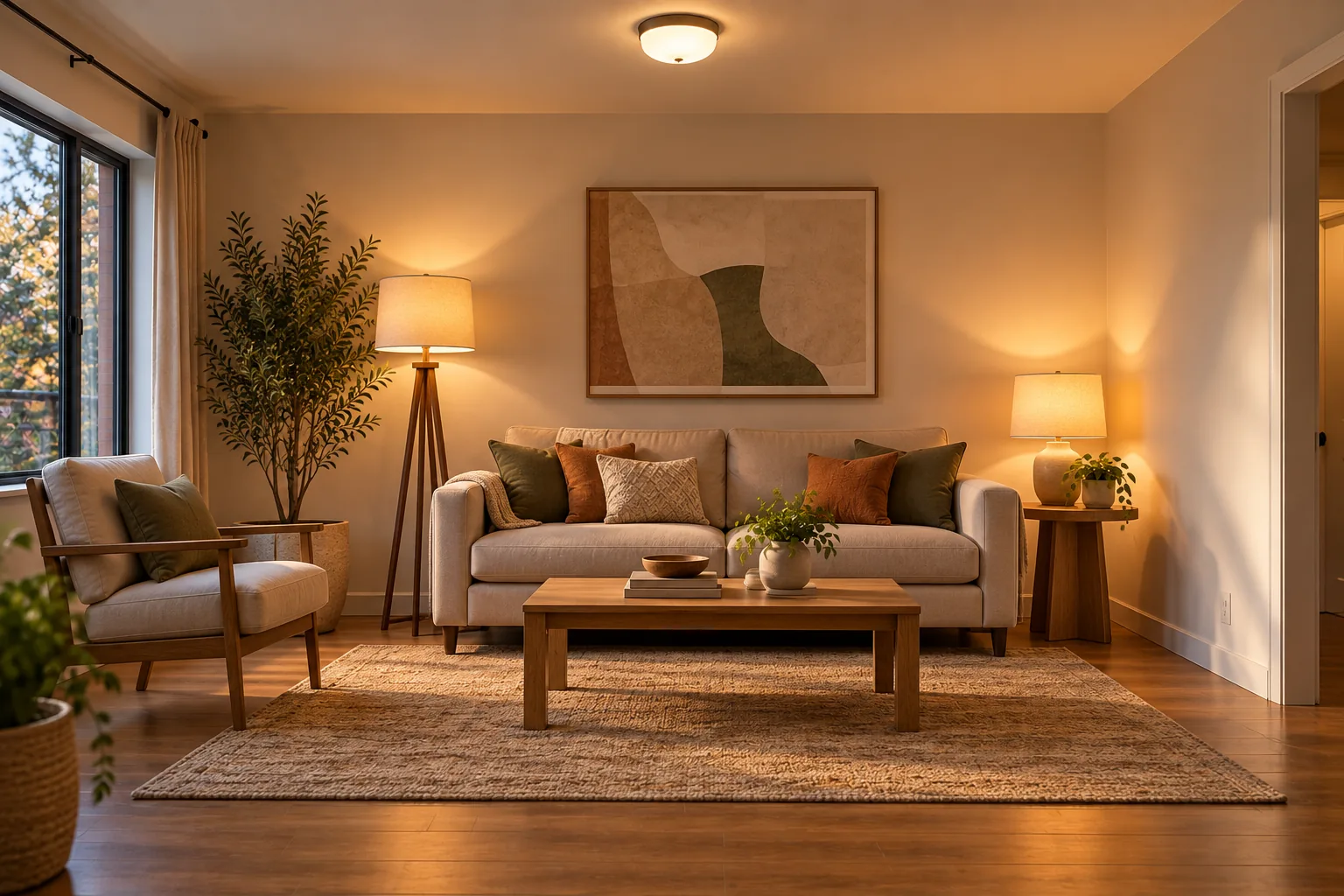
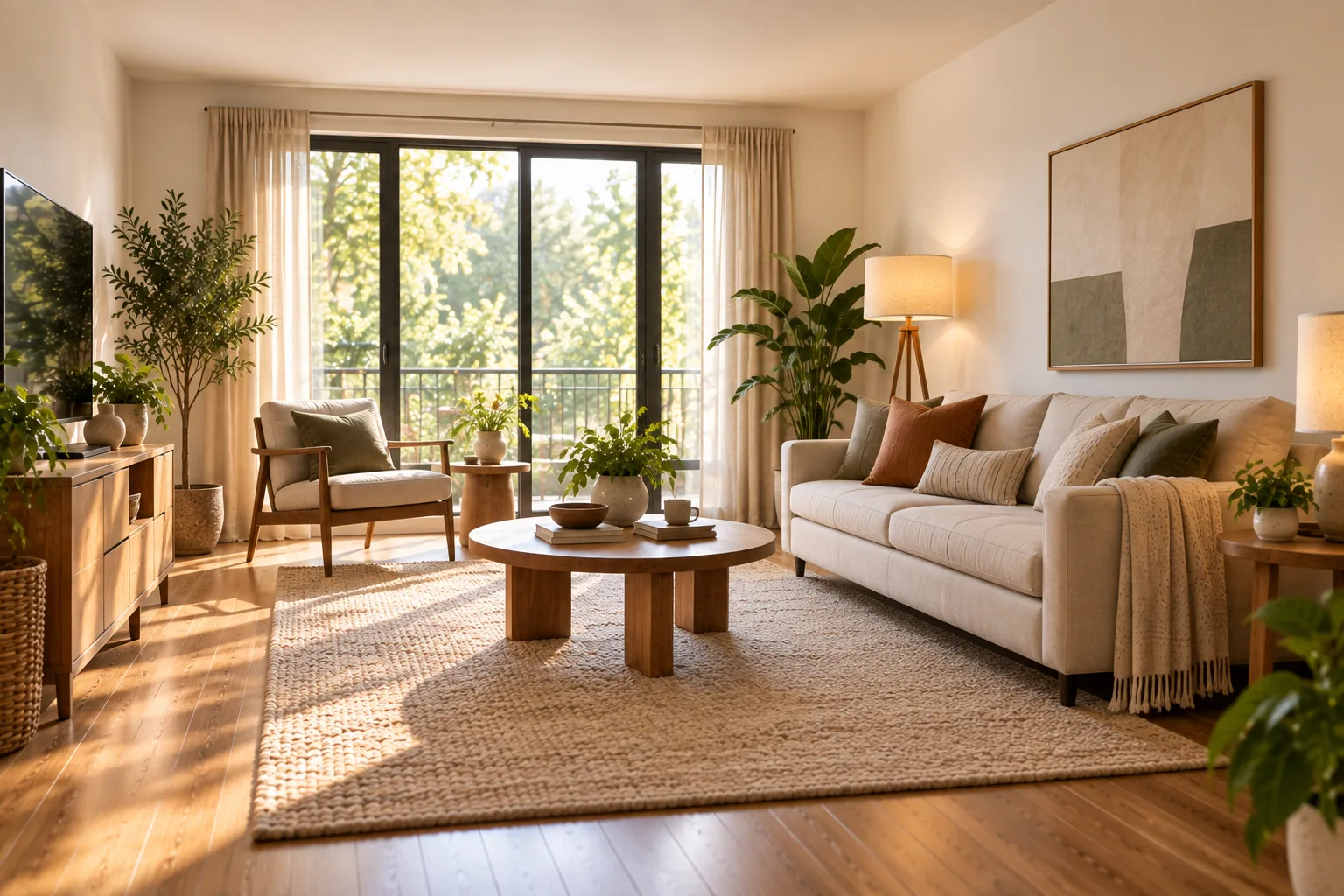
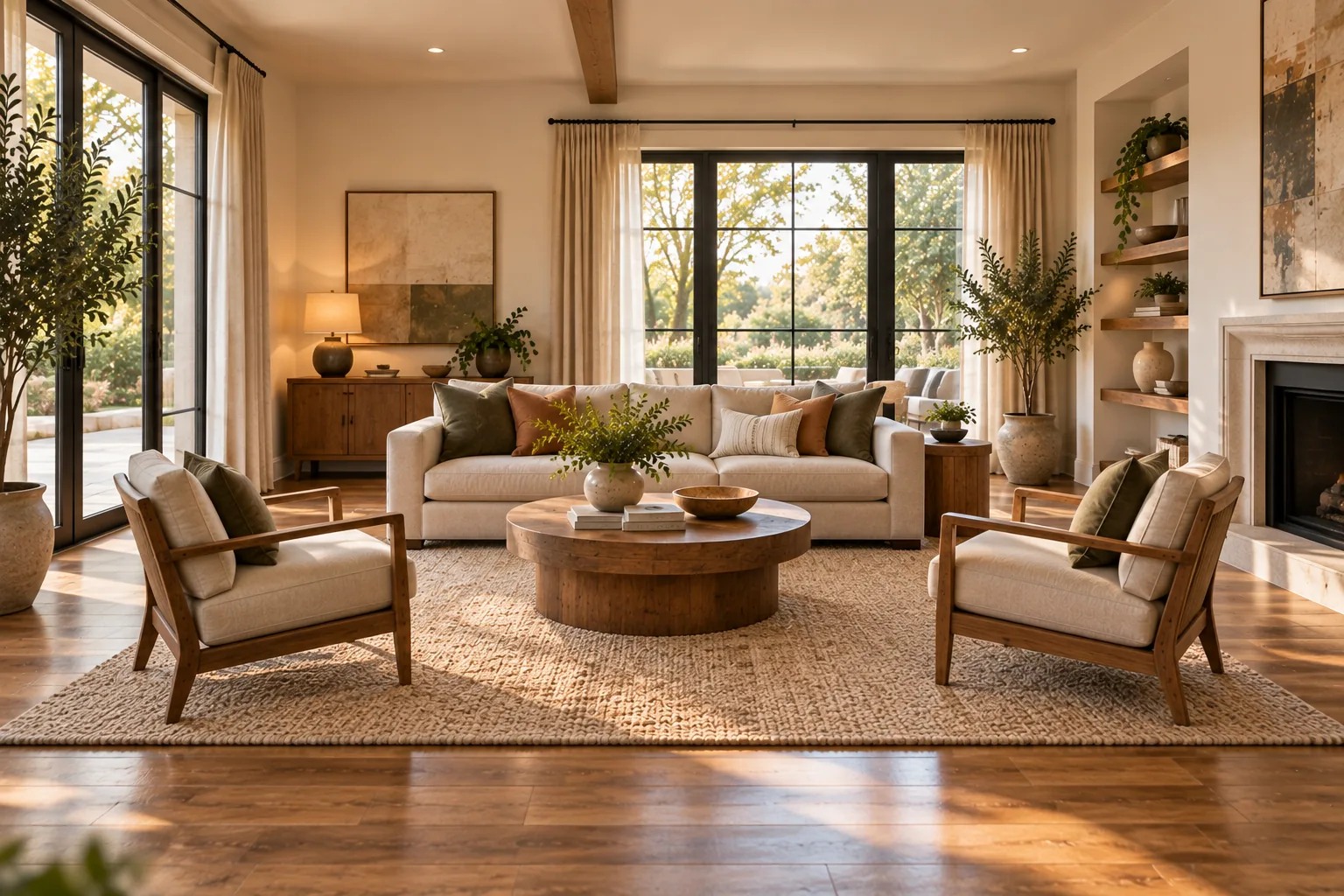
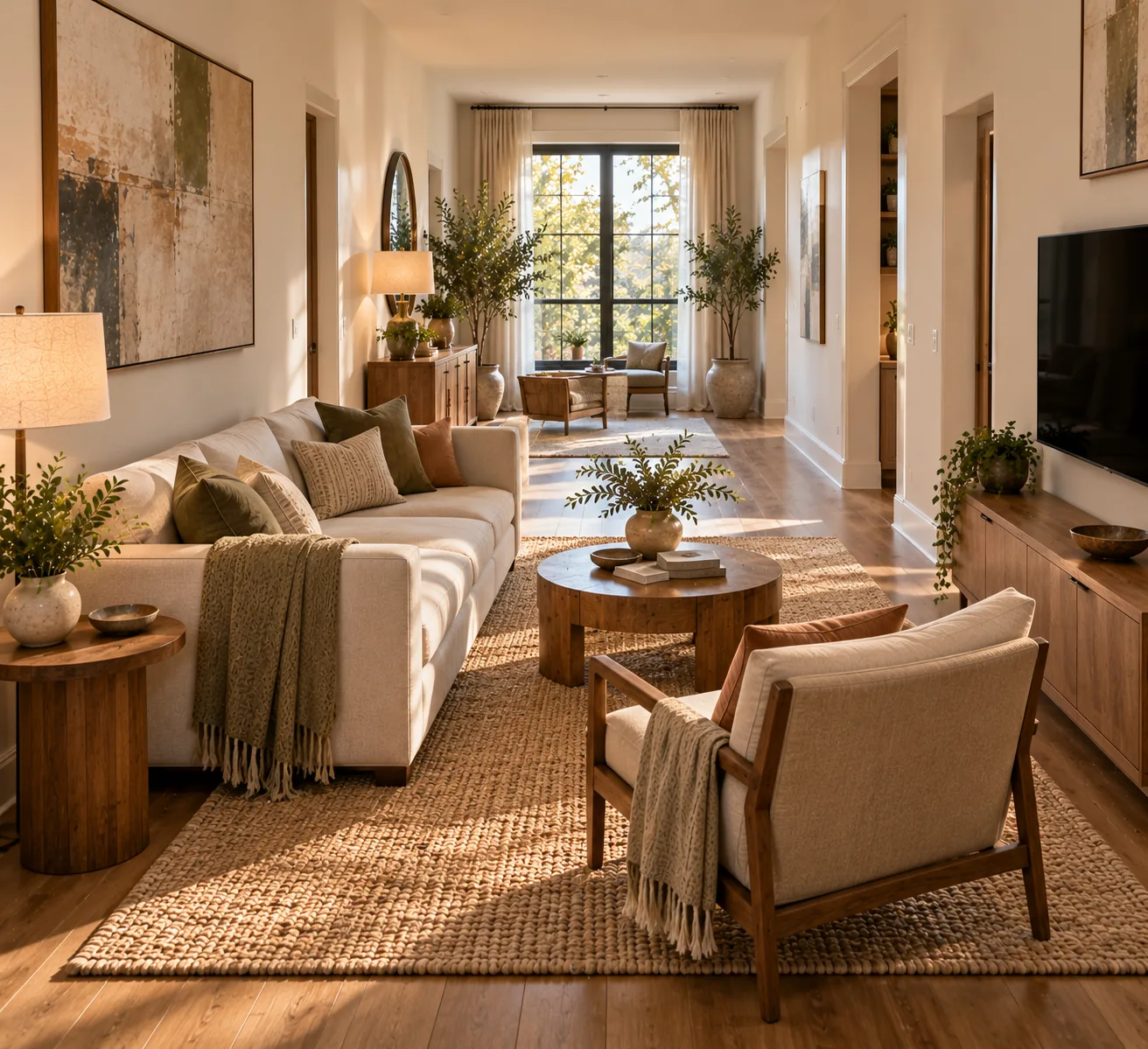
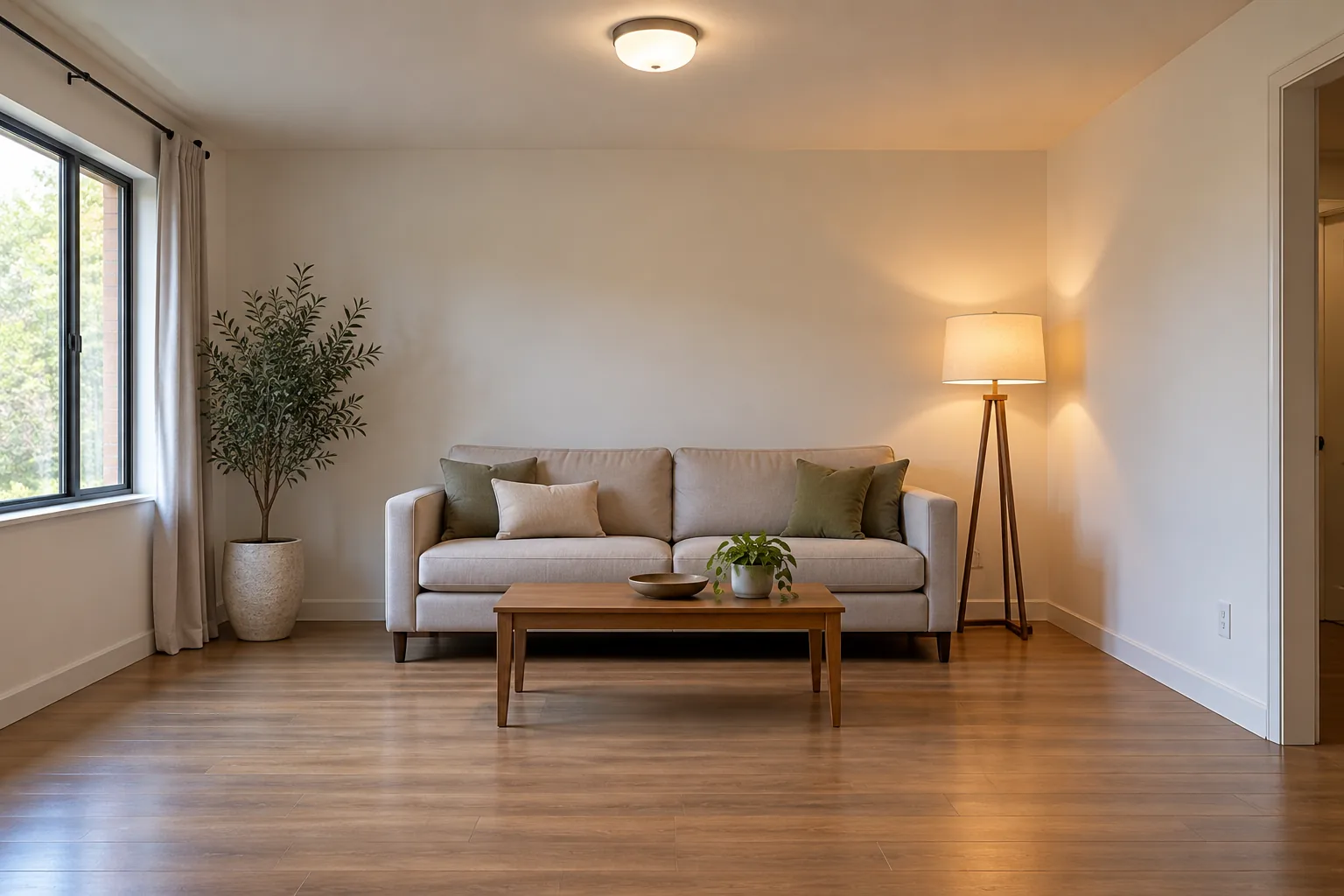
A living room with a sofa, an accent chair, and a coffee table, all correctly sized and arranged, still reads as a showroom because the only light is the overhead fixture and the floor is bare hardwood straight through. Adding a floor lamp and an 8×10 rug under the seating group, with no other purchases, is usually enough to make the exact same furniture suddenly read as a finished room.
The Empty-Walls Room
A room can have great furniture and still feel unfinished if the walls are bare above chair-rail height. A single large piece of art or a tall plant in one corner does more for how "done" a room feels than a second matching accent chair — vertical interest is usually the more efficient purchase.
The Everything-Matches-Perfectly-But-Feels-Sterile Room
Sometimes the issue is the opposite of clutter: a room where every piece was bought as a matching set feels showroom-flat for a different reason — nothing about it looks collected or personal. Mixing in one or two pieces that don't perfectly match, the same principle covered in the interior design principles that make any home feel more beautiful, usually resolves this faster than buying anything new.
Common Mistakes When Trying to "Finish" a Room
Mistake: Buying more furniture instead of fixing lighting. A second side table or an extra accent chair rarely solves the flat feeling, because the room's problem usually isn't furniture quantity. Fix lighting and the rug first, then reassess before buying anything else.
Mistake: Hanging art too high. Art hung with its center well above eye level (roughly 57–60 inches from the floor to the center of the piece) disconnects it from the furniture below it instead of relating to it, undercutting the exact height and connection a room needs.
Mistake: Choosing a rug that's technically the right size but placed wrong. A correctly sized rug pushed against a wall instead of centered under the seating group still leaves furniture looking disconnected from it. Size and placement both matter, not just size.
Mistake: Treating symmetry as the finish line. A perfectly matched, symmetrical room can still feel unfinished if it has no layered light or height. Symmetry is a styling choice, not a substitute for the three things covered above.
A Room-by-Room Finishing Checklist
- Is there a light source in the room besides the overhead fixture, and is it on right now?
- Does the rug reach under the front legs of the main seating, not just sit near it?
- Is there anything in the room taller than the back of the sofa — art, a plant, a floor lamp?
- Does everything in the room match exactly, with nothing collected or personal mixed in?
- If you fixed lighting and the rug and it still feels unfinished, is the furniture actually sized correctly for the room?
That last question is worth taking seriously before spending on more decor — if the underlying furniture sizing is off, no amount of lighting or rug placement will fully resolve it. Our guide on choosing furniture that actually fits your room covers how to check that specifically, and the free HOMEQIA Smart Room Planner below can give you a starting point for your own room's dimensions.
Finished Isn't the Same as Full
A room doesn't feel finished because it has enough furniture in it — it feels finished when light, floor, and height all work together instead of each doing its own separate thing. Most of what's "missing" from an unfinished room costs less than another piece of furniture would, and takes an afternoon rather than a full redecorating budget to fix.
Why does my living room feel unfinished even though it's fully furnished?
Usually because of what's missing between the furniture, not the furniture itself — most often layered lighting, a properly sized and placed rug, or nothing in the room taller than the back of the sofa.
What's the cheapest way to make a room feel more finished?
Adding a second light source (a floor or table lamp) and turning it on instead of relying on the overhead fixture is usually the single cheapest, fastest fix available.
Does a rug really make that much difference?
Yes — a correctly sized rug that reaches under the front legs of the main seating visually ties furniture together into one grouping instead of several separate floating objects.
Should I add more furniture if the room still feels unfinished?
Not as a first step. Fix lighting, rug sizing and placement, and vertical height first, then reassess — most unfinished-feeling rooms are a layering problem, not a quantity problem.