How to Choose the Right Rug Size for Every Room
The front-legs rule, room-by-room sizing, and how to measure before you buy — a complete rug sizing guide, not just "measure your space
An area rug that's too small doesn't just look slightly off. It visually shrinks the room around it.
Most advice on buying a rug stops at "measure your space," without explaining what that actually means in practice. That's how so many living rooms end up with a rug that's technically present but doing none of the job it's supposed to do — a small island of pattern floating in the middle of the floor, disconnected from the furniture around it. Getting rug size right is less about the room's total square footage and more about the furniture sitting on top of it.
Why Rug Size Is So Easy to Get Wrong
Rugs are usually bought by picturing the rug on its own — in a showroom, in a product photo, rolled out on a bare floor. In every one of those contexts, a rug that would actually be too small for a real room looks perfectly reasonable, because there's no furniture around it to reveal the mismatch.
The other common error is sizing a rug to the room instead of to the furniture group sitting in it. A 12-by-15-foot living room and an 8-by-10-foot rug sound proportional on paper, but if the sofa and chairs are pushed against the walls, that rug can still end up floating in open floor with no furniture touching it at all.
The Core Principle: A Rug Anchors Furniture, Not Just Fills Floor
A rug's job is to visually tie a furniture grouping together into one considered arrangement. When a rug is sized and placed correctly, the eye reads the sofa, chairs and coffee table as one connected zone — the same quality that makes an elegant living room feel put-together rather than simply furnished. When a rug is undersized, the same furniture reads as a collection of separate pieces that happen to share a room, with the rug reduced to a decorative afterthought in between them.
The Front-Legs Rule
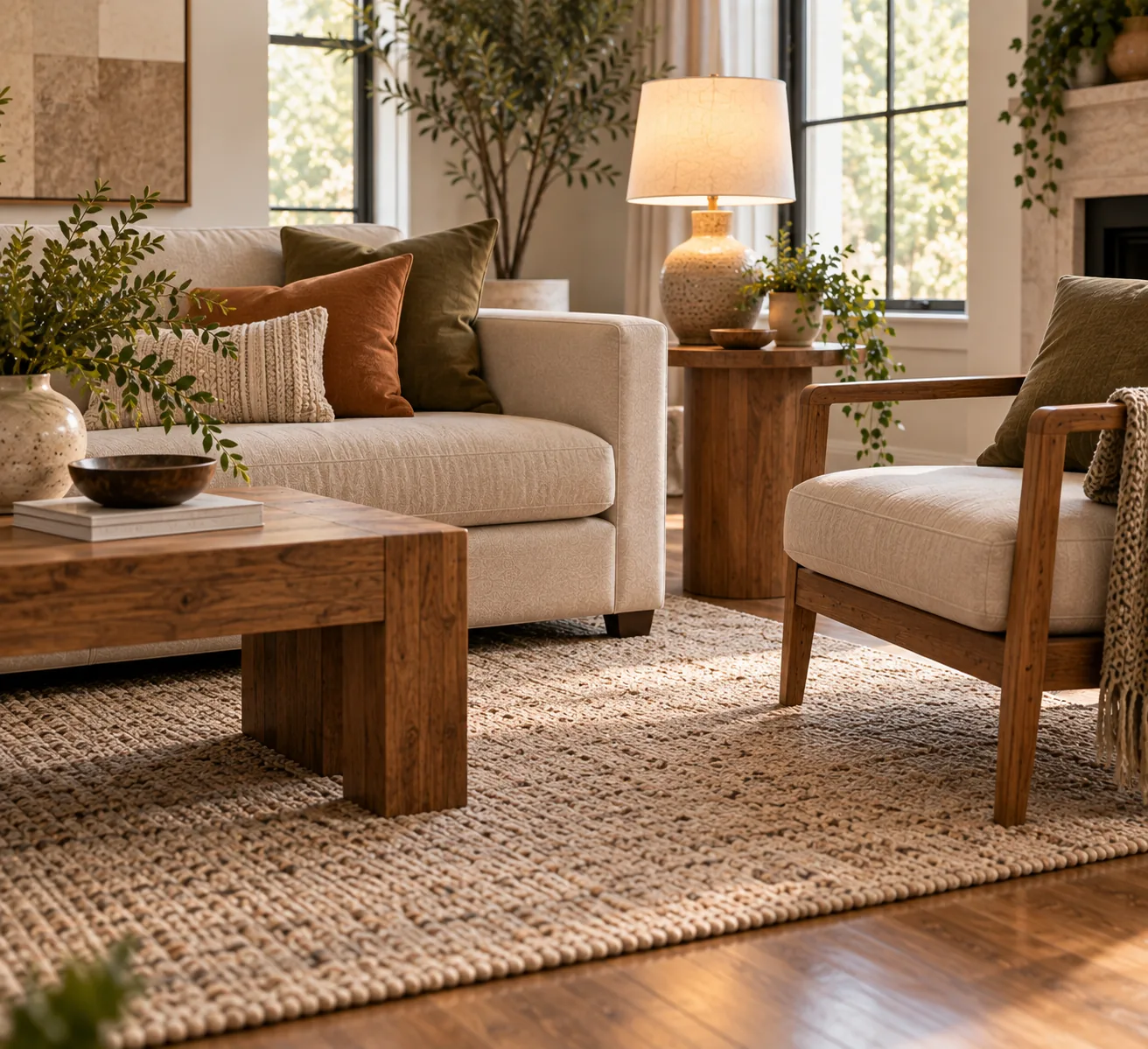
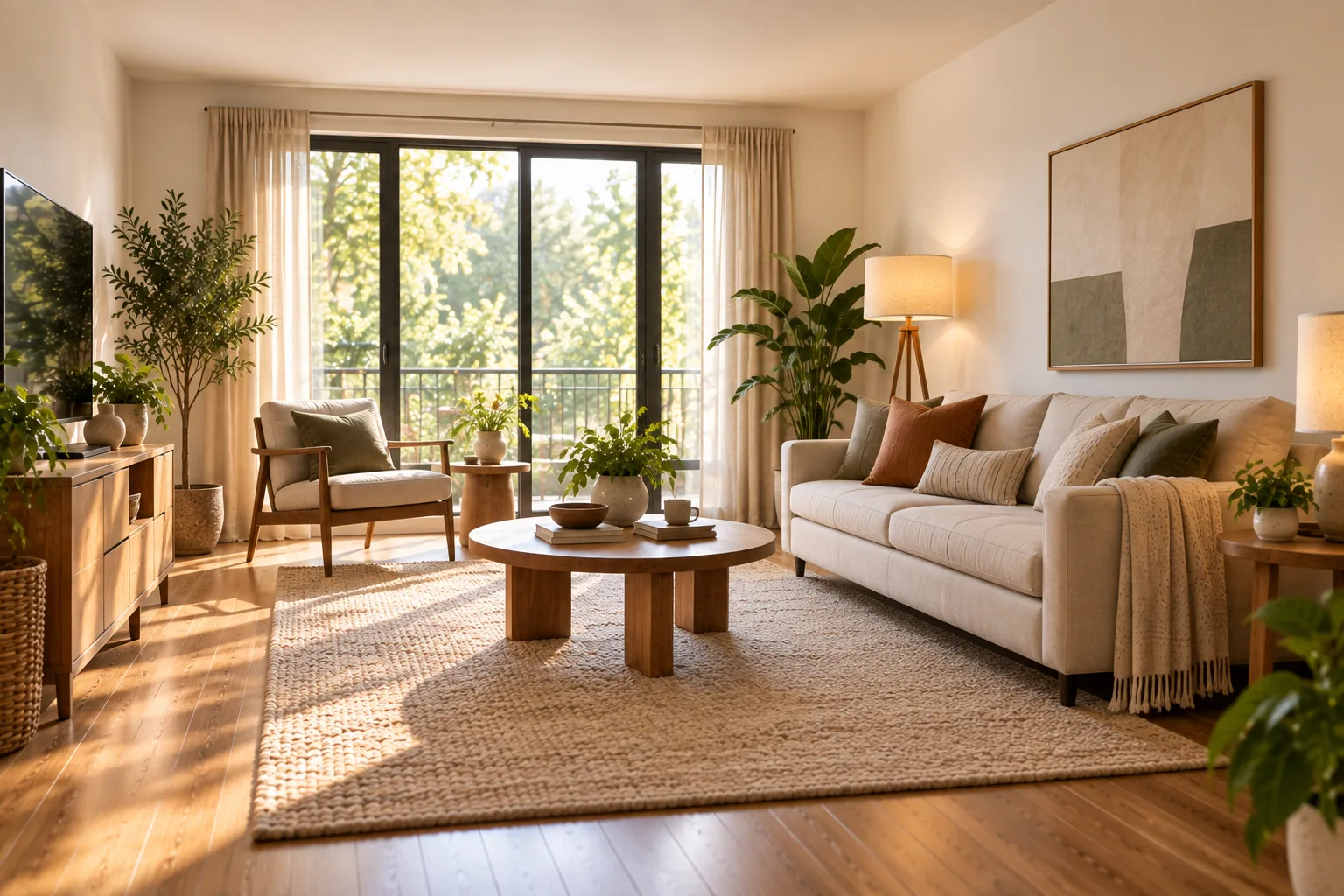
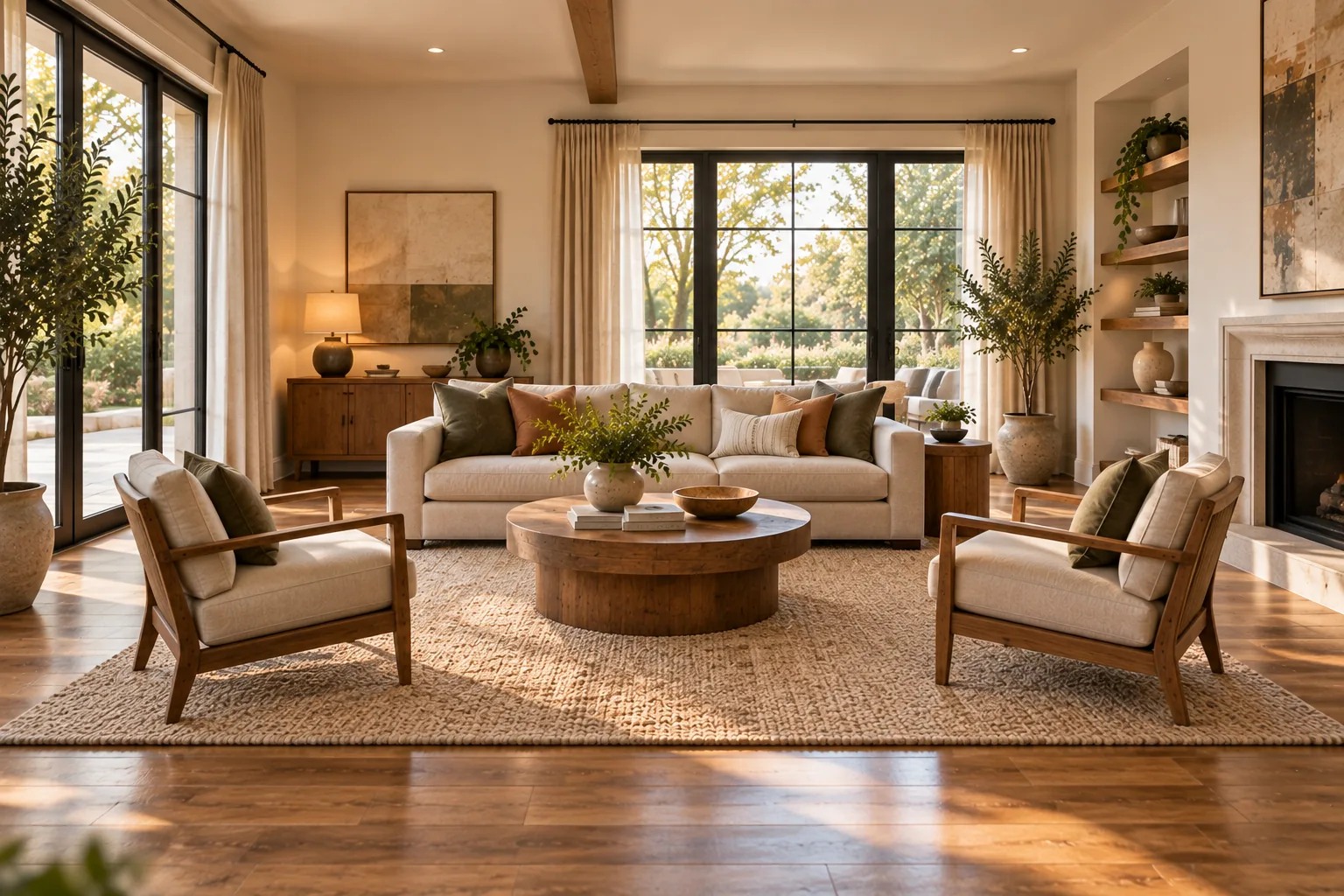
The most reliable sizing guideline: at minimum, the front legs of every piece of seating should rest on the rug. Ideally, all four legs of each piece do, which requires a larger rug but reads as more grounded and intentional. A rug that only the coffee table touches, with every seat floating around its edges, is the single most common sizing mistake in living rooms.
As a rough guide for a standard living room: a 5-by-8 rug works only for a very tight seating group of two pieces close together; 8-by-10 is the realistic minimum for a sofa plus two chairs with all front legs on the rug; 9-by-12 allows all four legs of every piece to sit on it in most average-sized rooms.
How to Actually Measure Before You Buy
Skip measuring the room itself as a first step. Instead, arrange the furniture the way you actually want it — or mark out the intended arrangement with painter's tape on the floor if it isn't in place yet — and measure the full footprint that group of furniture occupies, corner to corner. Add the clearance described above for the room type (a foot per side for living room seating, 24-30 inches for a dining table) to that footprint, and round up to the nearest standard size rather than down. A rug that's slightly larger than the exact math always looks more intentional than one that's slightly smaller.
Standard sizes to know: 5x8, 6x9, 8x10, 9x12, and 10x14. Custom or cut-to-size rugs exist, but they cost meaningfully more per square foot than a standard size, so it's worth checking whether the next standard size up actually solves the problem before paying for a custom cut.
A Real Example: The Open-Concept Living-Dining Combo
Small apartments and open-concept homes often ask one rug to do a job it can't do: define both a living area and a dining area at once. This rarely works well — a single large rug spanning both zones tends to read as one oversized, undifferentiated space rather than two considered areas. Two separate rugs, one sized correctly for the seating group and one sized correctly for the dining table, with a foot or two of bare floor between them, does more to make an open-concept space feel organized than one rug ever could, even though it means buying two rugs instead of one.
Living Room Rug Sizing
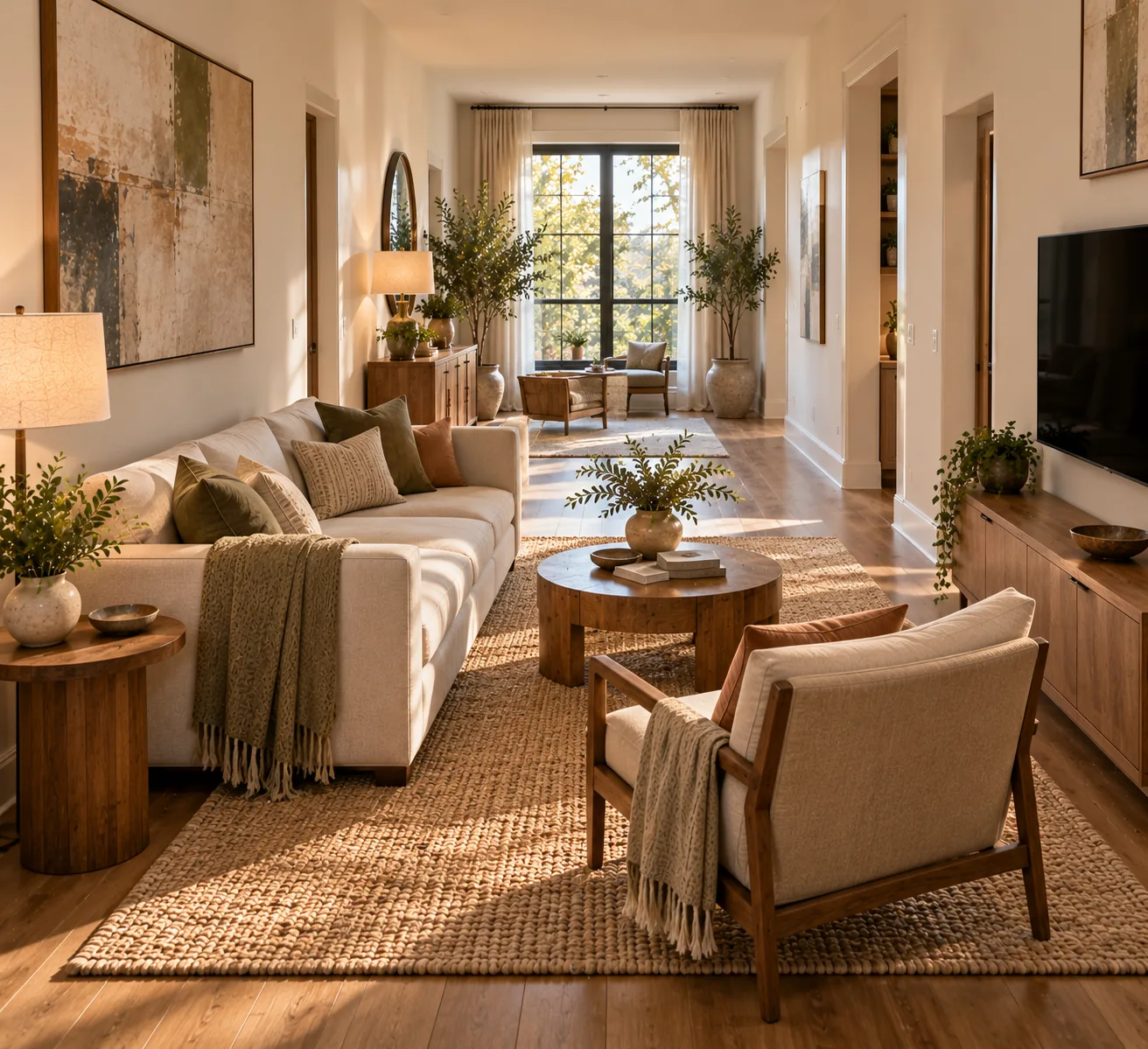
Measure the full seating group first — sofa, chairs, and the space between them — not the room itself. Add roughly a foot of rug beyond the furniture's outer edge on each side where possible. If your living room is also fighting an awkward layout, not just a rug problem, arranging furniture in a narrow or awkward living room is worth solving alongside the rug, since the two problems usually show up together: a room that doesn't have an obvious furniture arrangement rarely has an obvious rug size either.
Dining Room Rug Sizing
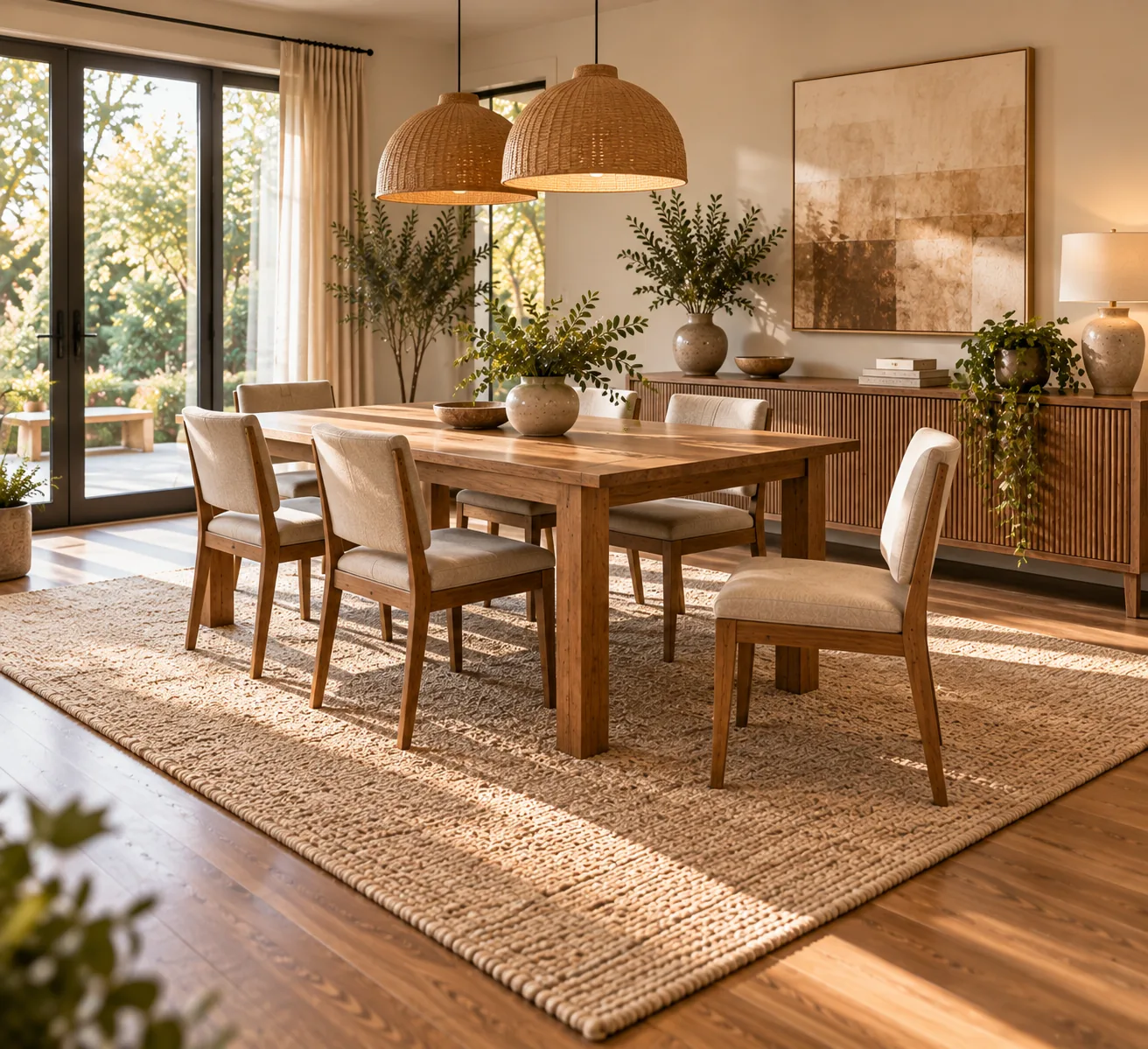
Dining rugs need to account for chairs in use, not just chairs pushed in. The rug should extend at least 24 to 30 inches beyond the table's edge on all sides, so that when someone pulls a chair back to sit down, the chair's back legs stay on the rug instead of catching on the transition to bare floor. A rug sized to the table alone, without this allowance, is uncomfortable in practice even when it looks fine in a photo.
Bedroom Rug Sizing
A rug that only peeks out from under the center of the bed does very little. For a queen or king bed, a rug should extend at least 18 to 24 inches beyond the sides and foot of the bed, so your feet land on it getting in and out. In smaller bedrooms or on a budget, two runners placed parallel on each side of the bed, rather than one large rug beneath it, solve the same problem for less cost and are easier to move if you rearrange later.
Entryways and Hallways
Runners in these spaces typically run 2.5 to 3 feet wide, with a few inches of floor visible on either side rather than wall-to-wall coverage. The length should generally stop 6 to 8 inches from any door swing so the rug doesn't catch or bunch as the door opens and closes.
Common Rug Sizing Mistakes
Mistake: Sizing to the room instead of the furniture. A rug chosen to match the room's square footage, without measuring the actual furniture group sitting on it, is the root cause of most undersized-rug problems. Measure the furniture first, the room second.
Mistake: Floating a small rug in the center with all furniture around the edges. This is the visual result of the mistake above. The fix isn't a different rug pattern or color — it's a larger rug, full stop.
Mistake: Assuming a properly sized rug is always unaffordable. Natural fiber options like jute and sisal cost meaningfully less per square foot than wool at the same size, and are a legitimate way to get the correct footprint without the higher price tag of a smaller wool rug. Layering a budget jute rug under a smaller, nicer patterned rug is another way to get both the right size and a more interesting look for less than one large patterned rug would cost.
Mistake: Ignoring the relationship between rug shape and table shape. A round dining table generally pairs better with a round or oval rug that echoes its shape, while a rectangular table works with a rectangular rug that extends past its corners. A mismatch here reads as slightly off even when the size itself is correct.
Mistake: Choosing material based on looks alone. Wool holds up well underfoot and resists stains reasonably well, but costs the most per square foot. Jute and sisal are affordable and durable but can feel rough underfoot and don't handle moisture well, making them a poor choice near an entry in a wet climate. Synthetic blends split the difference — softer than natural fiber, less expensive than wool, and generally a safer choice in a high-traffic household with kids or pets. Matching the material to how the room is actually used matters as much as matching the size.
Renter-Friendly Rug Considerations
None of the sizing principles above require any permanent installation. Use a rug pad rather than adhesive strips to prevent slipping and protect flooring, especially over hardwood in a rental where floor damage could affect a deposit. If you're renting and might move the rug between spaces later, a slightly more standard size (8-by-10, 9-by-12) is easier to reuse in a future room than a custom or oddly proportioned cut.
If You Can Only Get One Room Right First
Furnishing an entire home with correctly sized rugs at once is rarely realistic on a normal budget. If you have to prioritize, start with the living room. It's the room where an undersized rug is most visible — the furniture group is usually the largest in the home, and a mismatch there affects how the whole room is perceived every time you walk into it. Bedrooms and hallways are more forgiving to get wrong temporarily, since the consequence is smaller and easier to live with while you save for the next piece.
A Simple Rug-Sizing Checklist
- Have you measured the furniture group, not just the room?
- Will at least the front legs of every seating piece rest on the rug?
- For a dining rug, does it extend 24-30 inches past the table on all sides?
- For a bedroom rug, does it extend 18-24 inches past the bed's sides and foot?
- Does the rug's shape make sense with the furniture or table it sits under?
Get the Anchor Right First
A correctly sized rug is one of the few single purchases that changes how an entire room reads, because it affects how every other piece of furniture in that room is perceived. Measure the furniture group before the room, follow the front-legs rule as a minimum, and the rest of the room's proportions tend to fall into place around it. For the layout and proportion principles this connects to more broadly, the interior design principles behind rooms that feel beautiful covers why properly anchored furniture matters beyond just rugs.
What size rug do I need for an 8-by-10-foot bedroom?
In a room that size, a 5-by-7 or 6-by-9 rug positioned so it extends well beyond the sides of the bed usually works better than a rug sized to the full room, which would leave almost no floor margin around the furniture.
Should all four legs of my sofa be on the rug?
Ideally yes, but at minimum the front legs should rest on it. All four legs on the rug reads as more grounded, but front-legs-only is an acceptable and common compromise in smaller rooms.
Can I use two rugs instead of one large rug in a living room?
Yes, layering a smaller patterned rug over a larger neutral one is a legitimate design choice, not just a budget workaround — as long as the larger base rug still meets the front-legs rule for the full seating group.
How far should a dining rug extend past the table?
At least 24 to 30 inches on all sides, so chairs stay on the rug even when pulled back from the table to sit down.
What's a budget-friendly way to get a properly sized rug?
Natural fiber rugs like jute or sisal cost significantly less per square foot than wool at the same dimensions, making it realistic to size correctly without overspending. Layering a smaller decorative rug on top is optional, not required.