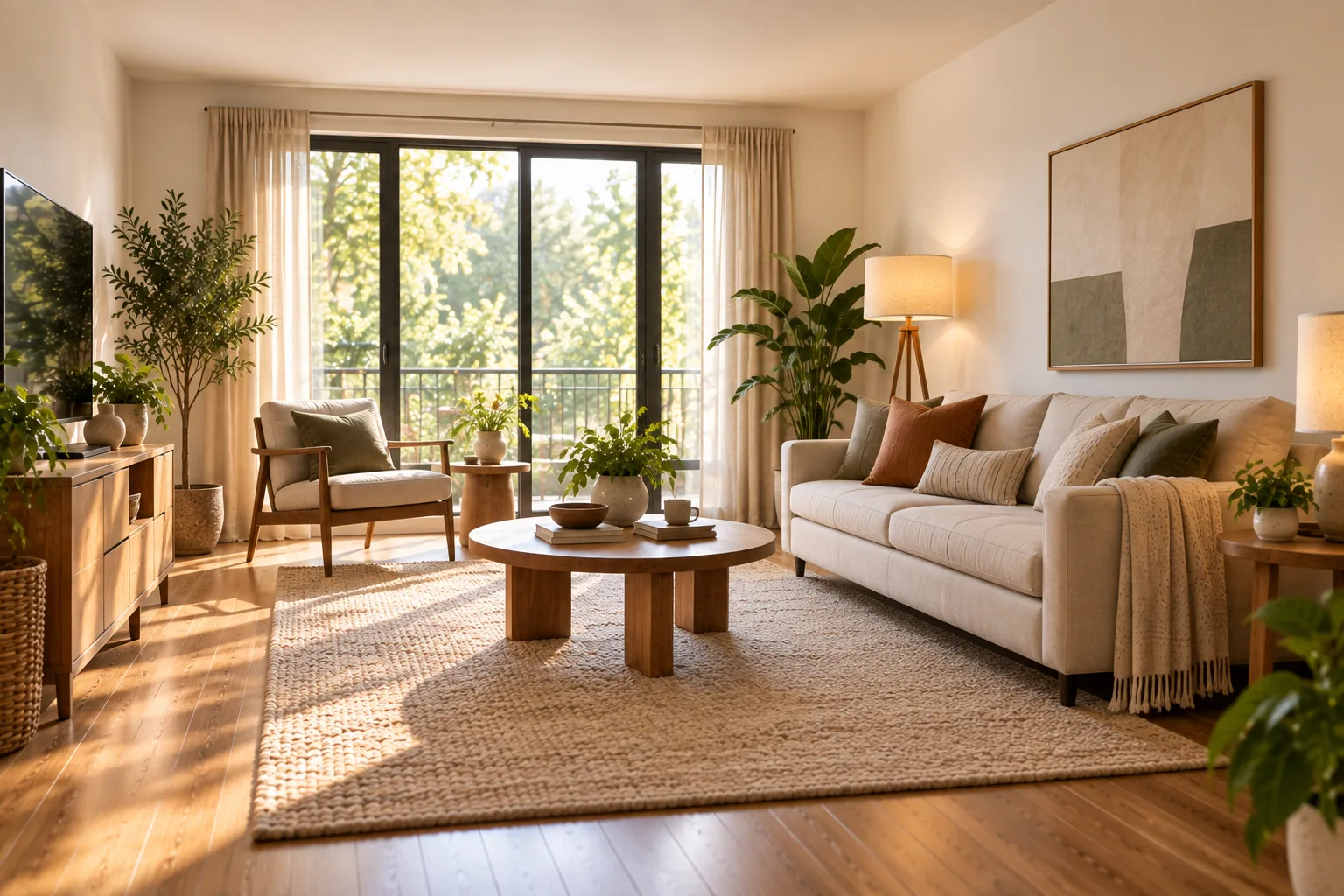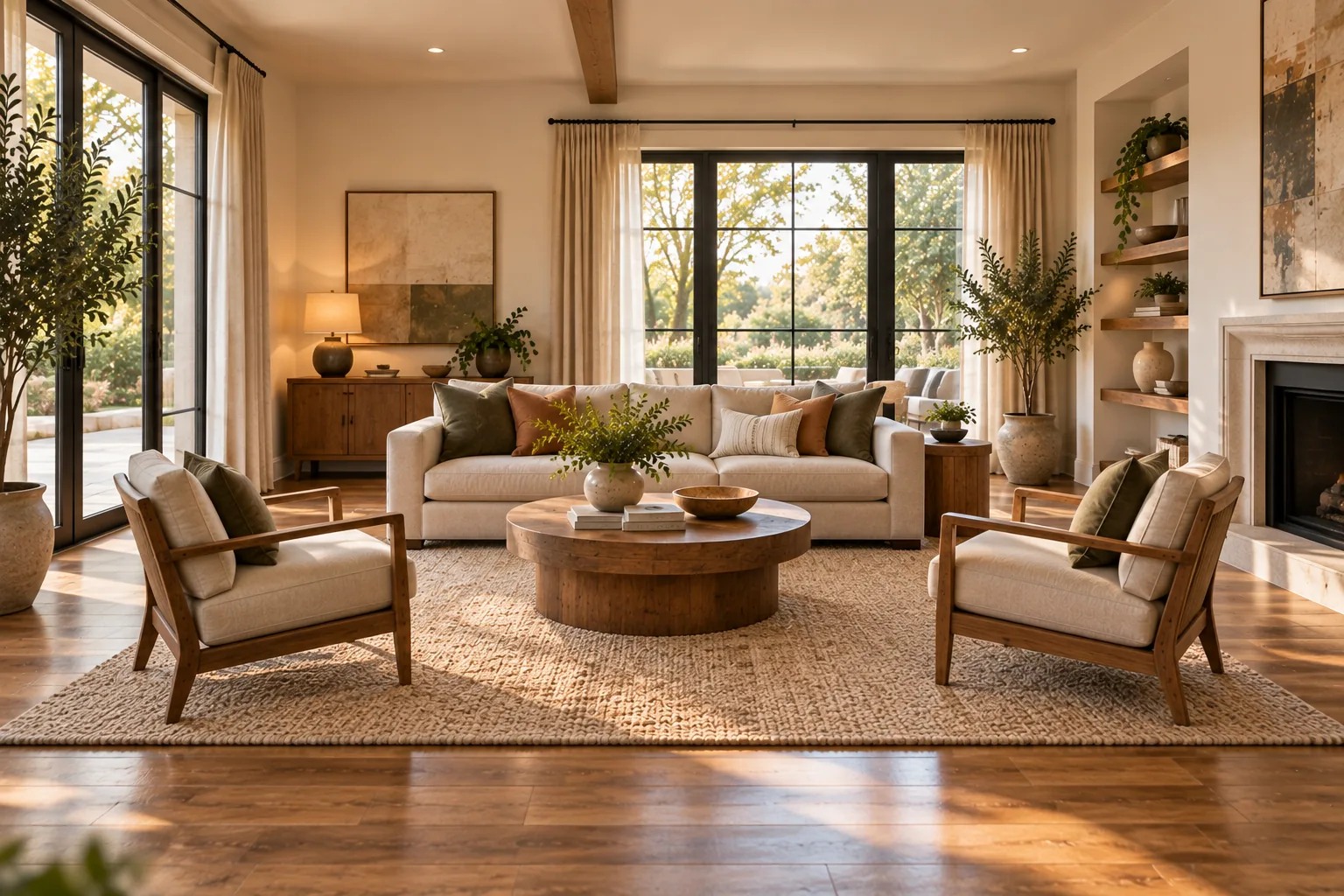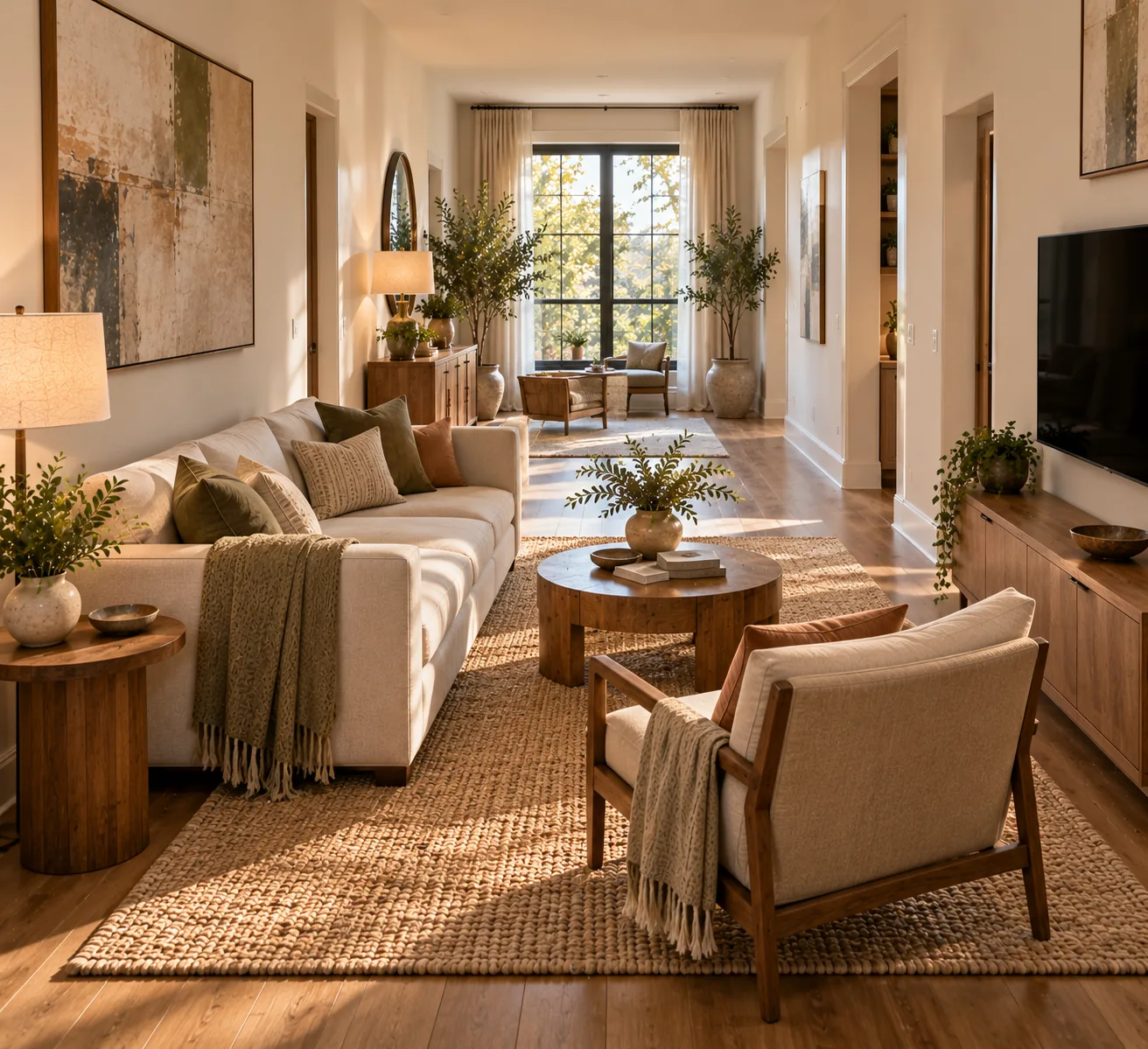
25 Living Room Ideas That Make Your Home Feel More Elegant
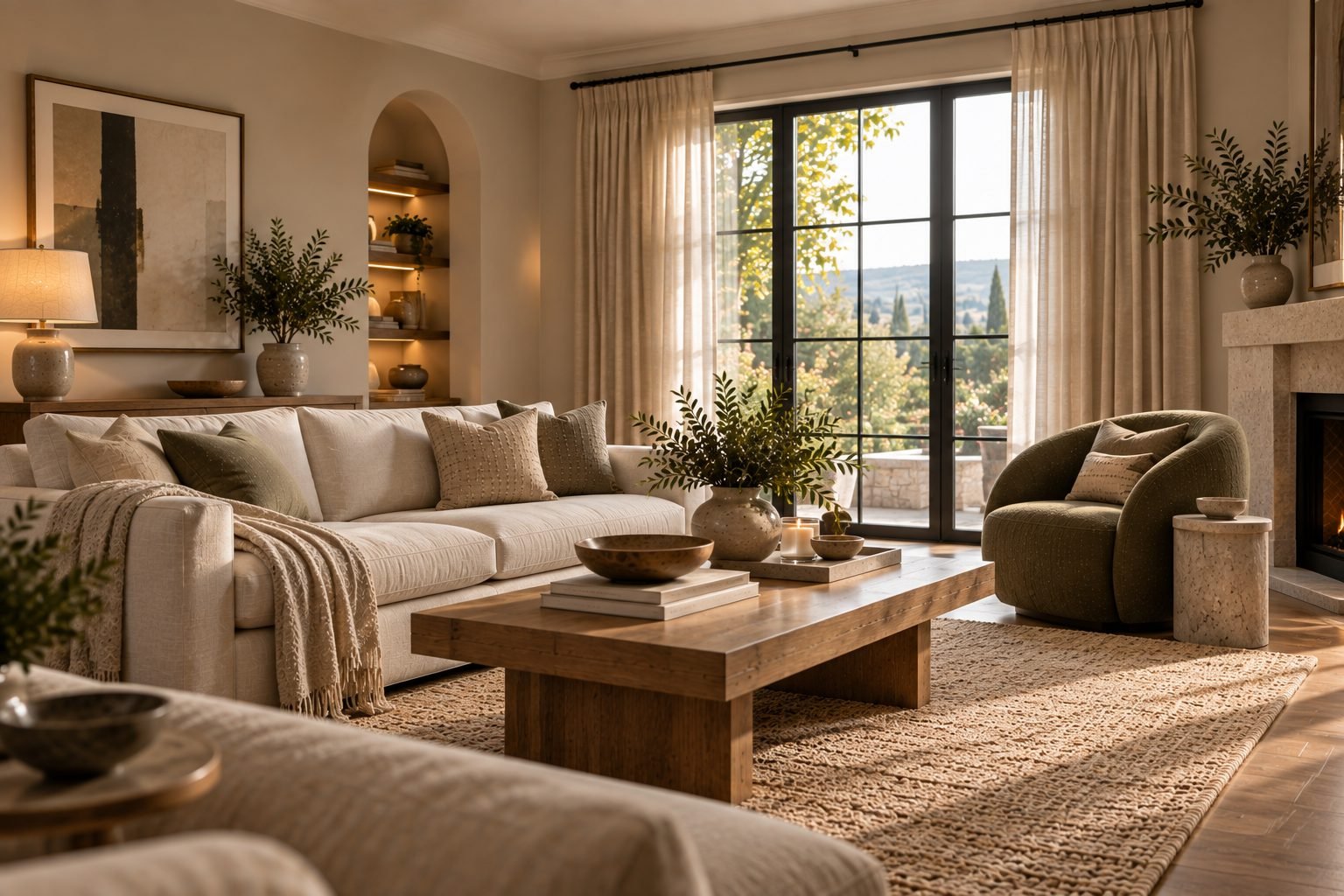
25 ways to make a living room feel more considered and elegant — through proportion, restraint and texture, not a bigger budget
Elegant doesn't have to mean expensive.
It's tempting to think a more elegant living room means a bigger sofa, a pricier rug, or more furniture altogether. In practice, the opposite is usually true. The living rooms that feel the most considered are rarely the most expensive — they're the ones where proportion, restraint, texture and composition have been thought through deliberately.
None of the ideas below require a renovation or a new furniture budget. Most are about how what you already own is scaled, arranged and edited. Here are 25 ways to make a living room feel calmer, more composed and genuinely more elegant.
1. Start With a Restrained Colour Palette
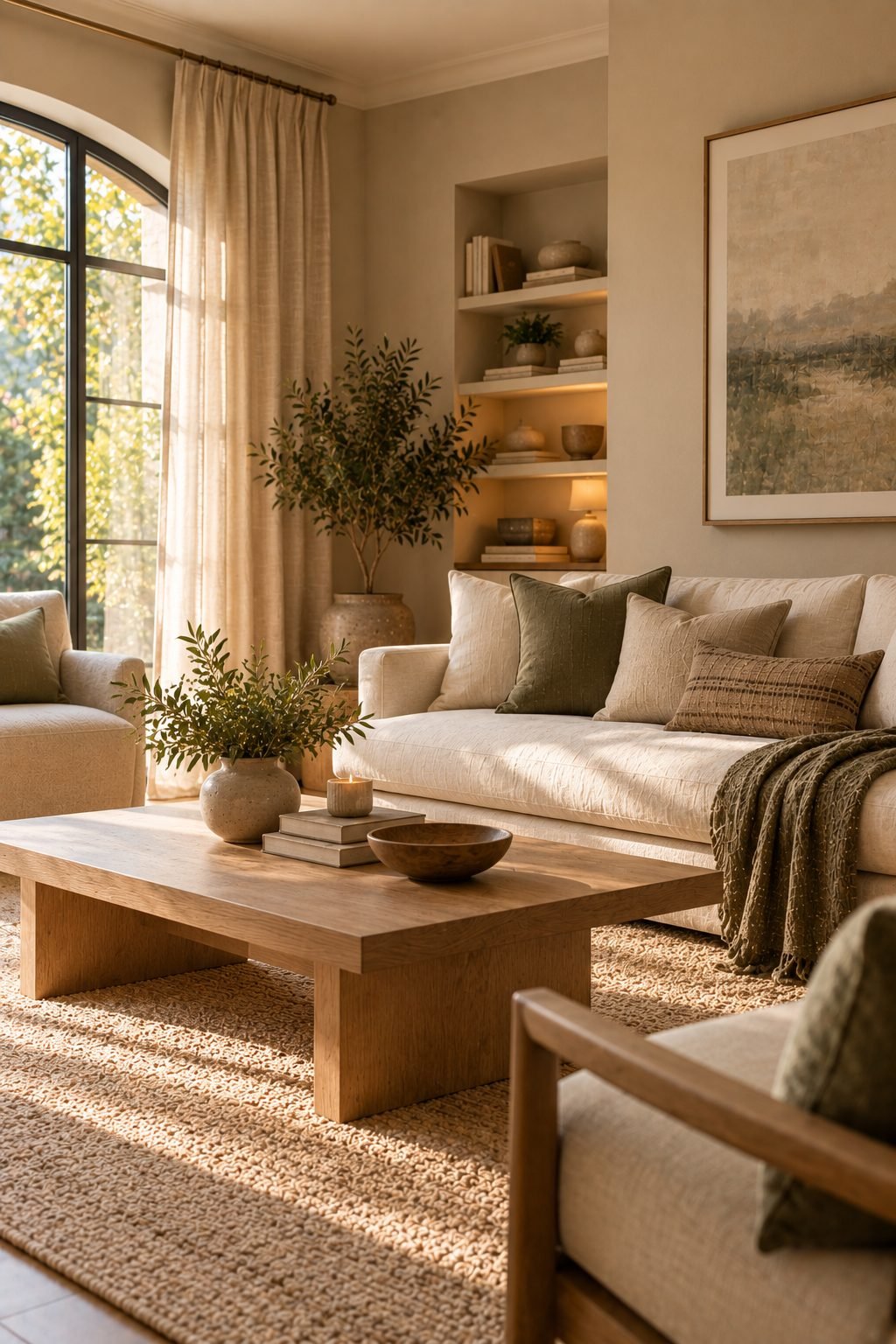
A restrained palette is one of the fastest ways to make a room read as considered rather than accumulated.
This doesn't mean every surface needs to be the same shade of white. It means the walls, large furniture and floor should sit close enough in tone that nothing fights for attention before you've even taken in the room. Save contrast for the details — a dark picture frame, a textured cushion — rather than the architecture of the space.
A living room that feels calm the moment you walk in almost always starts with this decision.
2. Choose a Properly Scaled Sofa
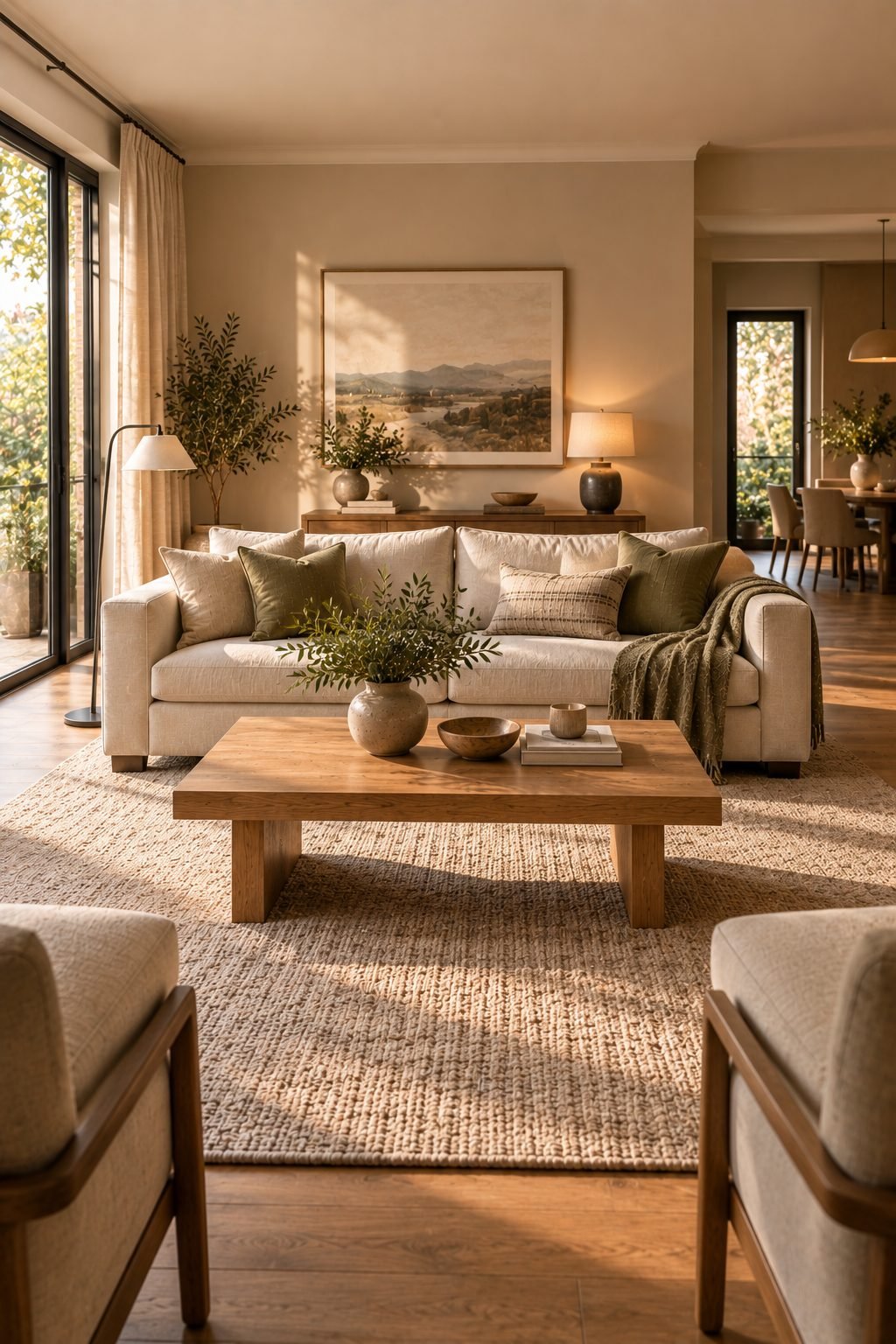
An oversized sofa is one of the most common ways an otherwise good living room stops feeling elegant. When a sofa is too large for the room, it pushes into walkways and forces everything else — the rug, the coffee table, the chairs — into cramped, awkward positions.
Before buying, measure the space you'll actually have around the sofa once it's in place, not just the wall it will sit against. A slightly smaller, well-proportioned sofa almost always reads as more elegant than an oversized one squeezed into the room.
3. Get Coffee Table Proportions Right
A coffee table that's too small looks lost in front of a large sofa; one that's too large blocks circulation and dominates the room.
As a general guide, the top of the coffee table should sit roughly level with the sofa seat cushion, and there should be enough space around it to walk past comfortably. Proportion here matters more than style — a beautiful table at the wrong scale will still look wrong.
4. Layer Your Lighting
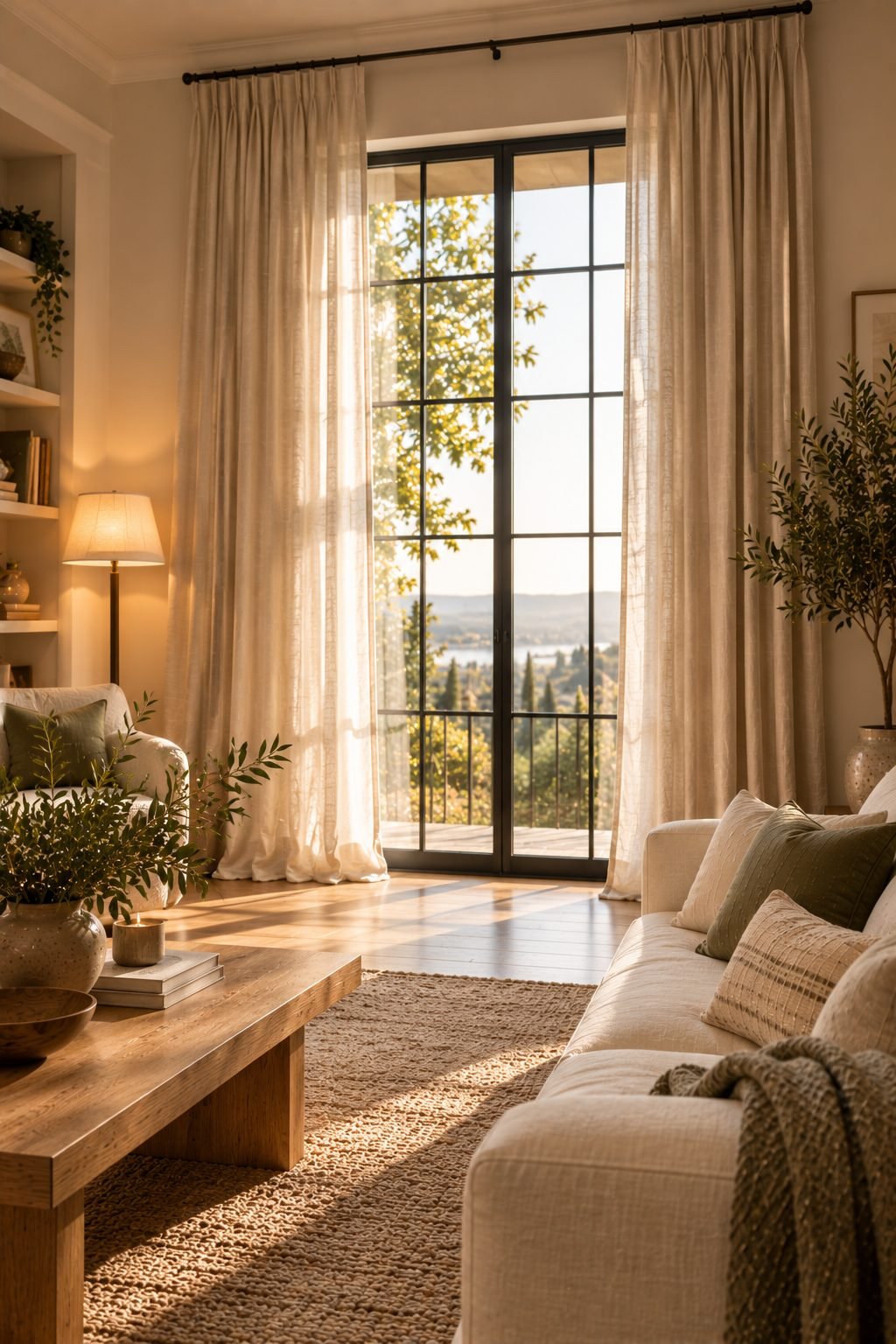
A single overhead light source can make even a beautifully furnished living room feel flat and utilitarian after dark.
Layering ambient, task and accent lighting — a floor lamp in a reading corner, a table lamp beside the sofa, perhaps a picture light over artwork — creates depth in the room that a single ceiling fixture never will. Dimmable, warm-toned bulbs make this layering feel intentional rather than makeshift.
5. Choose Curtains That Elevate the Room
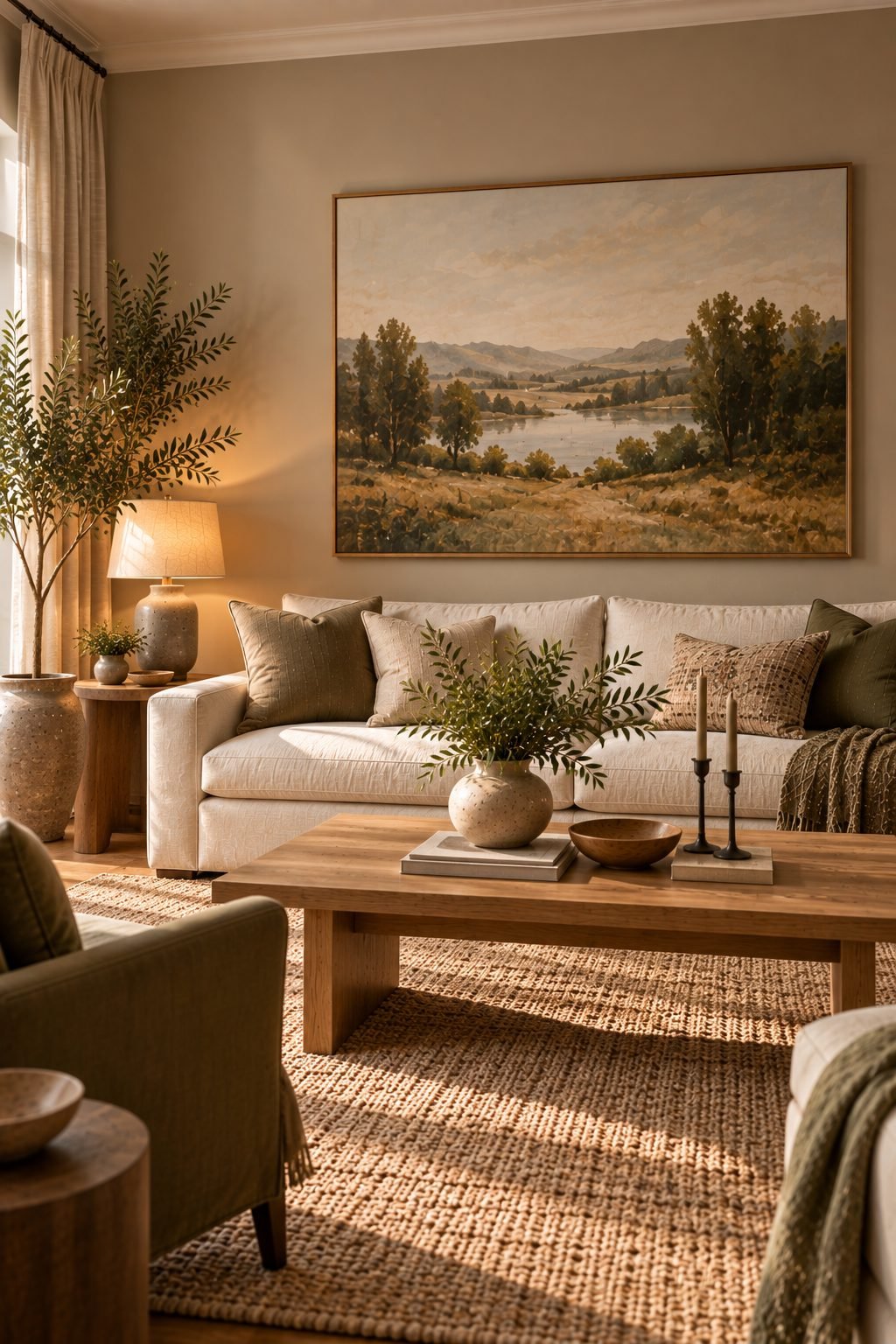
Short, tight curtains can make even a well-designed living room feel unfinished. Floor-length panels, hung as close to the ceiling as practical, draw the eye upward and give the whole room a sense of height.
Choose a fabric with some weight and texture rather than something thin and flat, and let the fabric fall generously rather than stretching it taut.
6. Add Meaningful Artwork
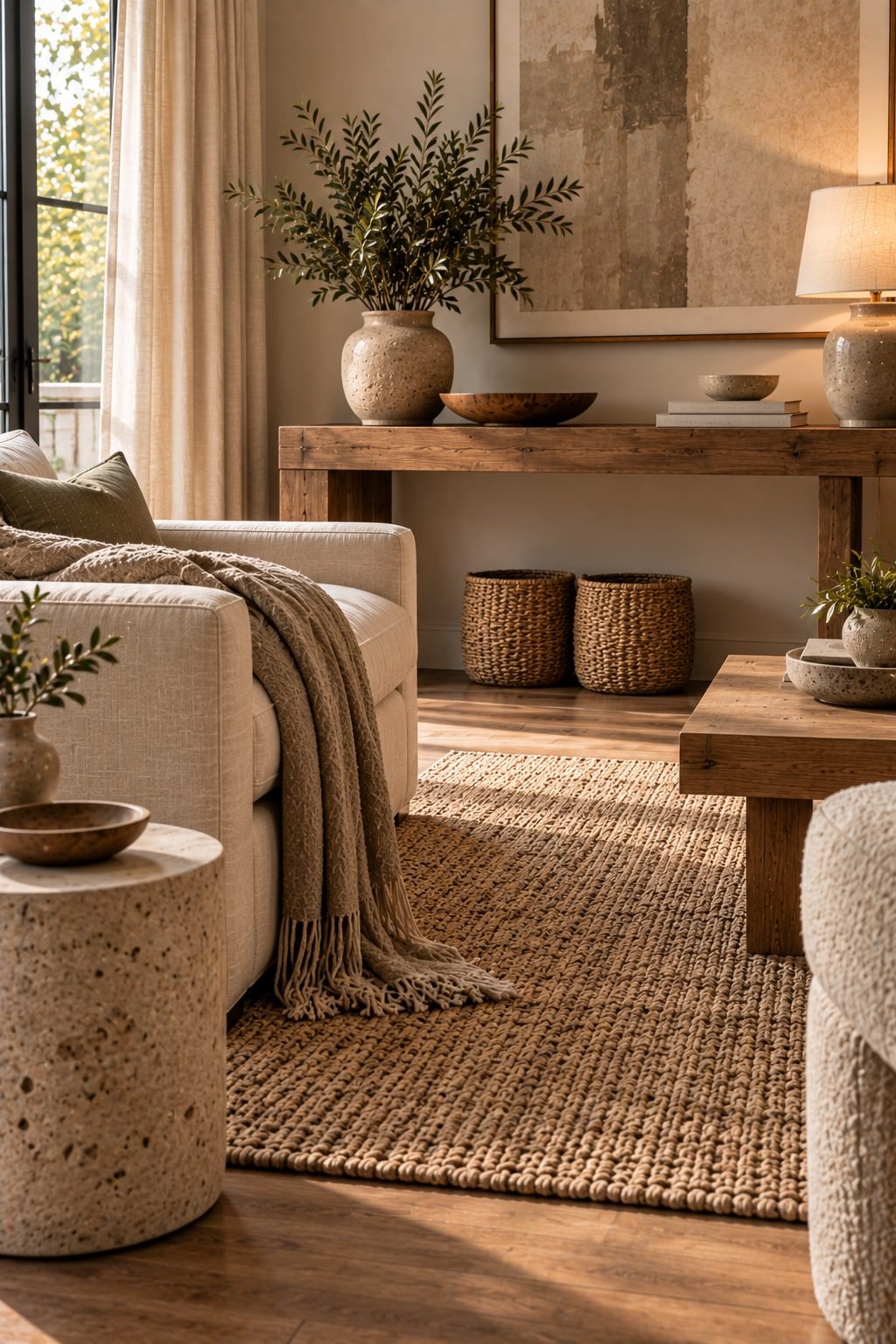
One well-chosen, generously sized piece of art almost always looks more elegant than a wall crowded with smaller pieces.
Scale the artwork to the furniture below it — as a rough guide, it should span roughly two-thirds the width of the sofa or console it hangs above. Choose something with a mood that matches the room rather than something purely decorative.
7. Use Natural Materials
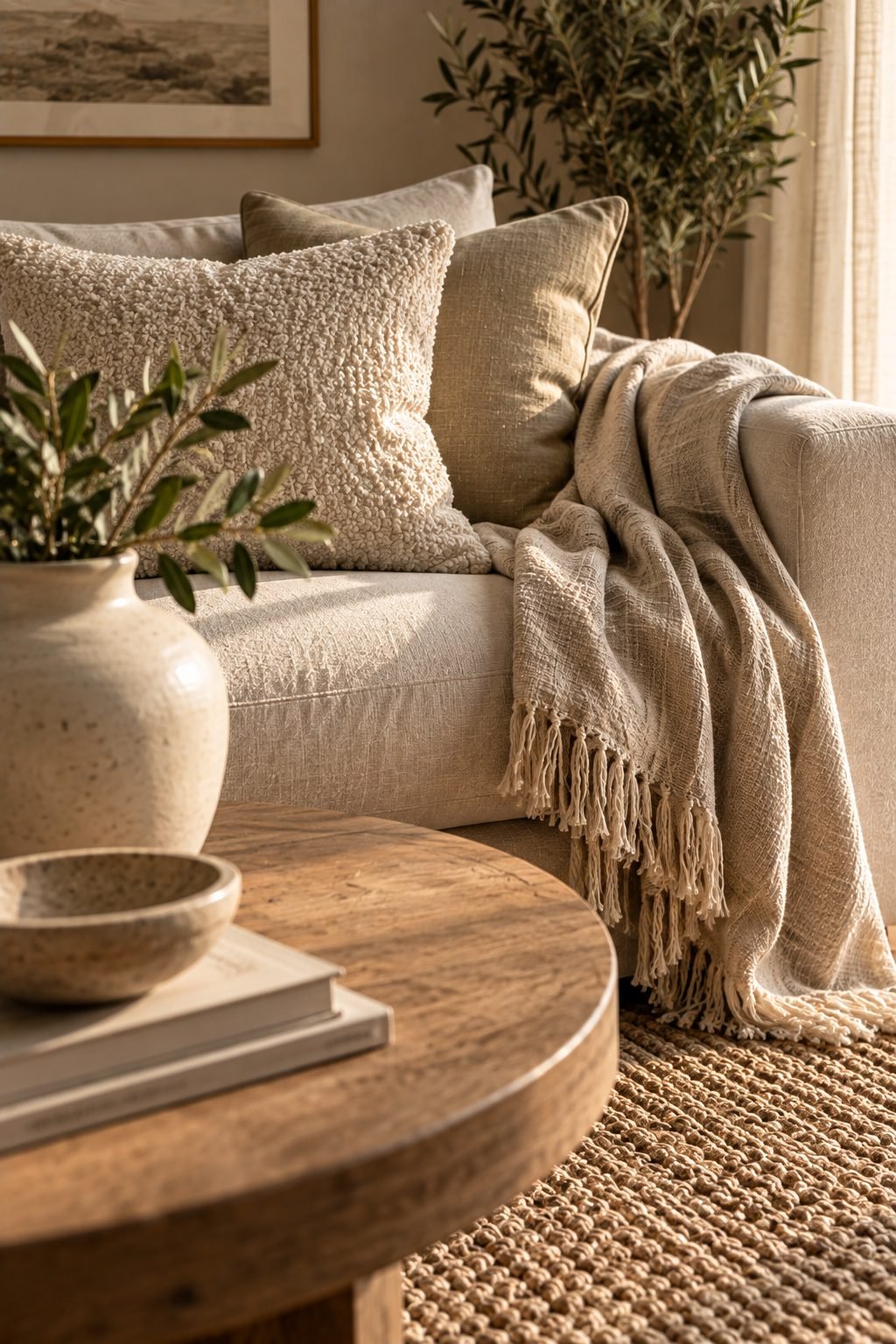
Wood, linen, wool, stone and rattan carry a warmth that glass, chrome and high-gloss laminate rarely do on their own.
You don't need to replace every piece of furniture to get this effect. Introducing one or two natural-material pieces — a wood console, a stone side table, a woven basket — can shift the whole feel of a room, even when the sofa and rug stay exactly as they are.
8. Layer Different Textures
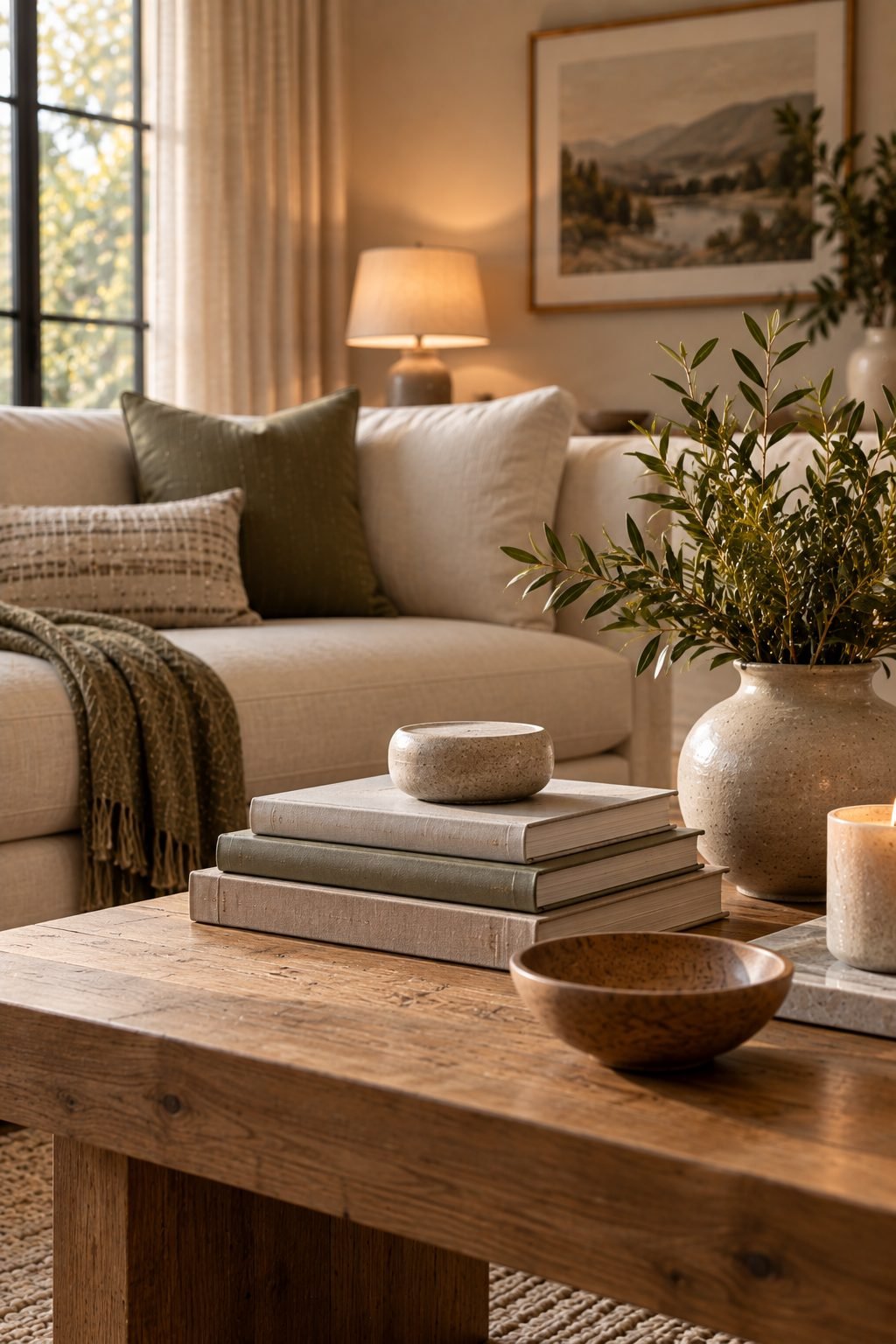
A room can be almost entirely neutral in colour and still feel rich, as long as the textures vary. Combine something smooth (linen, ceramic) with something textured (bouclé, wool, jute) and something structured (wood, metal).
Sameness is what makes an all-neutral room feel flat. Texture is what makes it feel deliberate.
9. Leave Negative Space
Elegant rooms almost always have less in them than you'd expect, not more.
Empty wall space, a clear corner, a surface with nothing on it — these aren't gaps to fill. They give the eye somewhere to rest, and they make the furniture and objects that are there feel more considered rather than competing for attention.
10. Display Books With Intention
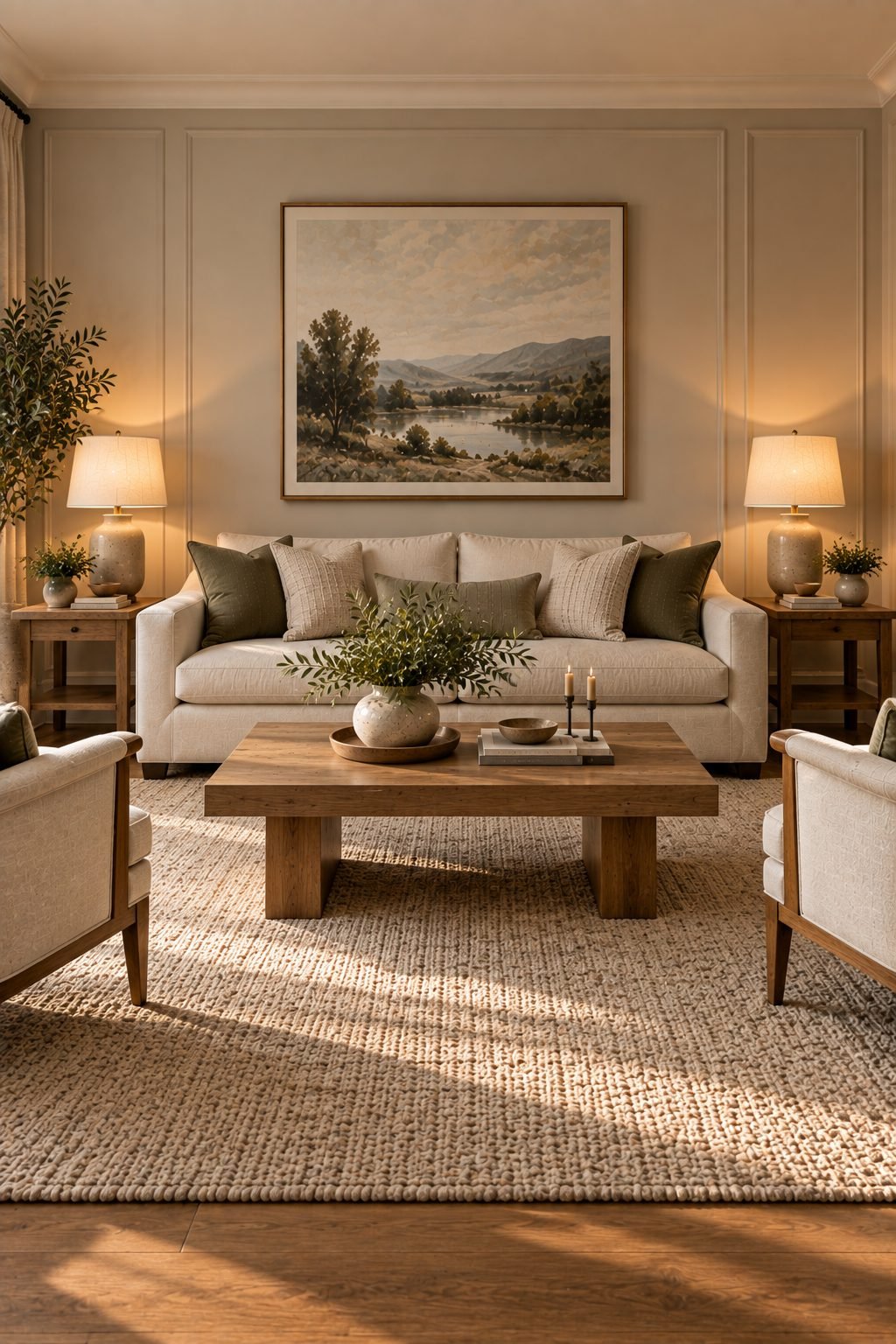
A stack of two or three books, chosen for their colour or cover rather than crammed onto a shelf, can do more for a coffee table than a tray of decorative objects.
Books also work well as a base for a small object — a candle, a bowl, a piece of sculpture — giving the arrangement height and structure rather than everything sitting flat.
11. Bring in Greenery
A single well-placed plant softens the hard lines of furniture and architecture in a way that few other objects can.
One generously sized plant in a simple pot almost always looks more elegant than several small ones scattered around the room. Choose a variety suited to the room's actual light rather than forcing a plant that will struggle.
12. Choose the Right Rug Size
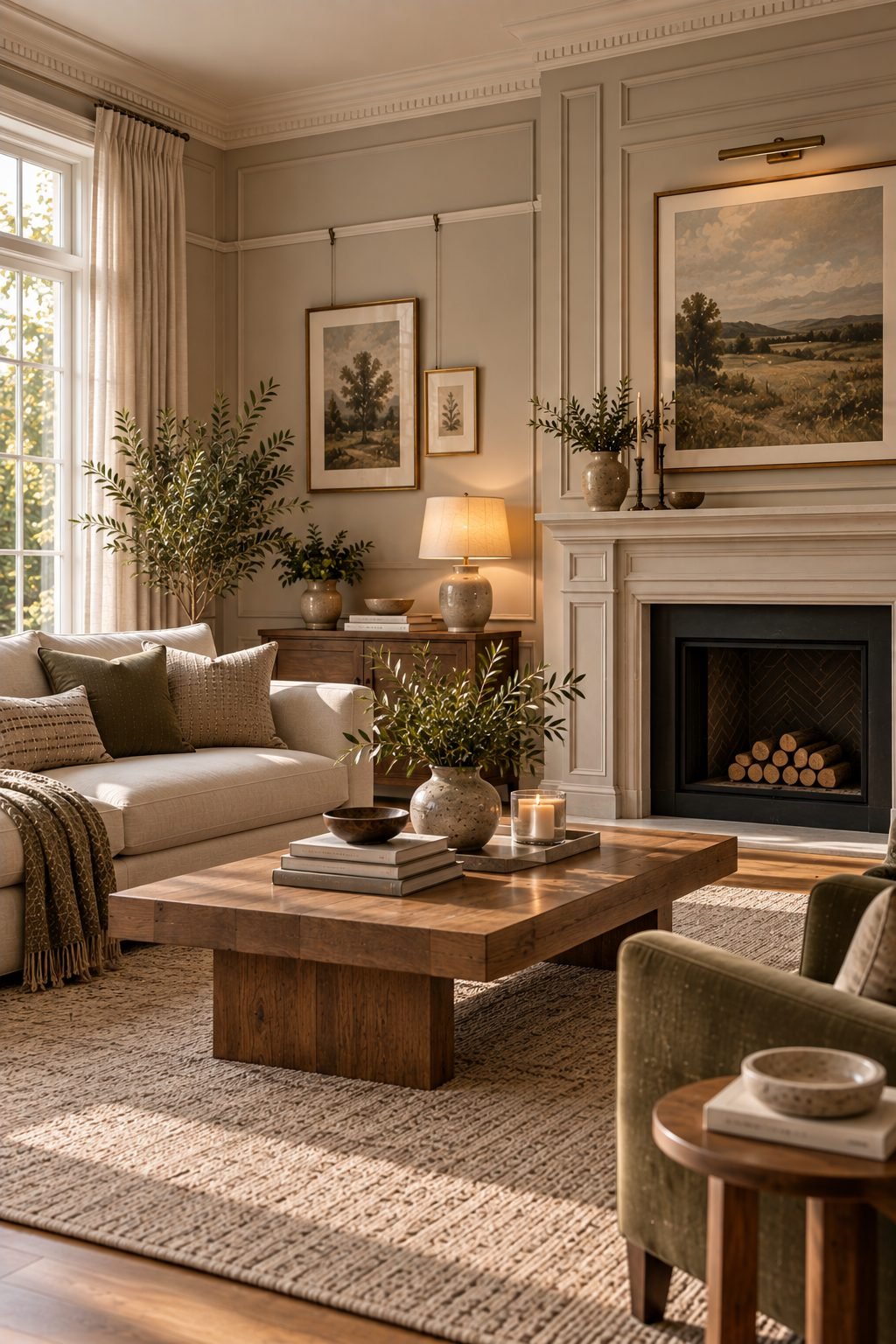
A rug that's too small for the seating arrangement is one of the most common furnishing mistakes in a living room, and one of the easiest to fix.
At minimum, the front legs of the sofa and chairs should sit on the rug; ideally, all the furniture in the seating group does. A rug floating in the middle of the room, with all the furniture around its edges, makes the whole space feel disconnected.
13. Add Side Tables With Purpose
A side table should be there to hold a lamp, a drink or a book within reach — not simply to fill a gap beside a chair.
Choose a height close to the arm of the sofa or chair it sits beside, so it's genuinely useful, and resist the urge to style it with more than one or two objects.
14. Create Symmetry Where It Matters
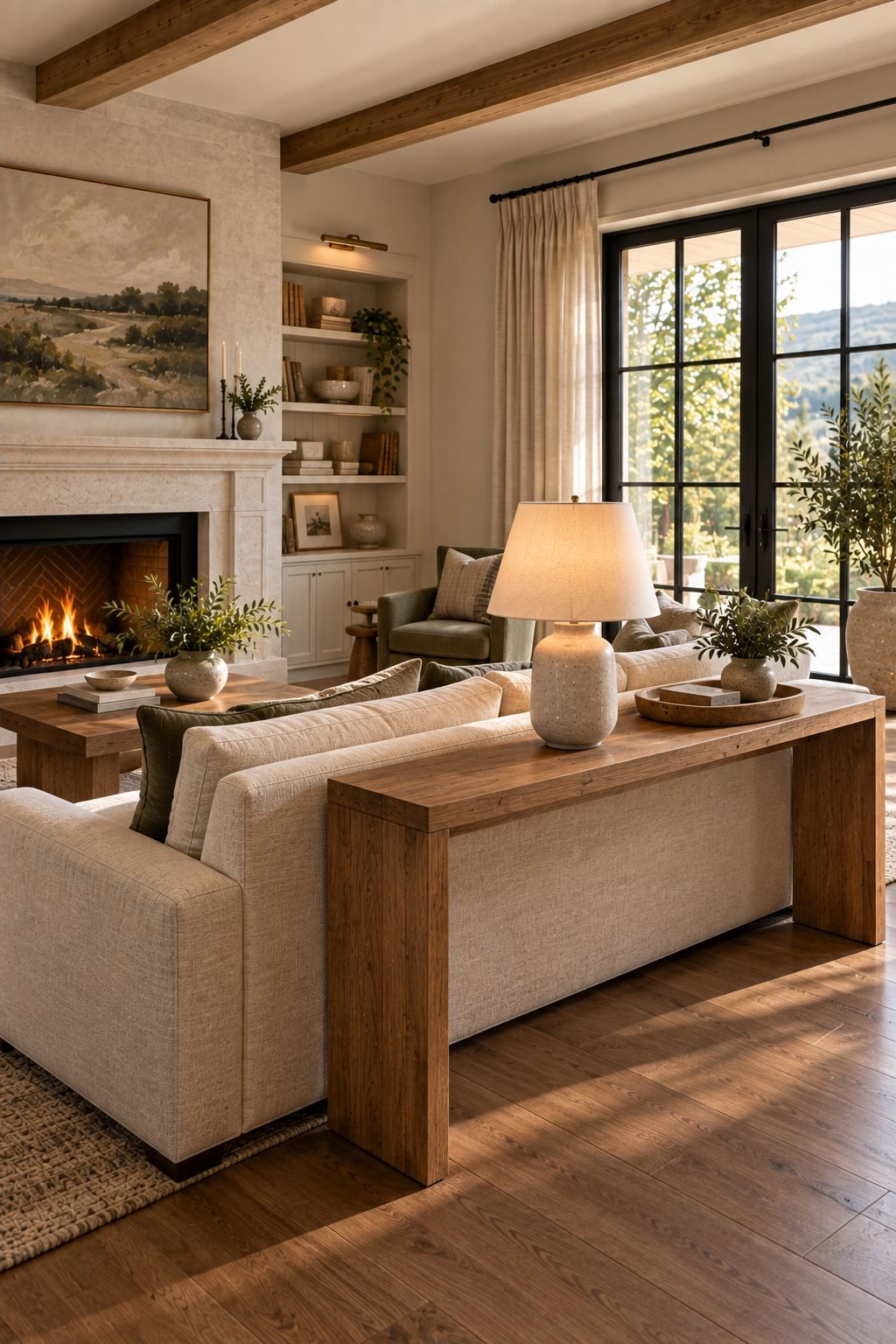
Symmetry reads as calm almost automatically. A sofa centred on its wall, matching lamps or side tables on either side, artwork balanced above — these small decisions create a sense of order the eye picks up on immediately.
This doesn't mean every element in the room needs to match. It's most effective when applied to one clear anchor point, like the main seating wall.
15. Embrace Asymmetry Elsewhere
Perfect symmetry throughout a room can start to feel stiff rather than elegant. Balancing a symmetrical seating arrangement with an asymmetrical detail — an off-centre floor lamp, a single accent chair angled slightly — keeps the room feeling lived-in rather than staged.
The goal is order with a little tension, not a mirror image of itself.
16. Add One Statement Chair

One chair with real character — an interesting silhouette, a richer texture, a slightly bolder shape — can carry a whole room, especially when everything else stays quiet.
This works precisely because it's one piece, not several. A room with three or four "statement" pieces has no statement left to make.
17. Use Concealed Storage
Remote controls, chargers, coasters and everyday clutter are unavoidable in a living room that actually gets used. Concealed storage — a lidded basket, a cabinet with doors rather than open shelving, an ottoman that opens — keeps these items available without keeping them visible.
A living room feels more elegant when what's on display has been chosen, not simply left out.
18. Highlight Architectural Details

Panelling, picture rails, a fireplace surround or original mouldings are worth drawing attention to rather than working around.
Paint them a soft, close-toned colour rather than stark white against a coloured wall, and keep furniture from blocking them where possible. These details often do more for a room's character than any single piece of furniture.
19. Repeat a Material or Colour
Repetition creates rhythm. A warm wood tone repeated across the coffee table, console and picture frames, or a muted colour echoed in cushions, art and a throw, helps a room feel unified rather than assembled piece by piece.
When every object has a different finish and palette, a room can feel fragmented even if each piece is beautiful on its own.
20. Keep Surfaces Edited

A console table, mantel or coffee table with a handful of well-chosen objects reads as elegant. The same surface covered in a dozen smaller items reads as cluttered, no matter how nice each individual piece is.
Before adding one more object to a surface, it's worth asking whether the space would actually look better with less.
21. Choose Furniture With Visible Legs
Furniture that sits directly on the floor, edge to edge, can make a room feel heavier and more closed in. Sofas, chairs and cabinets raised on visible legs let more of the floor remain visible, which makes the whole room feel lighter.
This is a small detail, but it has an outsized effect on how open a living room feels, particularly in a more compact space.
22. Layer Rugs and Textiles Underfoot
In a larger room, a single rug can sometimes feel lost. Layering a smaller textured rug over a larger flatweave, or extending texture from the rug into cushions and throws in the same tonal family, adds depth without adding clutter.
The key is keeping the layered pieces within the same restrained palette, so the effect reads as considered rather than mismatched.
23. Use a Console Table Behind the Sofa

When a sofa floats away from the wall rather than backing directly onto it, the back of the sofa can start to feel exposed and unfinished. A slim console table behind it fills that gap, adds a surface for a lamp, and gives the arrangement a sense of completion.
Keep it narrow enough that it doesn't compete with the sofa for floor space, and style it as simply as any other surface in the room.
24. Let One Piece Do the Talking
Every elegant living room seems to have one thing the eye goes to first — a piece of art, an unusual light fixture, a beautifully upholstered chair. Once that focal point exists, the rest of the room can afford to be quieter.
Trying to make every element stand out is usually what makes a room feel busy rather than elegant.
25. Edit the Room Like a Designer

Stand in the doorway and look at the room as if you were seeing it for the first time. Is there furniture that's rarely used? Are there objects competing for attention on the same surface? Could two smaller pieces be replaced by one considered one?
A living room rarely becomes more elegant by adding something new. It becomes more elegant by removing what it didn't need in the first place.
Editing costs nothing, and it's often the single most effective change available to any room.
Elegance as an Ongoing Habit, Not a Finished Project
None of these 25 ideas require replacing your furniture or committing to a single design style. Most of them are about proportion, restraint and how existing pieces are arranged — decisions that cost nothing beyond a bit of attention.
Start with the ones that have the biggest visible effect: get the rug size right, edit what's on your surfaces, and let one piece of furniture or art carry the room instead of asking everything to compete. The rest can follow gradually, whenever you're ready for it.
What makes a living room look elegant without being expensive?
Proportion and restraint matter more than price. A properly scaled sofa, a rug sized correctly for the seating group, and a restrained colour palette will do more for how elegant a room feels than any single expensive piece of furniture.
How big should a rug be in a living room?
At minimum, the front legs of your sofa and chairs should sit on the rug. Where the room allows it, sizing the rug so all the furniture in the seating group sits on it creates a more connected, elegant look than a small rug floating in the middle of the space.
Is it better to have matching furniture or a mix of styles?
A mix, generally — as long as it's tied together by a repeated material, colour or tone. Perfectly matching furniture can feel stiff, while a considered mix with some repetition running through it tends to read as more elegant and more personal.