Why Your Home Office Doesn't Feel Productive (And How to Fix It)
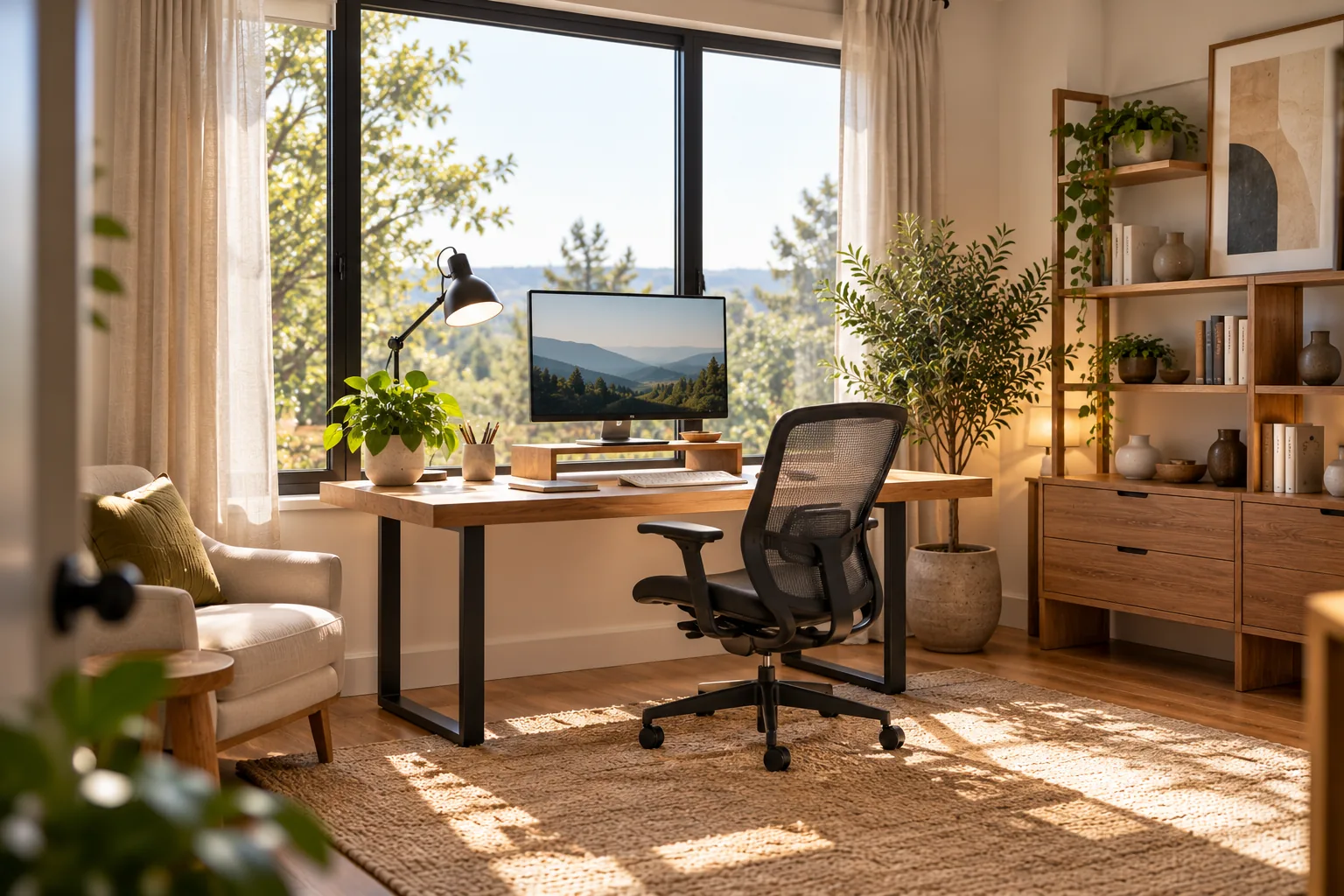
The desk is nice, the chair was an investment, and it still feels harder to focus here than at the kitchen table. Here's what actually drives productivity in a home office.
The desk is nice. The chair was a real investment. There's a plant, a lamp, maybe even a motivational print on the wall. And somehow, sitting down to work in this room still feels like wading through mud — focus doesn't come easily, and by 3pm you're wondering why a space built specifically for work feels harder to work in than the kitchen table ever did.
A productive home office and a well-decorated one are solving different problems, and conflating them is why so many home offices look right in photos and feel wrong in practice. Productivity is a function of what the room does to your attention and your body, not how it photographs.
Why a Nicely Decorated Office Still Doesn't Feel Productive
Decorating a room answers "does this look like a place where work happens." It doesn't answer whether your eyes keep drifting to the bed or the TV across the room, whether your shoulders are tense by 10am because the monitor sits too low, or whether anything in the room actually signals "this is work time" versus just being the room you happen to be sitting in. None of that shows up in how nicely the shelves are styled, which is exactly why a genuinely attractive office can still be a genuinely difficult place to concentrate.
The Three Real Drivers of a Productive Home Office
1. What's Actually in Your Line of Sight
Every time your eyes land on something unrelated to work — a bed, a TV, a pile of laundry, a door to a noisy part of the house — it costs a small amount of attention, and over a full workday those costs add up to a meaningfully harder time staying focused. The fix isn't always relocating the desk; often it's just turning it 90 degrees so the sightline faces a wall or a window instead of the rest of the room's competing activity.
2. Ergonomics, Not Just Desk Style
A desk that looks great but sits at the wrong height, or a monitor positioned below eye level, creates physical strain that compounds across a full workday regardless of how the room is styled. The baseline worth checking: monitor top at or just below eye level, elbows at roughly 90 degrees when typing, feet flat on the floor or a footrest. A beautiful desk that fails these basics will cost you focus through discomfort no amount of decor compensates for.
3. A Clear Signal That Work Has Started
In an office you don't own, a commute and a building you physically enter are "start work" signals your brain doesn't have to think about. A home office needs a substitute: closing a door, turning on a dedicated desk lamp, even just a specific playlist — something consistent that marks the boundary between "home" and "work mode." Without it, the workday doesn't have a clear start, and focus takes noticeably longer to arrive every single day.
A Quick Way to Diagnose Your Own Office
Sit down at the desk at the start of a normal workday and, before doing anything else, notice what's directly in your field of view. Is it a wall, a window, or something distracting? Check your monitor height against your eyeline without adjusting anything first. And ask honestly: is there anything that happens right before you start working that reliably signals "now it's work time" — or does the workday just sort of begin whenever you happen to open a laptop? Whatever that two-minute check reveals is almost always the actual issue, more reliably than redecorating the room ever resolves.
Real Examples
The Guest-Room Office Facing the Bed
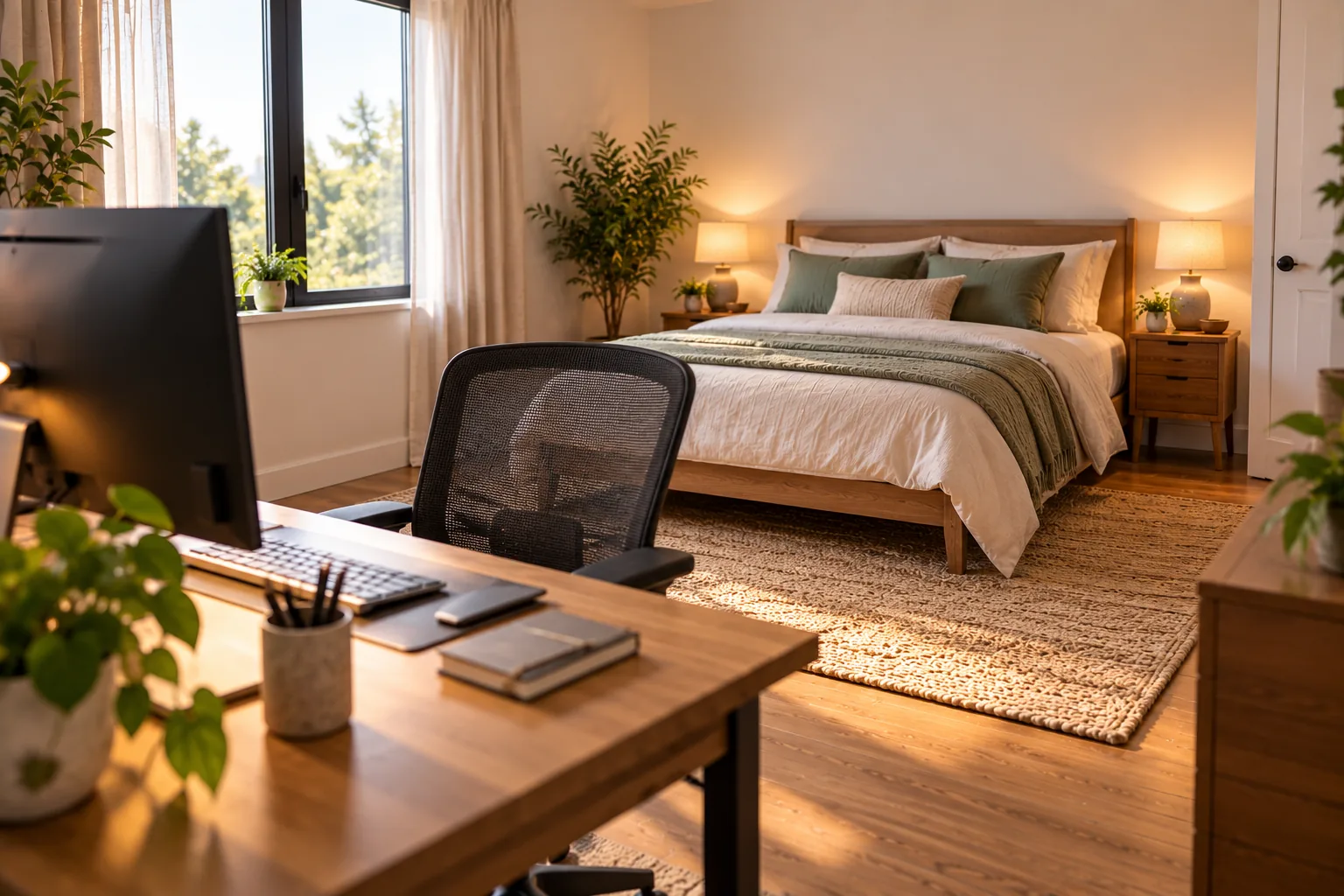
A desk set up in a spare bedroom, facing the bed, keeps "I could just lie down" in your peripheral vision all day long. Turning the desk to face the window or a blank wall, even without moving it more than a few feet, removes that specific distraction without any purchase at all.
The Beautiful Desk at the Wrong Height
A gorgeous vintage desk, sized for writing letters rather than working at a laptop for eight hours, can leave a monitor sitting six inches too low — the kind of ergonomic mismatch that causes real neck and shoulder strain by early afternoon regardless of how well the desk photographs. A simple monitor riser or a stack of sturdy books solves this specific problem without replacing the desk.
The Kitchen-Table Office With No Boundary
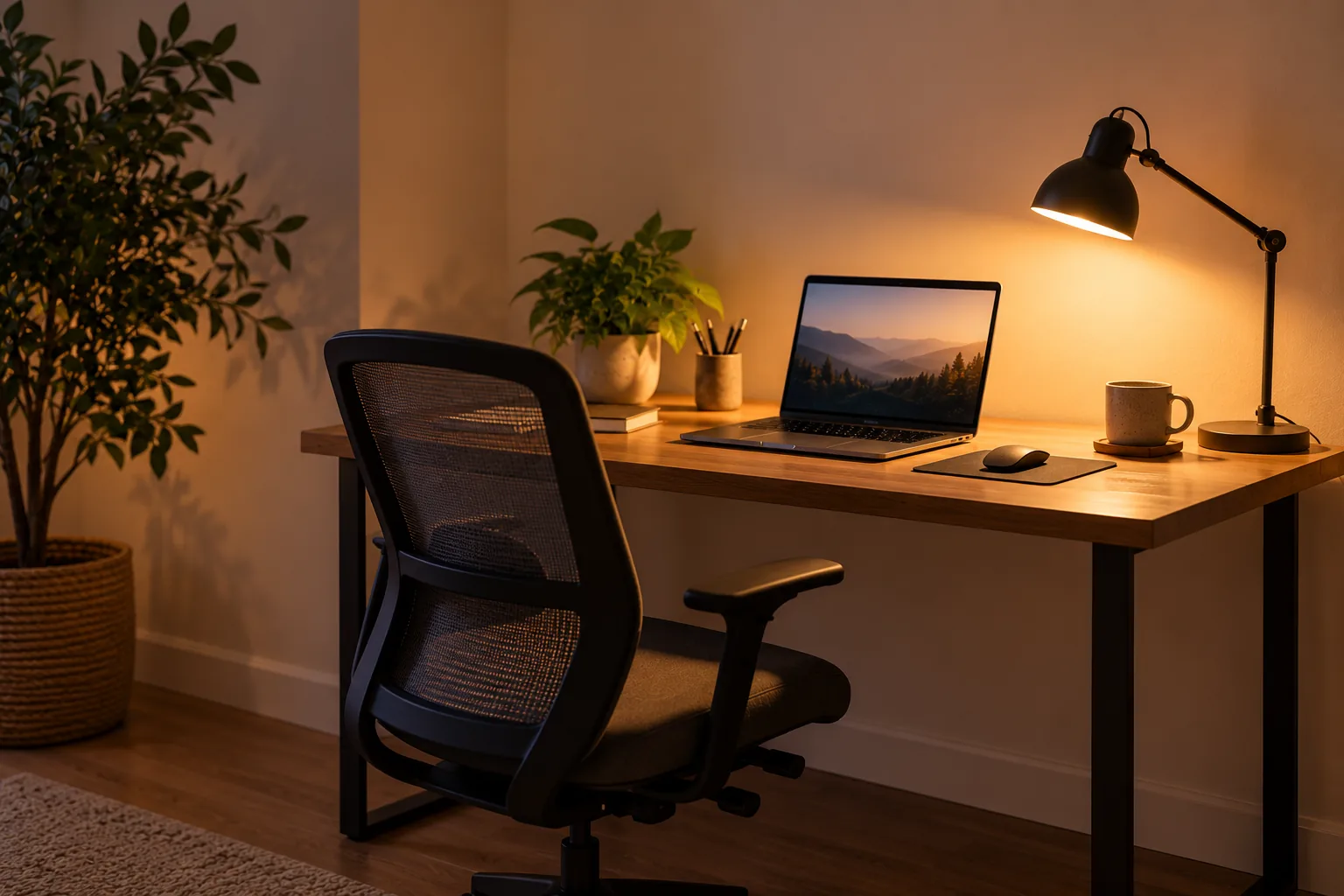
Working from the kitchen table means the workspace and the rest-of-life space are identical, with nothing marking the transition between them. Even a small dedicated corner — a single desk against a wall, used only for work, with a lamp that's only ever turned on during work hours — recreates the boundary a separate room would normally provide.
Common Mistakes
Mistake: Prioritizing how the desk looks over how the monitor sits. A visually striking desk that puts your monitor at the wrong height will cost you more in strain and lost focus than it gains in style. Check ergonomics first, choose the aesthetic within whatever passes that check.
Mistake: Facing the desk toward the most visually busy part of the room. If the room has a TV, a bed, or a high-traffic doorway, facing away from it is usually a five-minute fix with an outsized effect on focus.
Mistake: Skipping task lighting because the room has decent ambient light. General room lighting is rarely positioned correctly for close desk work, which quietly causes eye strain over a full day. A dedicated desk lamp, covered in more detail in the room-by-room guide to layering lighting, solves this specifically rather than relying on whatever light the room already has.
Mistake: Treating a tidy desk as the same thing as an organized one. A desk that's visually clear but has no actual system for where things go just relocates the clutter to a drawer, where it quietly becomes its own source of friction. The same principles in our home organization guide apply directly to a desk setup, not just closets and pantries.
What This Actually Costs
A monitor riser or arm runs $20 to $60 and solves most height-mismatch problems directly. A dedicated desk lamp for task lighting is $25 to $50. Turning an existing desk to face a different direction costs nothing. The most expensive item on this list, an ergonomic chair, is worth budgeting $150 to $400 for if your current one is causing genuine discomfort — but it's also the one item worth trying the other fixes before assuming you need, since posture problems caused by monitor height are often mistaken for a chair problem.
A Productive Home Office Checklist
- Is your desk facing a wall or window rather than a bed, TV, or high-traffic doorway?
- Is the top of your monitor at or just below eye level when you sit normally?
- Do you have dedicated task lighting, not just the room's general ambient light?
- Is there a consistent signal — a lamp, a closed door, a specific routine — that marks the start of your workday?
- Does your desk have an actual system for where things go, not just a surface that gets cleared occasionally?
If the room's proportions feel slightly off — a desk that's a little too large or too small for the space available — our guide on choosing furniture that actually fits your room covers how to check that specifically, which matters as much in a home office as it does in any other room.
Productive Isn't the Same as Photogenic
A home office becomes genuinely productive through what it controls — sightlines, ergonomics, and a clear boundary between work and everything else — not through how well the desk accessories are arranged. Most of the fixes above cost less than the desk lamp alone, and the highest-leverage one (turning the desk around) costs nothing at all.
Why don't I feel productive in my home office even though it's nicely set up?
Productivity depends on what's in your line of sight, whether your setup is ergonomically correct, and whether there's a clear signal that work has started — none of which is solved by how well the room is decorated.
What's the single most effective change for a more productive home office?
Turning the desk so it faces a wall or window instead of a bed, TV, or busy doorway usually has the biggest effect for the lowest cost of anything on this list.
Does desk height really matter that much?
Yes — a monitor positioned below eye level is one of the most common causes of neck and shoulder strain in a home office, and it compounds over a full workday regardless of how the desk looks.
How do I create a work/home boundary without a separate room?
Use a consistent, deliberate signal instead — a desk lamp only ever turned on during work hours, or a single dedicated corner used for nothing else, can substitute for a closed door.