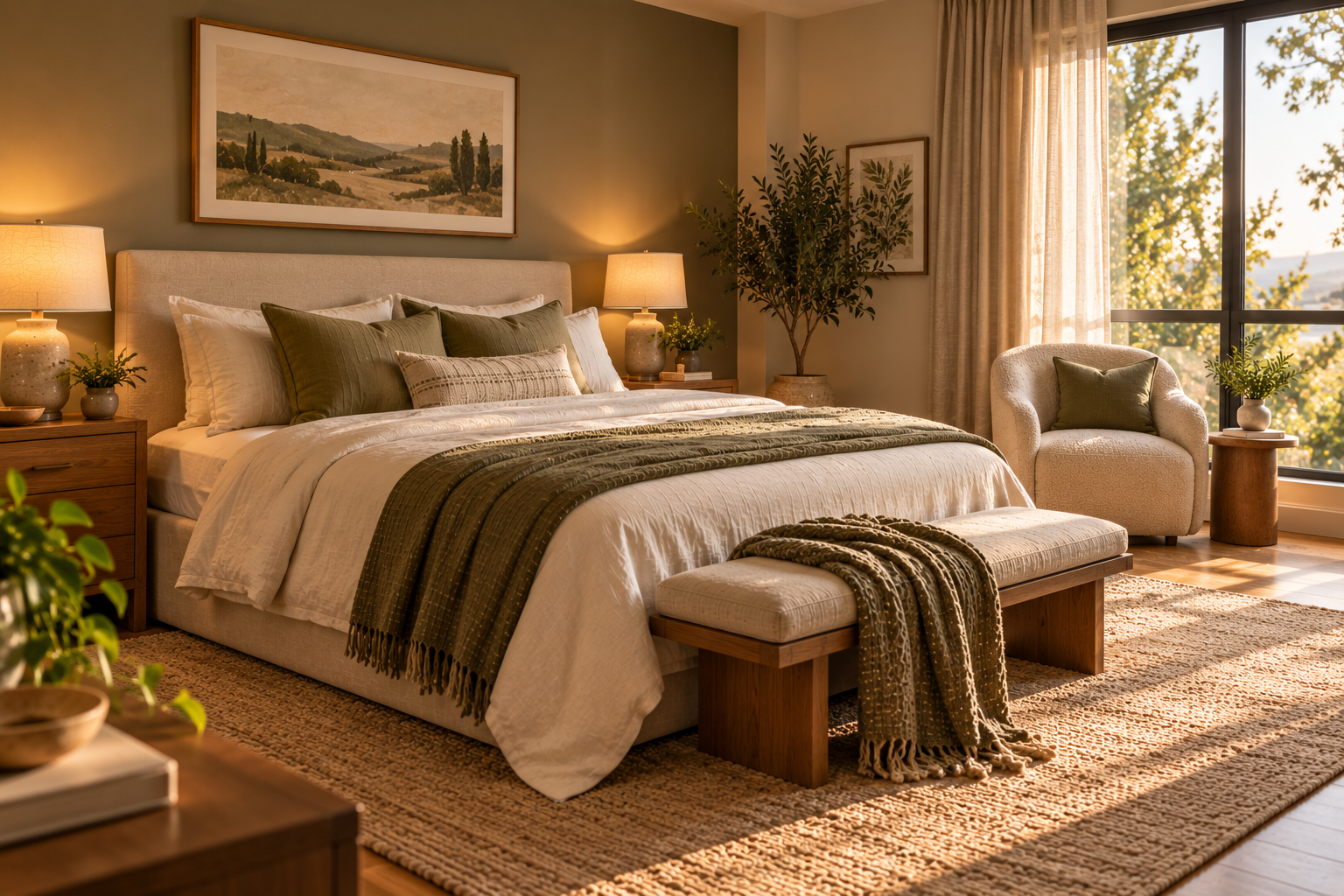
25 Small Bedroom Ideas That Make Your Room Feel Bigger

25 practical, designer-approved ideas for making a small bedroom feel calmer, brighter and genuinely bigger, without knocking down a single wall.
A small bedroom can be surprisingly beautiful. The challenge isn’t necessarily the square footage you have, but how thoughtfully that space is used.
When space is limited, every decision becomes more noticeable. A nightstand that’s slightly too wide can interrupt the walkway. A heavy curtain can make the window feel smaller. Too much furniture can quickly turn a calm bedroom into a room that feels crowded.
The good news is that making a bedroom feel more spacious doesn’t always require knocking down walls or buying smaller furniture. The right combination of color, light, furniture proportions, storage and visual simplicity can completely change the way a room feels.
Some of the most effective solutions are wonderfully simple: allowing more floor to remain visible, taking storage upward, choosing furniture with a lighter visual footprint, or using a mirror to bring additional light into the room.
If your bedroom is compact, these 25 ideas can help you create a space that feels more open, comfortable and considered — without sacrificing personality.
1. Choose a Light, Restrained Color Palette
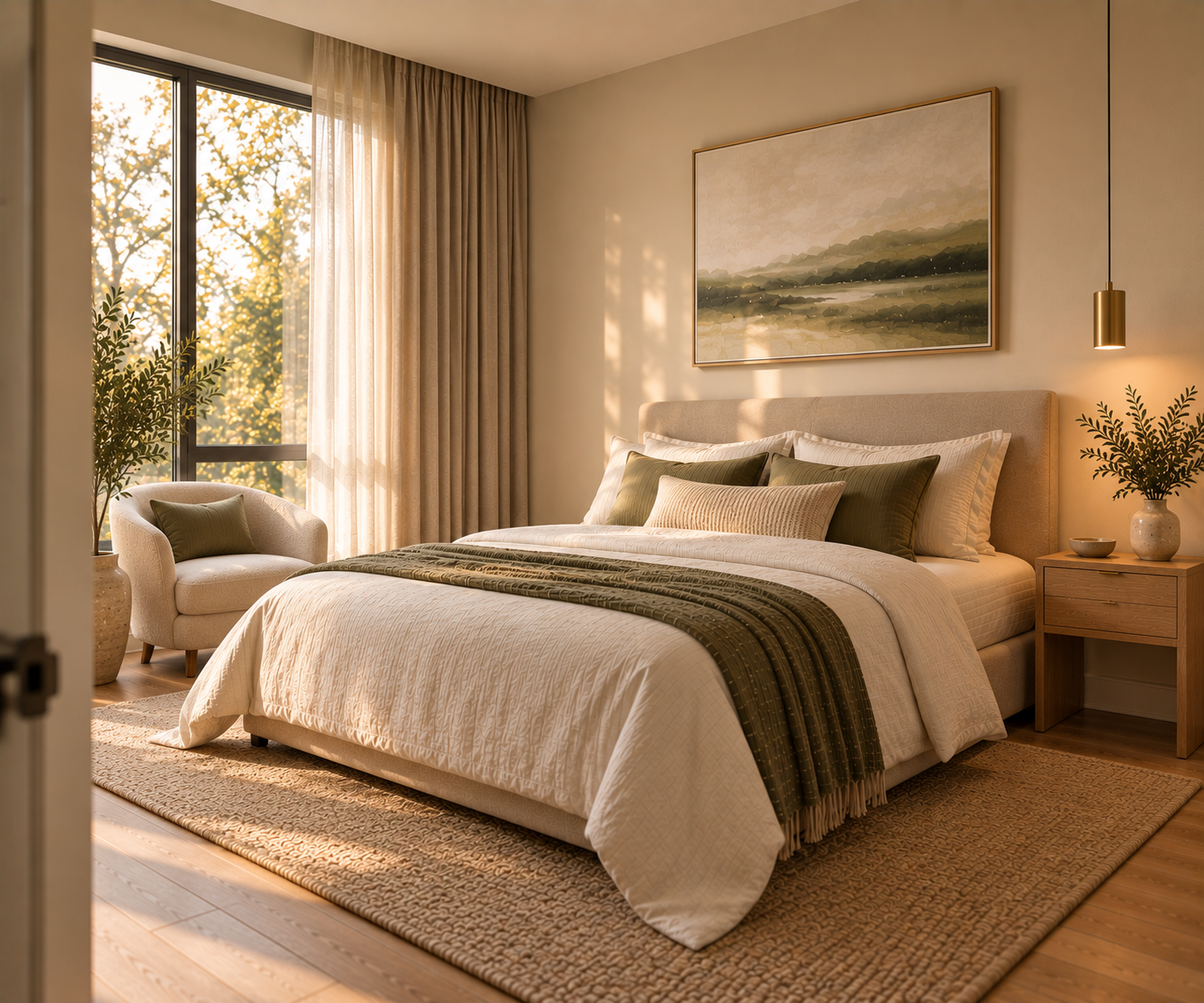
Color has an immediate effect on how a room is perceived.
Soft whites, warm creams, pale greige, muted beige and other light tones can help create a sense of continuity across the walls and ceiling. Rather than visually breaking the room into separate areas, a restrained palette allows the eye to move more easily around the space.
That doesn’t mean a small bedroom has to be completely white. Warm neutrals can create a much softer and more sophisticated atmosphere, particularly when combined with natural wood, linen and subtle textures. If you prefer color, consider using a muted version of your favorite shade rather than a highly saturated tone.
The goal isn’t to make the room look empty. It’s to create visual calm.
2. Make the Most of Natural Light
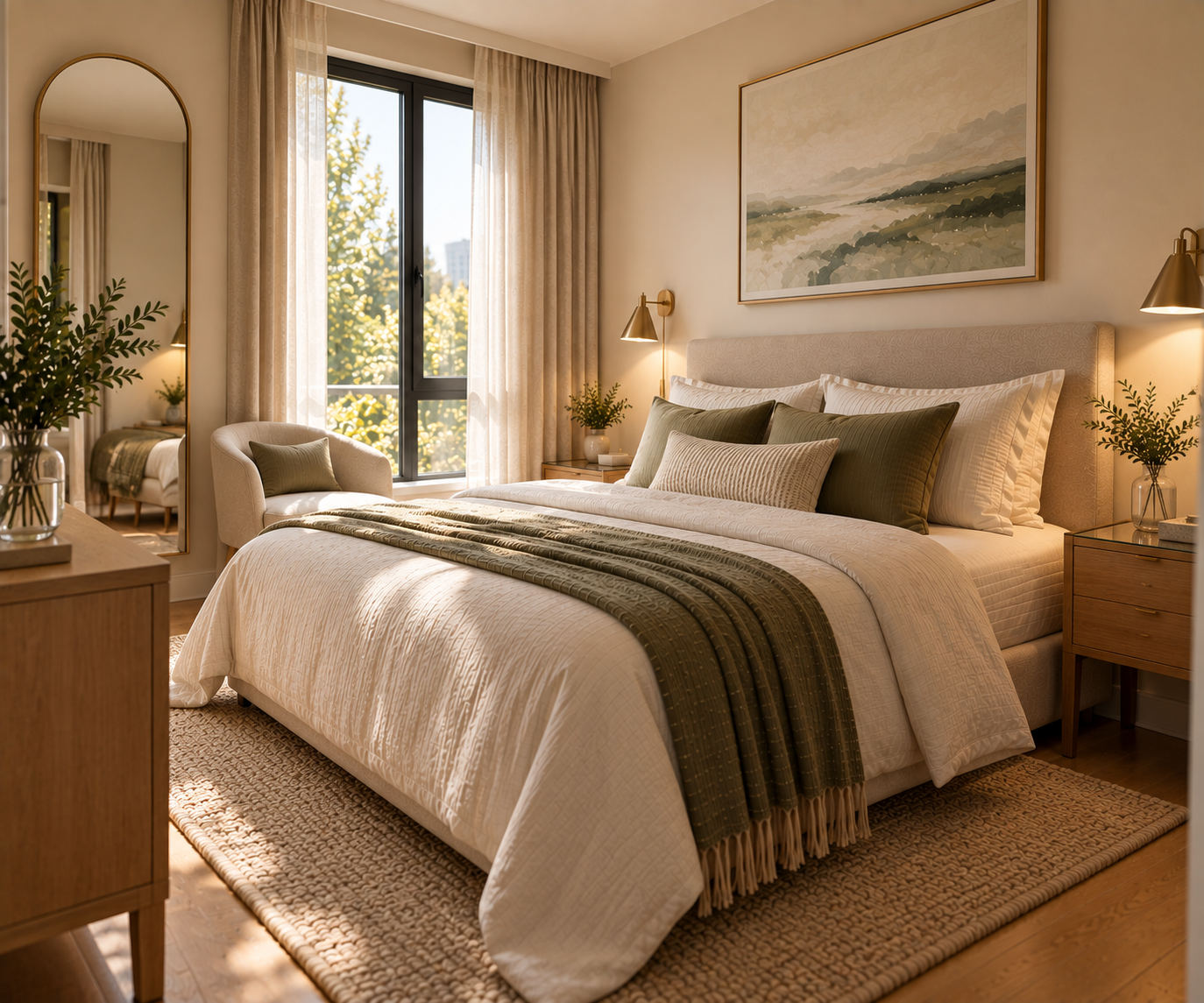
Natural light is one of the simplest ways to make a small bedroom feel more open. Whenever possible, keep the area around the window visually uncluttered. Avoid placing tall furniture directly in front of the window, and choose window treatments that allow daylight to enter freely.
Sheer curtains or lightweight linen-look panels can soften the light while maintaining a feeling of openness.
During the day, resist the temptation to keep curtains closed simply for decoration. Let the room breathe.
A small bedroom filled with natural light can feel considerably more spacious than a larger room that’s dark and visually enclosed.
3. Hang Curtains Higher Than the Window
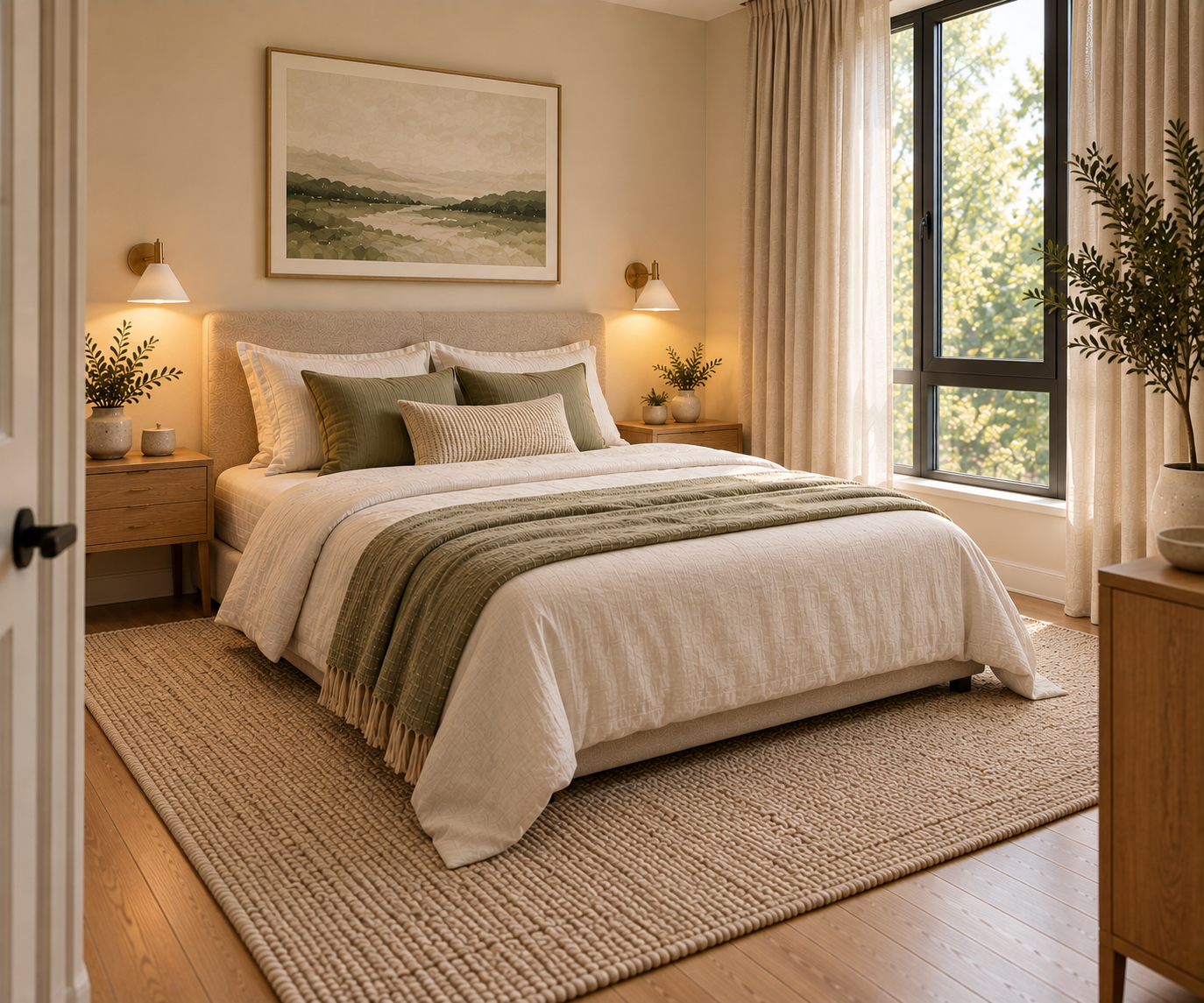
A small adjustment to your curtains can change the perceived proportions of the entire bedroom.
Instead of positioning the curtain rod immediately above the window frame, consider mounting it closer to the ceiling. Let the fabric fall almost to the floor. This draws the eye upward and emphasizes the vertical dimension of the room.
Choose curtains in a color close to the wall for an especially seamless effect. When the fabric blends quietly into the background, the window treatment becomes less of a visual interruption.
It’s a simple trick, but one that can make a compact bedroom feel noticeably taller.
4. Add a Large Mirror
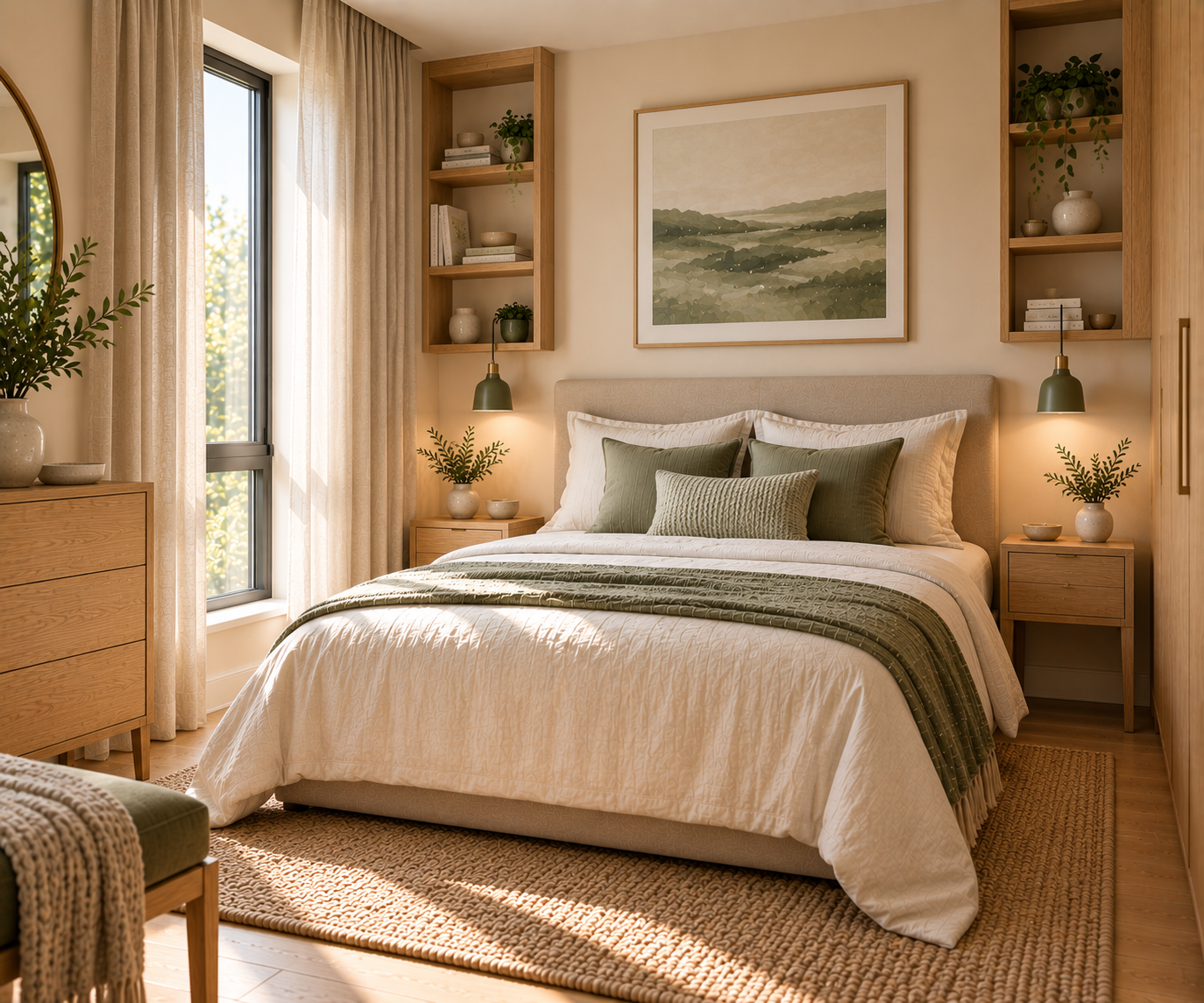
Mirrors are among the most useful decorative tools in a small room. A generously sized mirror can reflect natural light, brighten darker corners and create the impression of additional depth.
Rather than adding several small mirrors, consider using one substantial piece in a deliberate position. Opposite or near a window can be particularly effective because it allows daylight to travel visually further into the room.
A full-length mirror leaning against a wall can also become a beautiful feature in its own right. Look for simple frames that complement the rest of the bedroom — the mirror should enhance the room rather than dominate it.
5. Choose a Bed With Built-In Storage
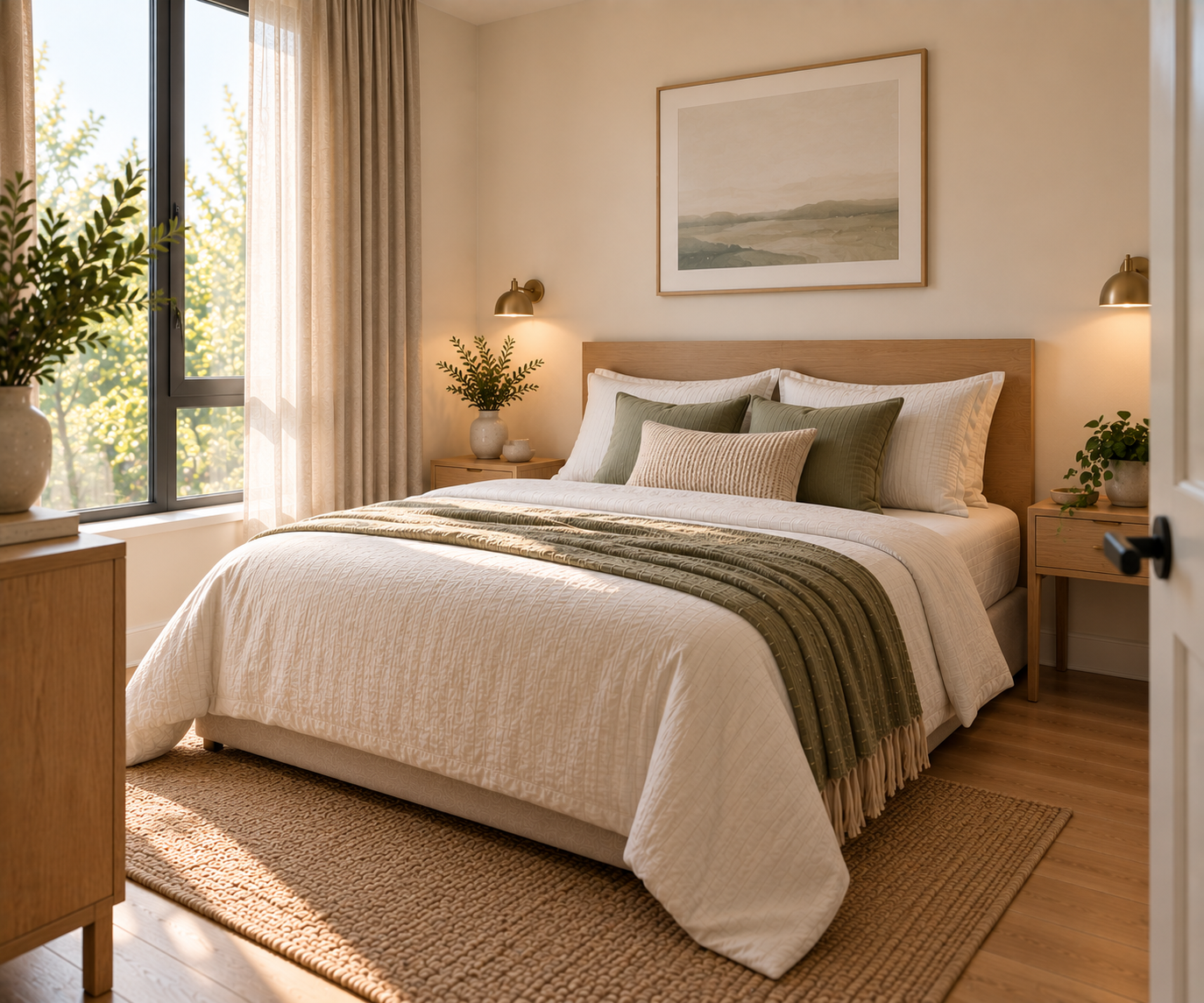
In a small bedroom, the area beneath the bed is valuable real estate. A storage bed can turn otherwise unused space into a place for spare bedding, seasonal clothing, shoes or other belongings — especially useful when there’s no room for a large wardrobe or chest of drawers.
Choose a design that fits naturally with the room rather than treating storage as an afterthought. Upholstered lift-up beds, drawer-style storage beds and platform beds with integrated compartments can all work depending on the layout.
The principle is simple: whenever possible, let one piece of furniture perform two jobs.
6. Try Floating Nightstands
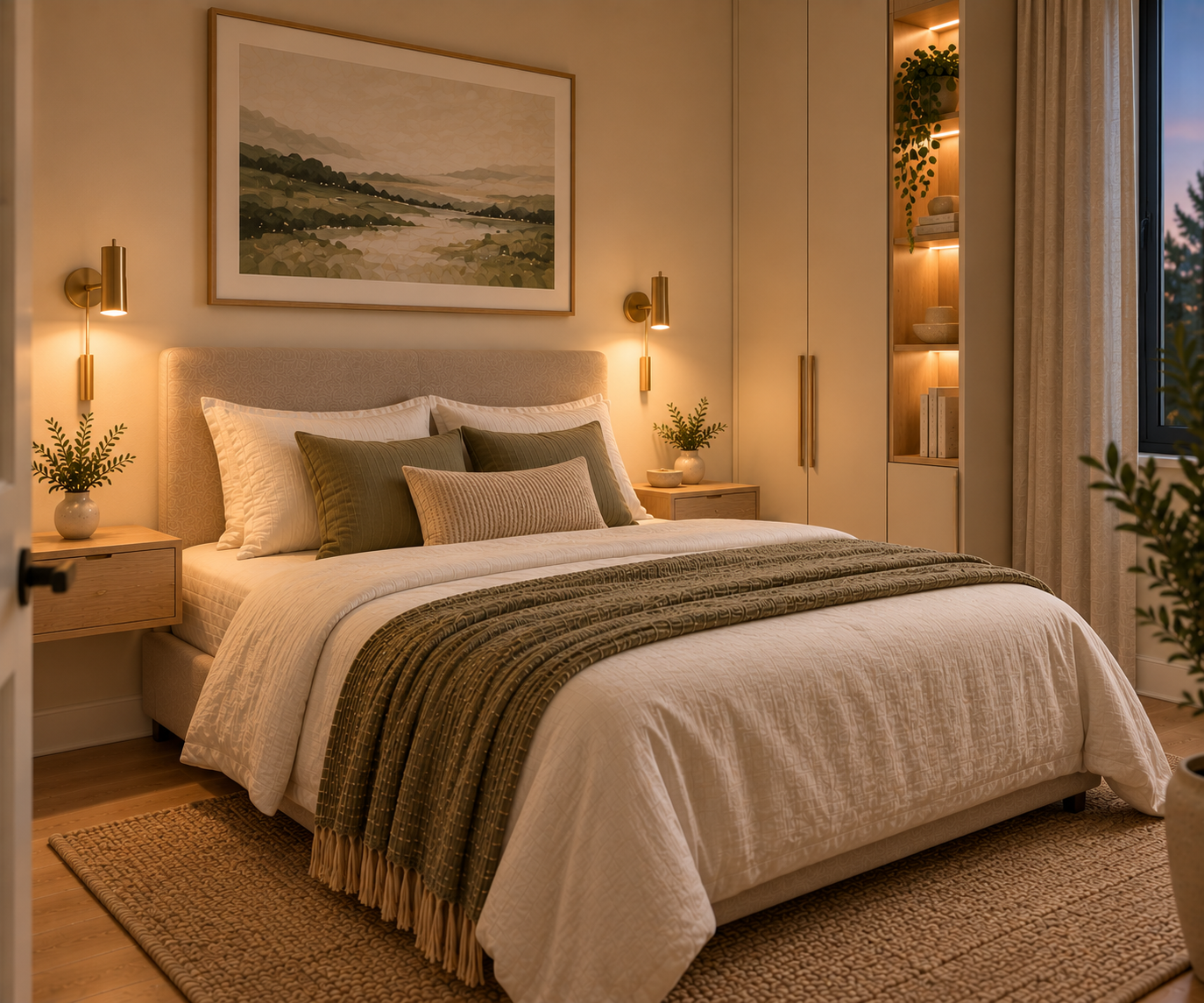
Traditional bedside tables occupy floor space. Floating nightstands don’t.
A wall-mounted shelf or compact floating bedside cabinet can provide enough room for a lamp, book and a few essentials while keeping the floor beneath it visible. That visible floor creates a subtle sense of openness.
Floating furniture can also make cleaning easier and give a bedroom a more contemporary, architectural appearance. If your bedroom is particularly narrow, even a simple wall-mounted shelf may be enough to replace a conventional bedside table.
7. Choose a Slim Bedside Table
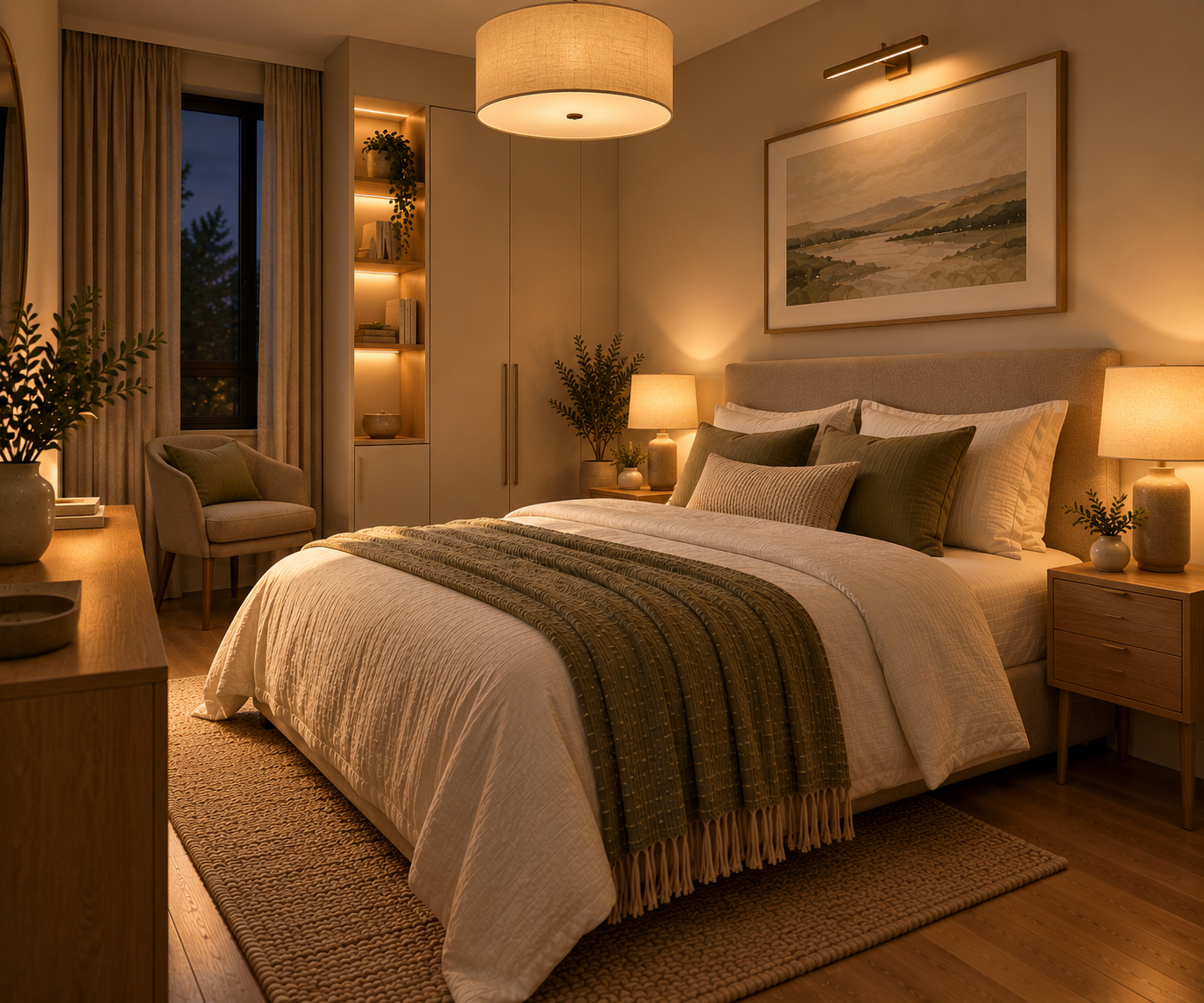
If floating furniture isn’t practical, look for a bedside table with a narrow footprint. You don’t need a large cabinet beside the bed simply because traditional bedrooms often have one.
Measure the available space before shopping and consider what you genuinely need to keep beside the bed. If a phone, lamp, book and glass of water are all that matter, a slim table may be perfectly adequate.
The smaller the room, the more important proportion becomes. A beautifully designed narrow table can look far more intentional than an oversized piece squeezed into a tight corner.
8. Use the Walls for Storage
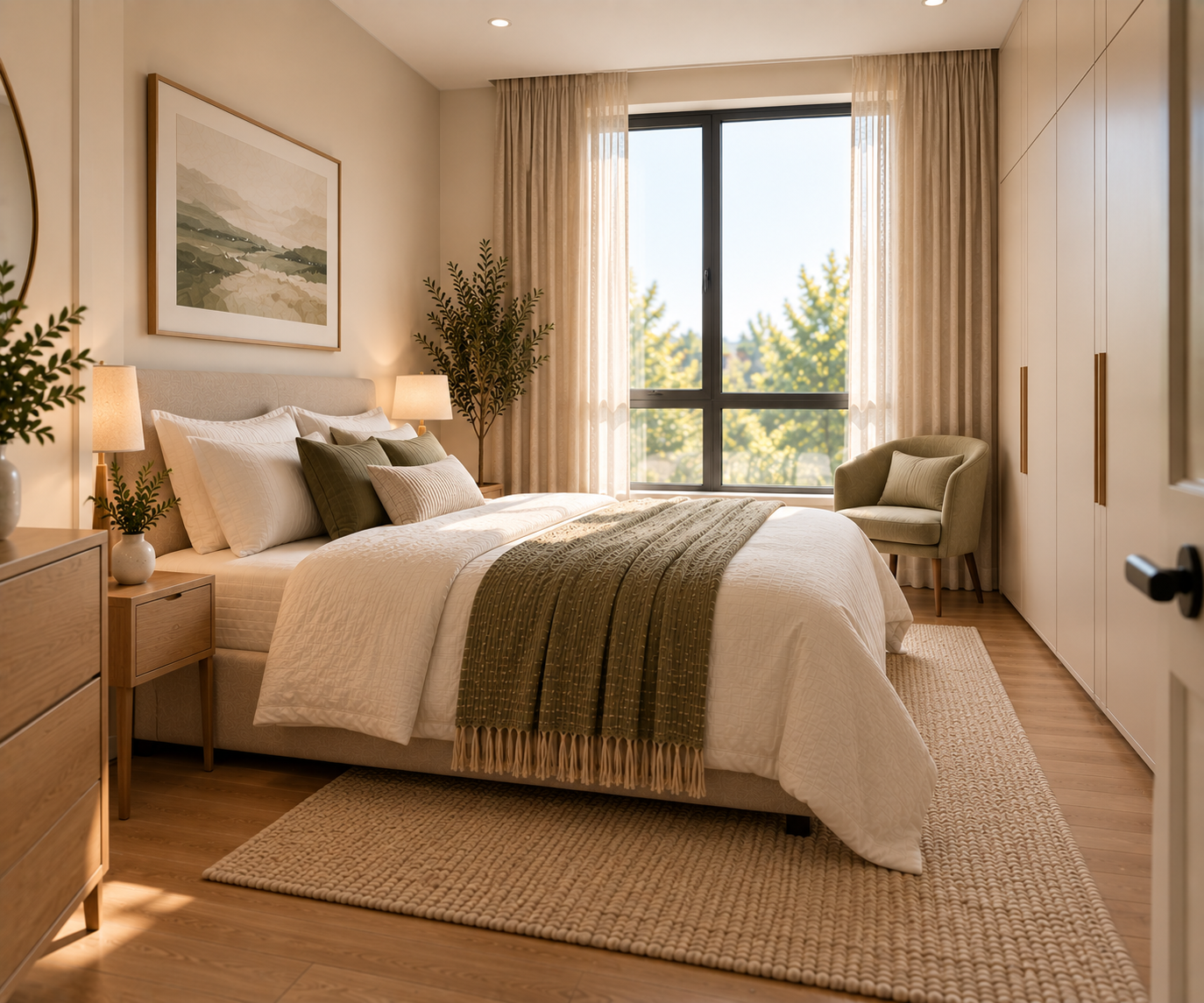
When floor space is scarce, look upward. Wall-mounted shelves, narrow cabinets, hooks and built-in storage can provide useful capacity without consuming the same amount of floor area as freestanding furniture.
Vertical storage is particularly useful around wardrobes, desks and unused wall sections. But avoid covering every available wall with shelves — too much open storage can create visual clutter.
A combination of concealed storage and a few carefully styled open shelves often provides the best balance between practicality and calm.
9. Choose Furniture With Visible Legs
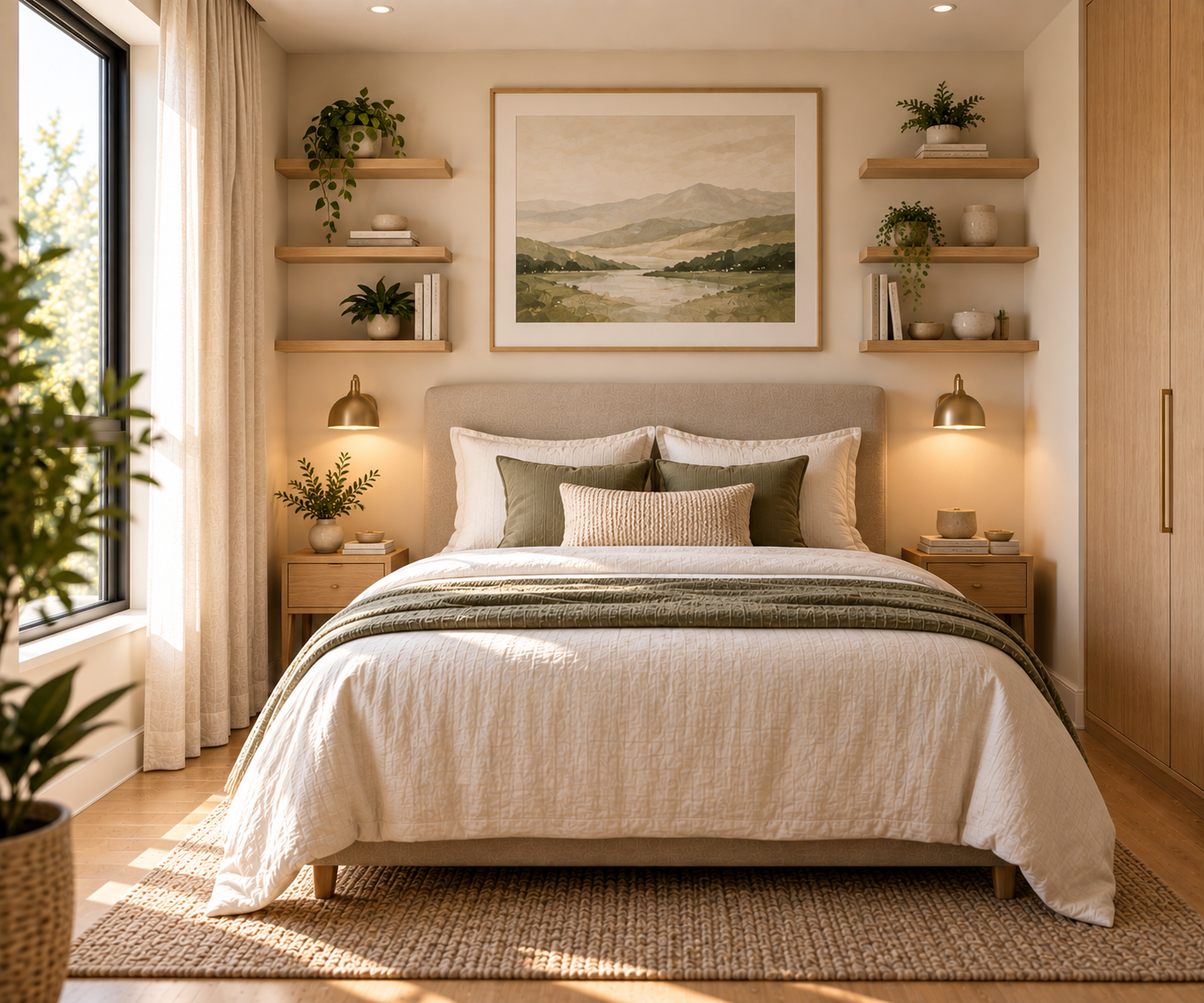
Furniture that sits directly on the floor can appear heavier than pieces raised on legs. A bed, nightstand, dresser or occasional chair with visible space beneath it allows more of the floor to remain visible — and that small gap can make the room feel lighter.
This approach works particularly well with mid-century-inspired furniture, contemporary pieces and simple Scandinavian forms, but the idea can be adapted to almost any style. When choosing furniture for a small bedroom, consider not only its physical dimensions but also how much visual weight it carries.
10. Keep Furniture Proportional
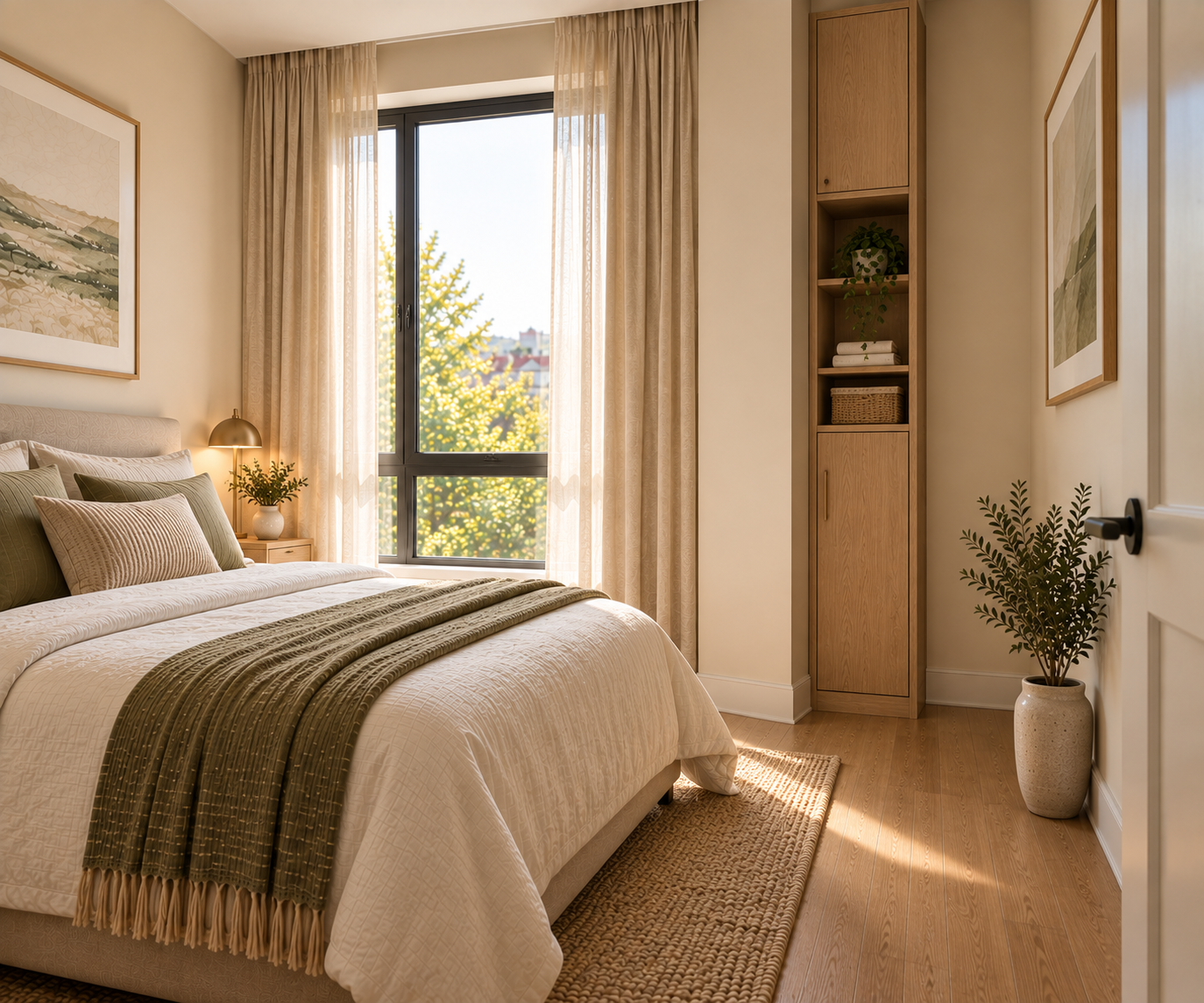
One of the biggest mistakes in a small bedroom is assuming that every piece of furniture needs to be tiny. Very small furniture can sometimes make a room feel awkward rather than spacious.
Instead, focus on proportion. A properly scaled bed paired with a slim nightstand may work better than a smaller bed surrounded by several unnecessary pieces. Similarly, one tall wardrobe can sometimes be more efficient than two short storage units spread across the room.
Before bringing something into the bedroom, consider its width, height, depth and visual weight together. A room feels spacious when its elements relate well to one another.
11. Consider a Wall-Mounted Desk
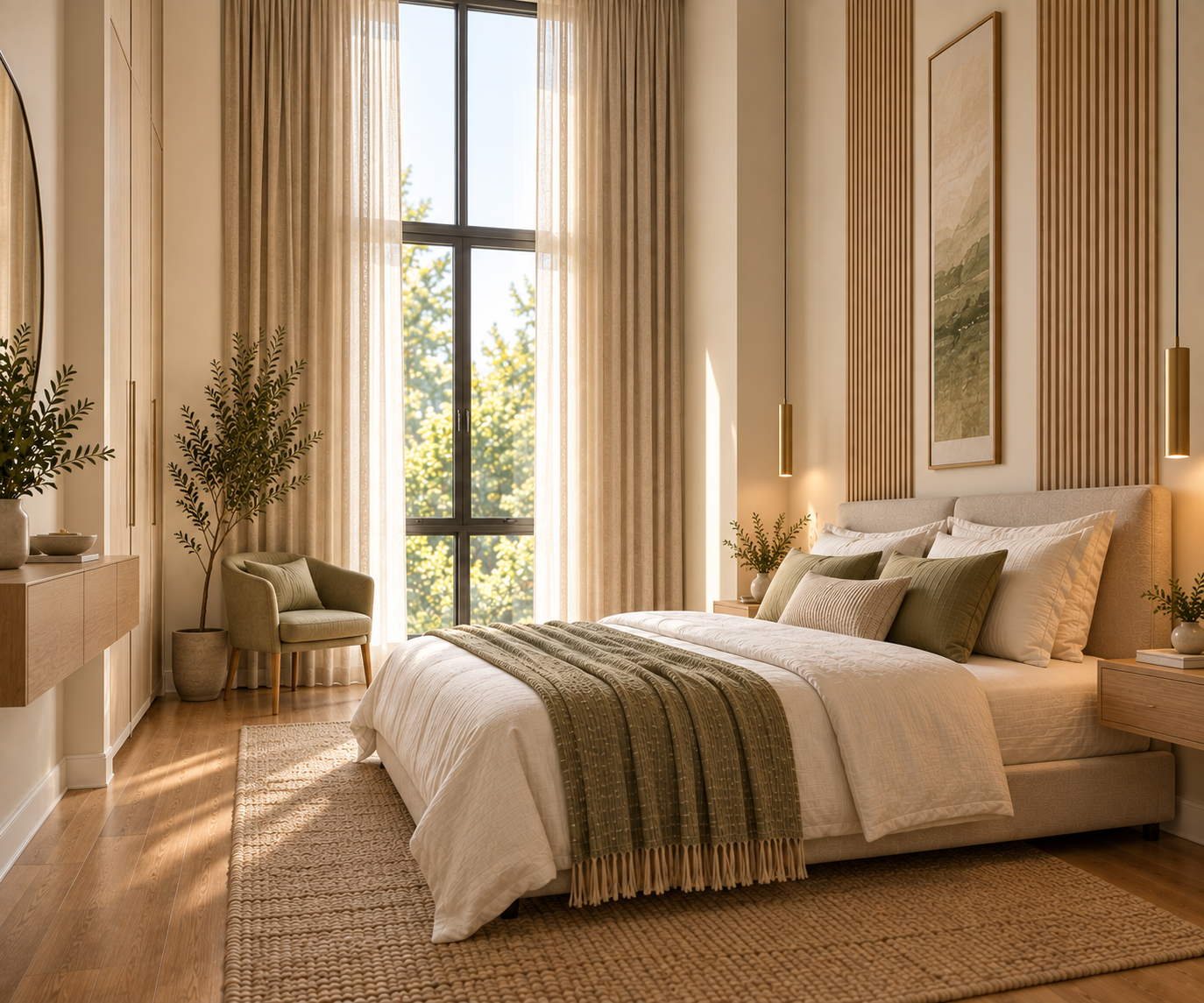
If your bedroom also needs to function as a workspace, a traditional desk may consume more room than necessary. A wall-mounted desk can create a compact work area while preserving valuable floor space.
Choose a design with enough depth for your actual needs rather than automatically selecting a full-size desk. When work is finished, the surface can also serve as a small vanity or display area. For particularly compact rooms, a fold-down wall desk can be an even more flexible solution.
12. Create One Strong Focal Point
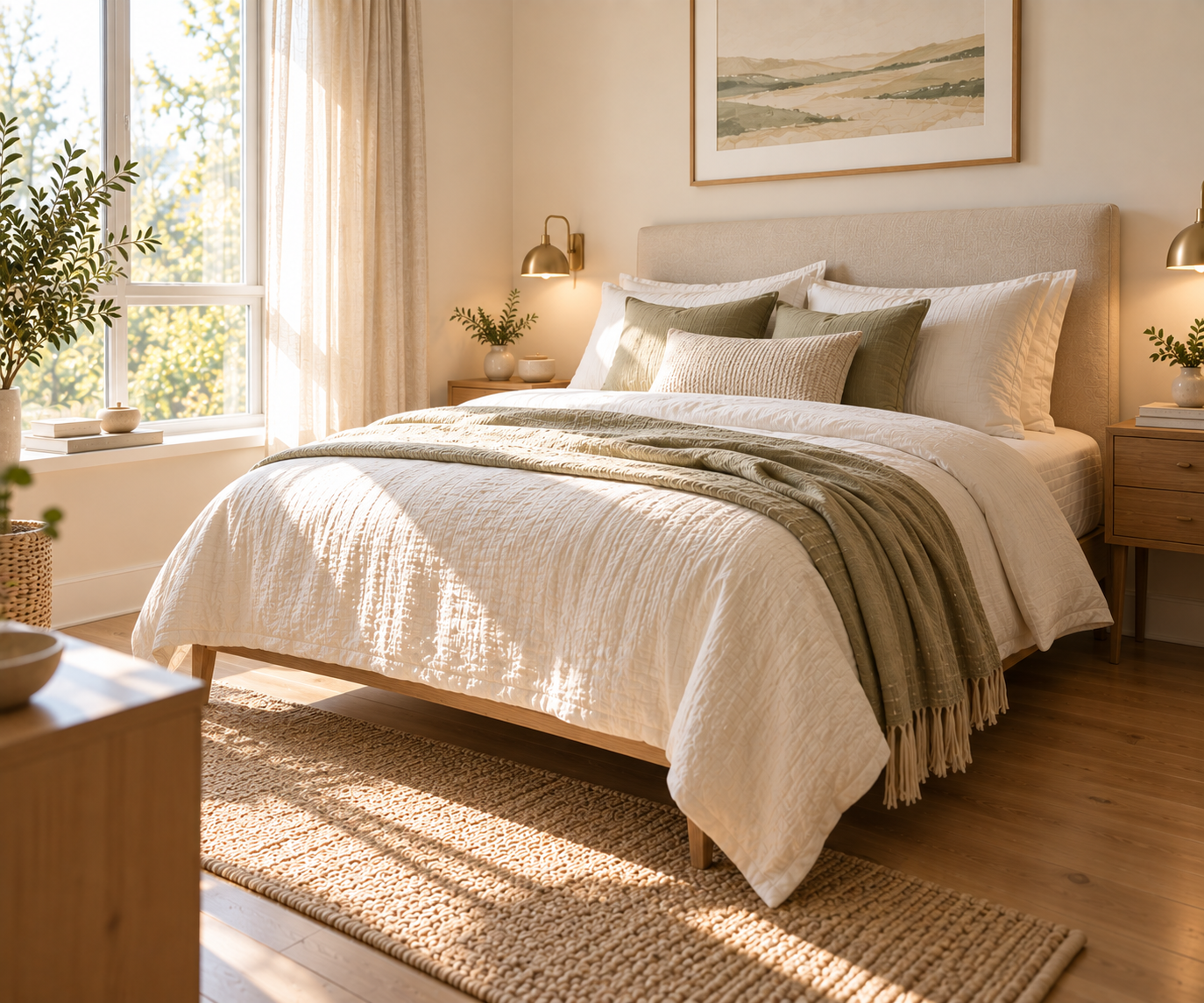
Small rooms can become visually busy very quickly. Instead of decorating every wall and surface, give the room one clear focal point — an interesting headboard, a piece of artwork, textured bedding, a beautifully framed mirror or a distinctive pendant light.
Once you have a focal point, allow the surrounding elements to remain quieter. This creates hierarchy, which is an important part of good interior design: the eye knows where to look, and the room feels more composed as a result.
13. Keep the Floor as Clear as Possible
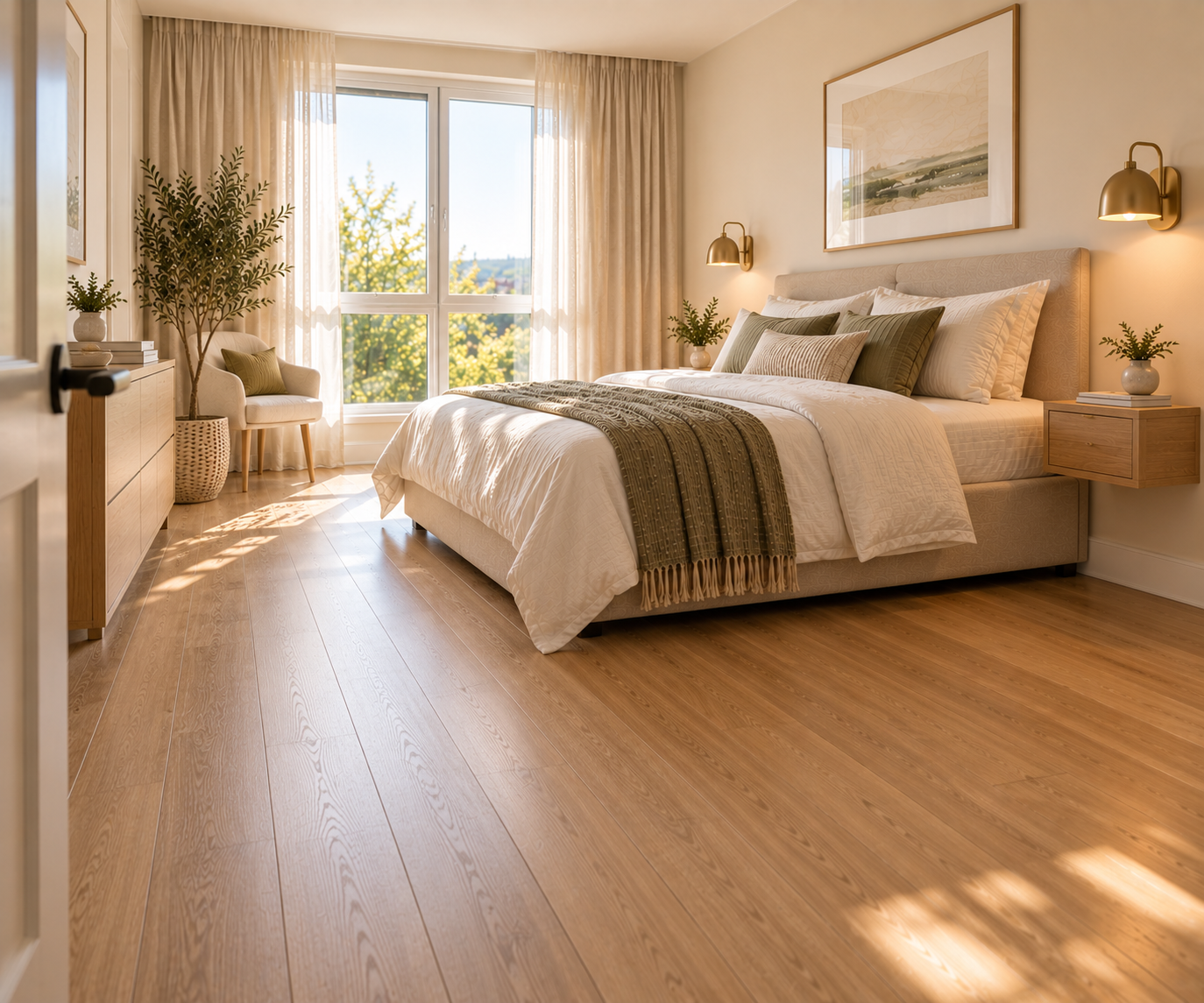
Visible floor area can have a powerful effect on the perception of space. Try to avoid placing unnecessary furniture directly beside the bed or in the main walkway.
If possible, choose storage that can be built into wardrobes, placed beneath the bed or mounted on the wall. Even small changes can help — replacing a floor-standing lamp with a wall light, for example, can free up a surprisingly useful corner.
The objective isn’t to leave every inch empty. It’s to make sure the floor is working for the room rather than becoming crowded by things that could live elsewhere.
14. Choose Bedding That Feels Light
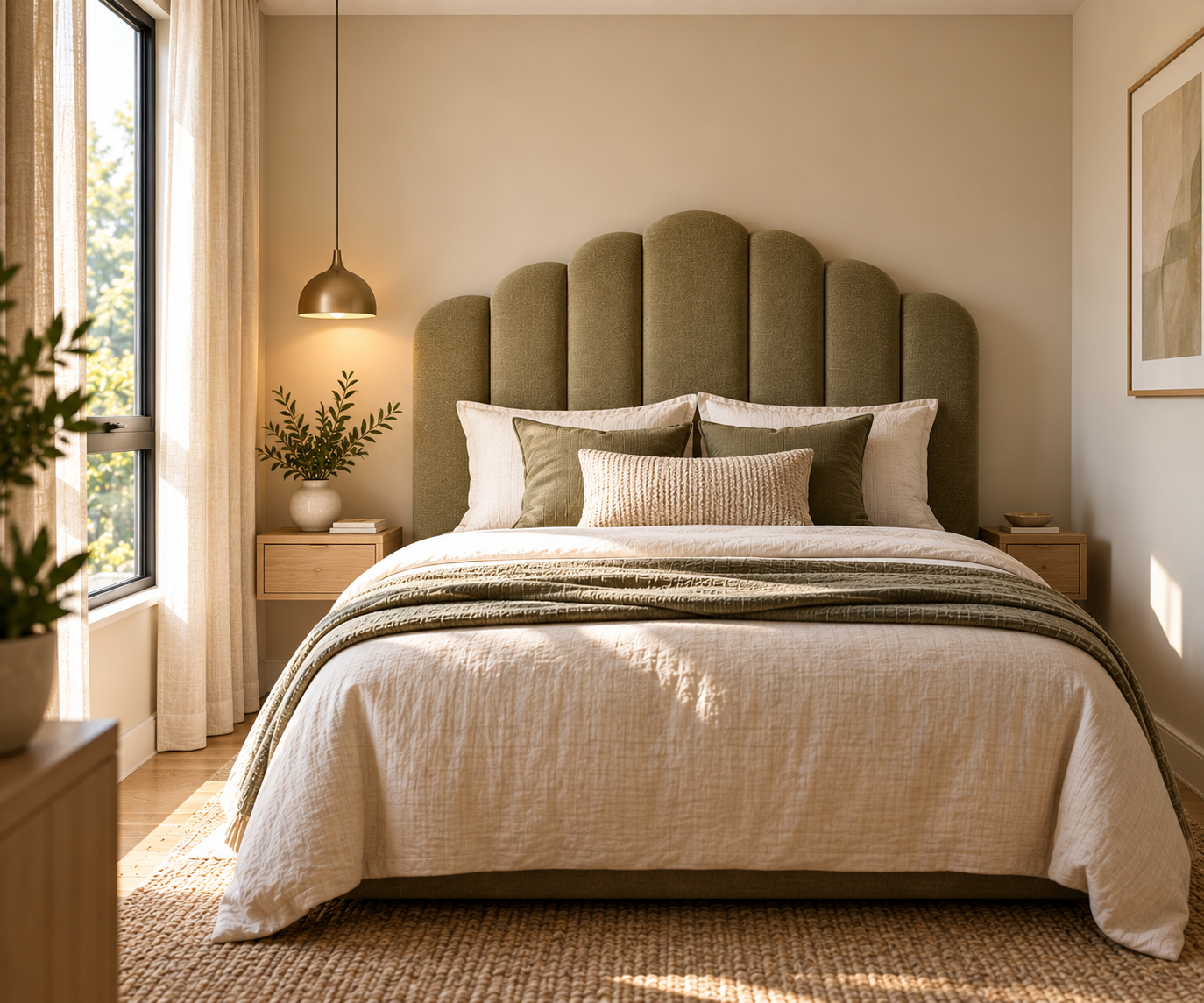
Bedding is often the largest visual element after the bed itself, so it has a significant influence on the room. Heavy patterns, numerous contrasting colors and oversized layers can make a compact bedroom feel visually crowded.
Instead, consider a restrained palette with a combination of subtle textures. Linen, cotton, quilted throws and softly folded blankets can create depth without overwhelming the space.
You can still make the bed inviting and luxurious — the difference is in the editing. A beautifully made bed with a quiet color palette can become the focal point without making the entire room feel heavy.
15. Introduce Vertical Lines
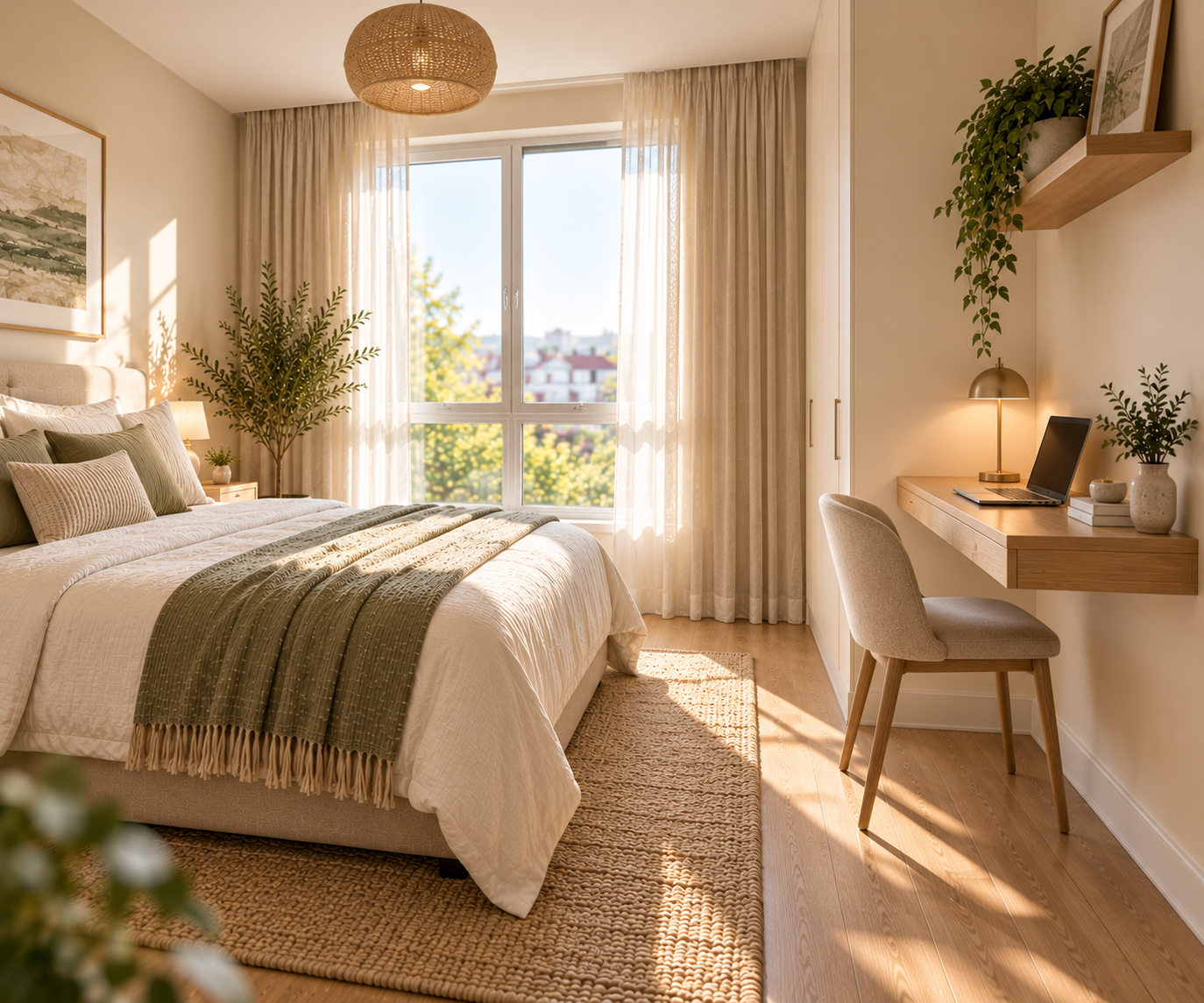
When you can’t make a room wider, emphasize its height. Vertical lines naturally draw the eye upward. They can be introduced through curtains, narrow shelving, vertical wall paneling, tall artwork or elongated furniture.
The effect doesn’t need to be dramatic — even a tall, narrow mirror or a vertically oriented artwork can change the visual rhythm of a room. Use these elements selectively; a few vertical gestures are usually more effective than covering the room in competing patterns.
16. Use Tall, Narrow Storage
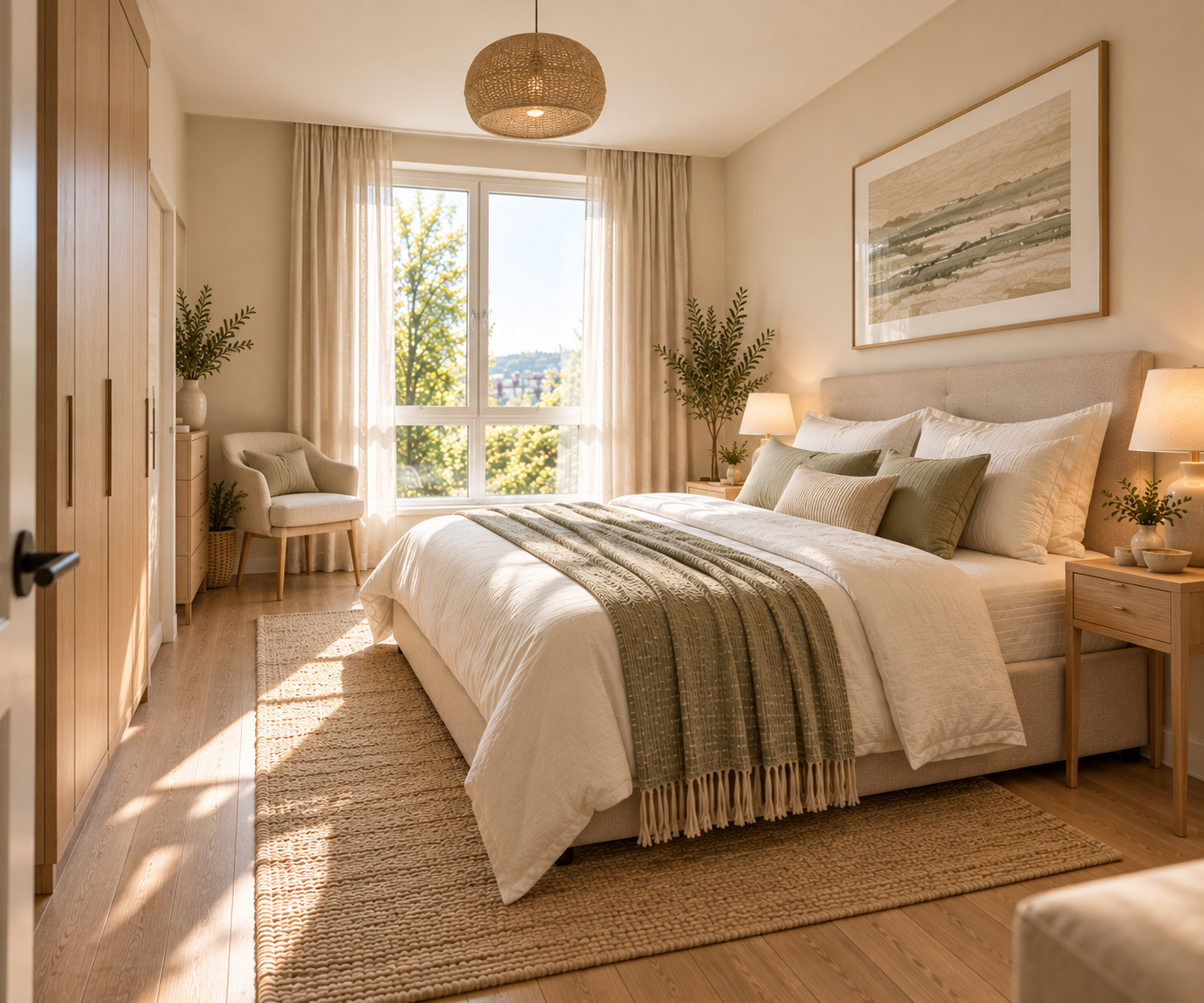
Storage furniture doesn’t always need to spread across the wall. A tall, narrow cabinet can provide useful storage while occupying relatively little floor width — particularly useful for clothing, books, accessories or items that need to remain close at hand.
Tall storage also reinforces the vertical lines of the room, helping the ceiling feel higher. If you have the opportunity to install built-in cabinetry, consider taking it all the way to the ceiling; the additional capacity can also reduce the temptation to add several separate pieces of furniture later.
17. Make Use of the Space Above the Bed
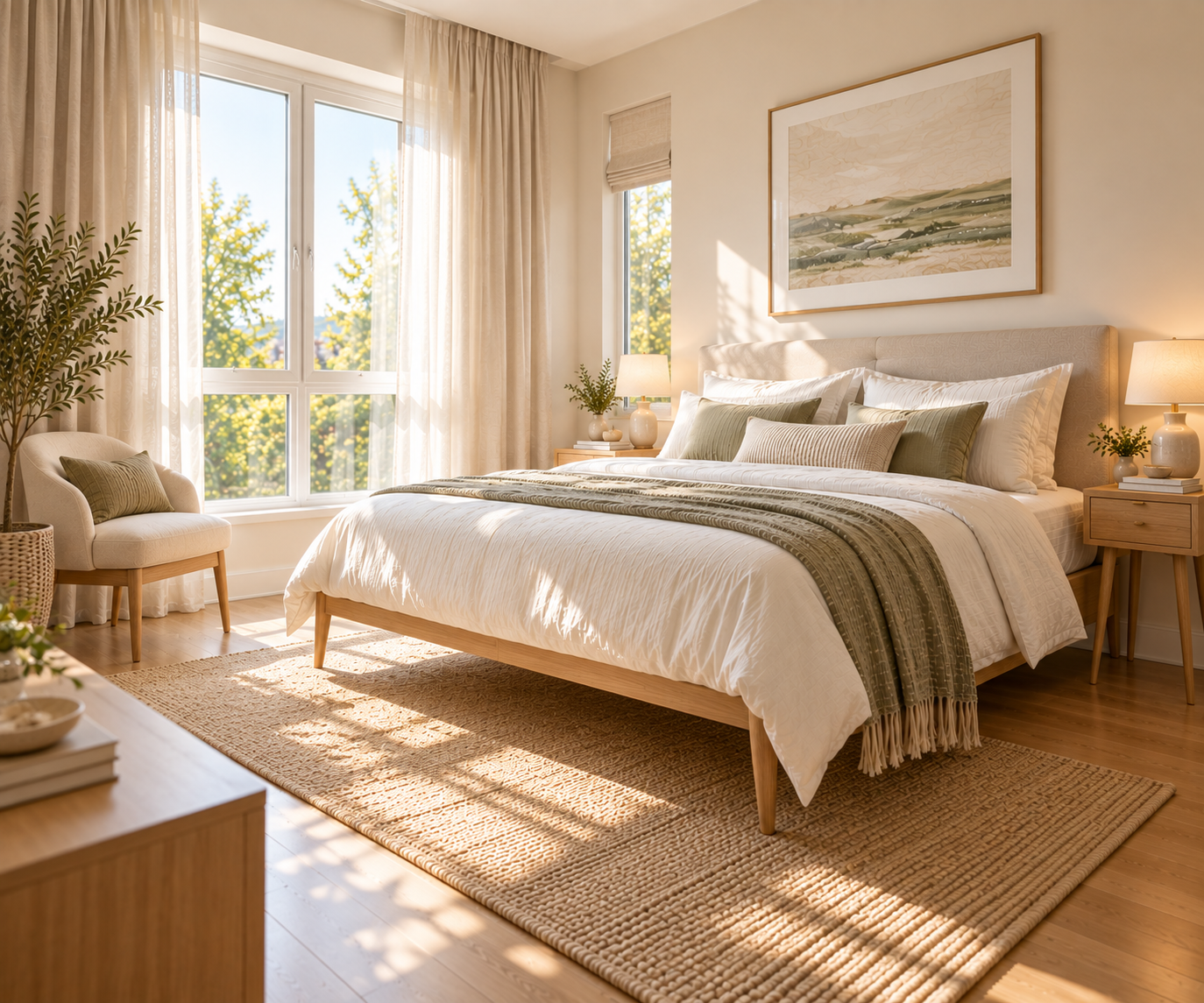
The wall above the bed is often underused. Depending on the ceiling height and layout, it can accommodate artwork, shelving, shallow cabinetry or other carefully considered storage — the key is to avoid making this area feel crowded.
For storage, closed cabinets can provide a cleaner appearance than multiple open shelves. For decoration, one large piece of artwork can often make a stronger statement than a collection of small pieces. Think of the wall above the bed as an opportunity to use vertical space, not an invitation to fill every empty section.
18. Keep Everyday Clutter Out of Sight
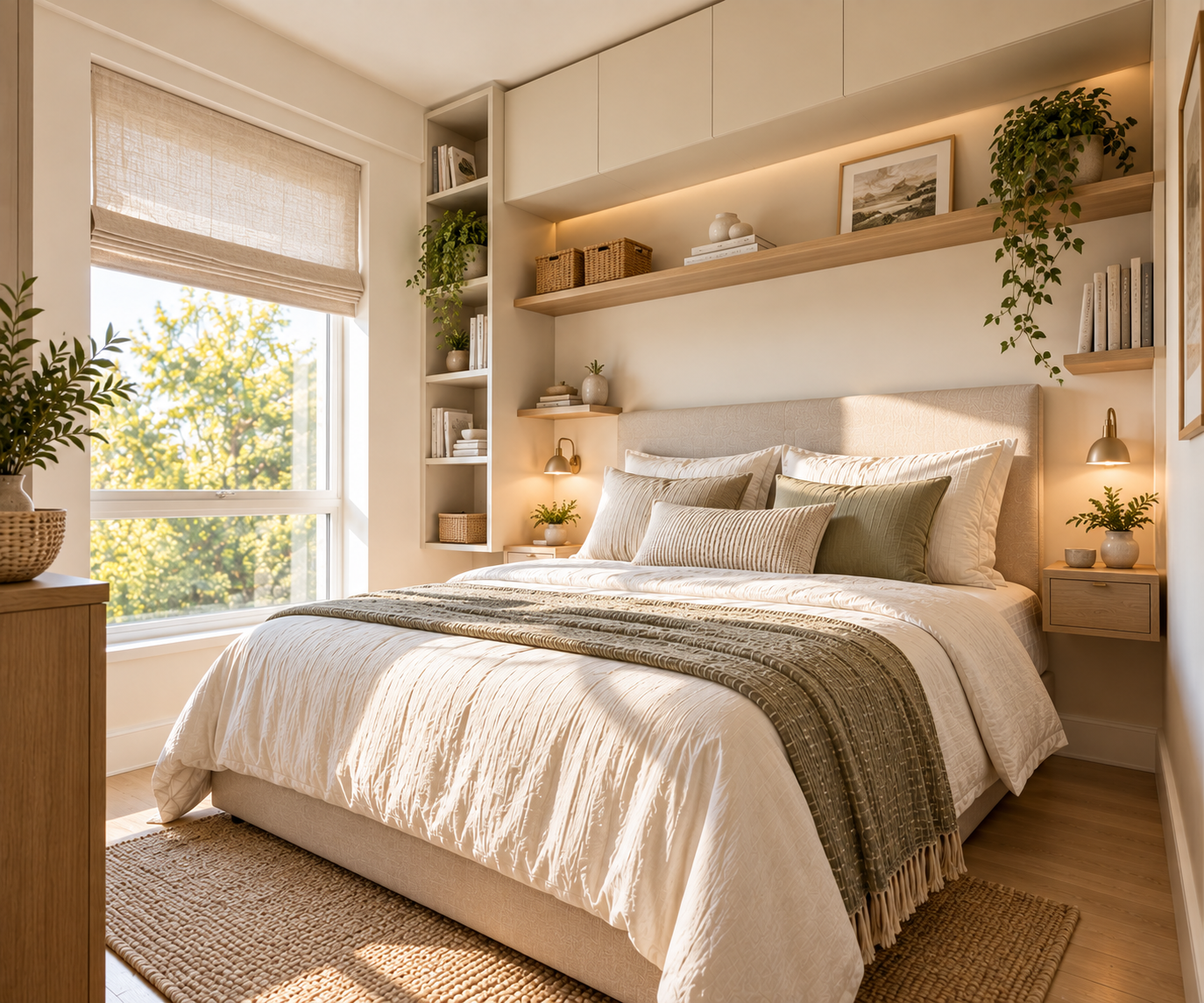
A small bedroom has very little tolerance for visual clutter. When there are clothes on chairs, cables across nightstands and objects scattered across every surface, the room can quickly feel smaller than it actually is.
Closed storage can help create a calmer visual field. Use baskets, drawers, wardrobe organizers and storage boxes to give everyday items a defined home. This is less about being minimalist and more about reducing visual noise — a bedroom feels larger when the eye can rest.
19. Use Layered Lighting
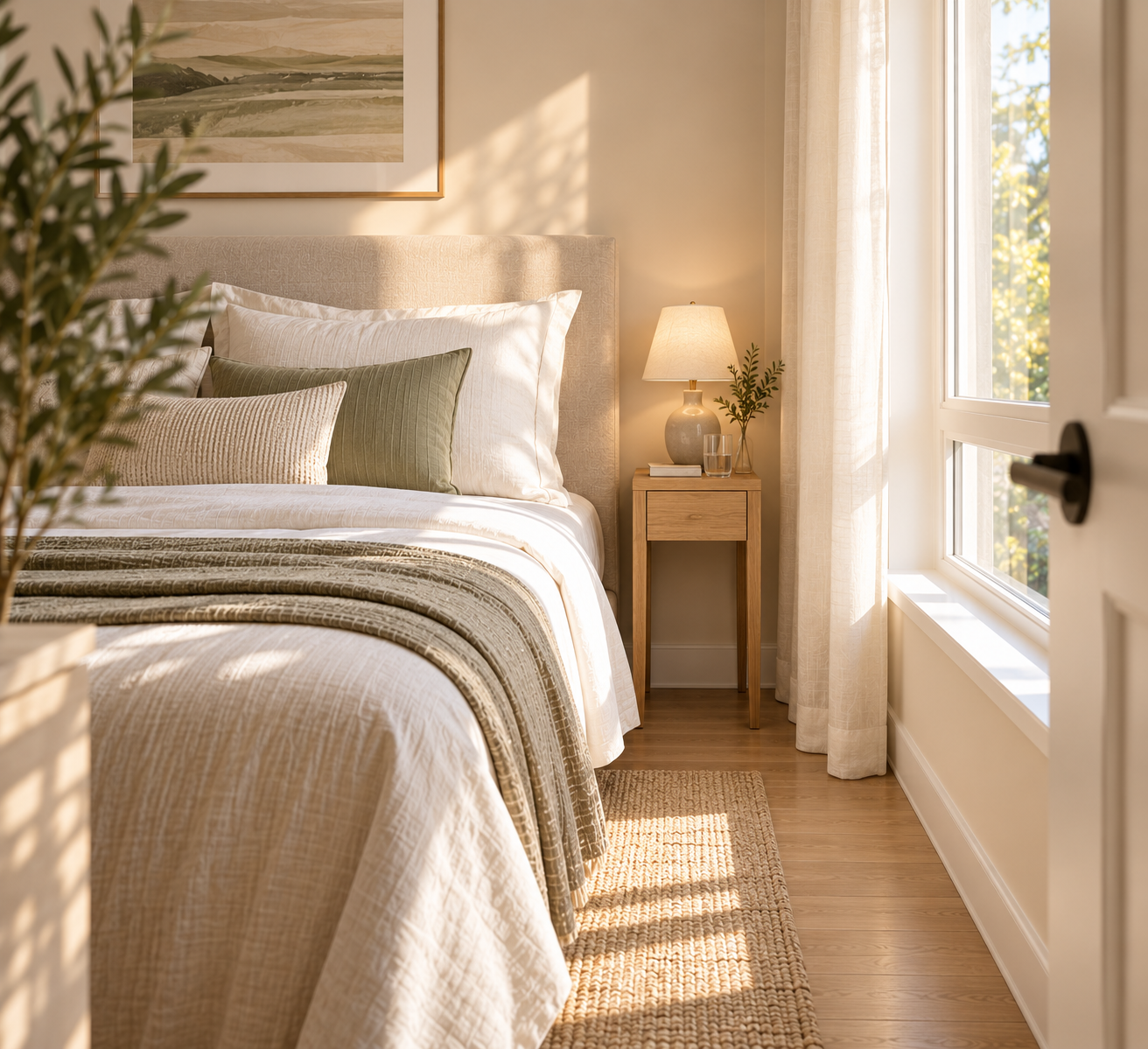
Lighting can transform the atmosphere of a small bedroom after sunset. Rather than depending entirely on one ceiling light, create several layers: ambient lighting for general illumination, bedside or wall lighting for functional light, and accent lighting for warmth and depth.
Wall sconces are especially useful because they provide illumination without taking up bedside or floor space. Warm, softly distributed light can also make neutral colors and natural materials feel richer, giving the room a sense of depth after dark.
20. Replace Bulky Lamps With Wall Lights
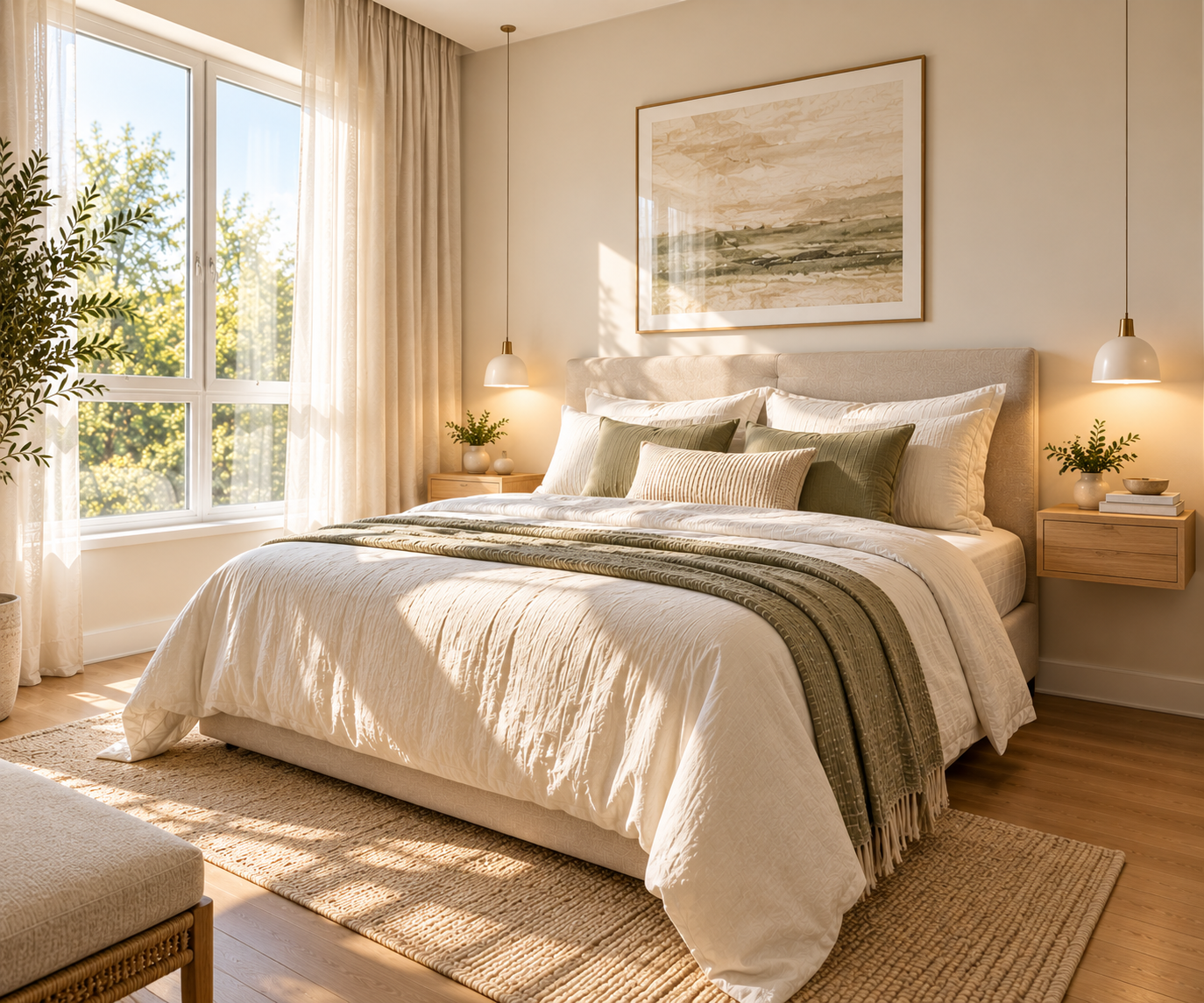
Bedside lamps can be beautiful, but they can also consume valuable space. If your nightstand is small, a wall-mounted sconce can provide the same function while keeping the surface clear — particularly effective when you need room for books, charging devices or other essentials.
Choose a fixture that complements the scale of the bedroom. In a compact room, a simple, well-proportioned light can feel more elegant than an oversized decorative lamp.
21. Choose a Visually Simple Headboard
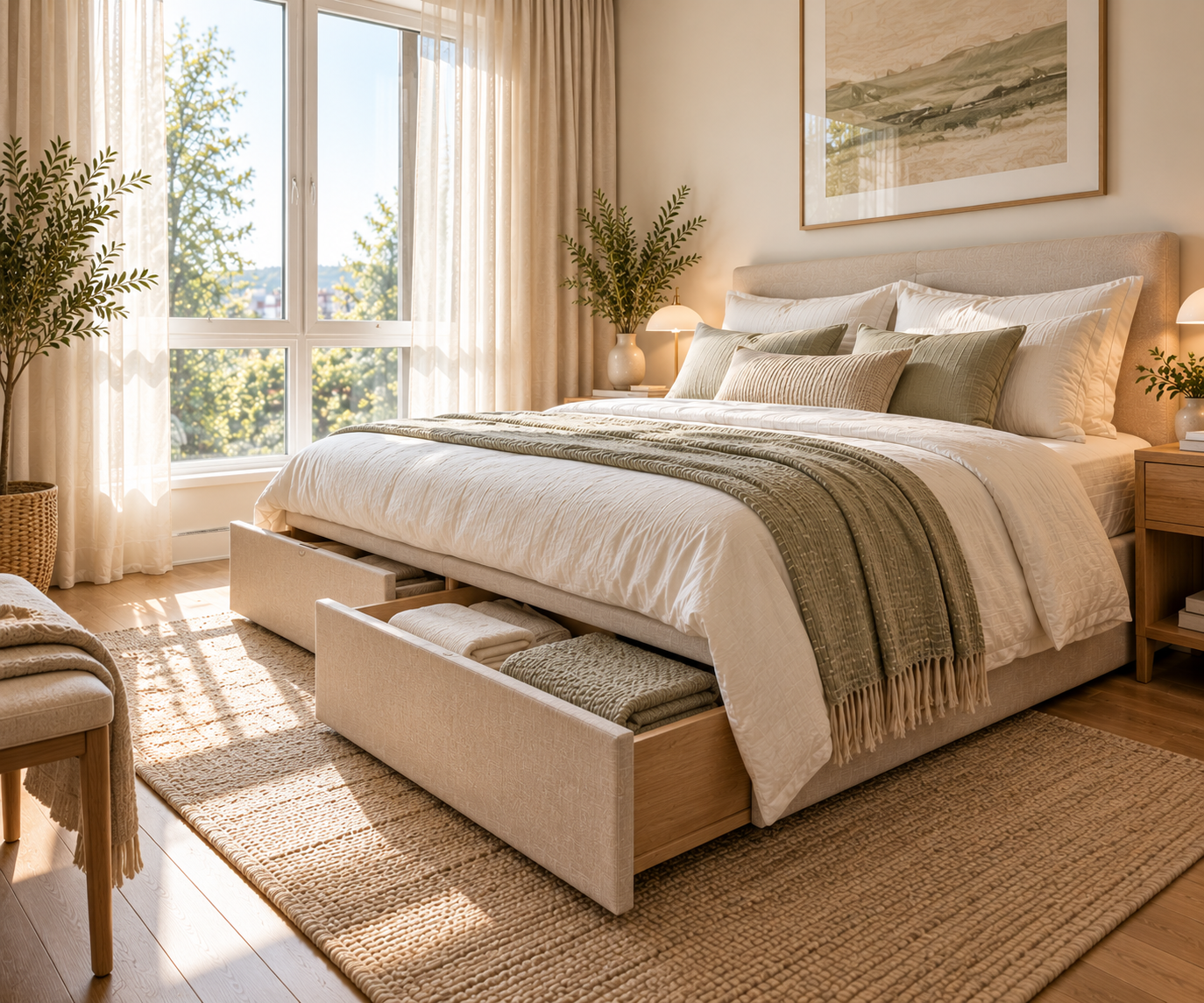
The bed is naturally the center of attention in a bedroom, and the headboard can have a major impact on how large the room feels. A very deep, oversized or heavily detailed headboard may visually push into the room.
Instead, consider a simple upholstered panel, slim timber headboard or minimalist integrated design. This doesn’t mean the headboard needs to disappear — it simply needs to work with the proportions of the space. A restrained headboard can still feel luxurious when its material, texture and craftsmanship are right.
22. Repeat a Material or Color
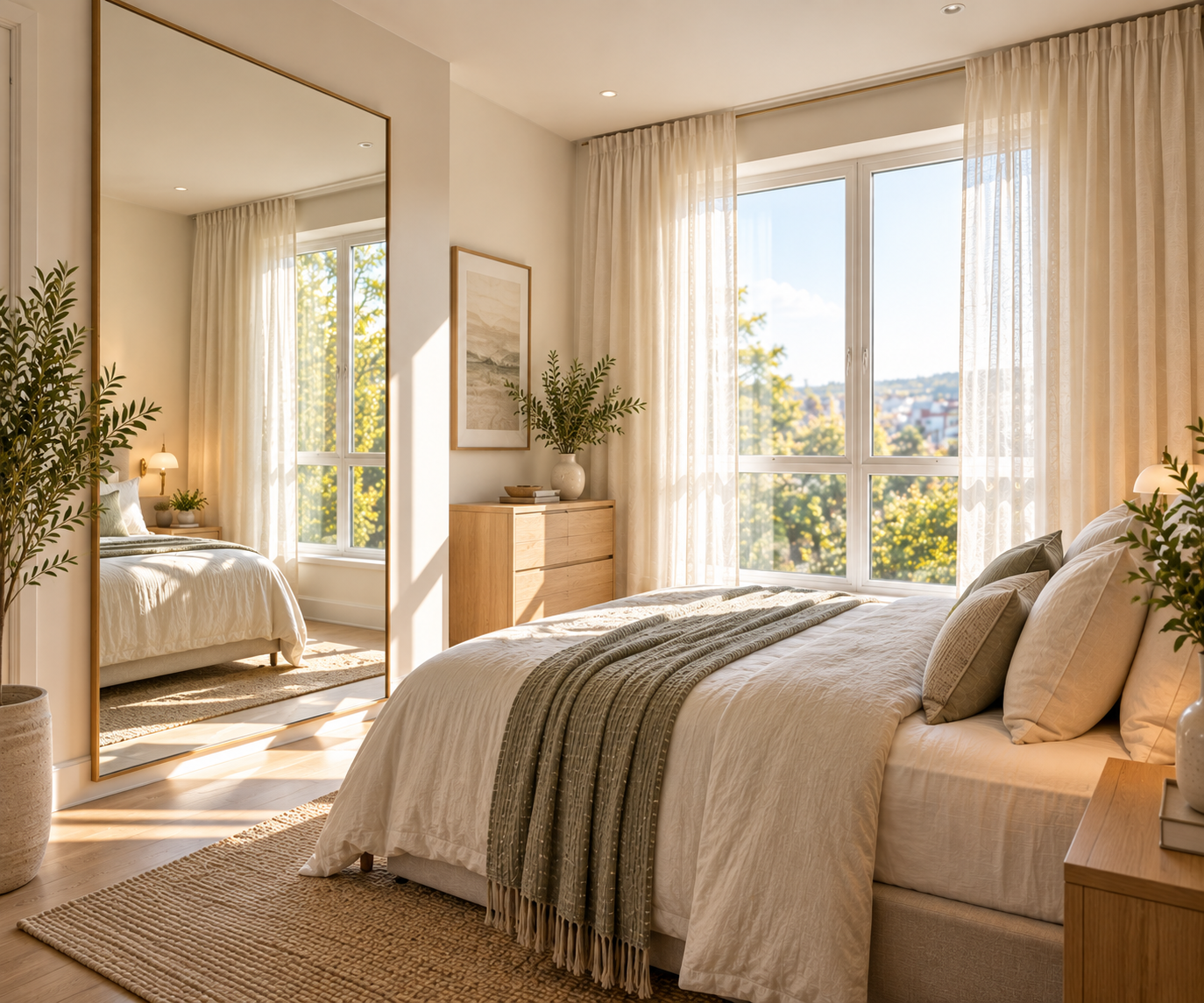
Visual consistency can make a small bedroom feel more cohesive. For example, repeating a warm timber tone across the nightstand, shelving and small decorative elements creates a connection between otherwise separate pieces.
The same principle works with color. A muted wall color repeated subtly in bedding, artwork or curtains can help the room feel unified. When every object has a completely different finish, color or style, the room can feel fragmented — repetition creates rhythm and calm.
23. Use a Rug Carefully
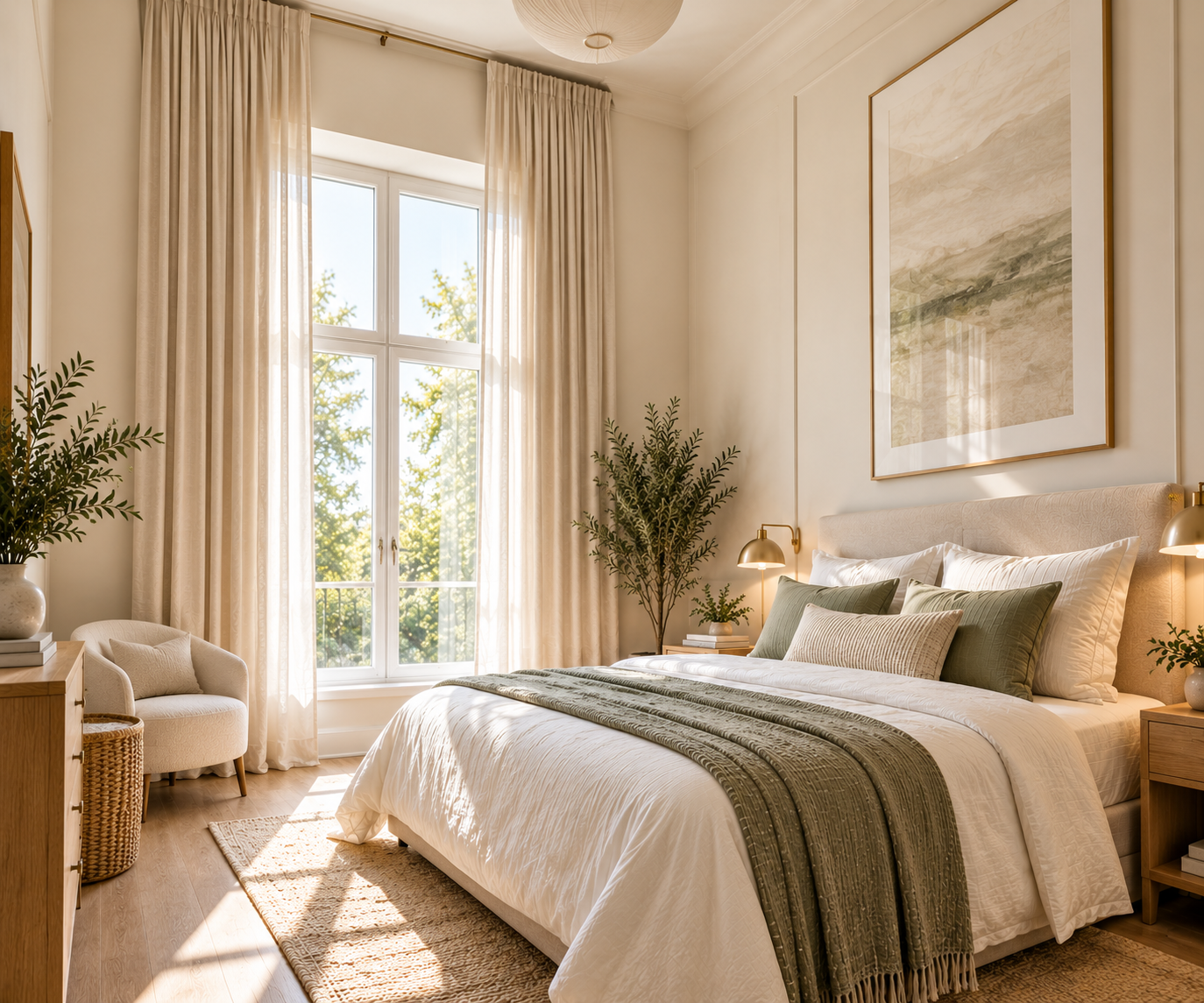
A rug can add warmth and softness to a bedroom, but its scale matters. A very small rug placed directly beneath the center of the bed can sometimes make the floor feel divided into separate fragments.
If space allows, a larger rug that extends beyond the sides and foot of the bed can create a more connected composition. In especially compact rooms, consider whether a rug is necessary at all — the best choice is the one that adds comfort without making the floor feel visually crowded.
24. Use Reflective Surfaces With Restraint
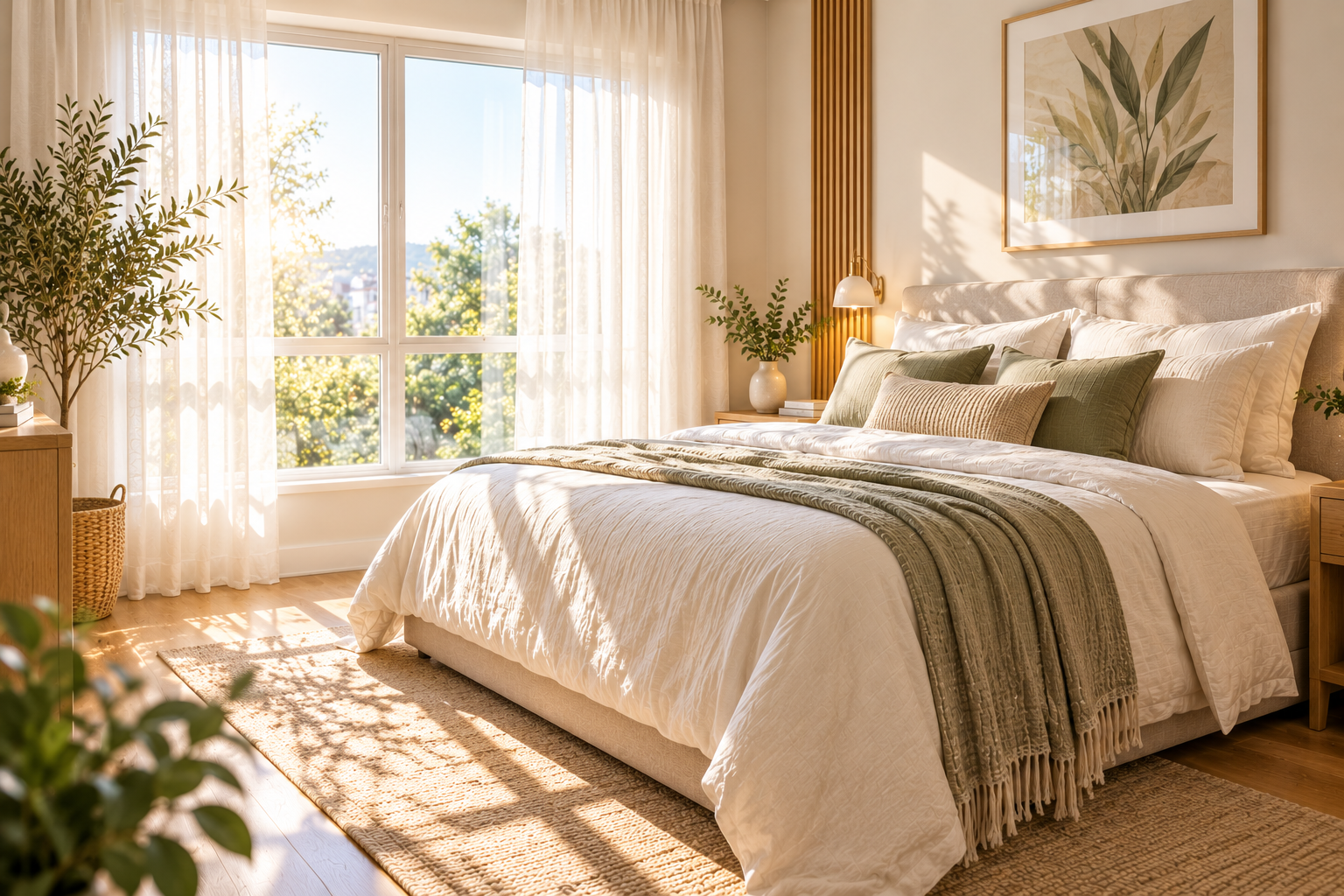
Mirrors aren’t the only surfaces that can help bounce light around a room. Glass, lightly reflective furniture finishes and polished metal details can also introduce subtle brightness. But restraint matters.
A small bedroom filled with glossy surfaces can quickly feel cold or visually busy. One mirror, a glass bedside surface or a few carefully chosen metal details may be enough. The objective is to create depth and movement in the light — not to make every surface reflective.
25. Edit the Room Like an Interior Designer
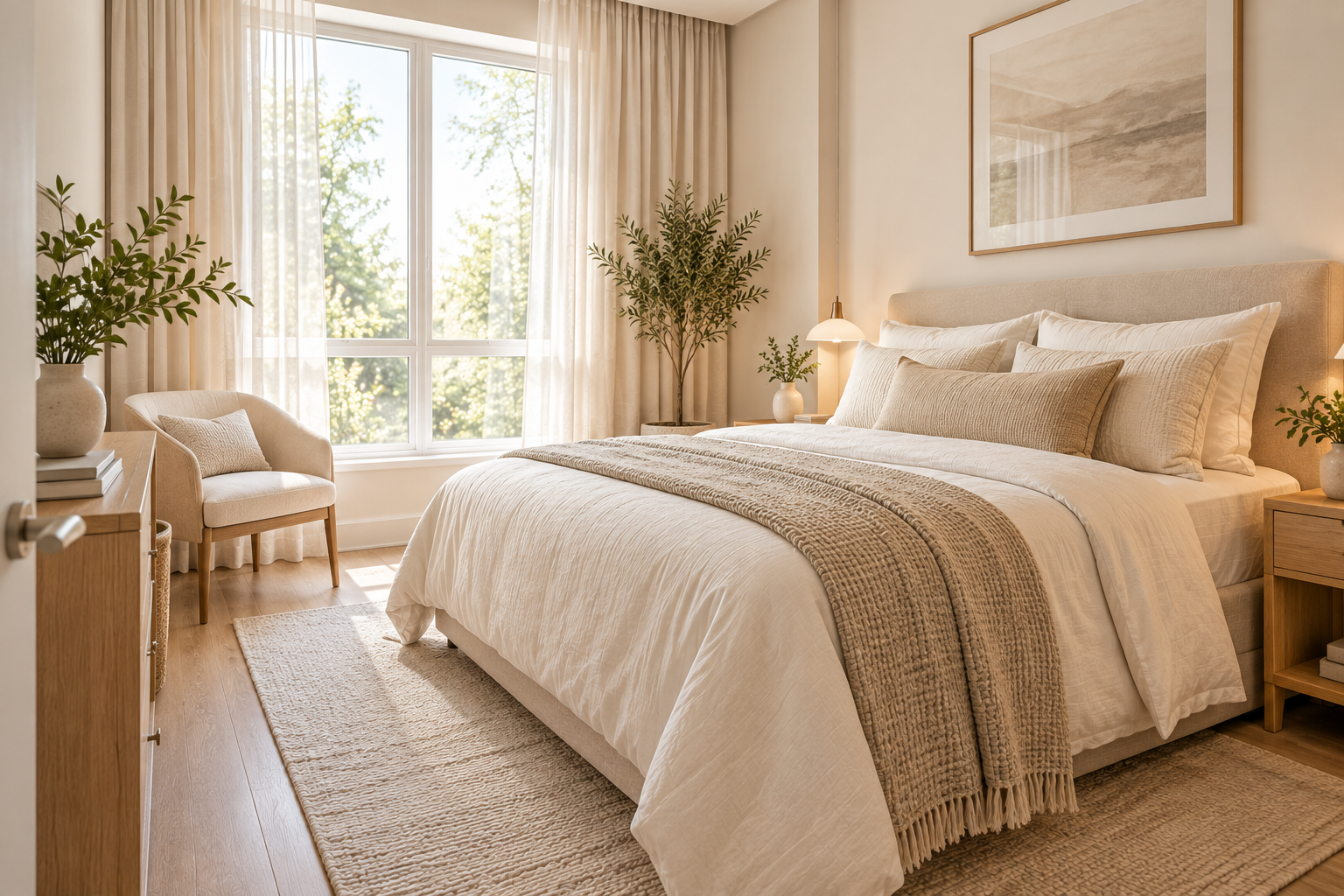
Perhaps the most effective small-bedroom idea is also the least expensive: edit.
Stand in the doorway and look at the room as if you were seeing it for the first time. Is there furniture you rarely use? Are decorative objects competing for attention? Is something blocking natural light? Could a storage solution replace two separate pieces?
Ask whether each item is useful, beautiful, meaningful — or ideally, more than one of those things.
Small bedrooms often become more spacious not because something new has been added, but because something unnecessary has been removed.
Good design isn’t about filling every available space. It’s about deciding what deserves to remain.
Creating a Bedroom That Feels Bigger Without Losing Its Character
A small bedroom doesn’t have to feel like a compromise.
The most successful compact bedrooms are rarely the ones with the fewest possessions or the most expensive furniture. They’re the rooms where every element has been considered: where storage has a purpose, furniture is properly scaled, natural light is allowed to travel, and decorative details have enough breathing room to be appreciated.
Start with the changes that will have the greatest impact. Clear the floor. Reconsider the furniture layout. Let more daylight in. Add a well-placed mirror. Move storage upward. Simplify the visual palette.
You don’t need to transform everything at once. Sometimes a bedroom begins to feel larger simply when it’s been given a little more space to breathe.
What’s the best paint color for a small bedroom?
There’s no single "correct" color, but soft whites, warm creams and muted greige tend to work well because they create continuity across the walls and ceiling rather than visually breaking the room into segments. If you love color, a muted, less saturated version of your favorite shade will usually feel calmer than a bold, high-contrast one.
Do mirrors really make a small bedroom look bigger?
Yes — a generously sized mirror, especially placed opposite or near a window, reflects natural light and creates the impression of extra depth. One large, well-placed mirror is almost always more effective than several small decorative ones.
Should I skip a rug in a small bedroom?
Not necessarily, but size matters more than in a larger room. A small rug placed only under the center of the bed can visually chop the floor into fragments. A larger rug that extends past the sides and foot of the bed reads as one connected space — and in especially tight rooms, it’s worth asking whether a rug is needed at all.
What’s the single easiest change to make a small bedroom feel bigger?
Clearing the floor. Removing or relocating anything unnecessary from the walkway and the area beside the bed has an almost immediate effect on how spacious a room feels — often more than any single piece of furniture or decor you could add.