
25 Cozy Bedroom Ideas That Make Your Room Feel More Relaxing
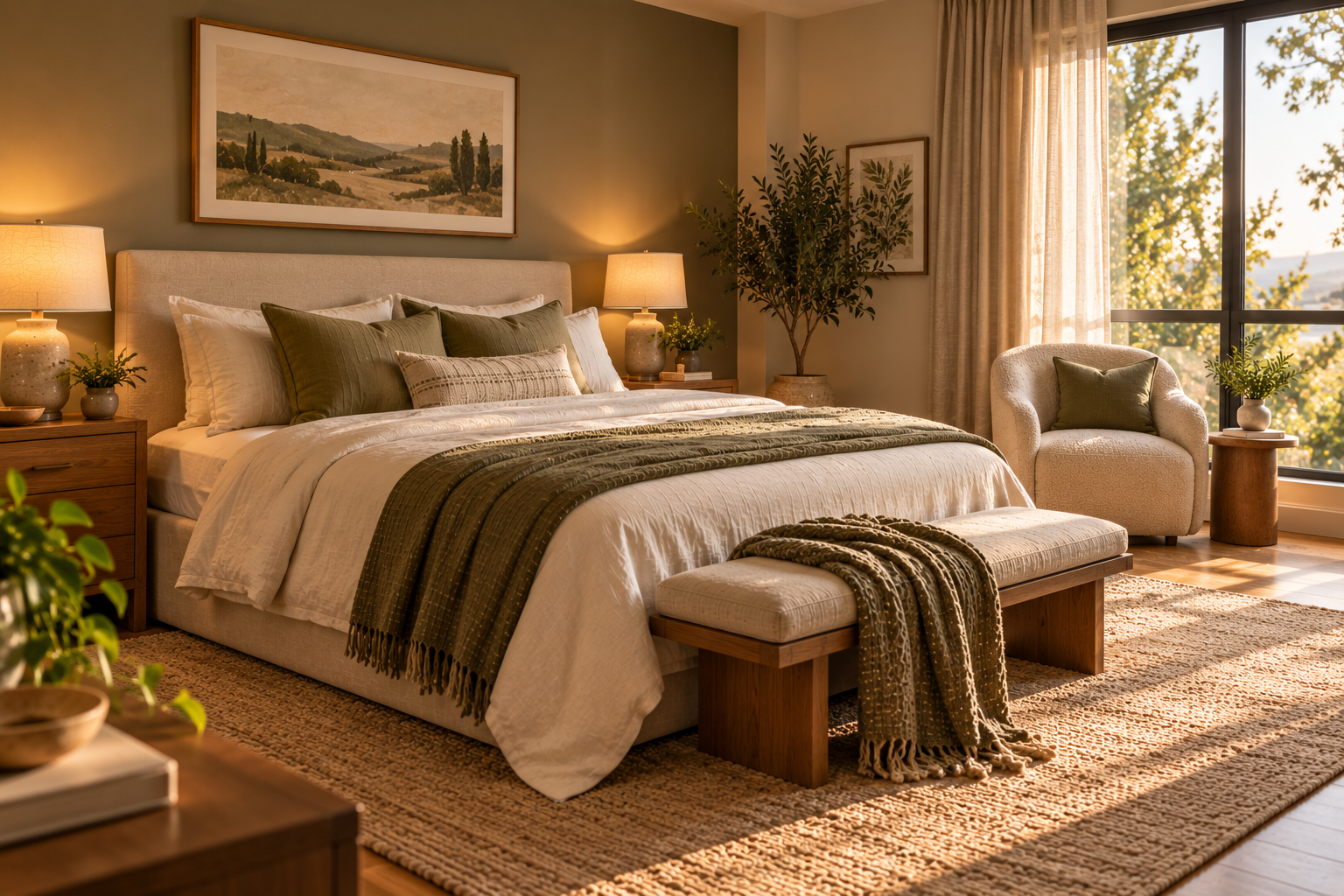
25 warm, practical ways to turn an ordinary bedroom into a genuine retreat — through lighting, texture, and a few deliberate choices, not a renovation.
Not every bedroom needs to work harder. Sometimes it just needs to feel softer.
Where making a small bedroom feel bigger is about proportion and visual space, making a bedroom feel relaxing is a different project entirely — it's about atmosphere. Light that feels warm instead of clinical. Textures you actually want to touch. A room that quiets your mind the moment you walk in, rather than one more space competing for your attention.
None of this requires a renovation. Most of it comes down to small, deliberate choices in lighting, texture, colour and what you choose to leave out. Here are 25 ways to turn an ordinary bedroom into a genuine retreat.
1. Start With Soft, Layered Bedding
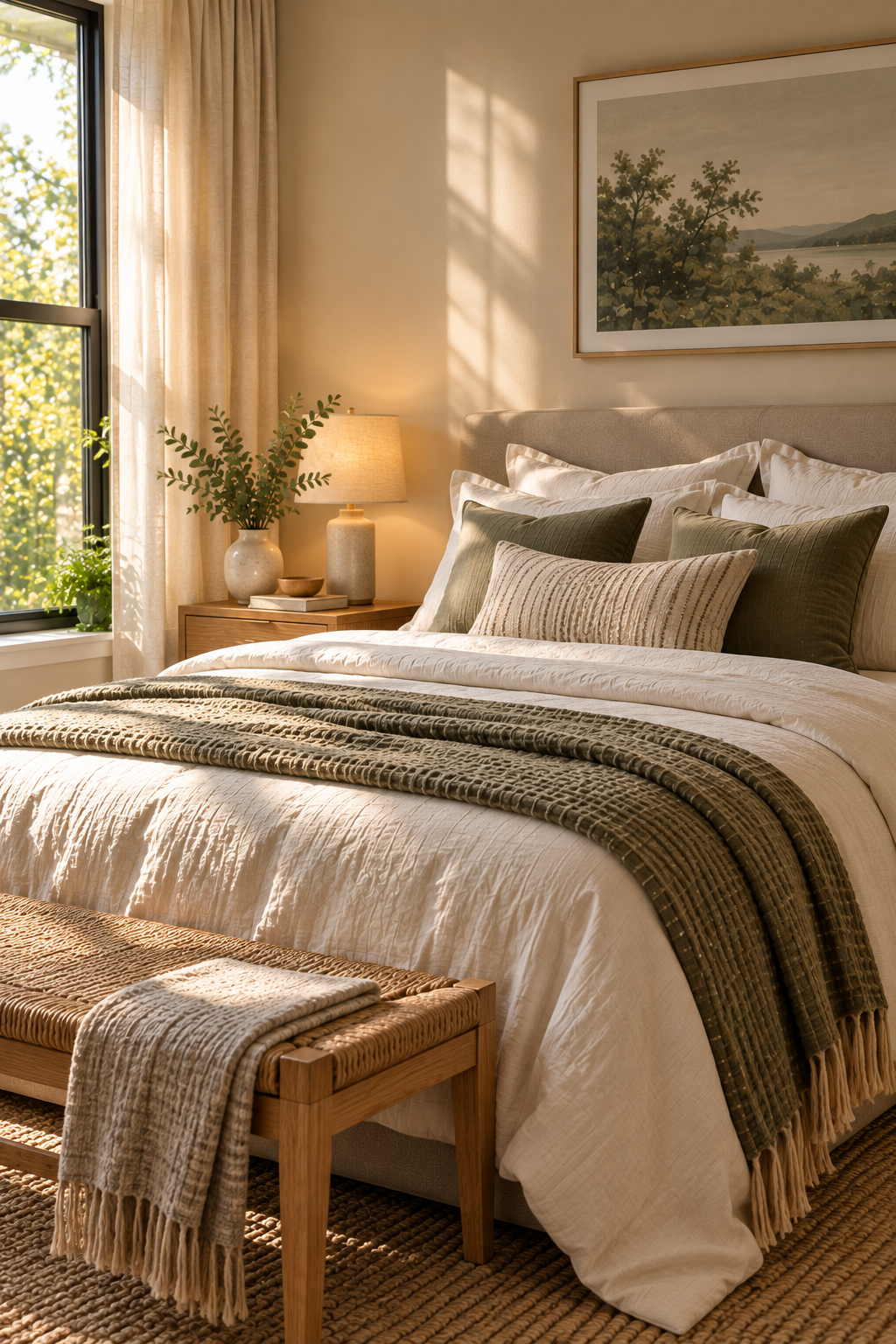
Bedding is the single largest surface in the room, so its texture sets the tone before anything else does.
Instead of one flat duvet, build in layers: a fitted sheet, a lightweight quilt, and a heavier throw folded at the foot of the bed. Mix materials rather than matching them exactly — a linen duvet with a cotton-waffle throw feels far more relaxing than a single matching set.
The goal isn't more bedding. It's bedding that invites you to actually get in.
2. Choose a Calming Colour Palette
Colour affects mood more directly in a bedroom than almost anywhere else in the home, simply because you spend so much unguarded time in it.
Muted, low-contrast palettes — soft clay, warm oat, sage, dusty blue — tend to read as calmer than high-contrast schemes. This doesn't mean dull. A soft, warm hue against white trim and natural wood can feel just as rich as a bold colour, without the visual stimulation that keeps a room feeling "on."
If you're unsure where to start, look at what already calms you outdoors — overcast skies, sand, moss — and bring a version of that indoors.
3. Add Warm Bedside Lighting
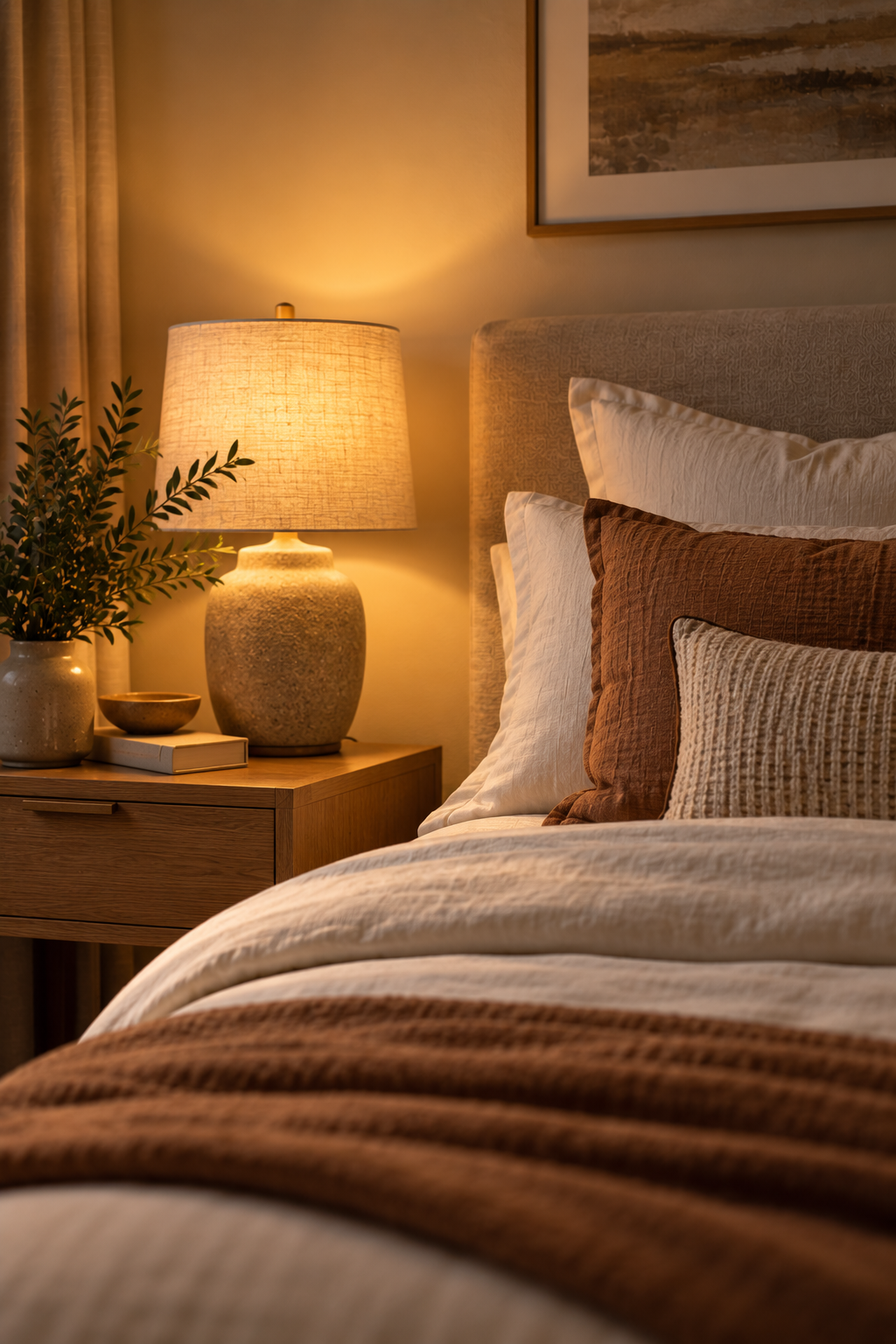
Overhead lighting is efficient. It is rarely relaxing.
A warm-toned bedside lamp does more to soften a bedroom in the evening than almost any other single change. Look for bulbs in the 2700K range — warmer and more amber than a typical daylight bulb — and a shade that diffuses the light rather than exposing the bulb directly.
If you only make one lighting change in your bedroom, make it this one.
4. Use Natural Materials

Wood, linen, wool, rattan, stone, clay — these materials carry warmth in a way that glass, chrome and high-gloss laminate simply don't.
You don't need to replace furniture to get this effect. A rattan bench, a linen lampshade, or a stoneware vase can shift the whole feel of a room even when the bed frame and dresser stay exactly as they are.
Aim for at least one natural material in each part of the room your eye naturally lands on.
5. Create a Comfortable Reading Corner
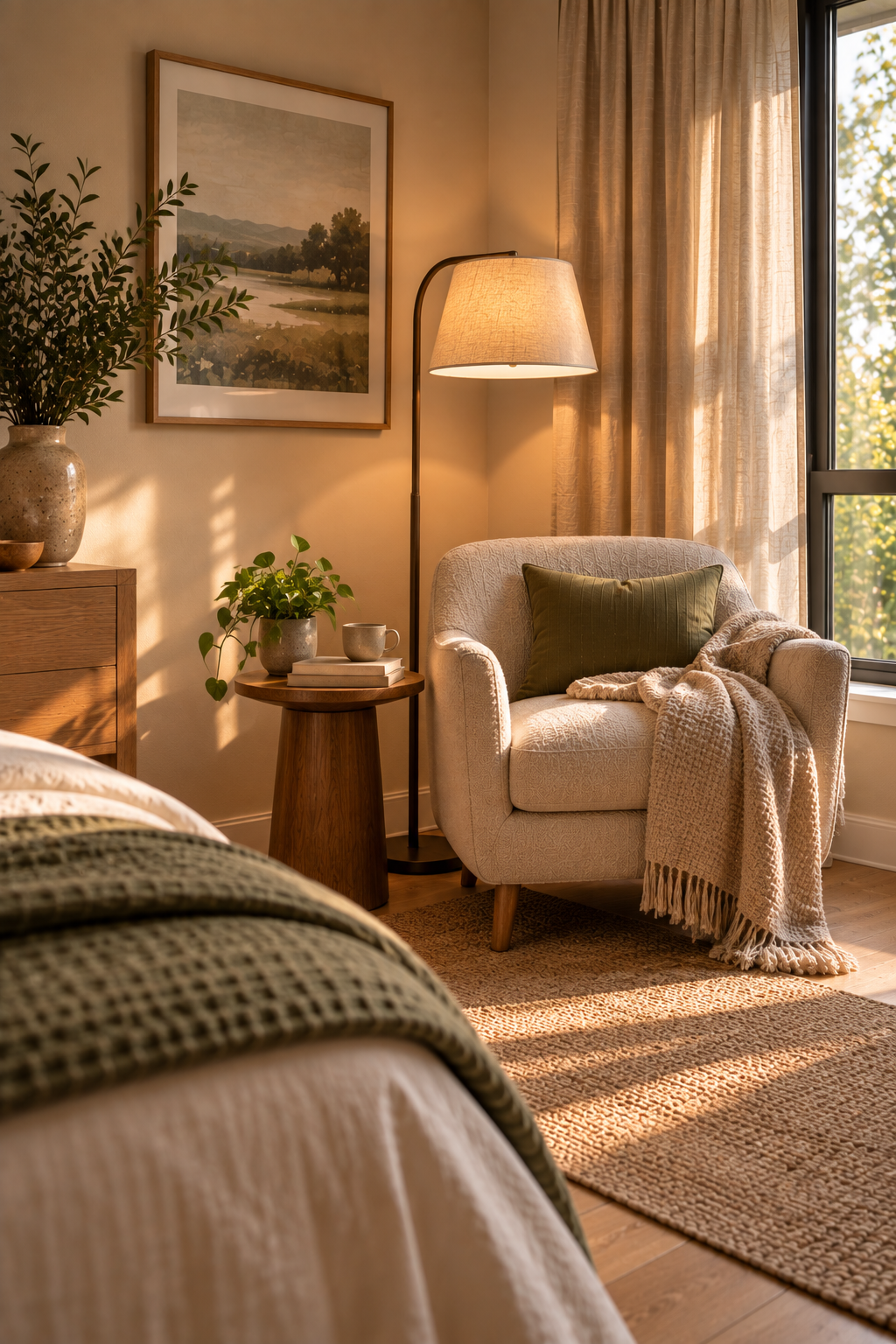
A bedroom that only contains a bed asks one thing of you: sleep. A bedroom with even a small second purpose feels more like a retreat and less like a functional stop.
You don't need a dedicated reading nook in the traditional sense — a single comfortable chair, a floor lamp, and a small table for a cup of tea is enough. Position it near natural light if you can, so it works during the day too.
6. Layer Different Textures

A room can be entirely neutral in colour and still feel rich, as long as the textures vary.
Combine something smooth (linen, cotton sateen) with something textured (bouclé, chunky knit, jute) and something structured (a wood frame, a woven basket). Sameness is what makes an all-neutral room feel flat; texture is what makes it feel deliberate.
7. Keep the Bed Visually Inviting

An unmade or awkwardly dressed bed undercuts every other effort in the room, no matter how good the lighting or colour palette is.
You don't need hotel-level precision every day, but a quick habit helps: pull the duvet straight, plump the pillows, and fold (don't drape) the throw at the foot of the bed. It takes under a minute and changes how the whole room reads.
8. Choose Soft Window Treatments
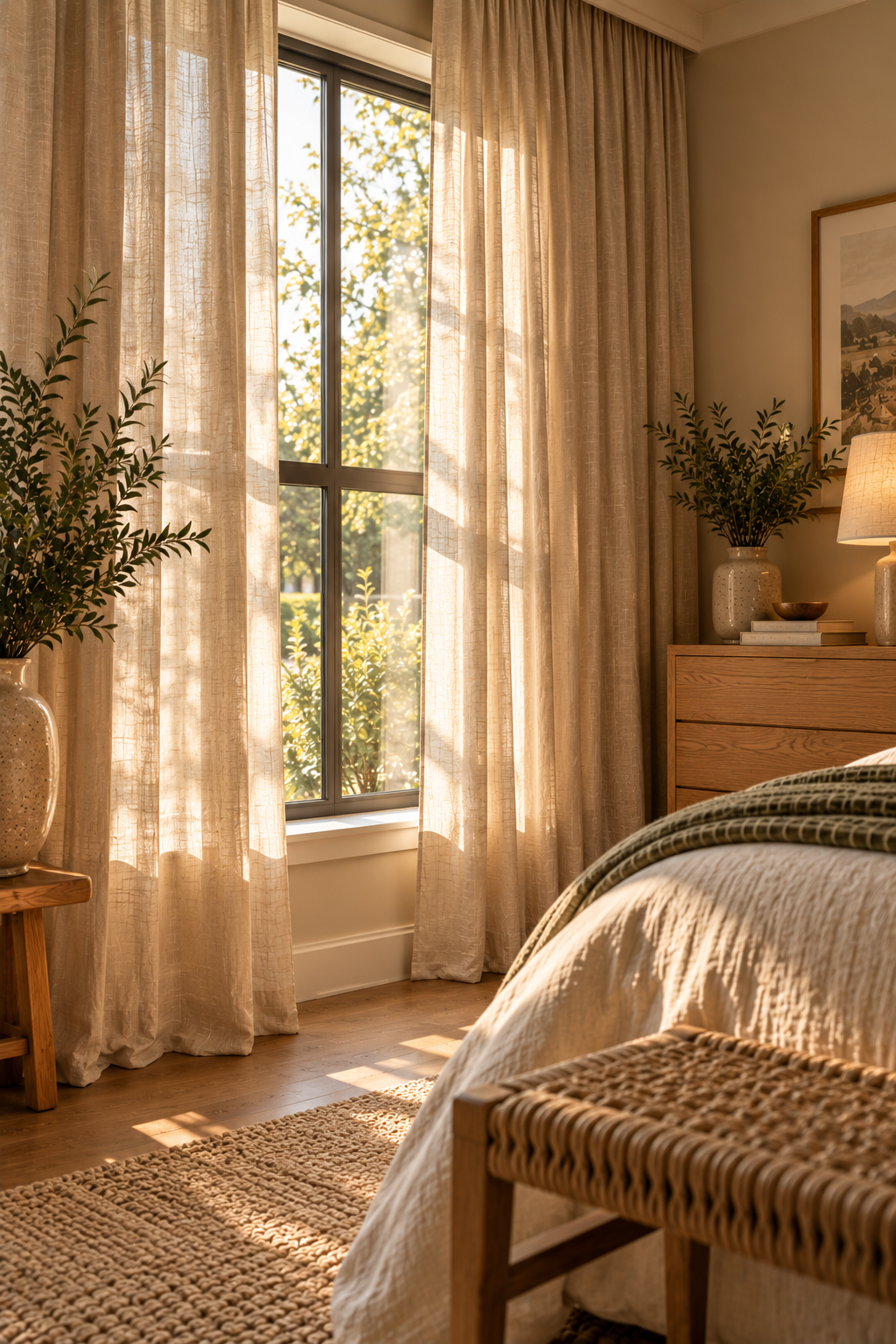
Hard blinds and stark white shades can make a room feel efficient, but rarely soft. Fabric curtains — even a simple linen panel — absorb sound and light in a way that changes the whole feel of a room after dark.
Choose a fabric with some visible texture or weight rather than something thin and stiff, and let it puddle slightly at the floor rather than stopping precisely at the sill.
9. Add One Meaningful Artwork
Relaxing rooms are rarely bare, but they're almost never busy either. One piece of art you actually love does more than a wall full of things you picked because the space needed filling.
Choose something with a mood that matches the room — a soft landscape, an abstract in muted tones, even a piece of your own — rather than something purely decorative.
10. Bring in Subtle Greenery
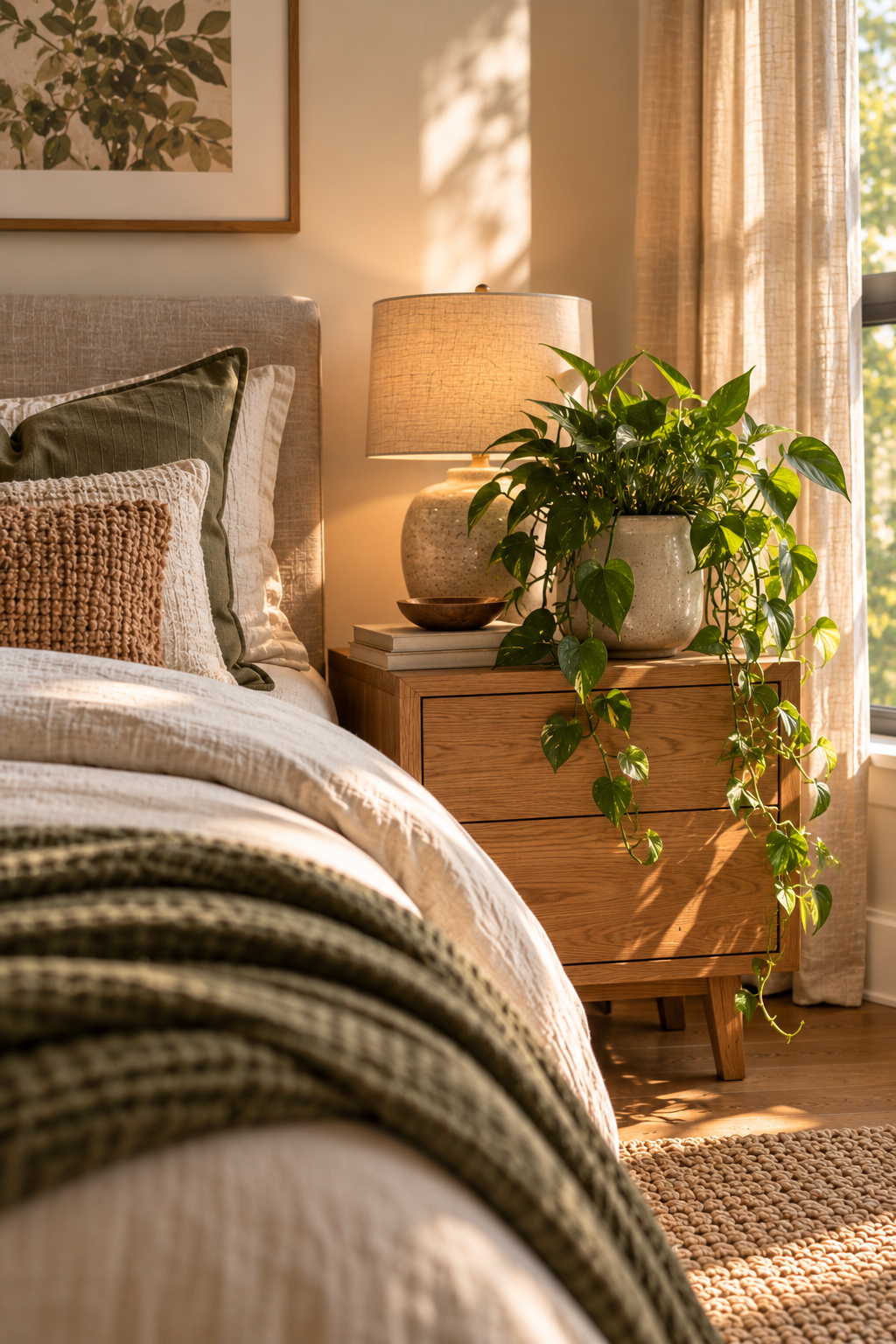
A living plant brings a bedroom to life in a way that dried or artificial versions rarely manage. It doesn't need to be dramatic — a single trailing pothos or a small snake plant on a nightstand is enough to soften the room.
Low-maintenance, low-light varieties work well in bedrooms that don't get direct sun for most of the day.
11. Use Warm Wood
Cool-toned grey wood and stark white furniture can feel very current, but they rarely feel warm. Where you have the choice, lean toward honey, walnut or oak tones instead.
You don't need to replace everything at once — introducing one warm wood piece, like a nightstand or a bench, next to cooler existing furniture is often enough to shift the temperature of the whole room.
12. Create Symmetry
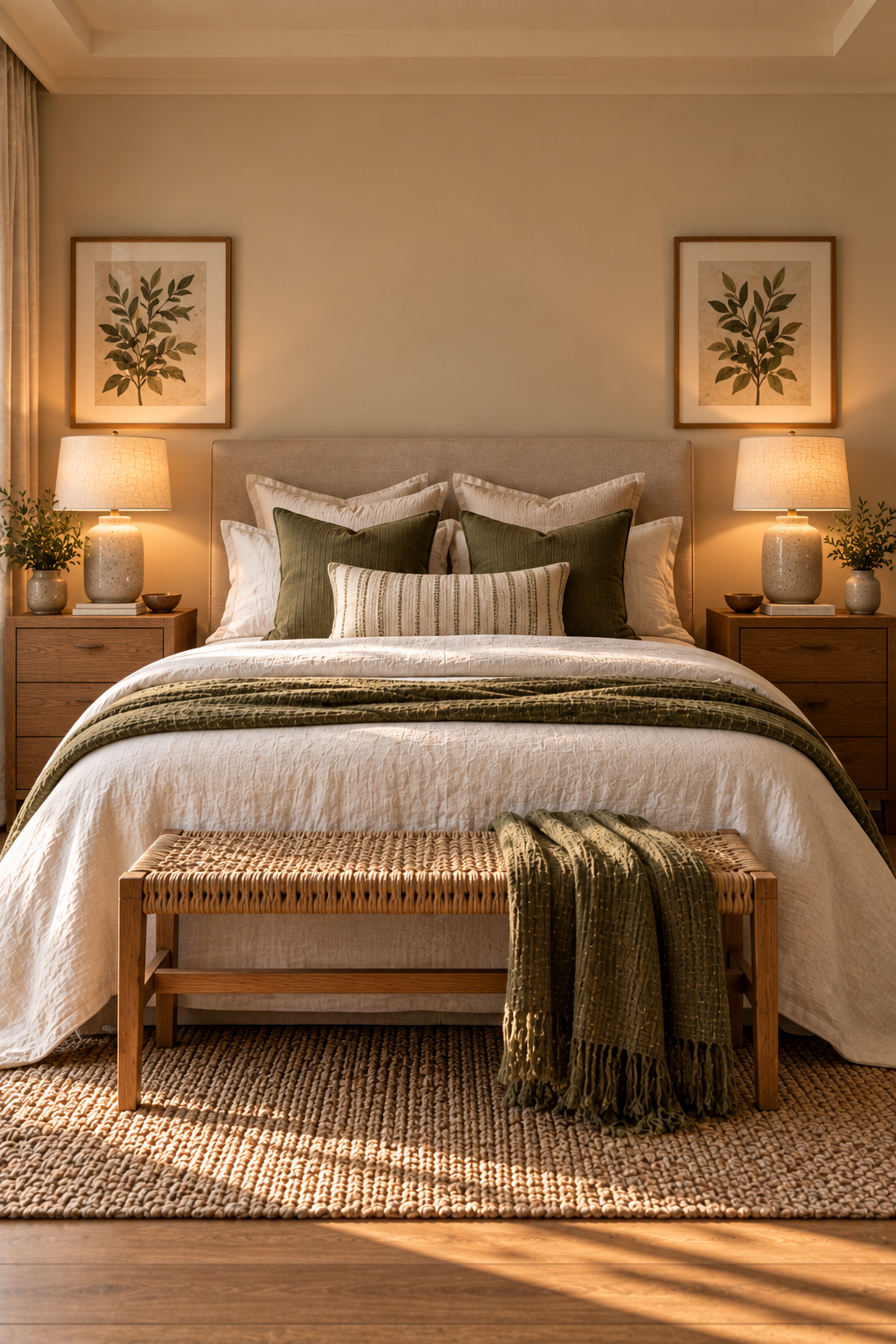
Symmetry reads as calm to the brain almost automatically — it's one reason matching nightstands and lamps feel more restful than mismatched ones, even when the mismatched pair is individually more interesting.
Centering the bed on its wall, matching the pieces on either side, and balancing artwork above the headboard all lean into this effect.
13. Introduce Ambient Lighting
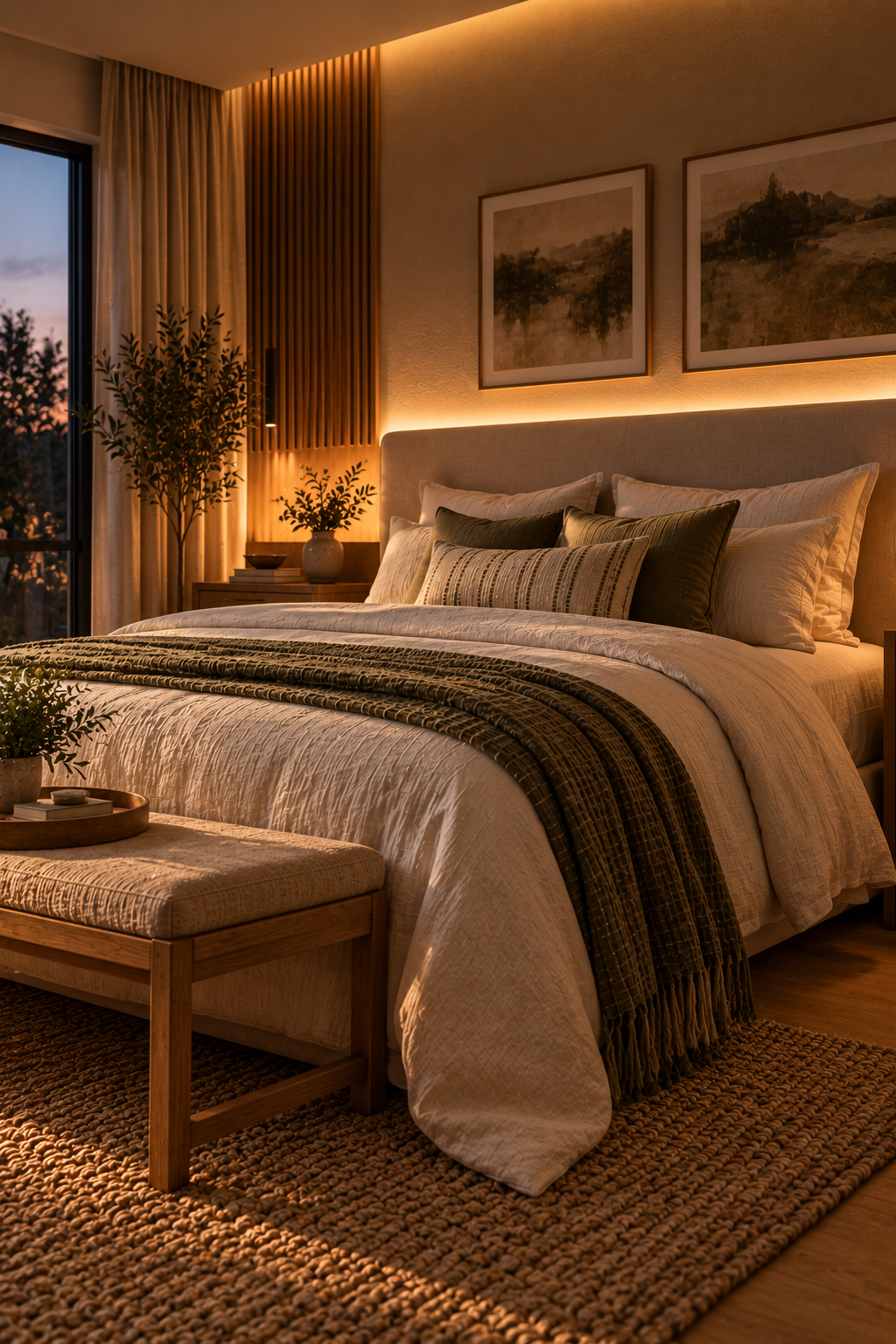
Bedside lamps handle task lighting. Ambient lighting is different — it's the soft, indirect glow that fills the room without a single obvious source, and it's what makes a space feel lit rather than illuminated.
A plug-in wall sconce, an uplight behind a plant, or a dimmable floor lamp in a corner all do this well. The goal is light with no harsh edges.
14. Choose Comfortable Bedroom Seating
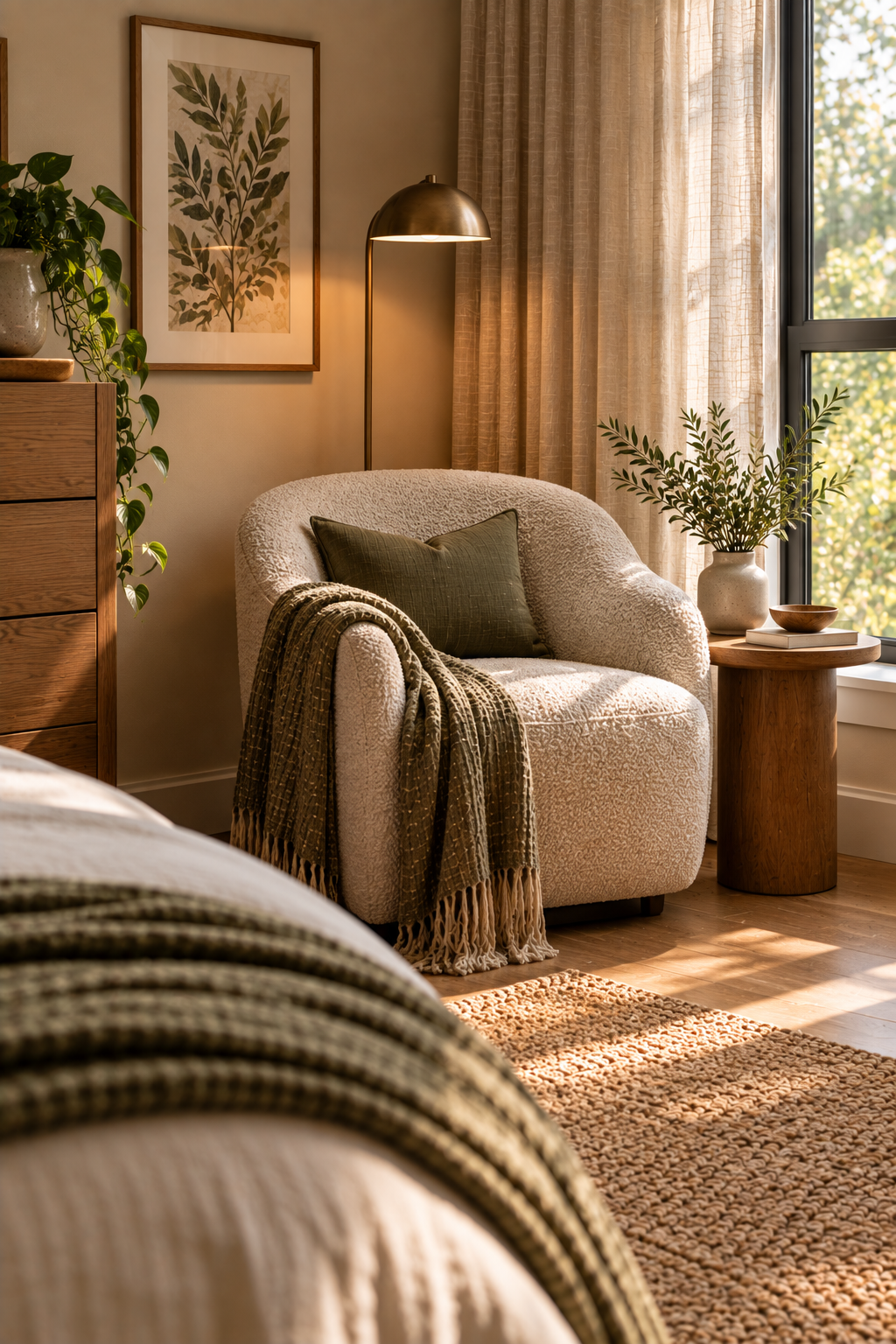
A single well-chosen chair changes how a bedroom functions, even if you rarely sit in it. It softens the geometry of a room that's otherwise all straight lines and hard surfaces, and it signals that the room is meant for more than sleeping.
Prioritize comfort and softness in the fabric — bouclé, velvet, brushed cotton — over a rigid, formal shape.
15. Keep Technology Visually Quiet
Chargers, cables and glowing standby lights are some of the biggest quiet disruptors of a calm bedroom, even though they're easy to overlook.
Route cords behind furniture, use a single discreet charging station instead of cables trailing across the nightstand, and consider a cover or box for a TV when it's not in use. None of this is decoration — it's simply removing visual noise.
16. Use Scent Carefully
Scent is one of the fastest ways to shift the mood of a room, and one of the easiest to overdo.
A single, consistent scent — a candle, a reed diffuser, a linen spray — used sparingly does more than several competing fragrances. Warm, low notes (sandalwood, amber, cedar) tend to read as more relaxing than sharp or overly sweet ones.
17. Add a Soft Rug

Hard flooring is practical, but it's rarely the first thing you want to feel underfoot first thing in the morning.
A rug with real depth — wool or a high-pile weave, not a thin flatweave — adds warmth both visually and literally. Position it so your feet land on it directly beside the bed, not just somewhere in the middle of the room.
18. Create a Relaxing Nightstand
The nightstand is the last thing you see before sleep and the first thing you reach for on waking, so what's on it matters more than its size.
Keep it to a small, deliberate set of objects: a lamp, a glass of water, maybe a book. A nightstand crowded with chargers, receipts and half-finished cups of tea undoes a calm bedroom faster than almost anything else in the room.
19. Use Curtains to Soften the Room
Beyond controlling light, curtains absorb sound and soften the hard edges of a window frame — both of which contribute to how relaxed a room feels, even if you don't consciously notice why.
If you already have blinds, consider adding a simple curtain panel alongside them rather than choosing one or the other. The combination gives you control over light and a softer overall look.
20. Avoid Overdecorating
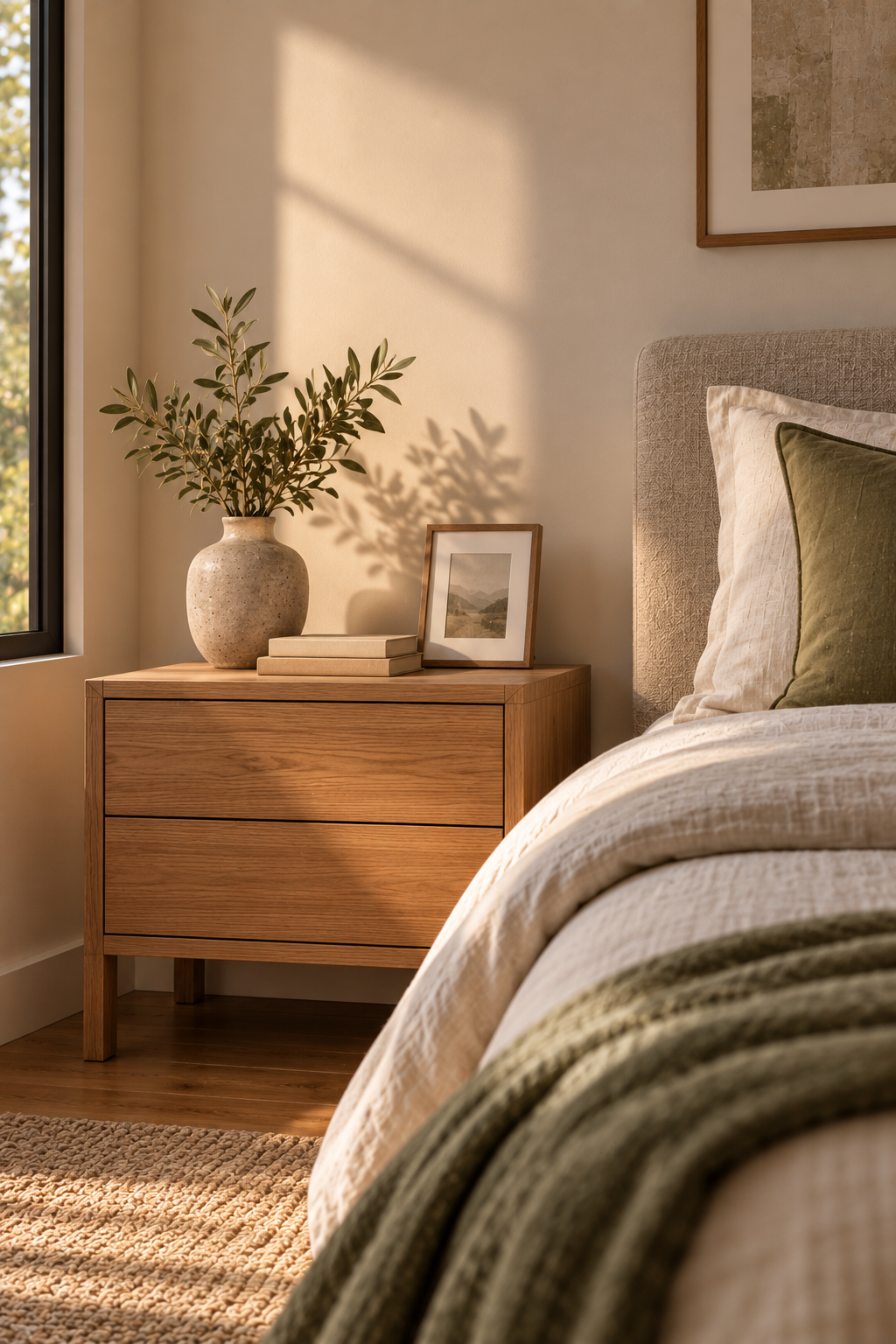
It's tempting to treat a bedroom refresh as an opportunity to add more — more cushions, more art, more objects on every surface. Past a certain point, this works against the goal.
A relaxing room usually has fewer, better things rather than more of everything. Before adding one more object, it's worth asking whether the room actually needs it, or whether it would feel calmer without it.
21. Use Muted Accent Colours
A neutral room doesn't have to mean a colourless one. Muted accents — a dusty terracotta cushion, a sage green throw, a faded rust ceramic — add warmth and personality without disrupting the calm base palette.
The key word is muted. A saturated, high-contrast accent color can undo the same calm a restrained palette worked to create.
22. Mix Linen, Cotton and Wool
Natural fibers behave differently in a room than synthetic ones — they drape differently, catch light differently, and simply feel better against skin.
Linen for lightness, cotton for softness, wool for warmth: using a mix rather than committing to just one gives a room more depth without adding a single extra colour or object.
23. Create a Hotel-Inspired Feeling

Hotel bedrooms feel relaxing largely because they're edited — every object earns its place, surfaces stay clear, and nothing personal competes for attention.
You don't need to strip your bedroom of personality to borrow this feeling. Focus on what hotels get right structurally: a well-made bed as the clear focal point, clear surfaces, and a restrained, cohesive palette.
24. Let the Room Have Empty Space
Not every wall needs art. Not every surface needs an object. Deliberate empty space gives the eye somewhere to rest, which is a large part of what makes a room feel calm rather than busy.
If a room feels slightly unfinished, resist the urge to immediately fill the gap. Live with it for a week first — often what felt like an empty spot turns out to be exactly what was keeping the room calm.
25. Finish With Personal Details
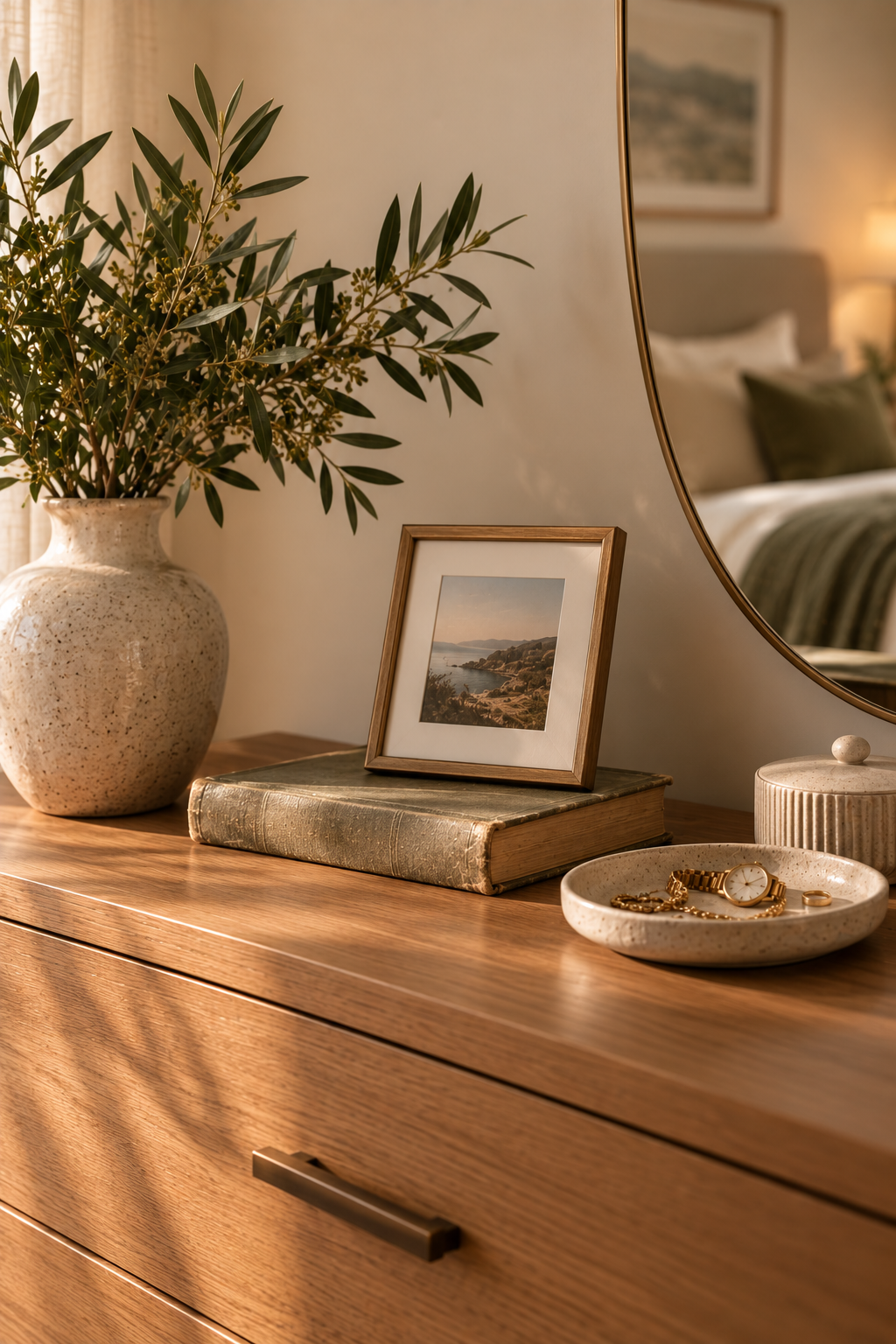
A truly relaxing bedroom still needs to feel like yours. A few personal objects — a photo, a well-loved book, something handmade or inherited — keep a calm, edited room from feeling like a hotel room you're only borrowing.
A relaxing bedroom isn't the one with the most things done to it. It's the one with nothing left competing for your attention.
Choose a small handful of details that mean something to you, and give each one enough space to actually be noticed.
Making Coziness a Habit, Not a One-Time Project
A relaxing bedroom isn't the result of one big renovation. It's usually the sum of several small, ongoing choices — the lamp you swap for a warmer one, the throw you fold instead of leaving crumpled, the nightstand you keep clear out of habit rather than effort.
Start with lighting and bedding — they have the biggest effect for the least cost. Then work outward: texture, a reading corner, a rug underfoot. You don't need to do all 25 at once. Even three or four of these, done well, can change how a bedroom feels within a single evening.
What's the fastest way to make a bedroom feel more relaxing?
Swap your overhead light for a warm bedside lamp and make the bed properly. Both take minutes and have an outsized effect on how calm the room feels, especially in the evening.
Do I need a neutral colour palette for a cozy bedroom?
Not necessarily — muted and low-contrast palettes tend to read as calmer than colourless ones. A soft, warm hue with natural wood and texture can feel just as relaxing as an all-white room, sometimes more so.
How do I make a bedroom cozy without making it cluttered?
Focus on texture and lighting rather than adding more objects. A few well-chosen, natural-material pieces almost always read as calmer than a surface filled with decorative items.