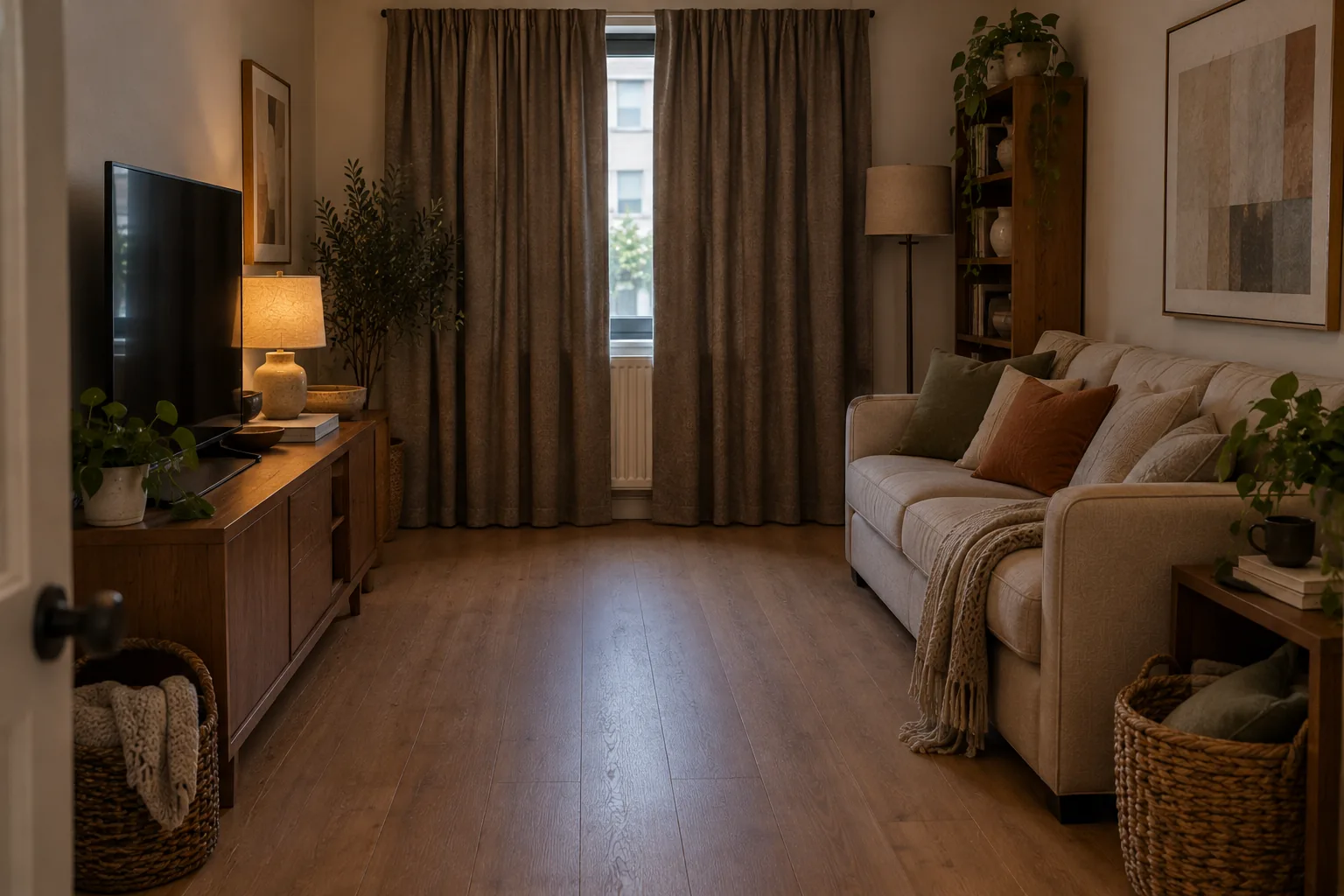
21 Small Living Room Ideas That Make the Most of Every Inch
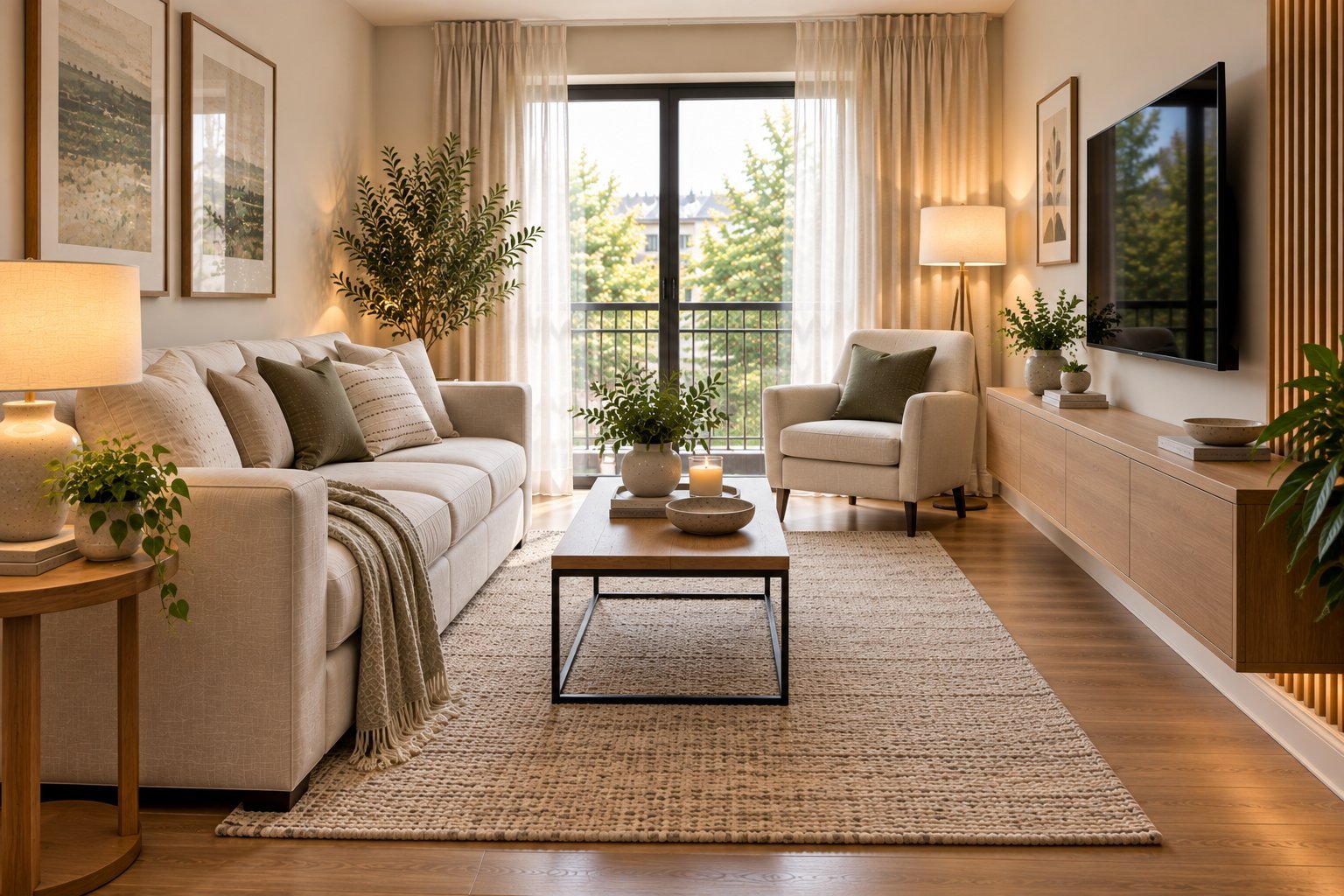
21 practical ways to make a small living room feel more open and functional — through furniture placement, scale and circulation, not less furniture.
A small living room doesn't need smaller furniture. It needs a plan.
Most small living rooms don't struggle because there's too much in them — they struggle because the furniture was placed reactively, one piece at a time, without a clear sense of how people would actually move through the room. The result is a space that technically fits everything, but never quite feels comfortable to sit in or walk through.
Small living rooms work best when circulation and visual hierarchy are designed deliberately, not left to chance. Here are 21 ways to make a compact living room feel more open, more functional, and genuinely easier to live in.
1. Start With Sofa Placement, Not Sofa Size
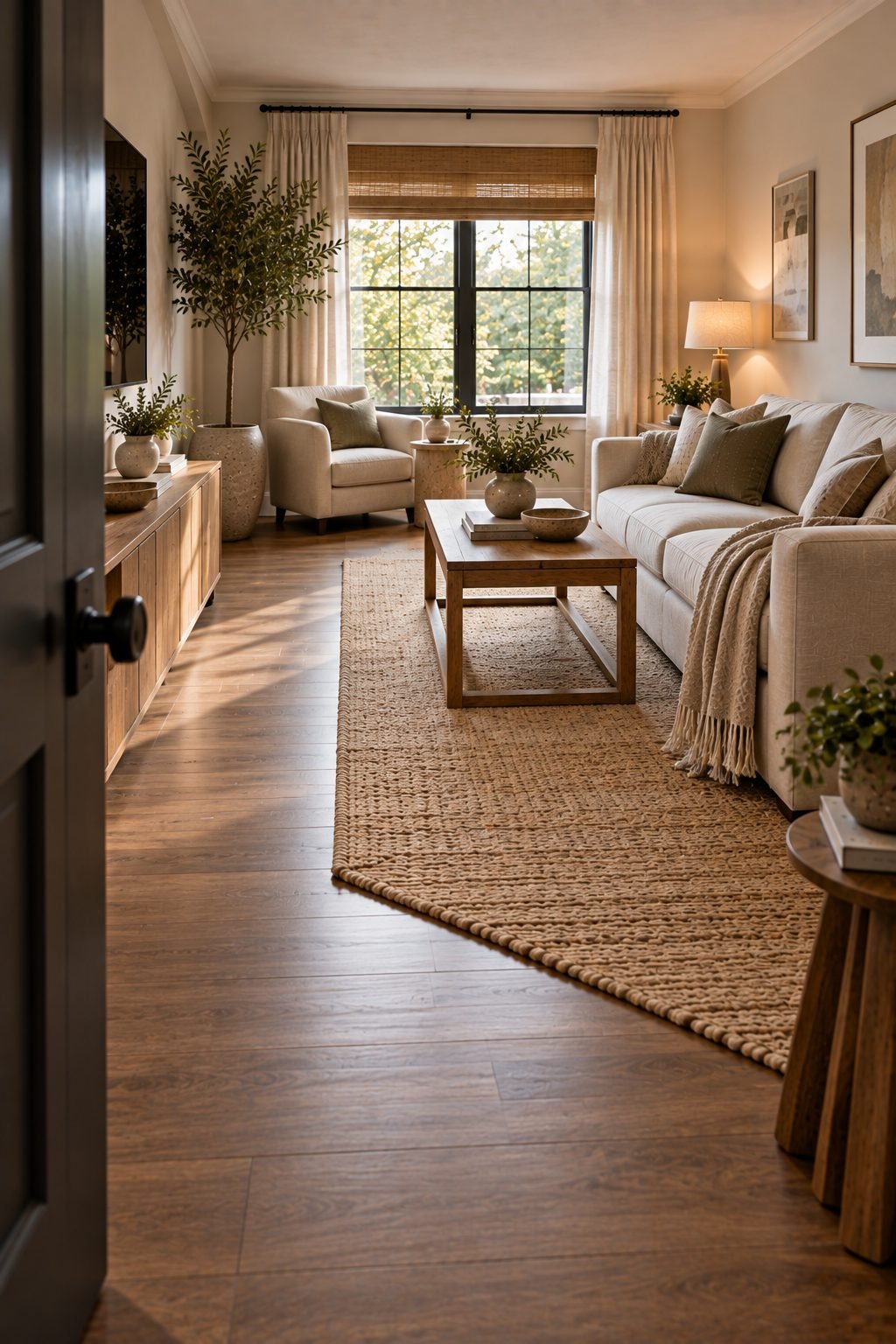
Before deciding whether your sofa is too big, look at where it sits. A well-sized sofa placed directly in the main walking path will always feel like an obstacle, no matter how compact it is.
Map out how people actually move through the room — from the door, to the window, to any other exits — and place the sofa to work with that path, not against it. Placement solves more small-room problems than replacing furniture does.
2. Choose Furniture at the Right Scale
It's tempting to assume every piece of furniture in a small room needs to be small. In practice, one or two properly scaled pieces usually work better than several undersized ones competing for the same floor space.
Measure the room and the furniture together before buying, and think about how each piece will feel with a person actually using it — not just how it looks empty in a showroom.
3. Use Wall-Mounted Furniture Where You Can
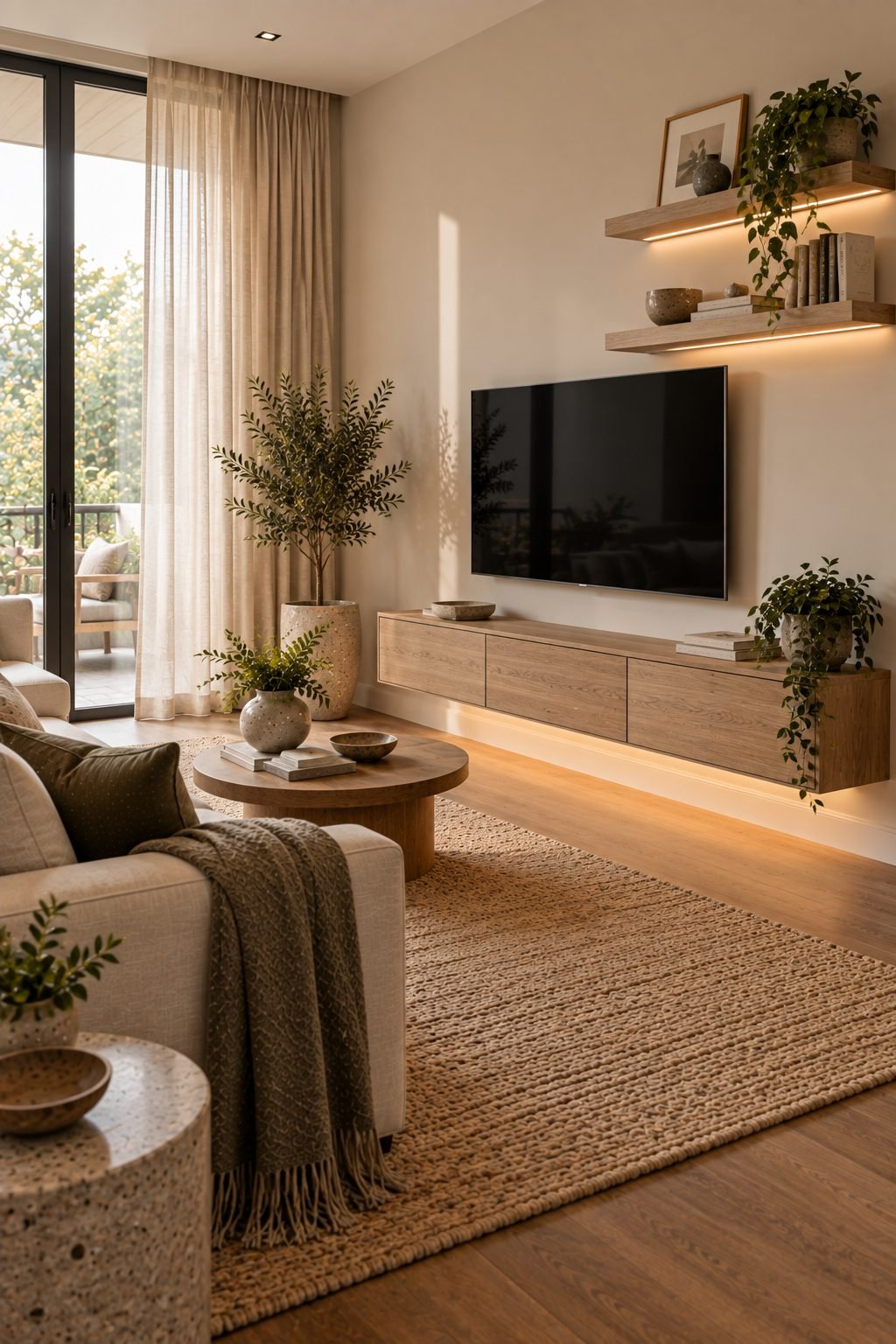
A media console, a desk, even a slim bench — anything that can be mounted to the wall instead of standing on legs on the floor gives a small room back valuable visual space.
The floor doesn't need to be completely bare to feel open. It just needs enough of it visible that the eye can register how much room there actually is.
4. Choose a Narrow Coffee Table
A deep, oversized coffee table can dominate a small living room in a way it never would in a larger space. A narrower table, or one on a smaller footprint, leaves more room to walk around the seating area without sacrificing a surface for drinks and books.
If you frequently need more surface area, consider a table with a lift-top or nesting design rather than simply sizing up.
5. Add a Large Mirror
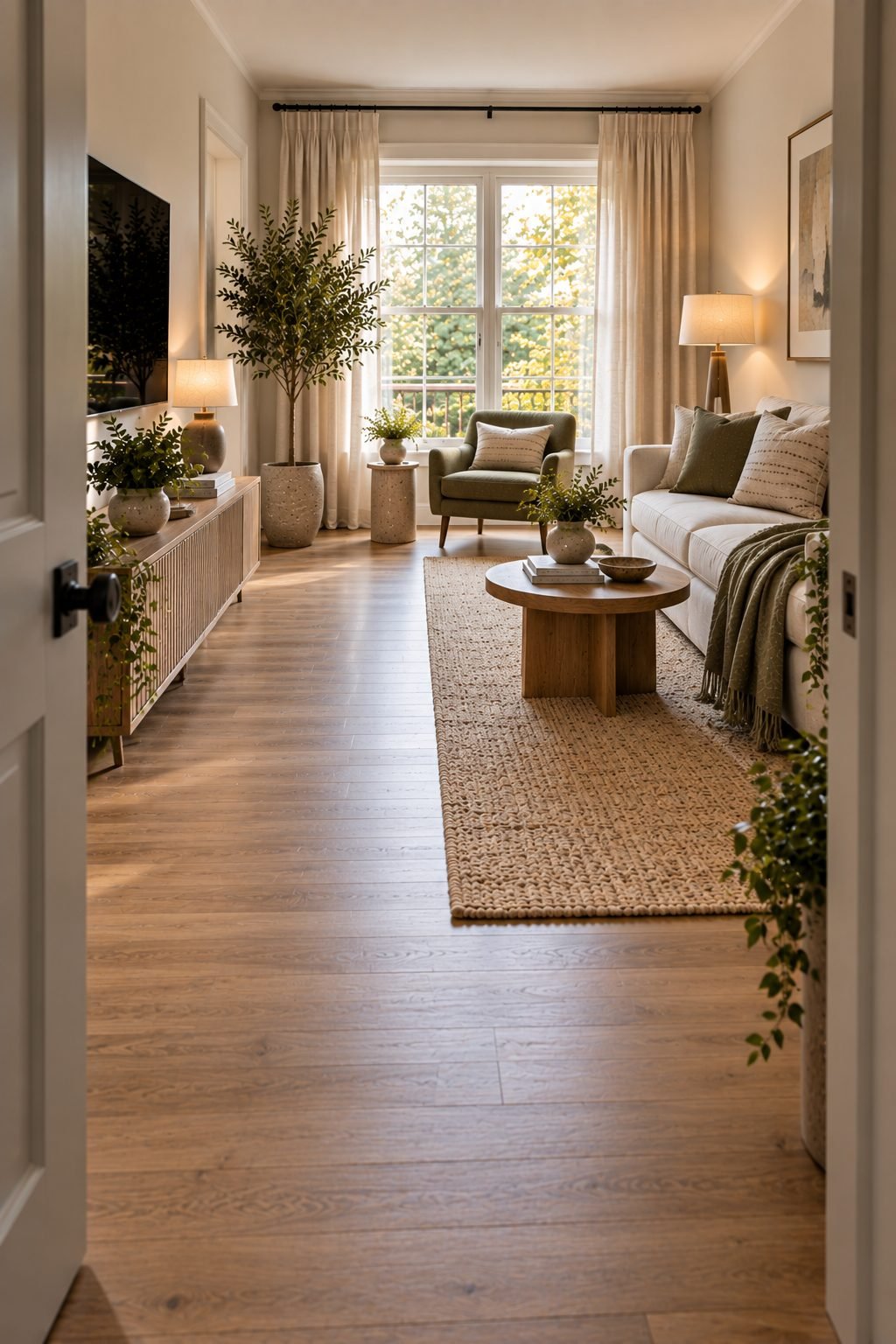
One generously sized mirror does more for a small living room than several decorative ones. Positioned to reflect a window, it bounces natural light further into the room and creates a sense of depth that makes the space read as larger than it is.
A full-length mirror leaning casually against a wall can double as a genuine design feature, not just a practical fix.
6. Take Storage Vertical
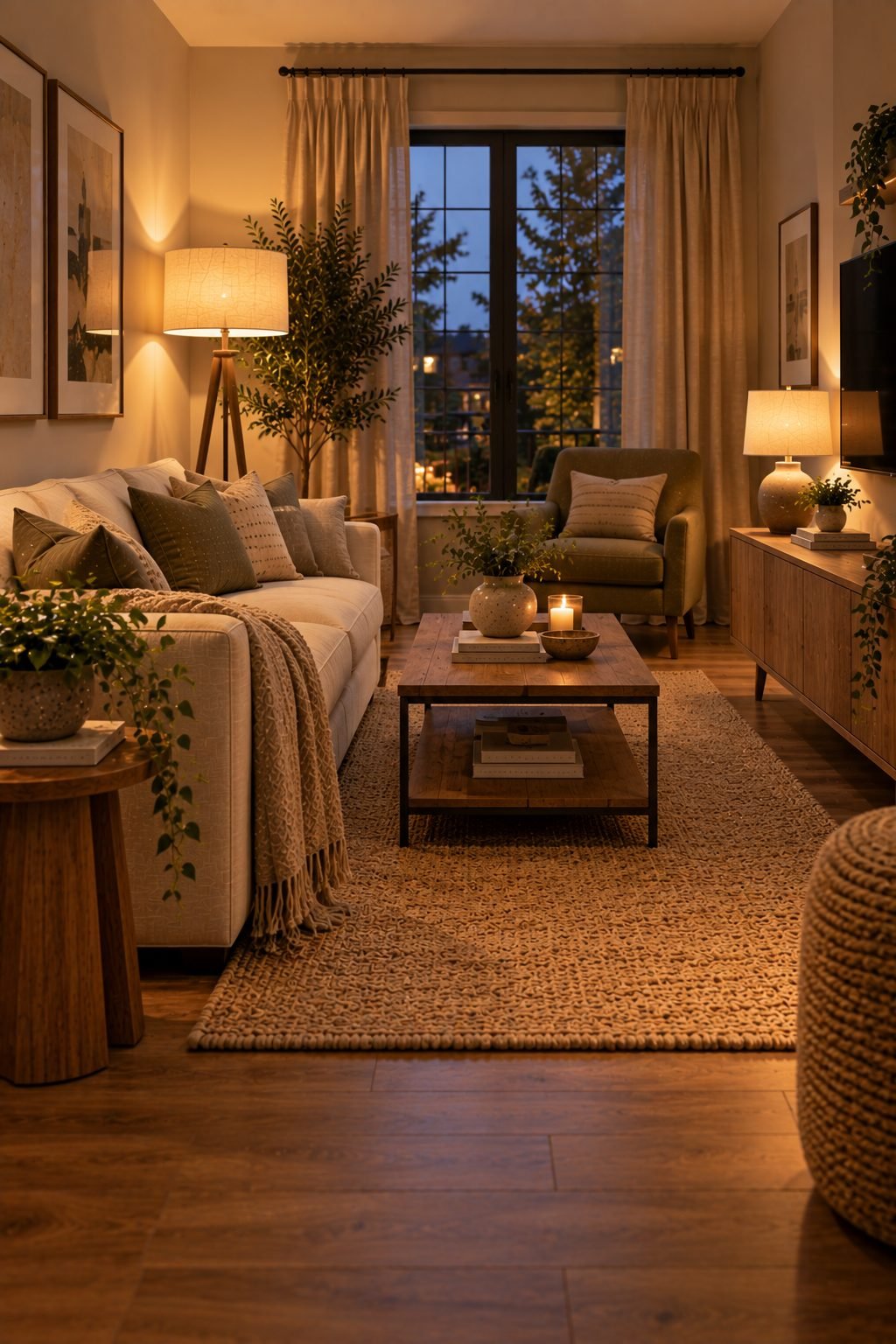
When floor space is limited, storage has to go somewhere else: up. A tall, narrow cabinet or shelving unit provides real capacity while occupying a fraction of the floor width a low, wide dresser would need.
Taking cabinetry close to the ceiling also has a secondary benefit — it draws the eye upward and makes the room feel taller in the process.
7. Use Floating Shelves
Floating shelves provide display and storage space without the visual weight of a standing bookcase. Because there's no cabinet base taking up floor space, more of the room stays visually open beneath them.
Keep the styling restrained — a few books, one or two objects per shelf — so the shelves add function without adding clutter.
8. Keep Walkways Clear
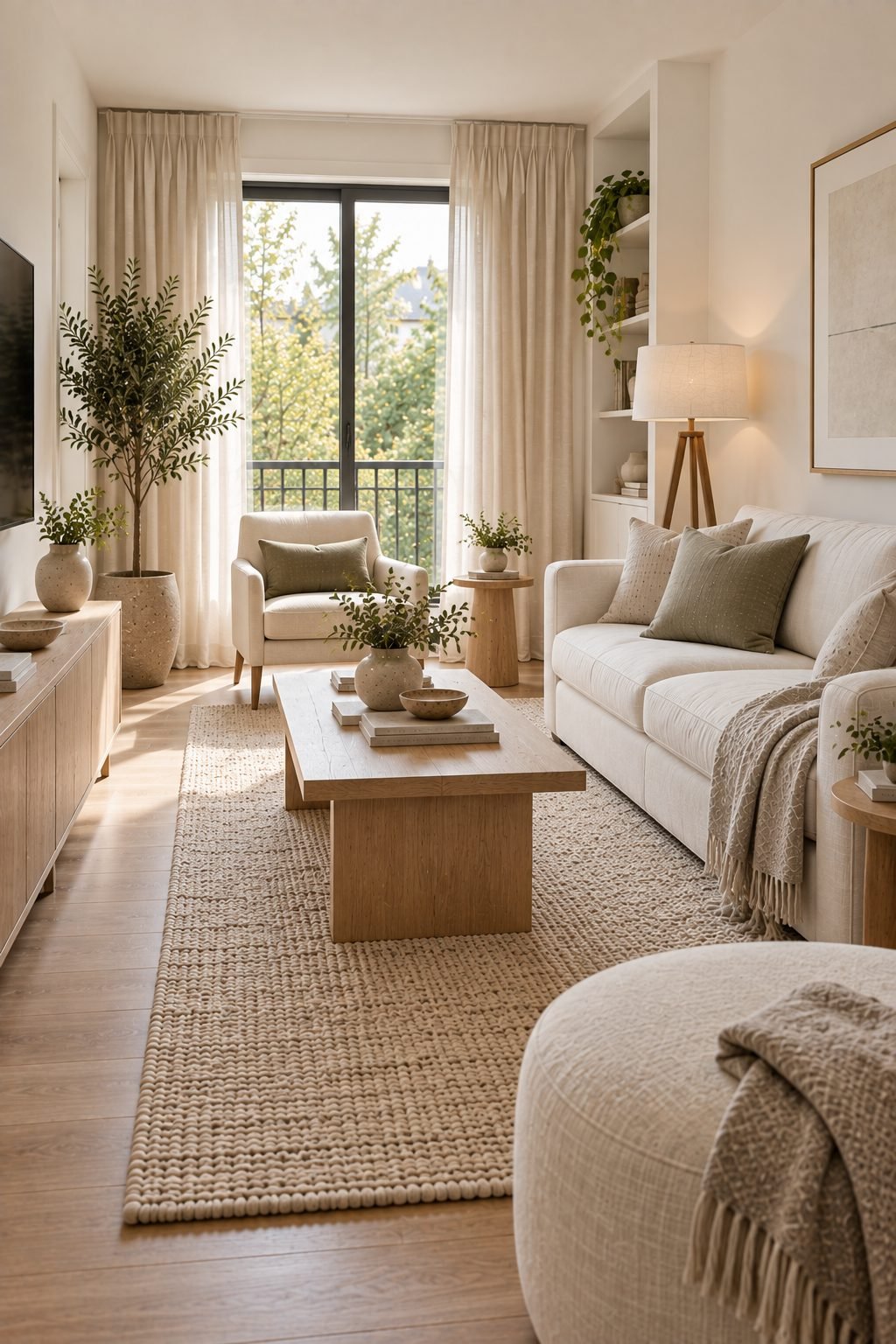
Every piece of furniture that sits in a main walkway makes a small room feel smaller than it is, even if the furniture itself is modestly sized. A side table in the wrong spot can have a bigger negative effect than a slightly larger sofa in the right one.
Walk the space as you would day to day, and remove or reposition anything that interrupts that path.
9. Layer Your Lighting
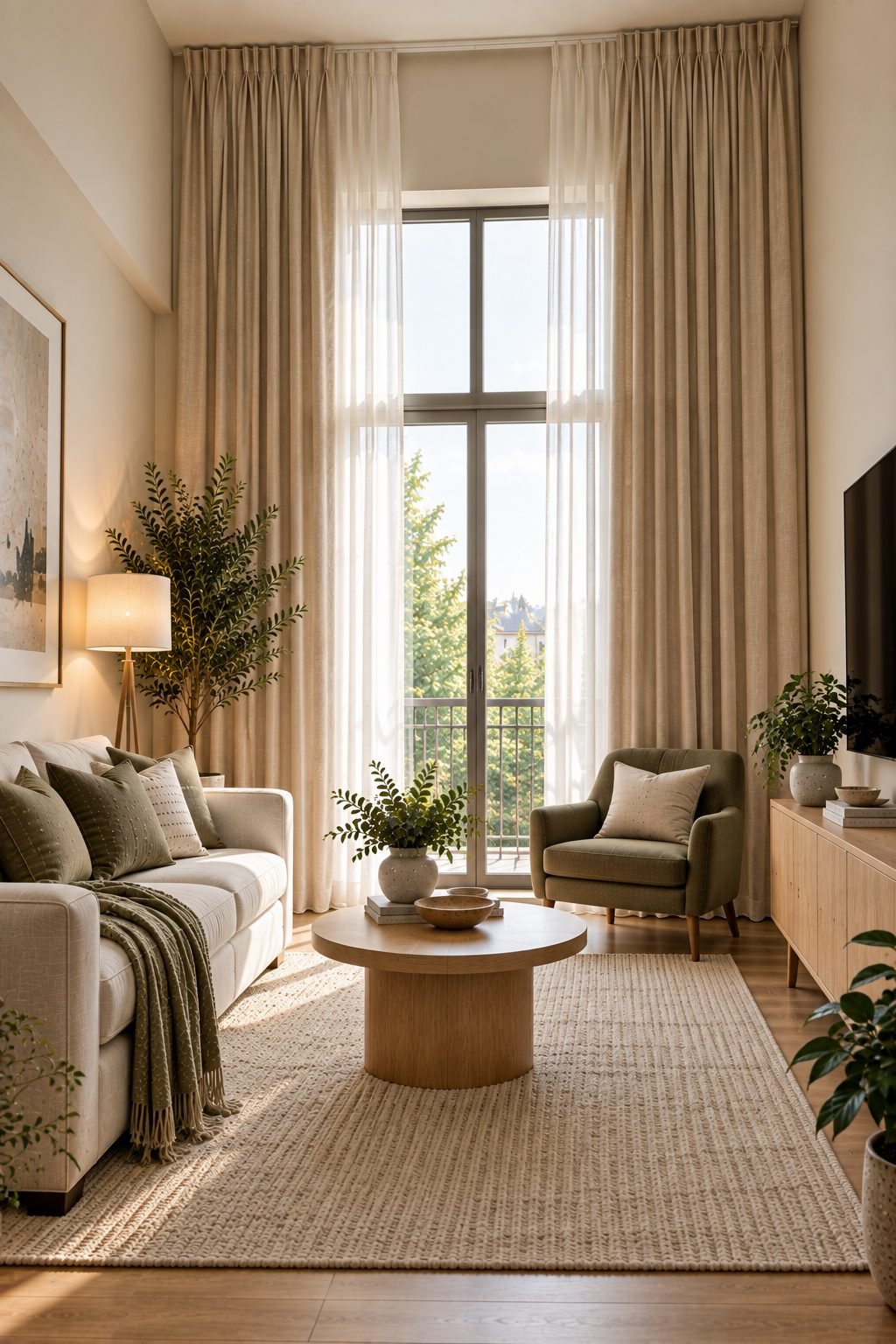
A single ceiling light tends to flatten a small room, making its boundaries feel more obvious rather than less. Layering in a floor lamp, a table lamp, or a wall sconce creates pockets of light that make the room feel larger and more considered after dark.
Warm, dimmable bulbs help this layered lighting feel intentional rather than makeshift.
10. Choose the Right Rug Size
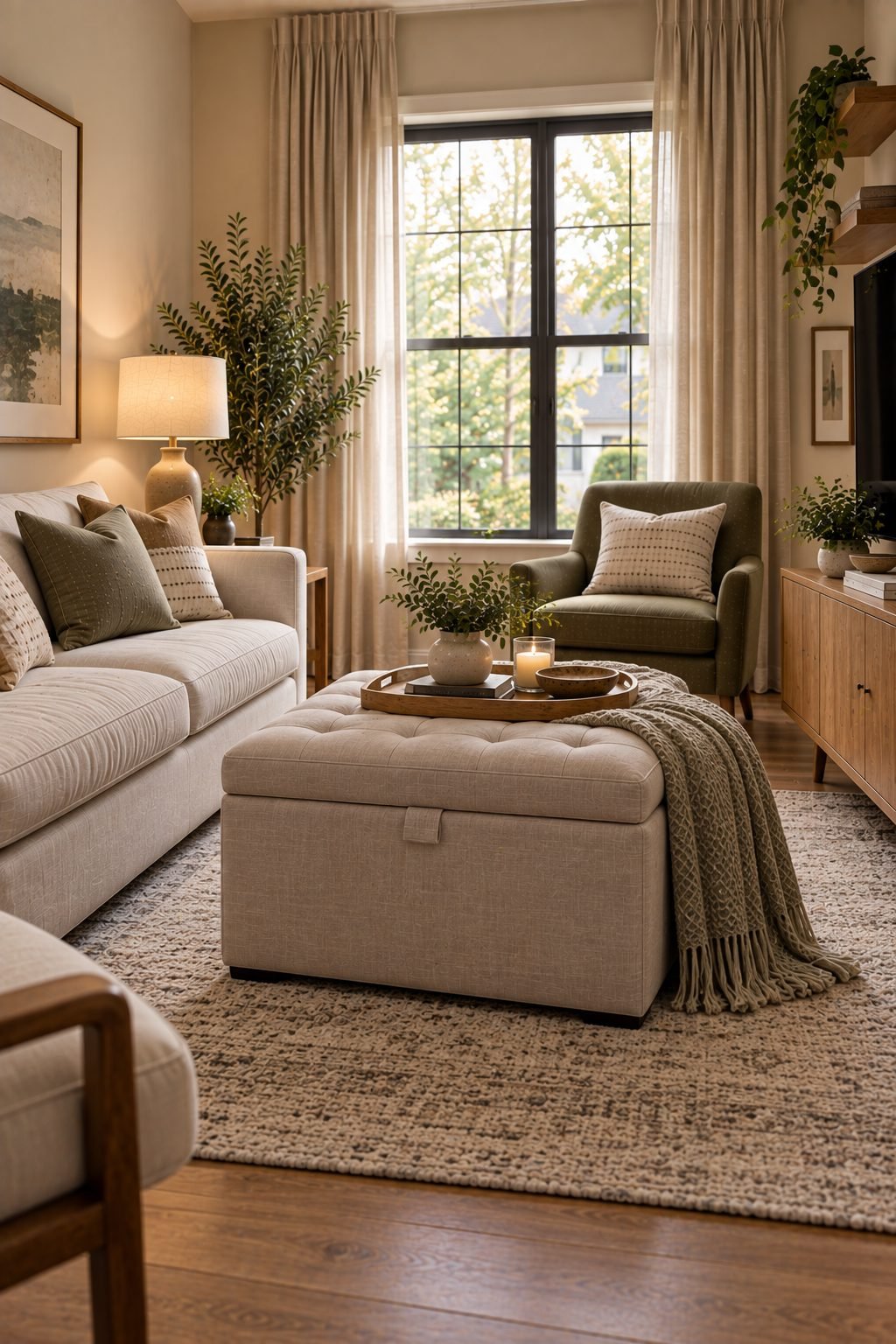
A rug that's too small will make a small living room feel more fragmented, not less — it draws a visual boundary around an already limited space. Sizing the rug so at least the front legs of your seating sit on it helps the whole area read as one connected zone.
If a full-sized rug isn't practical, consider skipping one altogether rather than using something undersized.
11. Use a Light, Restrained Colour Palette
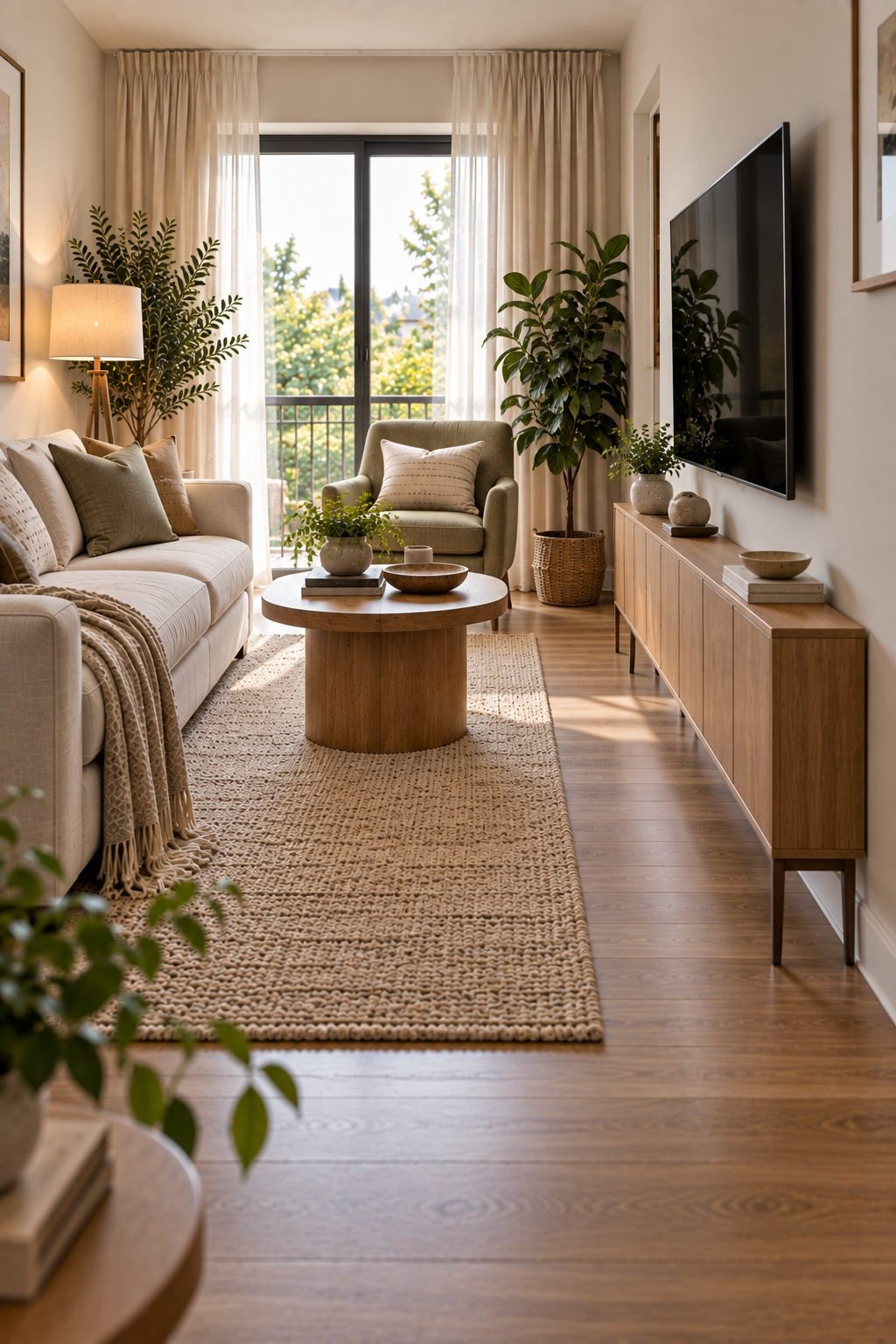
Soft, closely related tones across the walls, floor and large furniture help a small room feel continuous rather than chopped into separate zones by contrast.
This doesn't require an all-white room. A warm neutral palette with natural wood and texture can feel just as open, as long as nothing jumps out sharply against its surroundings.
12. Choose Curtains That Make the Room Feel Taller
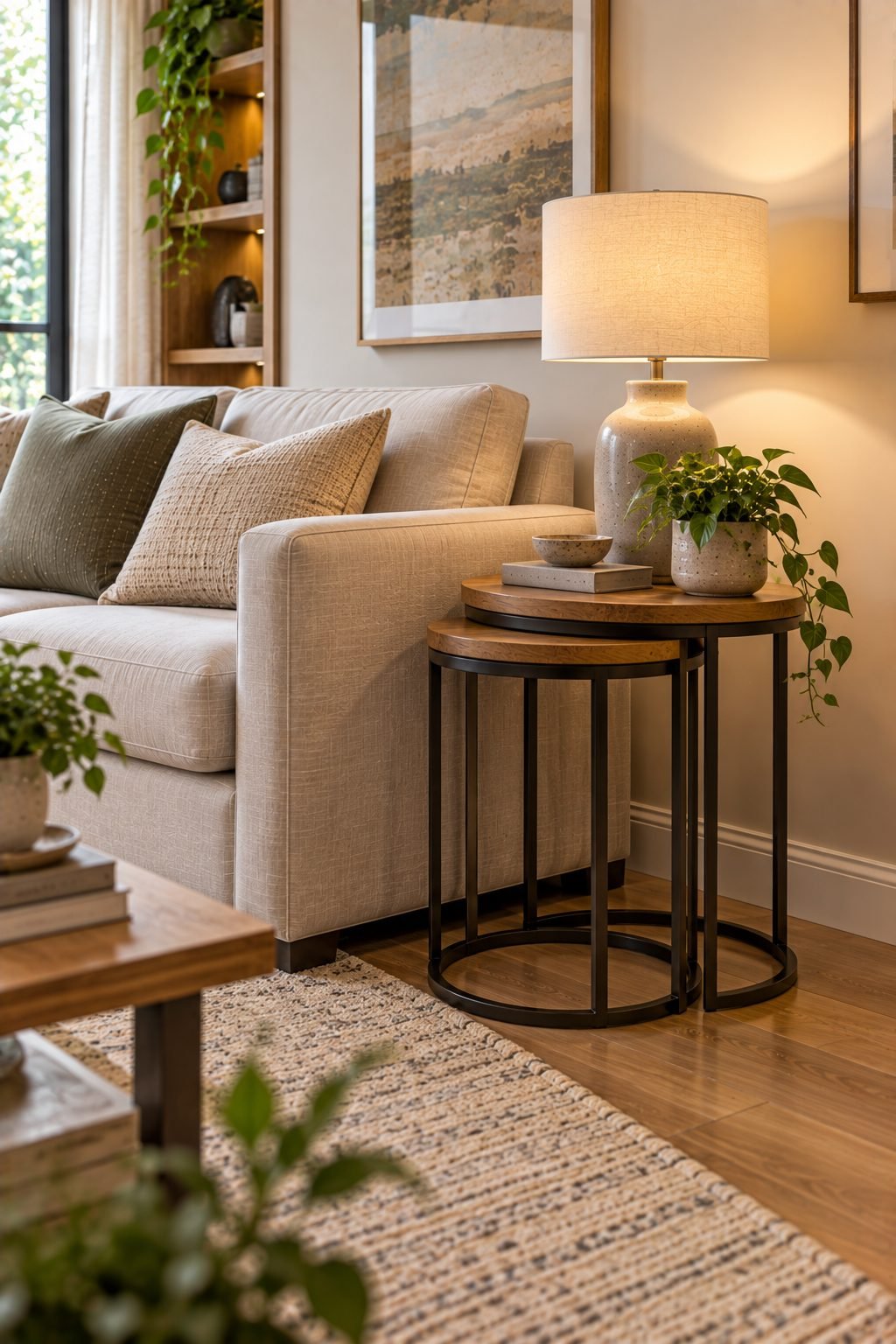
Mounting curtains close to the ceiling rather than directly above the window frame draws the eye upward and emphasizes the vertical dimension of a small room — one of the simplest tricks available for a room that can't be made any wider.
Choose a curtain colour close to the wall for an especially seamless, taller-feeling effect.
13. Choose Multifunctional Furniture
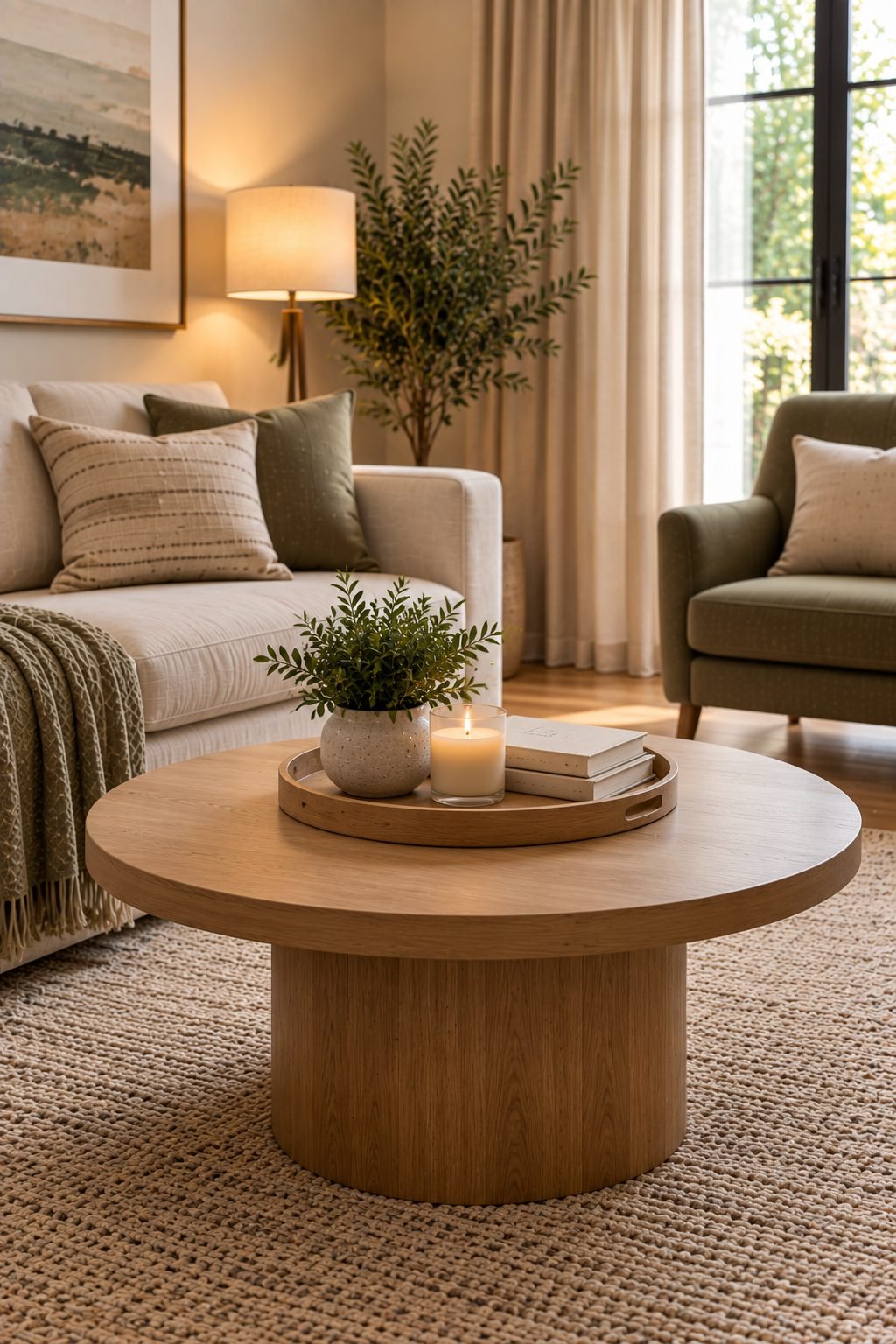
In a small living room, furniture that does only one job is a luxury you can rarely afford. A storage ottoman that works as a coffee table and extra seating, or a bench that doubles as both seating and a console, lets one piece cover multiple needs.
The principle is simple: whenever possible, let furniture earn its floor space twice over.
14. Add Compact, Properly Scaled Seating
An armchair scaled for the room, rather than a second full-sized sofa, often provides the extra seating a small living room needs without overwhelming it.
Look for slim arms and a shallower seat depth if floor space is especially tight — comfort doesn't have to mean bulk.
15. Use Hidden Storage
Remotes, chargers, magazines and everyday items accumulate quickly in a small living room with nowhere else for them to go. A cabinet with doors, a lidded basket, or a bench with storage underneath keeps these items available without keeping them visible.
A small room reads as larger when there's less visual clutter competing for attention on every surface.
16. Float Furniture Away From the Walls
Pushing every piece of furniture against the walls can feel like the obvious way to maximize space, but it sometimes does the opposite — leaving one large, awkward empty zone in the middle of the room.
Floating the sofa a small distance from the wall, even a few inches, and letting a rug or a slim console define the seating area, can make the layout feel more intentional and the room feel more balanced.
17. Choose a Slim Media Console

A deep media console eats into a small room's floor space for no functional benefit once modern televisions and equipment need so little depth. A slim-profile console frees up several inches of usable floor without any real compromise.
Those few extra inches matter more in a small room than they would anywhere else in the house.
18. Use Nesting Tables

Nesting tables give you the flexibility of extra surfaces — for guests, for a laptop, for a drink — without the permanent footprint of a full set of individual side tables.
Tucked together, they occupy the space of one small table; pulled apart, they can support an entire evening with company.
19. Keep Surfaces Visually Quiet

A coffee table or console covered in objects makes a small room feel busier and more crowded than its actual square footage would suggest. Keeping surfaces down to a small, deliberate handful of items gives the eye somewhere to rest.
This is one of the least expensive changes available, and often one of the most noticeable.
20. Repeat a Material or Colour
Repeating a wood tone across your coffee table, shelving and console, or echoing one accent colour in a cushion, a throw and a piece of art, helps a small room feel unified rather than assembled from unrelated pieces.
Consistency reads as intentional, even in a room where every piece has been chosen for its size rather than a perfectly matched set.
21. Edit the Room Like a Designer

Stand in the doorway and look at the room as if seeing it for the first time. Is there a piece of furniture that's rarely used? Could two smaller items be replaced with one that does more? Is anything sitting in a walkway simply because there was nowhere else to put it?
A small living room rarely needs less furniture. It needs each piece to be doing real work.
Editing is free, and it's often the single most effective change available in a room where every square foot counts.
Designing for How the Room Is Actually Used
None of these 21 ideas require more space than you already have. Most of them come down to a handful of decisions: where furniture sits relative to how people move, how much floor stays visible, and how disciplined the styling is on every surface.
Start with circulation — get the walkways clear and the sofa placement right — then layer in the smaller changes like lighting, rug size and vertical storage. A small living room designed around how it's actually used will always feel bigger than one simply filled with smaller furniture.
What's the biggest mistake people make in a small living room?
Placing furniture reactively rather than planning around how people actually move through the room. A sofa or side table sitting in the main walkway does more damage to how spacious a room feels than furniture that's simply on the larger side.
Should I use a small rug or no rug at all in a small living room?
Generally, no rug is better than an undersized one. A rug that's too small visually chops the room into fragments. If you can't fit one large enough for the seating area to sit on, it's often better to leave the floor bare.
Is multifunctional furniture actually worth it in a small space?
Yes, in most cases. A storage ottoman, a bench with hidden storage, or nesting tables let one piece of furniture cover two needs, which is one of the most space-efficient decisions available in a small living room.