
25 Small Bathroom Ideas That Make the Space Feel Bigger
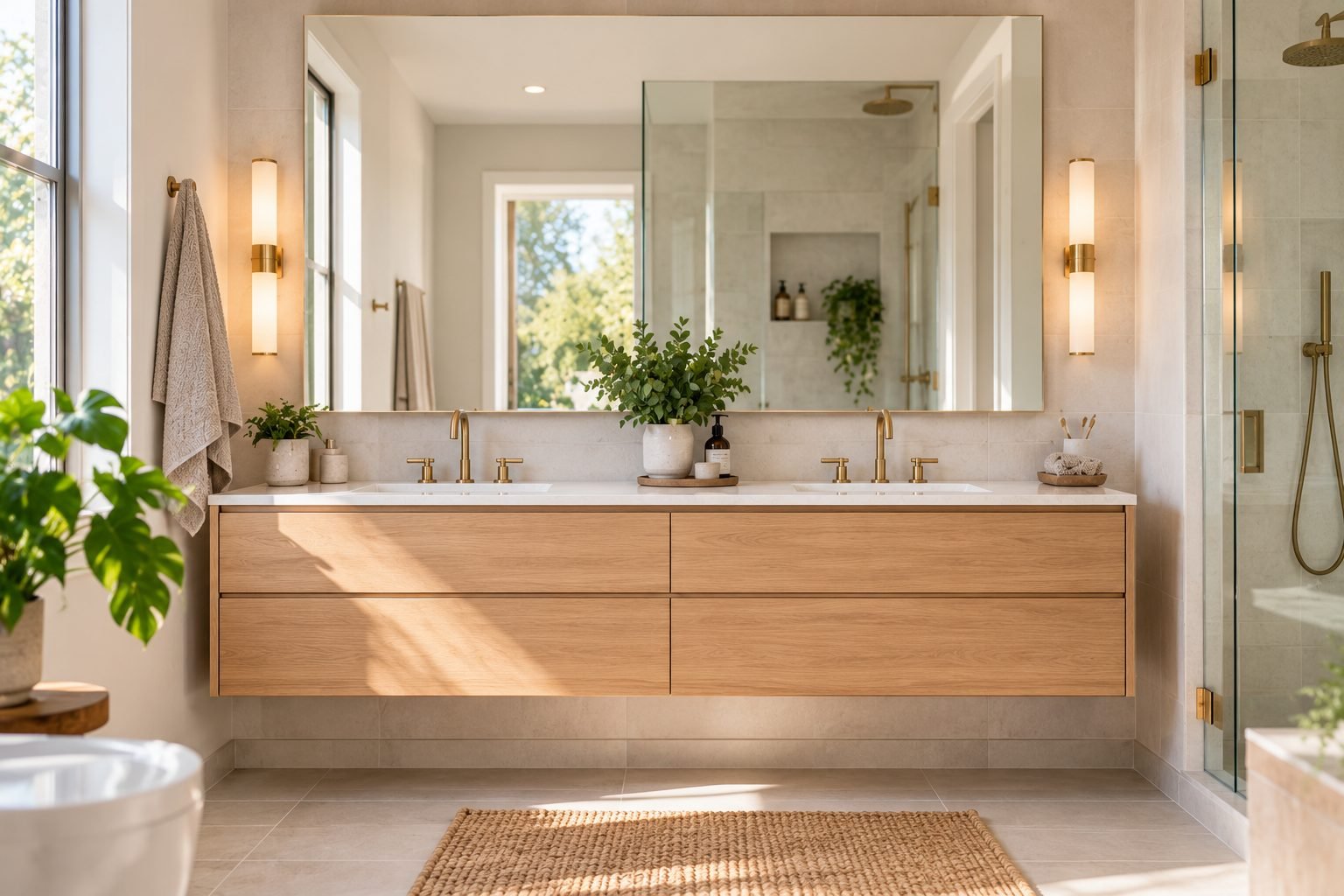
Light, reflection and restraint — 25 practical ways to make a small bathroom feel bigger without a full renovation.
A small bathroom doesn't need to feel small.
Bathrooms are usually the smallest rooms in a home, which means every decision inside them is amplified — a dark tile, a cluttered counter, or an undersized mirror reads as cramped far faster than it would anywhere else. The bathrooms that feel more spacious than their square footage almost always come down to a handful of deliberate choices about light, reflection, and what's left visible.
None of the ideas below require knocking down a wall. Here are 25 ways to make a small bathroom feel bigger, calmer, and genuinely more comfortable to use every day.
1. Choose a Large Mirror, Not a Small One
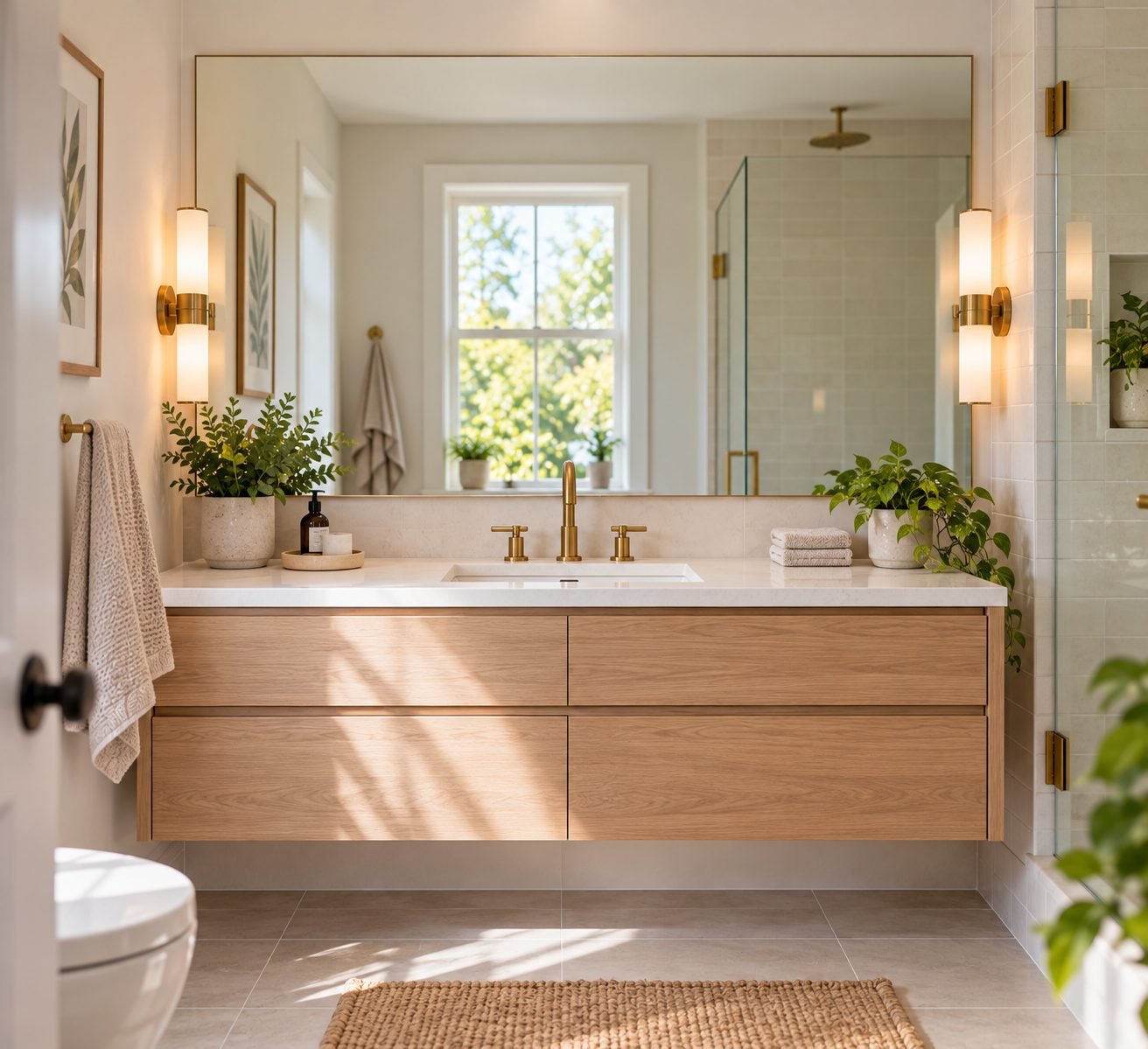
An undersized mirror is one of the most common mistakes in a small bathroom. A mirror that spans close to the full width of the vanity reflects far more light and visually doubles the sense of depth in the room.
2. Use Light, Reflective Tile
Dark tile can look striking in photos, but in a small, often window-limited bathroom, it absorbs the light that's already scarce. Lighter tile in a soft white, pale grey or warm stone tone bounces available light around instead of soaking it up.
3. Take Storage Vertical With a Tall Cabinet
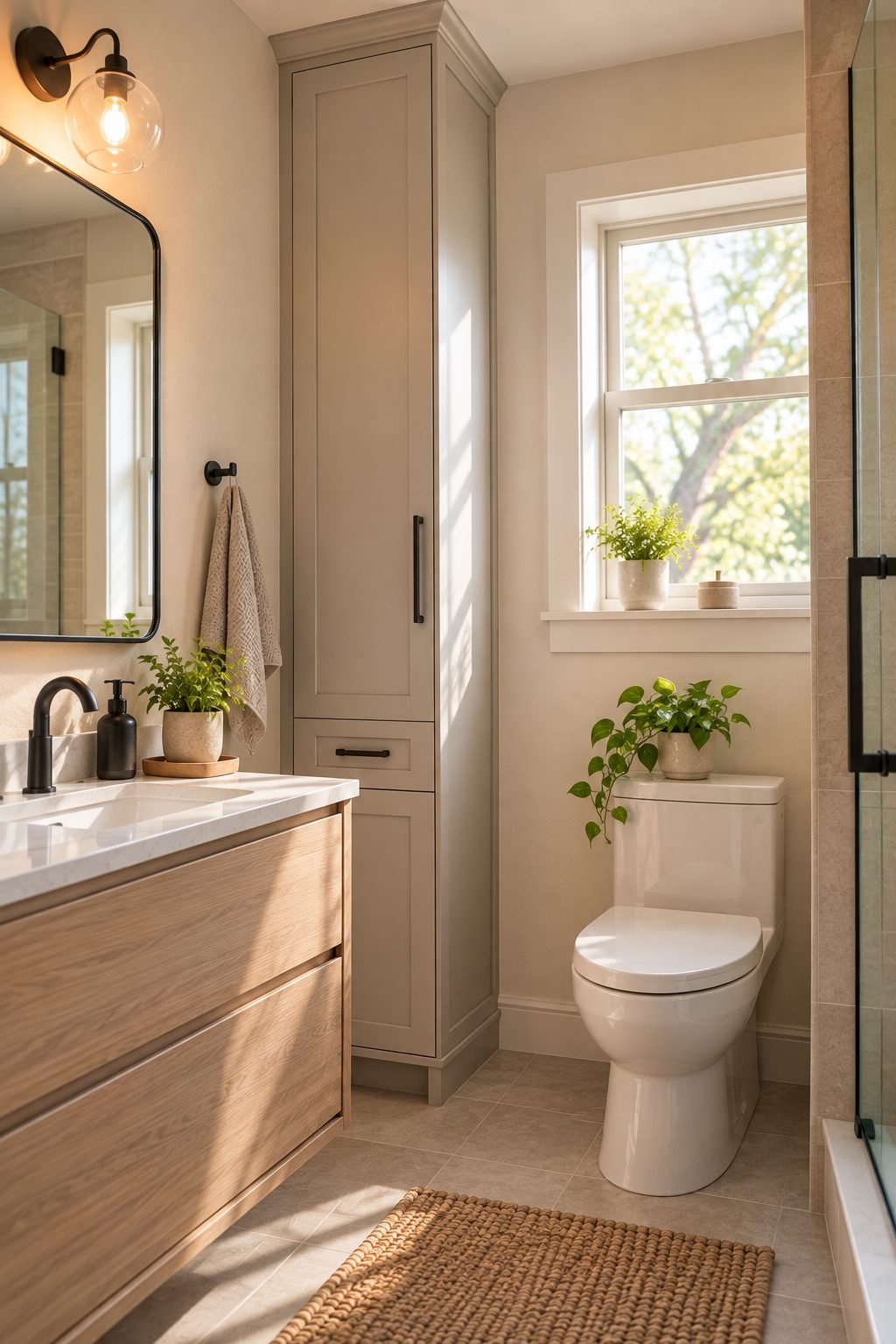
Floor space is the scarcest resource in a small bathroom, but wall space rarely is. A tall, narrow cabinet provides real storage capacity while taking up only a sliver of the floor a wide vanity or dresser would need.
4. Install a Floating Vanity
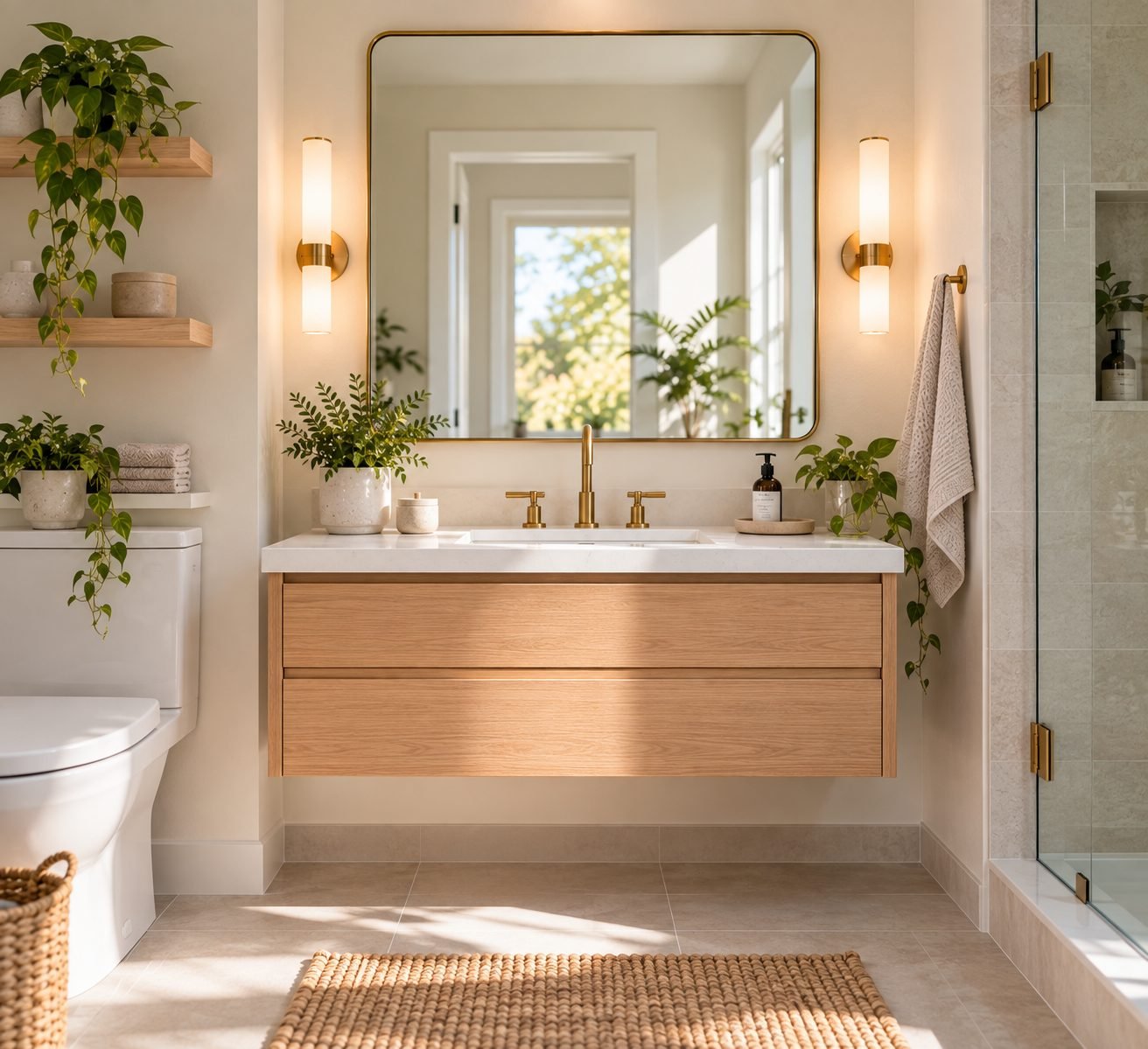
A vanity that floats off the floor, rather than sitting on legs or a cabinet base, lets you see the floor continue underneath it. That visible strip of floor does more for a room's sense of space than the extra inch or two of storage a floor-standing vanity would add.
5. Use a Frameless Glass Shower Door
A framed shower enclosure introduces visual lines that break up a small bathroom into segments. A frameless glass door lets the eye travel through the space uninterrupted, so the shower reads as part of the room rather than a separate box within it.
6. Add a Niche Instead of a Shelf Unit
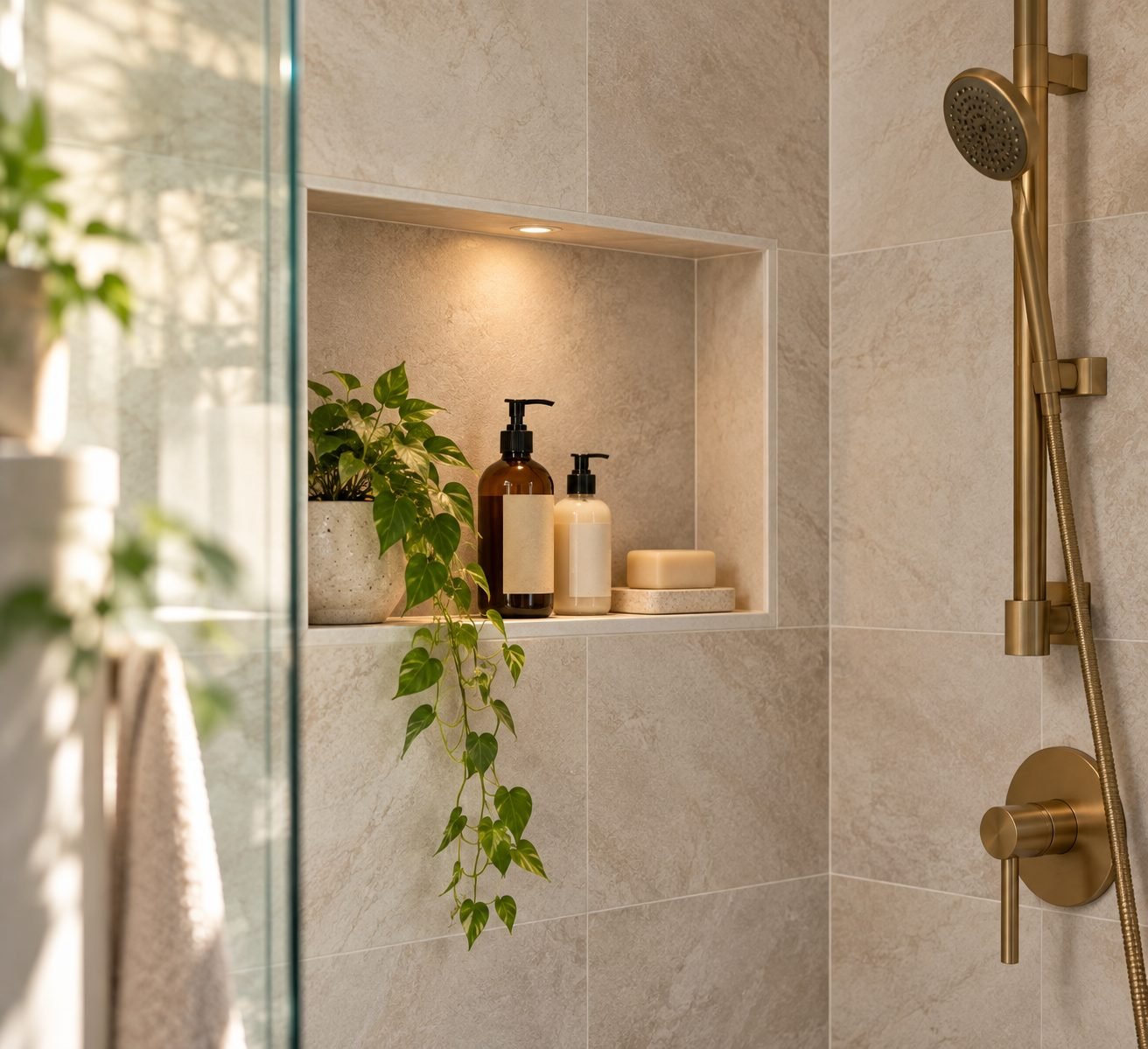
A built-in shower niche holds the same bottles a corner caddy would, without the caddy's visible hardware and shadow lines. It's a small architectural choice that keeps the shower wall reading as clean and continuous.
7. Choose a Single Continuous Tile Line
Running one tile continuously from floor to shower wall, rather than switching materials at a contrasting border, removes a visual break that would otherwise chop the room into smaller-feeling sections.
8. Use a Pedestal or Wall-Mounted Sink
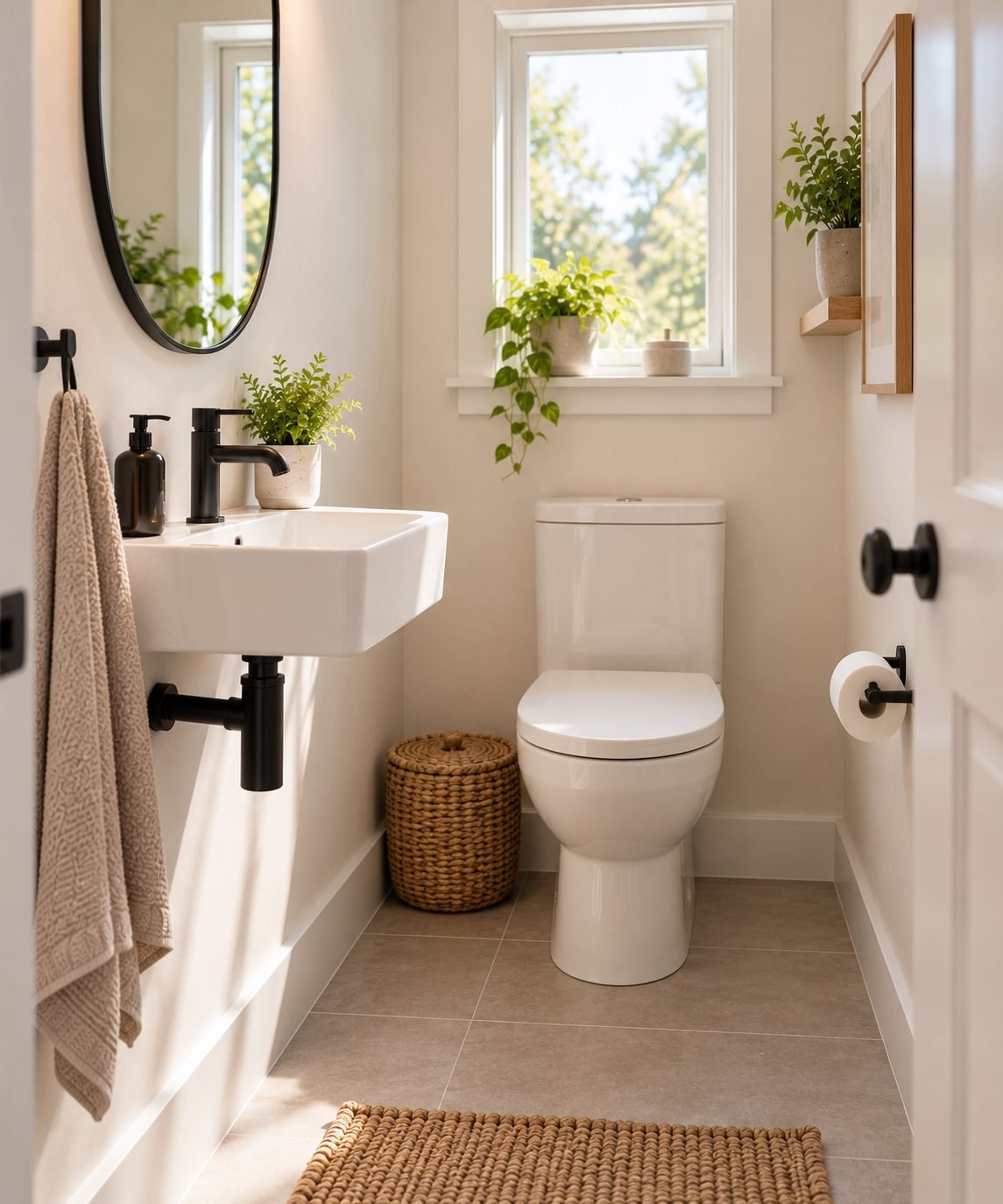
In a genuinely tiny bathroom, a bulky vanity cabinet can dominate the room. A pedestal or wall-mounted sink takes up a fraction of the visual weight, at the cost of some under-sink storage — a trade that's often worth it in the smallest spaces.
9. Layer in a Second Light Source
A single overhead fixture creates flat, shadowed light that makes a small bathroom feel dim regardless of the time of day. Adding sconces beside the mirror, at face height, removes harsh shadows and makes the whole room feel brighter without changing a single finish.
10. Hang Towels Vertically, Not Stacked
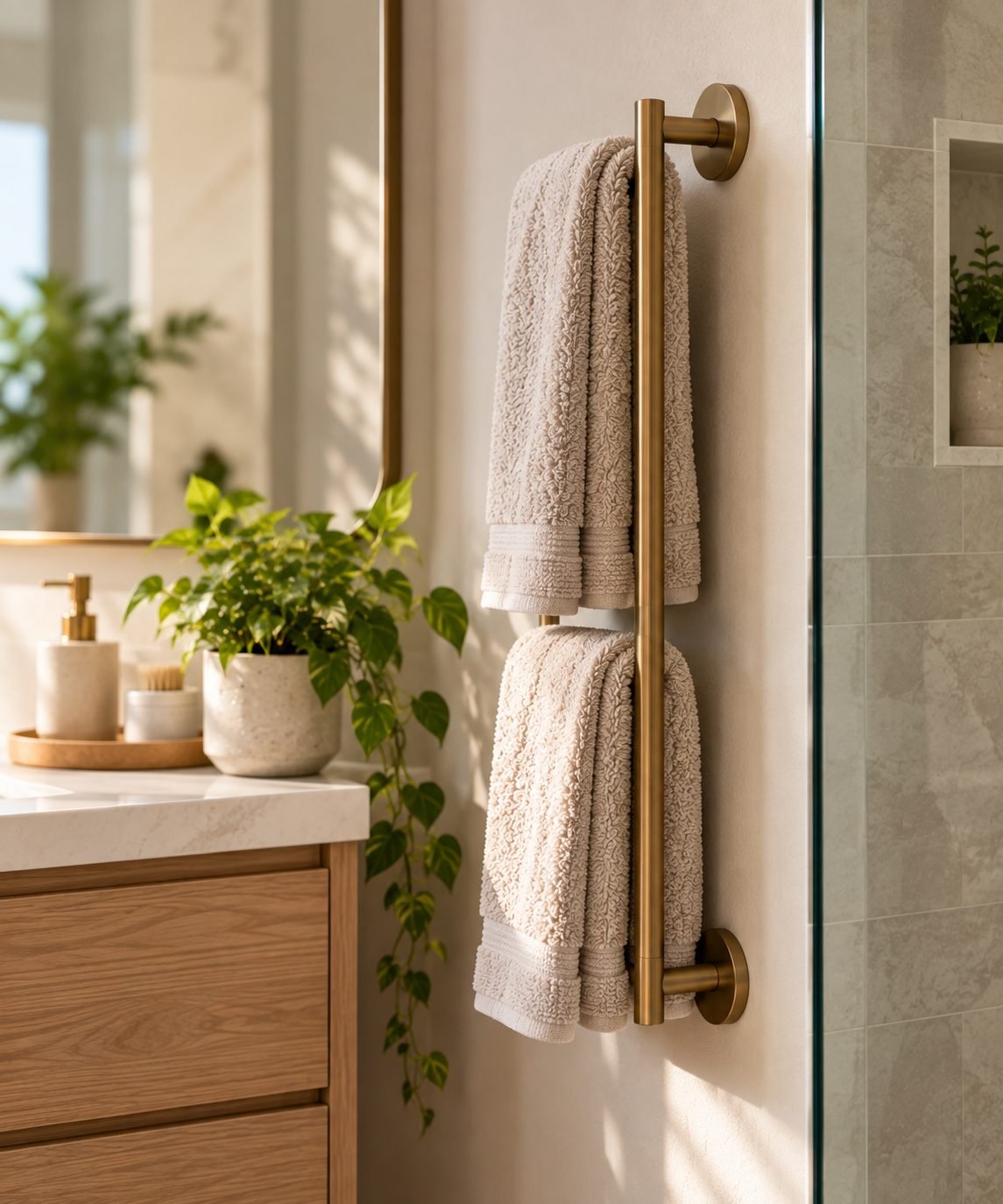
A stack of folded towels on an open shelf takes up more visual and physical space than the same towels hung vertically on a bar or hook. Vertical storage also means towels dry faster between uses.
11. Use Large-Format Tile to Reduce Grout Lines
Small mosaic tile multiplies the number of grout lines the eye has to process, which can make a compact bathroom feel busier than it is. Larger-format tile covers the same wall with far fewer seams, reading as calmer and more continuous.
12. Maximize the Window You Have
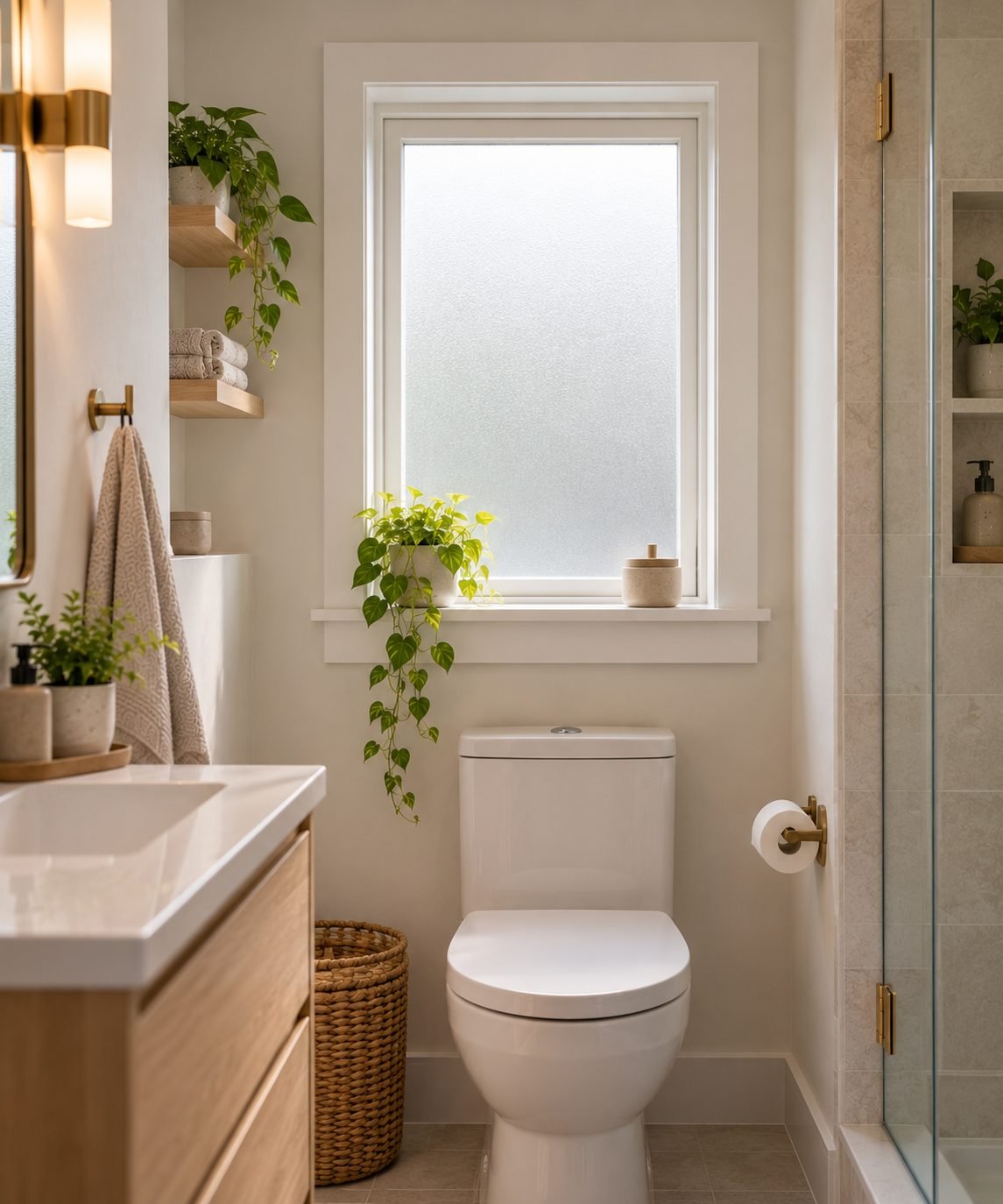
If your bathroom has a window, treat natural light as its most valuable asset. A frosted film or sheer covering that preserves privacy without blocking light will always make the room feel more open than heavy curtains or blinds.
13. Choose a Curbless Shower for Visual Flow
A raised shower curb creates a visible line that separates the shower from the rest of the floor. A curbless, gently sloped shower floor lets the eye read the whole bathroom floor as one continuous surface, which makes the room feel larger than its actual footprint.
14. Use Baskets Under the Sink for Hidden Storage
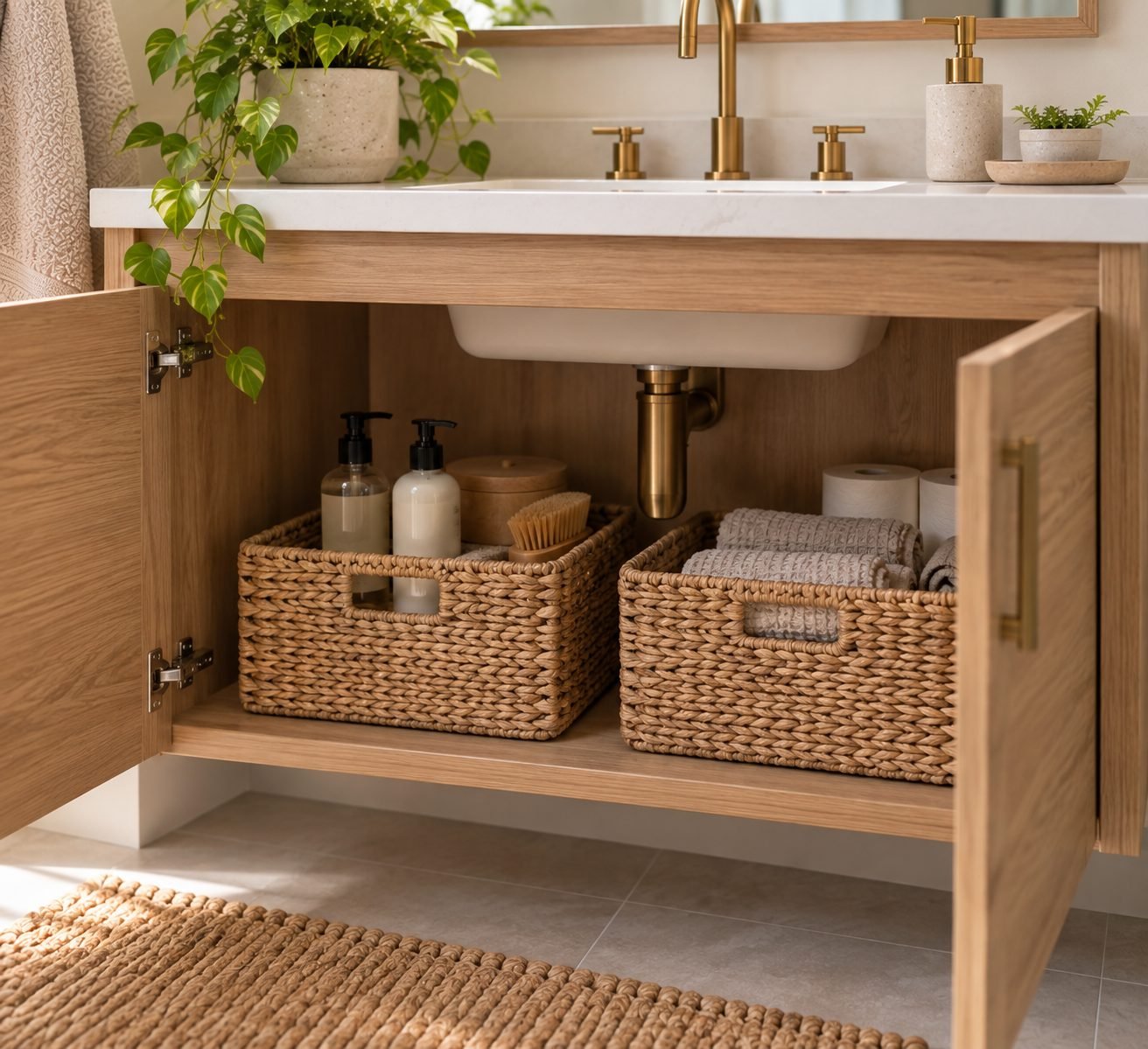
The cabinet under the sink is often a tangle of loose bottles. A few well-sized baskets turn that same space into pull-out zones — one for cleaning supplies, one for extra toiletries — that stay tidy with almost no ongoing effort.
15. Keep the Countertop Almost Empty
A small bathroom rarely needs less counter space. It needs less permanently living on it.
Every bottle and tube left out on the counter reduces the amount of visible surface in the room. Keep out only what you use every single day, and store the rest in a drawer or cabinet.
16. Add a Round Mirror to Soften Corners
A room made up entirely of straight edges and right angles can feel more boxed-in than it needs to. A round or oval mirror introduces a soft shape that breaks up the rectilinear lines of the vanity, tile and door frame.
17. Use a Half Wall Instead of a Full Enclosure
A low glass or tiled half wall separates a shower or tub area without fully enclosing it, letting light and sightlines pass over the top. It provides the same practical separation as a full enclosure while keeping the room feeling open.
18. Choose Wall-Mounted Faucets
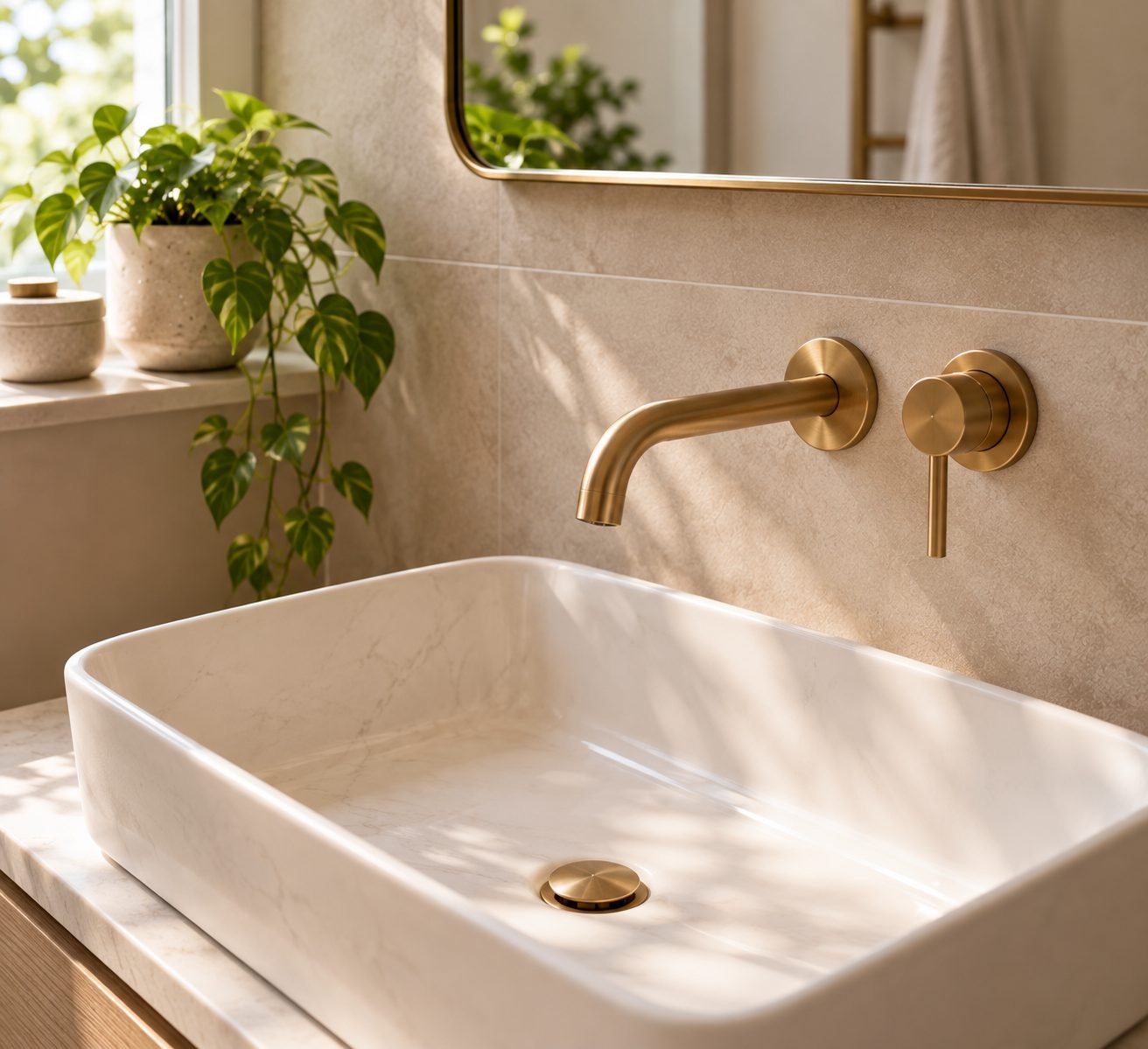
Mounting the faucet to the wall instead of the counter removes hardware from the sink deck entirely, freeing up a few extra inches of usable, visible counter — meaningful in a bathroom where every inch counts.
19. Add a Narrow Rolling Cart
A slim cart with a few tiers can hold extra towels or toiletries and roll into a closet or beside the vanity when it's not needed, giving you flexible storage without committing floor space to it permanently.
20. Use One Statement Tile Wall, Not Four
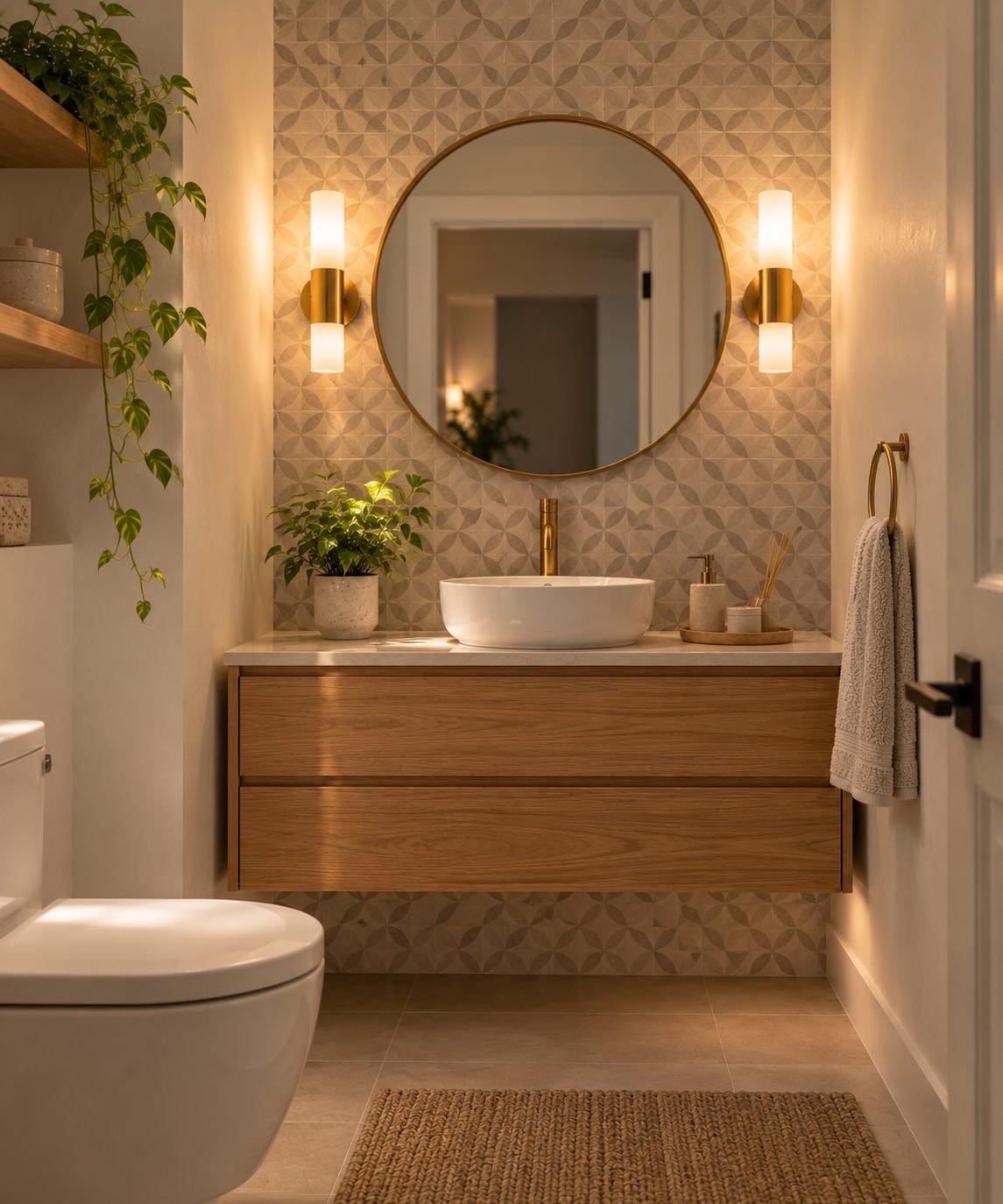
A patterned or bold tile is a great way to give a small bathroom personality, but covering every wall in it can overwhelm the space. Reserving the pattern for a single accent wall keeps the room feeling considered rather than busy.
21. Hang a Slim Wall Cabinet Beside the Mirror
A narrow cabinet mounted beside, rather than in front of, the mirror adds storage without eating into counter space or blocking the mirror's reflective value. It's an easy retrofit in bathrooms that don't have room for a full linen closet.
22. Choose Light Countertops Over Dark
The same logic that applies to tile applies to the countertop: a light surface reflects more of the room's available light back into it, while a dark countertop, however elegant, makes the vanity area read as heavier and smaller.
23. Add a Small Bench for Function and Calm
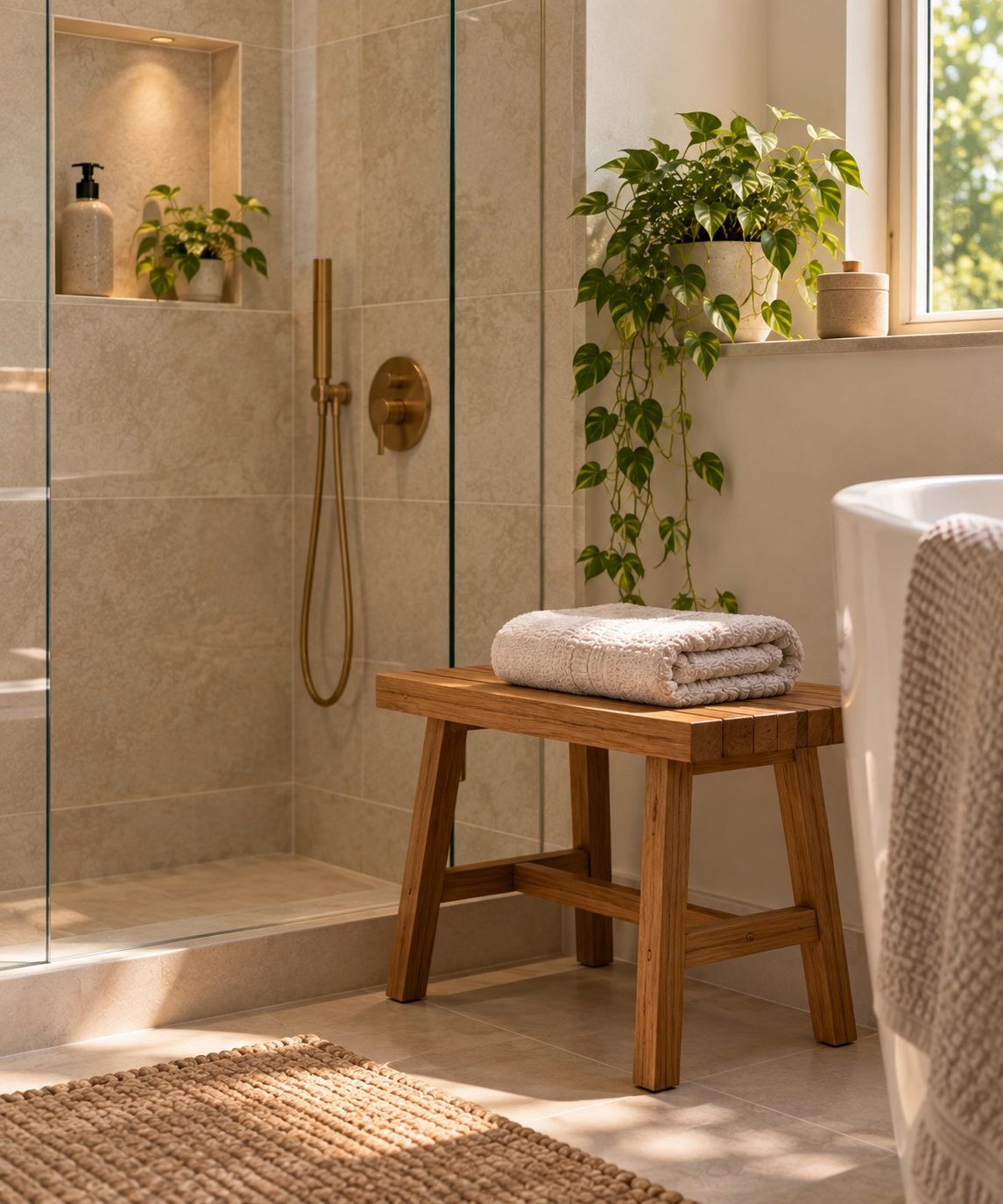
A small bench near the shower or tub gives you somewhere to set a towel or sit while drying off, and it adds a moment of hospitality to an otherwise purely functional room. Keep it clear of clutter so it still reads as intentional, not another surface for overflow.
24. Use Door-Mounted Organizers Inside Cabinets
The inside of a cabinet door is almost always empty space. A slim organizer mounted there can hold hair tools, small bottles or cleaning brushes, adding storage that doesn't touch the room's visible footprint at all.
25. Keep One Plant for Warmth, Not a Collection
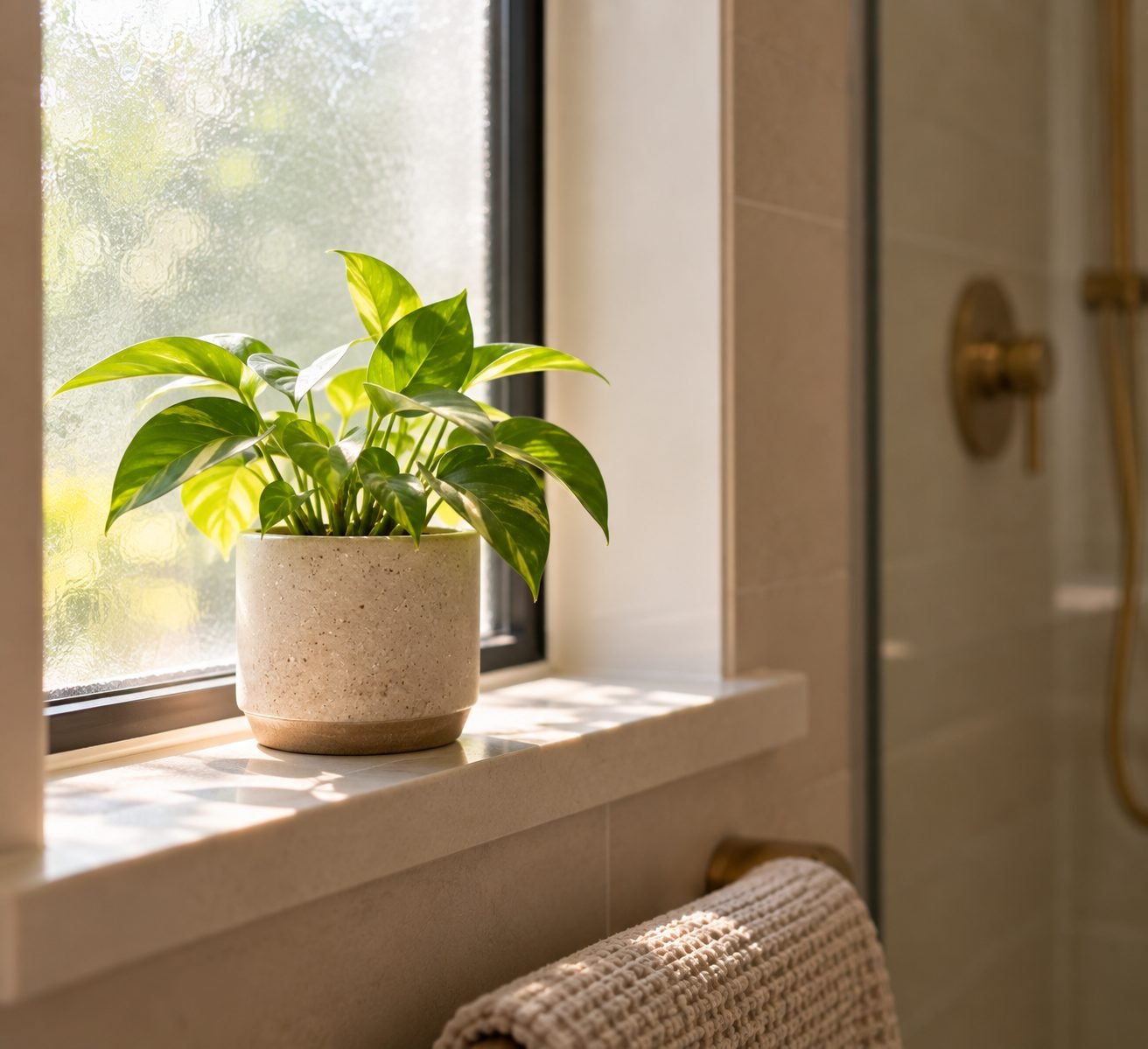
One plant that tolerates humidity well — on a windowsill or a floating shelf — adds warmth and life to a small bathroom without turning into another surface to manage. A single plant reads as considered; a collection of them starts to compete with the room itself.
Designing a Small Bathroom Around Light and Restraint
None of these 25 ideas require more square footage than you already have. Most of them come down to the same two principles: let as much light move through the room as possible, and keep every surface disciplined enough that it stays visible.
Start with the mirror and the lighting — the two changes with the biggest visual payoff — then layer in the smaller adjustments like storage and tile choices over time. A small bathroom designed around light and restraint will always feel calmer than one simply filled with smaller versions of the same fixtures.
What's the single biggest change for making a small bathroom feel bigger?
Upgrading to a larger mirror. It reflects more light and visually extends the depth of the room more than almost any other single change, and it's usually one of the easier updates to make without a full renovation.
Should a small bathroom always use light-colored tile?
Not entirely, but the walls and floor benefit most from staying light and reflective. A single darker accent — one wall, one niche — can still work well as long as it doesn't dominate the room's overall palette.
Is a floating vanity worth it in a small bathroom?
Usually yes. Seeing the floor continue underneath the vanity has a noticeable effect on how open the room feels, even though a floating vanity typically offers slightly less internal storage than a floor-standing one.
How do I add storage to a small bathroom without more floor space?
Go vertical and go inside what you already have: a tall narrow cabinet, a slim cabinet beside the mirror, door-mounted organizers, and baskets under the sink all add real capacity without touching the room's floor footprint.